Stack Gas Analyzer Calibration Issues That Lead to Bad Decisions
Author
Date Published
Reading Time
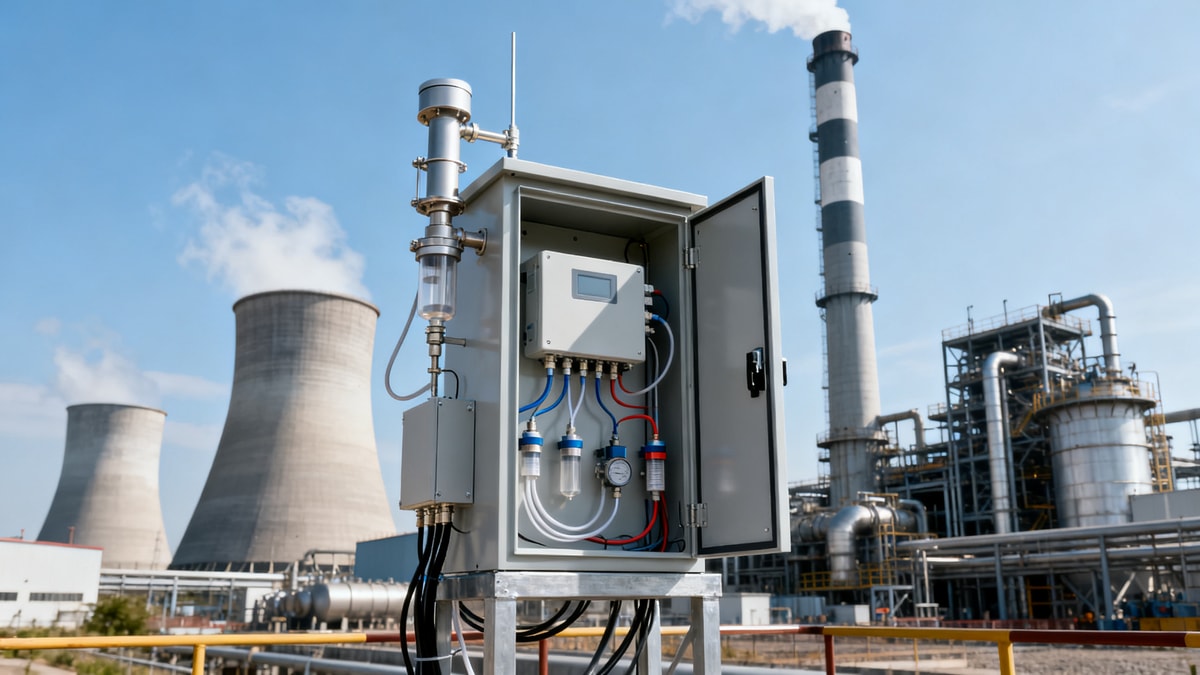
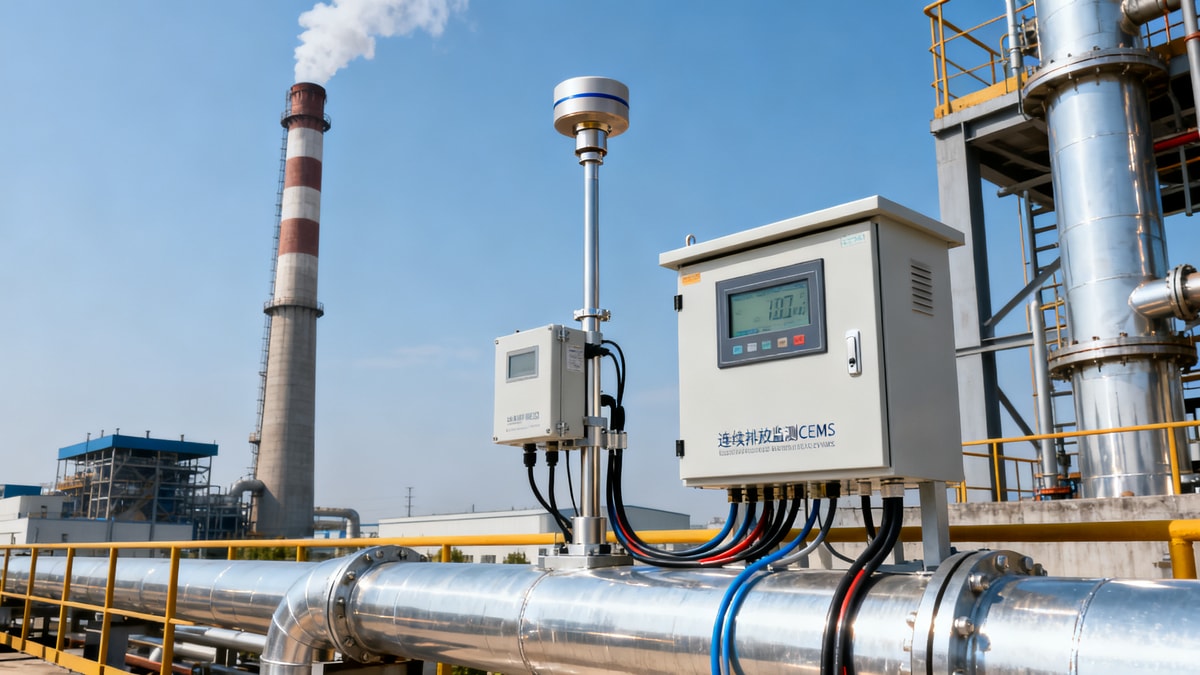
A miscalibrated stack gas analyzer can quietly distort emissions data, trigger compliance risks, and push decision-makers toward costly operational mistakes. For industrial leaders responsible for safety, efficiency, and environmental performance, understanding where calibration goes wrong is essential. This article explores the most common calibration issues that undermine data integrity and lead to bad decisions in high-stakes industrial environments.
Why calibration risk is rising, not falling
In many industrial sectors, the role of the stack gas analyzer has changed from a technical support function to a board-level source of operating intelligence. Emissions data now influences environmental reporting, fuel optimization, maintenance scheduling, permit compliance, and even capital planning. That shift matters because bad calibration no longer creates only a measurement problem; it creates a management problem. When leaders trust flawed numbers, they may approve the wrong shutdown, delay the right upgrade, or underestimate regulatory exposure.
Several industry signals explain why calibration issues are receiving more attention. Facilities are operating under tighter air emissions scrutiny, more digital reporting requirements, and greater pressure to prove process stability. At the same time, plants are expected to run leaner teams, longer maintenance cycles, and more connected instrumentation. In that environment, a stack gas analyzer that appears healthy on the control screen may still be drifting, contaminated, or improperly verified. The gap between apparent performance and actual measurement integrity is where poor decisions begin.
This is especially relevant for decision-makers in power generation, cement, metals, chemicals, waste-to-energy, and large process industries. As measurement systems become more integrated into automated reporting and operating dashboards, calibration quality becomes a strategic control point rather than a routine maintenance task.
The market trend: emissions data is becoming operational currency
A clear trend across heavy industry is that emissions measurement is no longer isolated from broader business decisions. A modern stack gas analyzer often feeds multiple users at once: compliance teams, plant managers, energy specialists, ESG reporting staff, and procurement leaders evaluating upgrade needs. That wider use increases the cost of calibration mistakes. One poor calibration event can ripple through monthly reports, trigger false alarms, distort combustion tuning, and create unnecessary disputes with regulators or auditors.
Another important shift is the move from reactive correction to predictive confidence. Industrial buyers increasingly want analyzers, calibration systems, and service providers that support traceability, remote diagnostics, and audit readiness. That means the conversation is changing from “Does the instrument work?” to “Can we prove the data was trustworthy when the decision was made?”
Where stack gas analyzer calibration goes wrong
Most costly calibration failures are not dramatic. They emerge gradually through routine shortcuts, aging components, or incorrect assumptions. The first common issue is using calibration gas that does not match the analyzer range, process condition, or required accuracy target. Decision-makers often assume any certified gas is sufficient, but a poor range match can make the stack gas analyzer look stable while still producing biased results in actual operating conditions.
A second issue is inadequate zero and span verification frequency. As facilities stretch maintenance intervals, analyzers may drift between checks due to sensor aging, contamination, thermal effects, or sample conditioning problems. The risk is not only inaccurate readings; it is false confidence in historical trends. Management may believe emissions are improving or stable when the change is largely instrument drift.
A third issue involves the sample handling system rather than the analyzer core. Heated lines, filters, moisture removal units, pumps, and valves can alter the gas reaching the measurement cell. In practice, a stack gas analyzer may be perfectly calibrated in isolation but wrong in service because the sample presented to it is no longer representative. This is a major source of confusion in plants where teams calibrate the instrument but do not verify end-to-end measurement integrity.
A fourth issue is poor response to cross-interference and process variability. Industrial exhaust streams are rarely static. Fuel changes, load changes, moisture shifts, and contaminant spikes can affect readings differently across analyzer technologies. If calibration procedures do not reflect actual process conditions, the data may appear compliant in the lab yet become unreliable in operation.
The hidden drivers behind calibration failures
The increase in stack gas analyzer calibration problems is being driven by several structural factors. First, many facilities now depend on mixed fleets of older and newer analyzers. Legacy units may require manual intervention and local expertise, while newer systems promise automation but still need disciplined verification. This mixed environment creates inconsistency in calibration practices across sites and business units.
Second, organizational silos often weaken accountability. Environmental teams may own reporting, operations may influence analyzer use, and maintenance may perform calibration. When responsibility is fragmented, nobody fully owns measurement quality from sampling point to final report. That fragmentation is one of the strongest predictors of bad decisions based on emissions data.
Third, procurement priorities are shifting. Buyers are under pressure to reduce service costs, standardize vendors, and shorten downtime. Those are reasonable goals, but when calibration capability is treated as a secondary feature rather than a core performance requirement, the stack gas analyzer becomes vulnerable to preventable failures. Lower upfront cost can produce much higher downstream compliance and operating cost.
Common drivers and their impact
Who feels the impact first
Calibration failures do not affect all stakeholders in the same way. For environmental compliance leaders, a bad stack gas analyzer creates reporting uncertainty, potential nonconformance, and difficult regulator conversations. For operations teams, the same issue can distort combustion control, excess air tuning, and emissions reduction efforts. For finance and executive leadership, the impact may appear later in the form of penalties, unnecessary capital expenditure, avoidable shutdowns, or reputation damage tied to unreliable environmental data.
Procurement leaders are also increasingly exposed. Supplier selection for analyzer systems, calibration gases, sample conditioning components, and service contracts now has direct influence on plant risk. A procurement model focused only on purchase price may fail to capture lifecycle issues such as calibration stability, spare parts quality, support responsiveness, and documentation strength.
Impact by business role
What smarter industrial buyers are changing now
A notable market direction is that leading industrial organizations are evaluating the stack gas analyzer as part of a complete measurement assurance system. Instead of asking only about sensor technology, they are asking broader questions: How is calibration documented? How quickly can drift be detected? Is sample system health visible? Can the supplier support traceable service across regions? Does the platform help defend data during audits?
This reflects a more mature buying logic. In a higher-scrutiny environment, the best analyzer is not necessarily the one with the most features; it is the one that maintains decision-grade accuracy under real plant conditions. That requires alignment among engineering, maintenance, EHS, and sourcing teams before the purchase, not after the first data dispute.
Forward-looking facilities are also building calibration governance into digital operations. They connect analyzer health data with maintenance systems, define escalation rules for repeated drift, and separate “instrument available” from “data trustworthy.” That distinction is becoming critical. A stack gas analyzer can be online while still producing data that should not be used for regulatory or strategic decisions.
How to judge whether your current calibration approach is falling behind
For enterprise decision-makers, the most useful question is not whether a recent calibration was completed, but whether the full calibration model still matches current business risk. A practical review should examine several signals. Are zero and span checks frequent enough for process variability? Are calibration gases appropriate for normal and upset conditions? Is there documented verification of the sampling path? Do recurring deviations trigger root-cause analysis, or just another adjustment? Are service records strong enough to support an external audit?
If these questions produce uncertain answers, the organization may be depending on analyzer data with more risk than leadership realizes. That does not always mean immediate replacement is required. In many cases, the better first step is to reassess procedures, accountability, service intervals, and technology fit. The trend across industry is clear: companies that treat calibration as a strategic assurance function are better positioned to avoid bad decisions than those treating it as a checkbox activity.
Decision-oriented priorities for the next 12 months
As environmental oversight, operating efficiency, and digital reporting continue to converge, stack gas analyzer calibration should remain on the executive risk agenda. The strongest near-term response is not complexity for its own sake, but clearer judgment. Review where emissions data influences financial, compliance, and operating decisions. Identify which analyzers feed the most critical workflows. Then test whether calibration practices, service support, and sample system controls are strong enough to protect those decisions.
For organizations planning upgrades, expansions, or supplier reviews, the most valuable move is to compare analyzer options through the lens of decision reliability. That means evaluating calibration stability, documentation quality, maintainability, diagnostics, and supplier competence together. In the current industrial landscape, trust in emissions data is becoming a competitive advantage as much as a compliance necessity.
If your business wants to better understand how stack gas analyzer calibration issues could affect plant performance, audit readiness, or procurement strategy, start by confirming three points: where your highest-impact data is generated, how calibration integrity is verified across the full measurement path, and whether current service practices match the risk profile of the operation. Those answers will provide a far better basis for action than any dashboard trend alone.
Technical Specifications
- India BIS Draft IS 17832:2026 Sets Noise & Dust Limits for Waste CrushersAuthor :Environmental Engineering Director
- Korea MFDS Mandates Korean UI & KOSHA OEL Database for Industrial Water AnalyzersAuthor :Precision Metrology Expert
- Indonesia BPOM Mandates PM0.1 Efficiency & CADR Decay Labeling for Industrial Air PurifiersAuthor :Environmental Engineering Director
Expert Insights

Chief Security Architect
Dr. Thorne specializes in the intersection of structural engineering and digital resilience. He has advised three G7 governments on industrial infrastructure security.
Related Analysis
- May 03, 2026India BIS Draft IS 17832:2026 Sets Noise & Dust Limits for Waste CrushersAuthor :Environmental Engineering Director
- May 03, 2026Korea MFDS Mandates Korean UI & KOSHA OEL Database for Industrial Water AnalyzersAuthor :Precision Metrology Expert
- May 03, 2026Indonesia BPOM Mandates PM0.1 Efficiency & CADR Decay Labeling for Industrial Air PurifiersAuthor :Environmental Engineering Director
Core Sector // 01
Security & Safety
- Global Industrial Laser Distance Meter Price Index Up 9.3% WeeklyAuthor :Precision Metrology Expert

- Noise Monitoring Terminal Data Looks Normal, but Is It Trustworthy?Author :Precision Metrology Expert

- Stack Gas Analyzer Calibration Issues That Lead to Bad DecisionsAuthor :Precision Metrology Expert

- Portable Water Testing Kits: What Field Errors Skew Results?Author :Precision Metrology Expert

- Continuous Emission Monitoring CEMS: Data Gaps That Raise RiskAuthor :Precision Metrology Expert

- Gold Wash Plant Equipment That Cuts Recovery LossesAuthor :Precision Metrology Expert

- KC Certification Update: Industrial Laser Dust Meters Require Class II Div 2 Explosion-Proof HousingAuthor :Precision Metrology Expert

- ESMA Mandates EN 14181 QA/QC Level 3 for Industrial Water Sensors in UAEAuthor :Precision Metrology Expert