Portable Water Testing Kits: What Field Errors Skew Results?
Author
Date Published
Reading Time
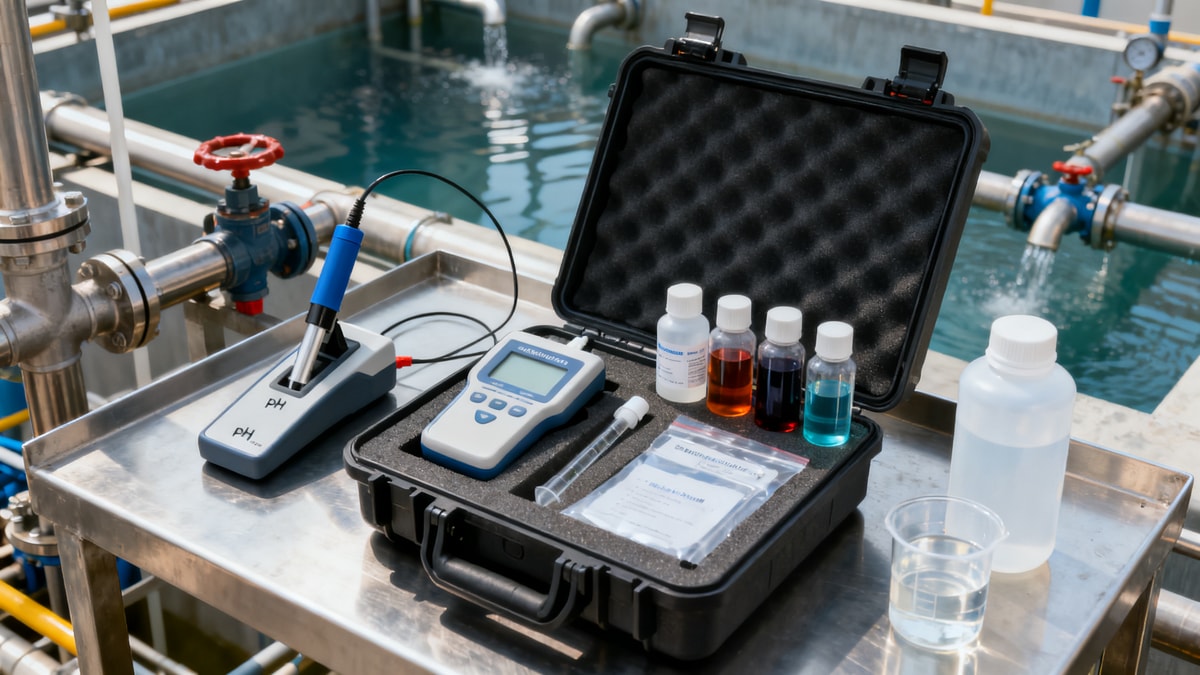
Portable water testing kits make field decisions faster, but small operator mistakes can quickly distort pH, chlorine, turbidity, or conductivity readings. From poor sample handling to timing errors and contaminated vials, these issues can lead to costly misjudgments. This article highlights the most common field errors and shows users how to improve testing accuracy, consistency, and confidence on site.
What portable water testing kits are and why field accuracy matters
Portable water testing kits are compact tools used to measure key water quality indicators directly at the point of use, discharge, storage, or treatment. In industrial facilities, utilities, construction projects, environmental monitoring work, and emergency response, they allow operators to make rapid judgments without waiting for laboratory turnaround. Common parameters include pH, free or total chlorine, turbidity, conductivity, dissolved oxygen, hardness, alkalinity, and selected ions.
That speed is valuable, but it also creates a risk: field data is only as good as the person collecting and running the test. Unlike a controlled lab environment, on-site testing happens in heat, dust, rain, poor lighting, unstable surfaces, and under time pressure. For users and operators, the biggest challenge is not usually the kit itself. It is how easily everyday field errors can skew the result enough to trigger the wrong operational decision.
In sectors where compliance, corrosion control, disinfection, cooling water management, or environmental discharge limits matter, even a small reading error can have an outsized impact. A false low chlorine result may lead to unnecessary dosing. A false high conductivity reading may suggest contamination that is not actually present. A delayed turbidity test can hide the true condition of the sample. This is why understanding error sources in portable water testing kits is not just technical housekeeping; it is part of operational risk control.
Why the industry pays close attention to field testing errors
Across modern industry, water quality data supports safety, process stability, equipment life, environmental compliance, and public trust. EPC contractors need dependable readings during commissioning and handover. Facility managers rely on field measurements to maintain treatment systems, cooling loops, boilers, and potable water networks. Environmental teams use portable water testing kits for screening, trend checks, and rapid investigation of abnormal events.
Because these measurements often feed immediate decisions, operators must know when a result reflects the water and when it reflects a field mistake. Search engines and industrial decision-makers increasingly reward content and suppliers that demonstrate E-E-A-T: practical experience, technical expertise, authority, and trust. In the same spirit, reliable field testing depends on disciplined methods, traceable calibration, and awareness of limitations. Good operators do not assume the number is correct simply because the meter displayed it.
The most common field errors that skew results
Most errors with portable water testing kits happen before the reading is taken. Sample collection, storage, timing, and handling strongly influence what the kit sees. Operators who understand the following issues can prevent a large share of avoidable inaccuracy.
Poor sample handling
Using the wrong container, touching the inside of the vial, filling from a dirty tap, or allowing headspace when it should be minimized can all change the sample. Some analytes shift quickly when exposed to air, sunlight, or warm temperatures. Chlorine can dissipate. Dissolved gases can change pH. Suspended solids can settle before turbidity is measured. If the sample is no longer representative, the reading is no longer representative either.
Contaminated vials, caps, or probes
Residue from previous tests is a major cause of false results. A vial with detergent film, a conductivity probe with dried salts, or a color comparator with fingerprints can distort the next measurement. Even rinsing with non-sample water may introduce contamination. Clean equipment is not enough; it must also be properly rinsed and stored to prevent carryover.
Timing errors during reagent-based tests
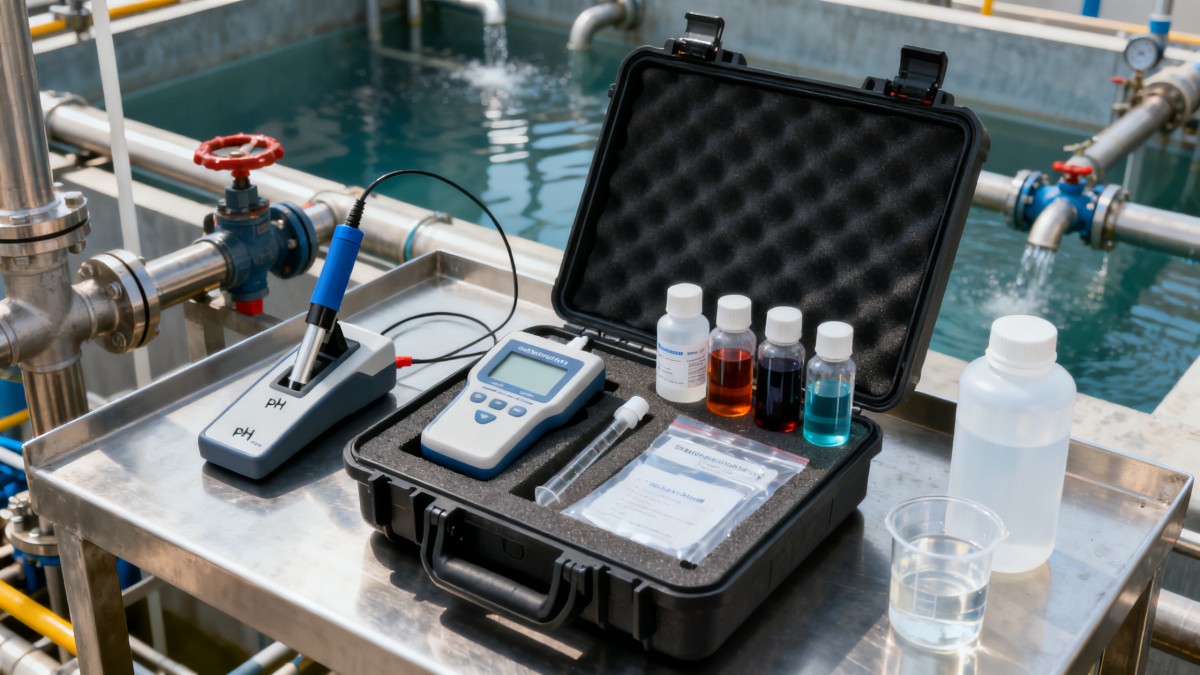
Many portable water testing kits depend on a strict reaction time. Reading too early may underdevelop the color. Reading too late may overdevelop it or allow fading. In chlorine testing, seconds matter. In high-throughput situations, operators often prepare multiple vials at once and then lose exact timing for each sample. This creates inconsistent results even when the method is otherwise correct.
Calibration drift and skipped verification
Meters for pH, conductivity, and dissolved oxygen require calibration and routine verification against standards. A calibrated instrument can still drift during transport, temperature change, or long field use. Operators sometimes trust yesterday’s calibration or assume factory settings are enough. Without a quick check using known standards, there is no assurance that the instrument is still performing within expected tolerance.
Temperature effects
Water chemistry and sensor response are temperature-sensitive. Conductivity changes with temperature. pH electrode behavior can vary. Some reagents react differently in hot or cold conditions. Leaving a sample in direct sun, testing immediately after taking it from a chilled line, or moving instruments between indoor and outdoor environments can create avoidable measurement shifts. Temperature compensation helps, but it does not solve every field problem.
Lighting and visual interpretation mistakes
Colorimetric portable water testing kits are especially vulnerable to poor visual conditions. Shade, glare, colored PPE lenses, dirty comparators, and operator fatigue can all affect how a color is read. Two people may interpret the same sample differently. Digital photometers reduce this source of subjectivity, but they still require clean optics, proper blanking, and correct procedure.
Improper mixing and incomplete dissolution
Powder pillows, tablets, and liquid reagents must be mixed as instructed. If the reagent is not fully dissolved, the reaction may be incomplete. Shaking too aggressively can also introduce bubbles that interfere with turbidity or optical measurement. The method’s details exist for a reason. Small deviations can create a result that looks precise but is chemically unreliable.
How error risk changes by test type
Not all portable water testing kits fail in the same way. Users should understand which parameters are most vulnerable to operator technique, environmental conditions, or instrument maintenance.
Practical ways operators can improve accuracy on site
Improving field accuracy does not always require more expensive equipment. In many cases, portable water testing kits perform well when the operator follows a disciplined routine. The most effective habits are simple, repeatable, and easy to verify.
- Use a standard sampling sequence so every operator collects, labels, and tests in the same order.
- Rinse sample cells correctly, ideally with the sample when the method allows.
- Protect reagents from moisture, heat, and expired storage conditions.
- Carry calibration standards and perform quick field verification, not just scheduled calibration.
- Record time, temperature, location, lot numbers, and unusual site conditions with the result.
- Repeat a suspicious reading instead of forcing it into the logbook as final.
These practices are especially valuable in industrial environments where one reading may influence chemical dosing, process shutdown, contractor acceptance, or environmental reporting. Portable water testing kits are decision tools, not just measurement tools. Better discipline means better decisions.
Building consistency across teams and shifts
A frequent problem in field operations is not random inaccuracy but inconsistent technique between users. One shift may swirl a reagent vial gently, while another shakes it hard. One technician waits for stabilization; another reads instantly. Over time, the dataset becomes noisy and trend analysis loses value. For facilities that depend on portable water testing kits, consistency should be treated as a management issue as much as a technical one.
Short work instructions, visual SOP cards, and periodic competency checks can reduce variation. It also helps to define clear trigger points for confirmation testing. For example, if a result is outside the normal operating band, the operator may be required to retest, inspect the instrument, and compare against a standard before escalating. This approach prevents overreaction to one questionable field number.
When a field result should not be trusted on its own
Portable water testing kits are excellent for rapid screening and routine control, but some situations demand caution. If the result conflicts with process behavior, if the sample matrix is unusual, if the instrument has not been verified, or if there was visible interference during testing, the reading should be treated as provisional. The same is true when compliance limits are tight or consequences are high. In those cases, a confirmatory test, duplicate sample, or laboratory analysis may be the better path.
Good operators know that confidence comes from method control, not from speed alone. A fast wrong answer is still wrong. The goal is to keep field testing fast while making it more defensible.
FAQ
How often should portable water testing kits be calibrated?
It depends on the parameter, instrument type, and site risk, but calibration should follow the manufacturer’s method and be supported by regular verification checks in the field. High-use kits or critical measurements often need more frequent confirmation.
Do expired reagents really affect results?
Yes. Reagent degradation can weaken color development, change reaction performance, or create unstable readings. For portable water testing kits, expired or poorly stored reagents are a common hidden cause of bad data.
Is one repeat test enough after a suspicious reading?
Often a repeat is the first step, but not always the last. If the result remains unusual, inspect the kit, verify with a standard, and consider duplicate sampling or lab confirmation depending on the operational impact.
Final takeaway for field users
Portable water testing kits are highly useful across industry because they convert water quality into immediate action. Their weakness is not portability; it is how easily field conditions and human habits can distort the reading. For users and operators, the path to better results is straightforward: collect representative samples, keep equipment clean, respect timing, verify calibration, control temperature effects, and document what happened in the field.
When teams treat portable water testing kits as precision tools rather than simple convenience items, the quality of on-site decisions improves noticeably. In environments where safety, compliance, and system reliability matter, that improvement is worth far more than the few extra minutes it takes to test correctly.
Technical Specifications
- India BIS Draft IS 17832:2026 Sets Noise & Dust Limits for Waste CrushersAuthor :Environmental Engineering Director
- Korea MFDS Mandates Korean UI & KOSHA OEL Database for Industrial Water AnalyzersAuthor :Precision Metrology Expert
- Indonesia BPOM Mandates PM0.1 Efficiency & CADR Decay Labeling for Industrial Air PurifiersAuthor :Environmental Engineering Director
Expert Insights

Chief Security Architect
Dr. Thorne specializes in the intersection of structural engineering and digital resilience. He has advised three G7 governments on industrial infrastructure security.
Related Analysis
- May 03, 2026India BIS Draft IS 17832:2026 Sets Noise & Dust Limits for Waste CrushersAuthor :Environmental Engineering Director
- May 03, 2026Korea MFDS Mandates Korean UI & KOSHA OEL Database for Industrial Water AnalyzersAuthor :Precision Metrology Expert
- May 03, 2026Indonesia BPOM Mandates PM0.1 Efficiency & CADR Decay Labeling for Industrial Air PurifiersAuthor :Environmental Engineering Director
Core Sector // 01
Security & Safety
- Global Industrial Laser Distance Meter Price Index Up 9.3% WeeklyAuthor :Precision Metrology Expert

- Noise Monitoring Terminal Data Looks Normal, but Is It Trustworthy?Author :Precision Metrology Expert

- Stack Gas Analyzer Calibration Issues That Lead to Bad DecisionsAuthor :Precision Metrology Expert

- Portable Water Testing Kits: What Field Errors Skew Results?Author :Precision Metrology Expert

- Continuous Emission Monitoring CEMS: Data Gaps That Raise RiskAuthor :Precision Metrology Expert

- Gold Wash Plant Equipment That Cuts Recovery LossesAuthor :Precision Metrology Expert

- KC Certification Update: Industrial Laser Dust Meters Require Class II Div 2 Explosion-Proof HousingAuthor :Precision Metrology Expert

- ESMA Mandates EN 14181 QA/QC Level 3 for Industrial Water Sensors in UAEAuthor :Precision Metrology Expert