Gold Wash Plant Equipment That Cuts Recovery Losses
Author
Date Published
Reading Time
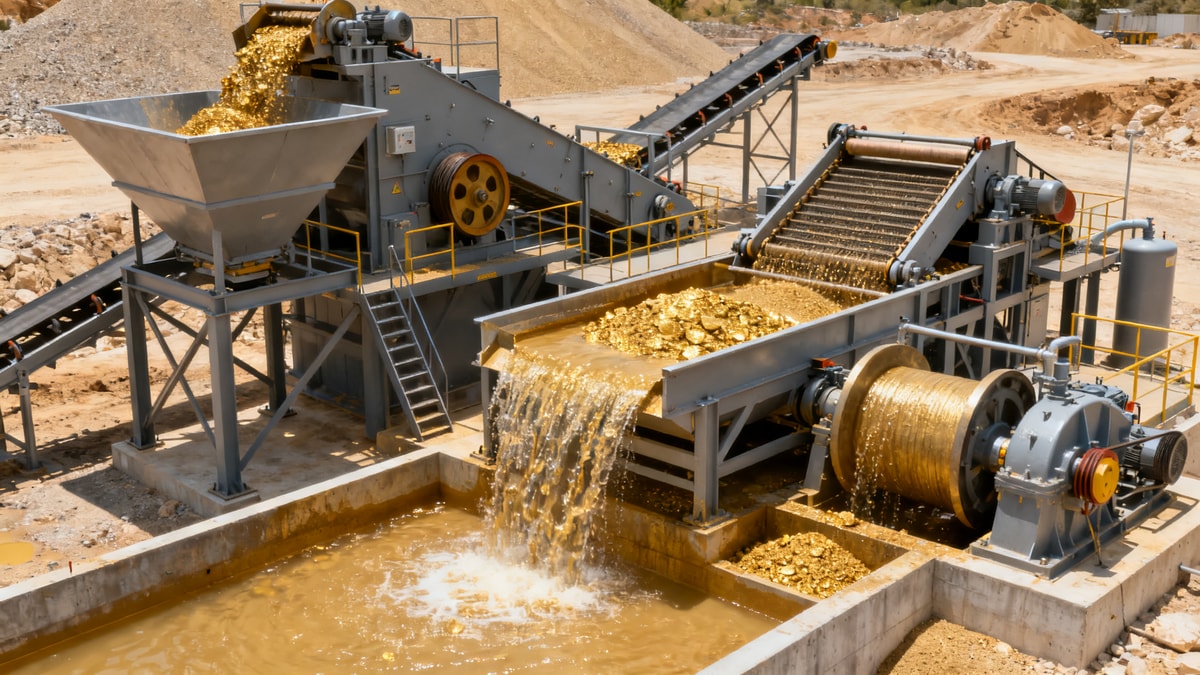
Choosing the right gold wash plant equipment can significantly cut recovery losses, lower operating costs, and improve output consistency. For business decision-makers, the real advantage lies not only in throughput, but in system reliability, material handling efficiency, and long-term return on investment. This article explores what to evaluate when selecting equipment that supports stronger recovery performance and more resilient operations.
What Gold Wash Plant Equipment Means in an Industrial Context
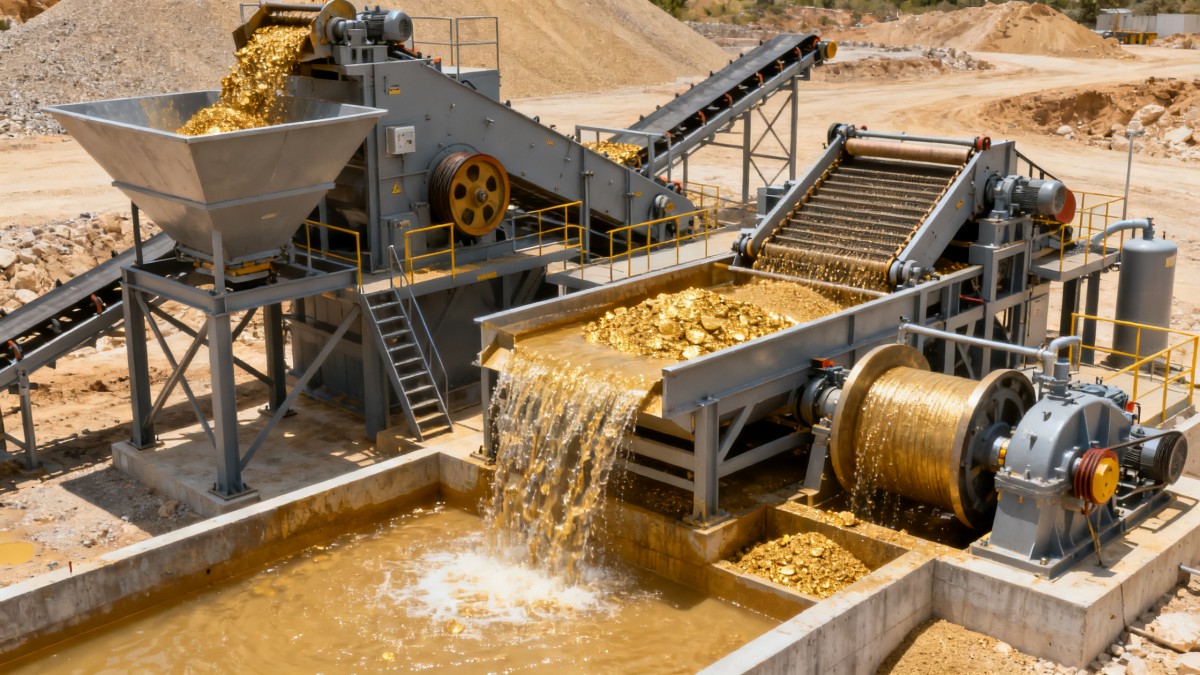
In practical terms, gold wash plant equipment refers to the integrated machinery used to separate gold-bearing material from clay, gravel, sand, and oversize rock. A complete system may include feeders, trommels, vibrating screens, scrubbers, slurry pumps, concentrators, sluice systems, dewatering components, and tailings handling units. While individual machines matter, recovery performance depends on how well the system is engineered as a whole.
For industrial operators, the issue is not simply whether a plant can process ore, but whether it can do so consistently under variable feed conditions. Recovery losses often occur when material is poorly washed, when fine gold bypasses the capture circuit, or when the system becomes unstable due to surges, blockages, or excessive wear. That is why gold wash plant equipment should be assessed as a production asset tied directly to yield protection and operating resilience.
This matters beyond mining teams alone. EPC contractors, project owners, procurement leaders, and operations executives all need a clear understanding of how plant design choices affect recoverable value, maintenance burden, water demand, and site productivity. In that sense, gold wash plant equipment sits at the intersection of mechanical reliability, process efficiency, and capital discipline.
Why Recovery Losses Remain a High-Priority Issue
Even a modest percentage loss in gold recovery can translate into a major financial gap over the life of an operation. Decision-makers often focus on nominal capacity, yet a plant rated for high throughput can still underperform if wash efficiency is weak or fine particle retention is poor. In gold processing, lost recovery is rarely caused by one single factor. It is usually the result of a chain of small inefficiencies across feed preparation, washing, classification, concentration, and discharge.
Current industry attention is also shaped by tighter project economics. Fuel, labor, spare parts, environmental compliance, and water management have all become more visible cost centers. As a result, buyers now expect gold wash plant equipment to deliver more than basic separation. They want lower downtime, predictable maintenance intervals, compatibility with site constraints, and stronger performance across changing ore profiles.
Another reason for increased scrutiny is that many projects operate in remote or harsh environments. Under these conditions, equipment failure has broader consequences: delayed production, logistics complications, safety risk, and unstable cash flow. This is why robust design, verified components, and clear process integration are increasingly important in capital planning.
Core System Elements That Influence Recovery
When evaluating gold wash plant equipment, several system elements have an outsized effect on recovery losses. The first is feed control. If ore enters the plant unevenly, downstream separation becomes inconsistent. A properly sized hopper and feeder help regulate material flow and reduce surging.
The second factor is washing effectiveness. Clay-heavy ore can trap fine gold, making scrubbing and agitation essential. Trommels and rotary scrubbers are often used to break down compacted material before classification. If this stage is weak, valuable particles may report to waste before they ever reach the recovery circuit.
The third is screening and classification accuracy. Oversize material should be removed efficiently, while the target fraction must be directed to the proper recovery device. Poor screen selection or excessive blinding can reduce separation efficiency and create avoidable losses. Finally, the concentration stage must align with particle size distribution. Fine gold recovery requires different handling than coarse gold recovery, and a mismatch here can significantly erode results.
Industry Overview: What Decision-Makers Should Compare
A useful way to assess gold wash plant equipment is to compare systems through an operational lens rather than through unit price alone. The table below highlights the main evaluation areas that affect both recovery and business performance.
Where Better Equipment Delivers Measurable Business Value
The value of well-specified gold wash plant equipment extends far beyond higher recovery percentages. Better equipment improves the stability of the entire operation. This means fewer emergency interventions, cleaner material flow, lower spillage, and more reliable production forecasting. For decision-makers managing project timelines and financial exposure, these operational improvements are often as important as metallurgical gains.
There is also a labor efficiency component. Plants with intuitive layouts, accessible service points, and well-matched components generally require less manual correction. That reduces dependence on reactive maintenance and frees site teams to focus on process optimization rather than constant troubleshooting.
From a sourcing perspective, equipment quality has strategic implications. Systems supported by reliable technical documentation, known component standards, and responsive after-sales service are easier to integrate into formal procurement frameworks. This aligns with the expectations of industrial buyers who prioritize traceability, durability, and life-cycle value over headline pricing.
Typical Operating Scenarios and Equipment Priorities
Not every operation requires the same gold wash plant equipment configuration. The most suitable design depends on ore conditions, production targets, mobility requirements, infrastructure access, and compliance expectations. The following table outlines common scenarios and the priorities they create.
Practical Evaluation Criteria Before Selection
Before approving an investment, decision-makers should request performance evidence tied to real operating conditions. This includes feed characteristics, expected particle size distribution, moisture and clay content, water requirements, installed power, wear part consumption, and anticipated recovery range. Gold wash plant equipment should not be judged only by brochure claims. Site-specific data is essential.
It is also wise to evaluate how the plant fits into wider industrial systems. For example, electrical compatibility, instrumentation visibility, access for inspection, and safety provisions all influence long-term performance. In modern industrial environments, reliable operation depends on more than mechanics alone. Monitoring points, maintenance access, and compliance documentation support better decision-making over the full asset life cycle.
Another key question is scalability. If output targets rise, can the current configuration be expanded without redesigning the entire plant? Modular gold wash plant equipment often gives operators a more flexible path to future growth, especially in projects that evolve from pilot phases to larger commercial production.
Common Selection Mistakes That Increase Recovery Losses
A frequent mistake is choosing equipment based mainly on nameplate capacity. High tonnage means little if the material is not being properly liberated and classified. Another issue is underestimating ore variability. A plant that performs well on clean gravel may struggle badly on sticky feed or mixed particle sizes.
Some buyers also overlook maintenance logistics. If critical wear parts are difficult to source or replace, the practical recovery rate over time may fall below expectations because the plant cannot be kept in optimal condition. In addition, poor integration between washing, screening, and concentration stages can create bottlenecks that increase losses even when each machine appears technically sound in isolation.
For organizations with formal procurement and compliance standards, insufficient technical transparency is another risk. Equipment providers should be able to explain material specifications, service intervals, component origin, and operating assumptions clearly. That level of visibility supports stronger governance and more confident capital allocation.
A More Strategic Approach for Enterprise Buyers
Enterprise buyers should treat gold wash plant equipment as part of a broader industrial performance strategy. The best outcomes usually come from aligning process design, mechanical selection, environmental planning, and service support from the beginning. This approach reduces the gap between theoretical recovery and actual field results.
For organizations responsible for large infrastructure or resource projects, the strongest suppliers are those that combine technical credibility with documented reliability. Buyers should favor partners that can support engineering review, operating data analysis, spare parts planning, and commissioning guidance. These factors help turn equipment investment into durable operational value.
If your objective is to reduce recovery losses, improve output consistency, and strengthen return on capital, gold wash plant equipment should be evaluated as a system of connected decisions rather than a simple machinery purchase. A disciplined review of ore conditions, recovery targets, maintenance realities, and supplier capability will lead to more resilient plant performance and better business results.
Technical Specifications
Expert Insights

Chief Security Architect
Dr. Thorne specializes in the intersection of structural engineering and digital resilience. He has advised three G7 governments on industrial infrastructure security.
Related Analysis
- May 02, 2026Chemical Metering Pumps: Which Dosing Errors Cost the Most?Author :Environmental Engineering Director
- May 02, 2026What Sets One Belt Filter Press Manufacturer Apart?Author :Environmental Engineering Director
- May 02, 2026Moving Bed Biofilm Reactor MBBR Retrofit Benefits and LimitsAuthor :Environmental Engineering Director
Core Sector // 01
Security & Safety
- Gold Wash Plant Equipment That Cuts Recovery LossesAuthor :Precision Metrology Expert

- KC Certification Update: Industrial Laser Dust Meters Require Class II Div 2 Explosion-Proof HousingAuthor :Precision Metrology Expert

- ESMA Mandates EN 14181 QA/QC Level 3 for Industrial Water Sensors in UAEAuthor :Precision Metrology Expert

- 6th National Auto Standards Committee Launched, Impacts Optical Test Equipment ExportAuthor :Precision Metrology Expert

- How Accurate Should a Video Measuring Machine BeAuthor :Precision Metrology Expert

- 6th National Auto Standardization TC EstablishedAuthor :Precision Metrology Expert
![]()
- EN 61000-4-30:2026 Published: New Harmonic Group Immunity Testing for PQ AnalyzersAuthor :Precision Metrology Expert
![]()
- China Launches World's Largest Agri-Meteorological Observation NetworkAuthor :Precision Metrology Expert
![]()