Noise Monitoring Terminal Data Looks Normal, but Is It Trustworthy?
Author
Date Published
Reading Time
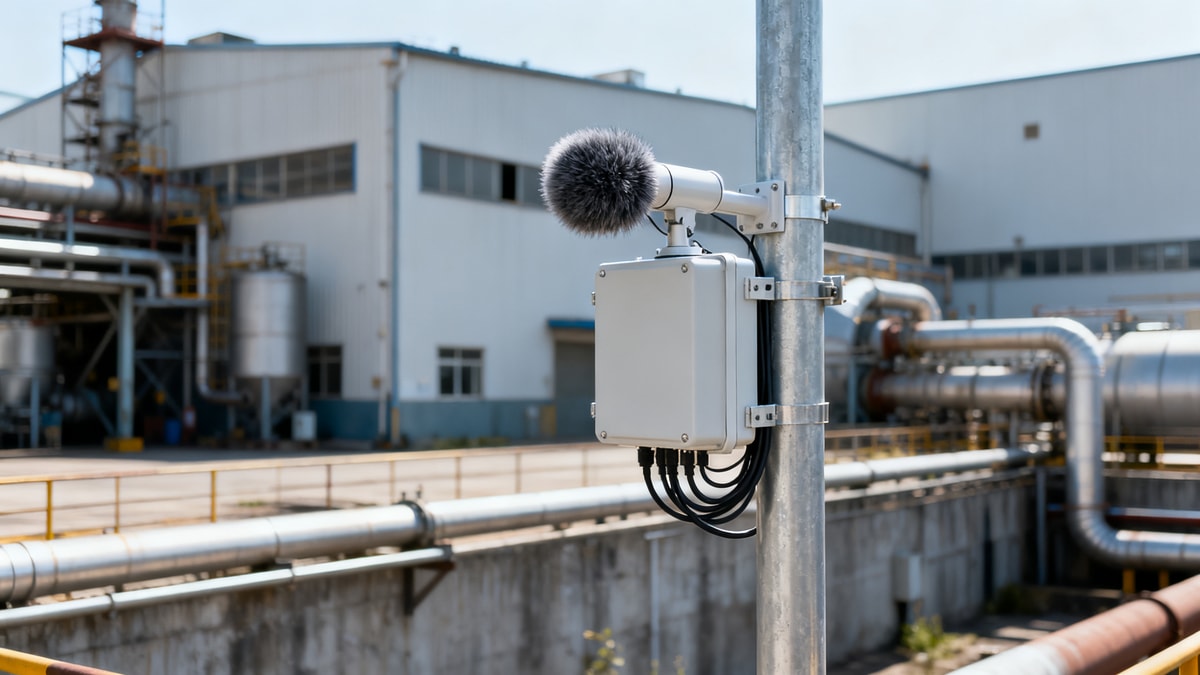
A noise monitoring terminal may display stable, compliant values, but that does not automatically mean the data is trustworthy. For information researchers, facility managers, and industrial decision-makers, “normal” readings can mask calibration drift, microphone aging, poor installation, communication dropouts, firmware logic issues, or environmental interference. Before data is used for compliance reporting, community noise assessment, occupational risk control, or process optimization, it must be tested for credibility as well as consistency.
In practice, trustworthy noise data comes from a chain of reliability: correct sensor selection, proper placement, documented calibration, stable power and communications, validated firmware, secure data handling, and regular field verification. If any link in that chain is weak, a noise monitoring terminal can look healthy on the dashboard while still producing misleading results. The key question is not whether the numbers appear normal, but whether the entire measurement system can defend those numbers under scrutiny.
Why “normal” data from a noise monitoring terminal can still be misleading
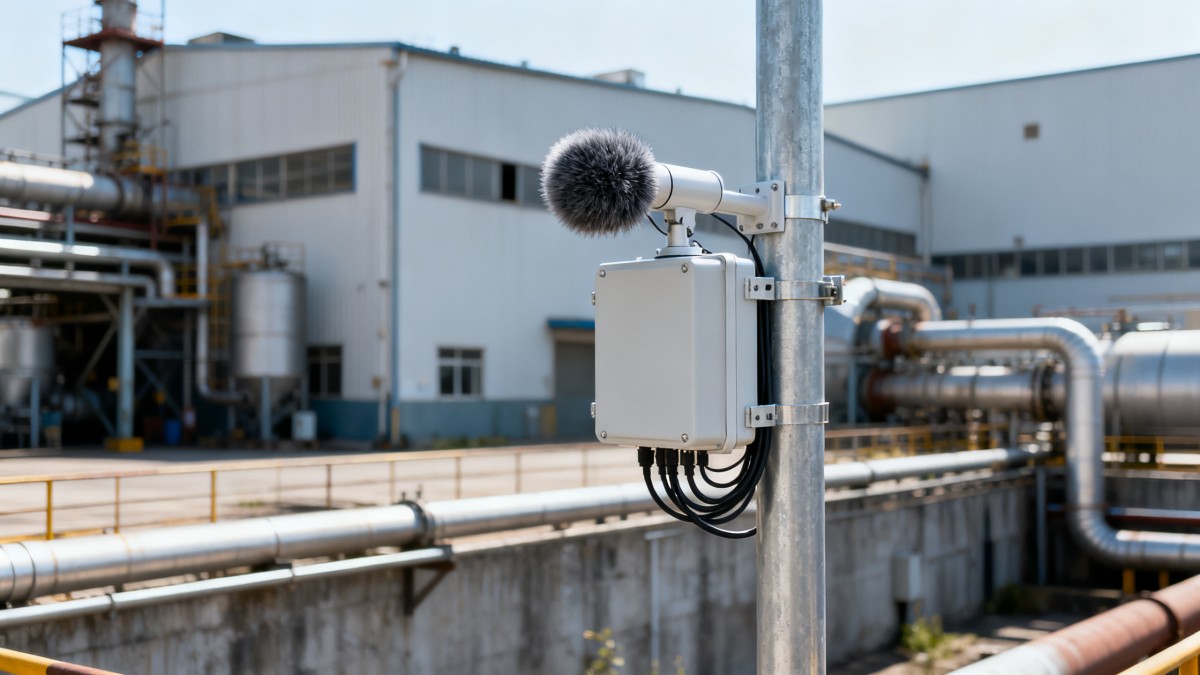
The core search intent behind this topic is practical and evaluative. Readers are not simply asking how a noise monitoring terminal works. They want to know whether stable readings can be trusted, how to verify data integrity, and what signs suggest hidden measurement problems. They are usually comparing systems, reviewing monitoring reports, or trying to judge whether recorded values are strong enough for operational or regulatory use.
For this audience, the biggest concern is decision risk. If the data is wrong, a site may miss a genuine noise event, fail an audit, mishandle a complaint, or invest in the wrong corrective action. In industrial and environmental contexts, bad data is rarely harmless. It can distort compliance reporting, weaken contractor accountability, and undermine confidence in the monitoring program itself.
That is why a normal-looking trend line should never be treated as proof of quality. Stable measurements may reflect stable conditions, but they may also reflect a stuck sensor, an overaggressive averaging algorithm, damaged windscreen performance, poor acoustic exposure, or a communications system that is replaying cached values instead of transmitting current field data. Reliability must be earned through evidence, not assumed from appearance.
What trustworthy noise data actually depends on
A reliable noise monitoring terminal is not just a microphone in a weatherproof box. It is an integrated measurement system. Trustworthy data depends on the quality of the acoustic sensor, the preamplifier, signal processing, time weighting, frequency weighting, environmental protection, power stability, and backend data management. Weakness in any one of these areas can affect the usefulness of the output.
Calibration is one of the first conditions for trust. Even a high-quality terminal can drift over time because of component aging, physical shock, moisture exposure, dust ingress, or temperature cycling. If a terminal has not been field-checked or laboratory-calibrated according to a documented schedule, its readings may remain smooth and plausible while gradually moving away from true sound pressure levels.
Placement is equally important. A well-calibrated device in the wrong location can still generate poor data. If the terminal is mounted too close to walls, reflective surfaces, HVAC outlets, machinery housings, or intermittent local noise sources, it may overstate or understate actual site conditions. Likewise, if it is shielded from the area of interest or positioned below recommended height, the measurements may not represent the environment the user thinks is being monitored.
Environmental exposure also matters more than many buyers expect. Wind, rain, humidity, insects, dust, and sudden temperature shifts can all influence microphone behavior. A terminal designed for general outdoor use may not maintain accuracy in a corrosive industrial yard, a coastal site, or an area with high particulate loading. “Normal” data in such environments may simply indicate the system’s inability to respond correctly to changing acoustic conditions.
How to judge whether the data is credible, not just convenient
The most useful way to evaluate a noise monitoring terminal is to separate data appearance from data defensibility. A credible system should produce measurements that are technically explainable, auditable, and consistent with real-world observations. In other words, if someone asks why the reading was 58 dB at 2:15 a.m. or why no spike appeared during a documented equipment event, the monitoring record should support a clear answer.
Start by checking calibration evidence. Look for a documented initial calibration certificate, a traceable standard, and ongoing verification records. If the supplier or operator cannot show when the unit was last calibrated, what method was used, and whether field checks were performed before and after deployment, confidence should drop immediately.
Next, review metadata rather than headline numbers alone. Reliable records should include timestamps, averaging intervals, weighting settings such as A-weighting, event markers where relevant, device status logs, and fault notifications. If a platform only displays simplified summary values without technical context, it becomes much harder to determine whether the readings are valid or whether important anomalies have been filtered out.
Cross-checking is another strong indicator. If the terminal’s readings roughly align with handheld reference measurements, site activity logs, complaint times, or known operating conditions, trust increases. If not, the discrepancy deserves investigation. A good terminal should not merely produce data continuously; it should produce data that can survive comparison with independent evidence.
It is also wise to ask how the system handles missing data, network interruptions, and abnormal values. Some platforms interpolate gaps, average short periods aggressively, or suppress outliers for dashboard cleanliness. Those design choices may improve readability, but they can also hide operational truth. In compliance or dispute settings, hidden assumptions in data processing can become a serious liability.
Common reasons a noise monitoring terminal looks fine while performing poorly
One common issue is sensor drift. The terminal may still report believable figures within a familiar range, but its absolute accuracy may be slowly shifting. Because environmental noise often varies naturally within a moderate band, drift can go unnoticed unless comparison checks are performed regularly.
Another issue is poor acoustic siting. If a device is installed where shielding, reflection, or local vibration affects the microphone, the data can appear stable yet fail to represent the true exposure area. This is especially common when installation is driven by convenience, available power, or network signal rather than acoustic measurement principles.
Communication failure can be more subtle than complete outage. A terminal may buffer old data, upload in batches, or display delayed records while the user assumes live monitoring is active. In some cases, dashboards continue showing the last valid value, creating the false impression of calm, steady conditions. Without transmission health indicators, users may not realize they are looking at stale information.
Environmental accessories can also degrade performance. A worn windscreen, clogged protective layer, or damaged enclosure may not trigger an obvious alarm, yet each can change how sound reaches the sensor. In harsh outdoor settings, routine visual inspection is just as important as electronic diagnostics.
Firmware and software configuration errors are another risk. Incorrect time weighting, threshold settings, frequency weighting, or event logic can distort how noise is recorded and summarized. The data may still look orderly, but it may not reflect the measurement basis required by a regulation, contract, or study protocol.
Questions buyers and researchers should ask before trusting the data
If you are assessing a monitoring solution or reviewing an existing deployment, a few focused questions can reveal far more than a polished dashboard. First, ask what standards the terminal is designed to meet and whether supporting certificates are current. For industrial and environmental applications, evidence tied to recognized acoustic and electrical standards is more valuable than generic claims of accuracy.
Second, ask how often calibration is required and what field verification process is recommended. A credible provider should be able to explain not only the laboratory calibration cycle but also daily, weekly, or pre-post deployment checks where applicable. They should also clarify how drift, failed checks, or suspicious deviations are handled in records.
Third, ask about installation criteria. What is the recommended mounting height? What separation is needed from walls or reflective surfaces? How does the provider account for wind exposure, vibration, and local obstructions? If these details are vague, the resulting data may be difficult to defend even when the hardware itself is good.
Fourth, ask what happens during power loss, network loss, firmware updates, and sensor fault conditions. Can the system store raw or high-resolution data locally? Does it flag stale values clearly? Are audit trails preserved? The answer matters because trustworthy monitoring is as much about exception handling as normal operation.
Fifth, ask whether the platform supports comparison against reference measurements and whether raw data can be exported for independent analysis. Systems that only offer summary dashboards often limit technical transparency. For researchers and informed buyers, access to the underlying measurement record is a major trust factor.
How to build a practical verification framework
For most organizations, the best approach is not blind trust or blanket skepticism. It is a structured verification framework. This can be lightweight for basic screening applications or more rigorous for compliance and high-stakes industrial use. The goal is to create a repeatable method for deciding when data is fit for purpose.
A practical framework begins with acceptance testing. Before routine use, confirm calibration status, inspect the physical installation, verify clock synchronization, test communications, and compare readings against a reference instrument under controlled conditions. This establishes a known baseline instead of assuming performance from factory specifications alone.
Then define periodic checks. These may include scheduled field calibrator tests, visual inspections, review of status logs, network uptime checks, and spot comparisons during representative operating conditions. If the terminal is deployed in a harsh environment, the inspection frequency should be increased rather than left to annual maintenance alone.
It is also helpful to set data quality rules. For example, flag sudden long periods of identical readings, abrupt baseline shifts without corresponding site activity, repeated packet loss, or unexplained gaps. Such rules do not prove inaccuracy by themselves, but they help identify when a deeper review is necessary.
Finally, tie the verification level to the intended use. If the noise monitoring terminal is used for internal trend awareness, moderate uncertainty may be acceptable. If it is used for permit compliance, community dispute resolution, contractor penalties, or legal evidence, the verification burden must be much higher. Trustworthiness is not an abstract ideal; it is linked to the consequences of being wrong.
What this means for industrial procurement and operational decision-making
For procurement teams, the lesson is straightforward: do not evaluate a noise monitoring terminal only by price, interface design, or apparent data stability. Assess the full reliability ecosystem around the device. That includes certification, calibration support, environmental suitability, installation guidance, software transparency, maintenance requirements, and vendor responsiveness when anomalies occur.
For facility managers and operators, the message is equally important. A compliant-looking chart should not automatically close an investigation. If complaints, process events, or field observations do not match the recorded values, treat that mismatch as a signal. The right response is not to discard the system immediately, but to verify the chain from sensor to report.
For information researchers comparing solutions, the strongest differentiator is often not who promises the cleanest dashboard, but who can demonstrate the clearest evidence of measurement integrity. In industrial environments, data trust is a competitive feature. A supplier that can explain calibration traceability, field validation, fault handling, and auditability is offering far more than hardware.
Conclusion: normal readings are only the beginning, not the proof
A noise monitoring terminal can show stable, compliant, and seemingly reassuring values while still producing data that is incomplete, biased, delayed, or technically indefensible. That is why normal readings alone should never be treated as a final indicator of trust. The real test is whether the data can be supported by calibration records, proper installation, environmental suitability, transparent processing, and independent verification.
For anyone using a noise monitoring terminal to support research, compliance, risk management, or procurement decisions, the most useful mindset is simple: trust the system only after you have validated the system. When the measurement chain is documented and defensible, normal data becomes meaningful. Without that foundation, “normal” may be nothing more than a comforting illusion.
Technical Specifications
- India BIS Draft IS 17832:2026 Sets Noise & Dust Limits for Waste CrushersAuthor :Environmental Engineering Director
- Korea MFDS Mandates Korean UI & KOSHA OEL Database for Industrial Water AnalyzersAuthor :Precision Metrology Expert
- Indonesia BPOM Mandates PM0.1 Efficiency & CADR Decay Labeling for Industrial Air PurifiersAuthor :Environmental Engineering Director
Expert Insights

Chief Security Architect
Dr. Thorne specializes in the intersection of structural engineering and digital resilience. He has advised three G7 governments on industrial infrastructure security.
Related Analysis
- May 03, 2026India BIS Draft IS 17832:2026 Sets Noise & Dust Limits for Waste CrushersAuthor :Environmental Engineering Director
- May 03, 2026Korea MFDS Mandates Korean UI & KOSHA OEL Database for Industrial Water AnalyzersAuthor :Precision Metrology Expert
- May 03, 2026Indonesia BPOM Mandates PM0.1 Efficiency & CADR Decay Labeling for Industrial Air PurifiersAuthor :Environmental Engineering Director
Core Sector // 01
Security & Safety
- Global Industrial Laser Distance Meter Price Index Up 9.3% WeeklyAuthor :Precision Metrology Expert

- Noise Monitoring Terminal Data Looks Normal, but Is It Trustworthy?Author :Precision Metrology Expert

- Stack Gas Analyzer Calibration Issues That Lead to Bad DecisionsAuthor :Precision Metrology Expert

- Portable Water Testing Kits: What Field Errors Skew Results?Author :Precision Metrology Expert

- Continuous Emission Monitoring CEMS: Data Gaps That Raise RiskAuthor :Precision Metrology Expert

- Gold Wash Plant Equipment That Cuts Recovery LossesAuthor :Precision Metrology Expert

- KC Certification Update: Industrial Laser Dust Meters Require Class II Div 2 Explosion-Proof HousingAuthor :Precision Metrology Expert

- ESMA Mandates EN 14181 QA/QC Level 3 for Industrial Water Sensors in UAEAuthor :Precision Metrology Expert