KC Certification Update: Industrial Laser Dust Meters Require Class II Div 2 Explosion-Proof Housing
Author
Date Published
Reading Time
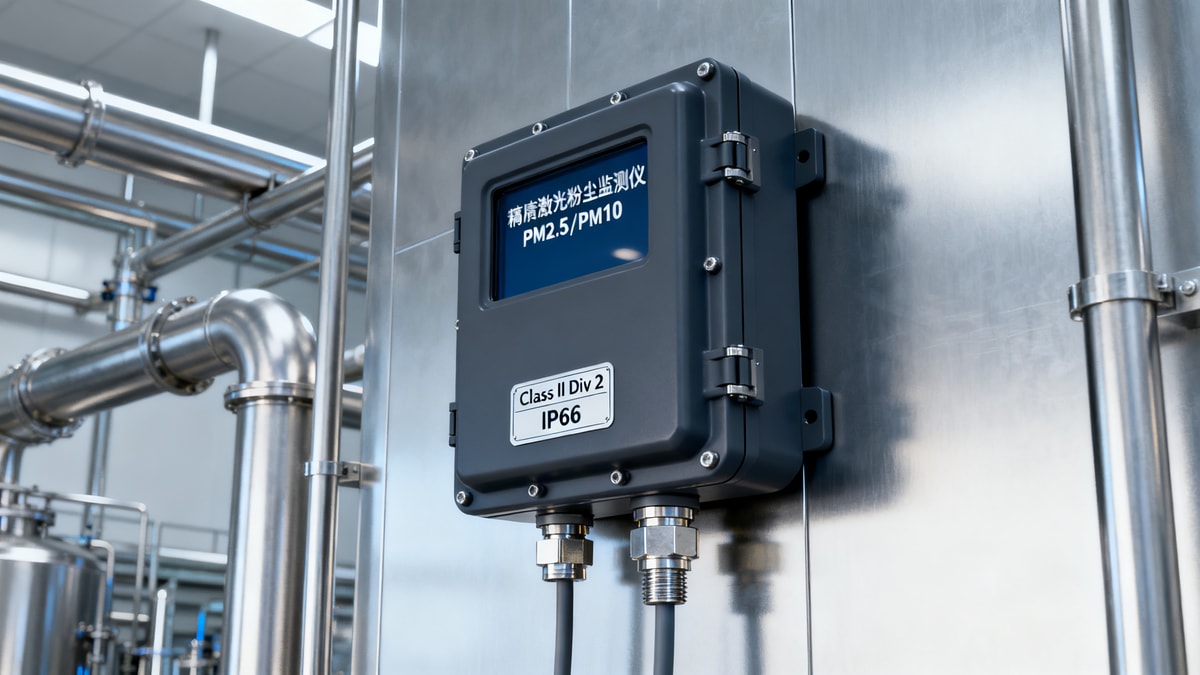
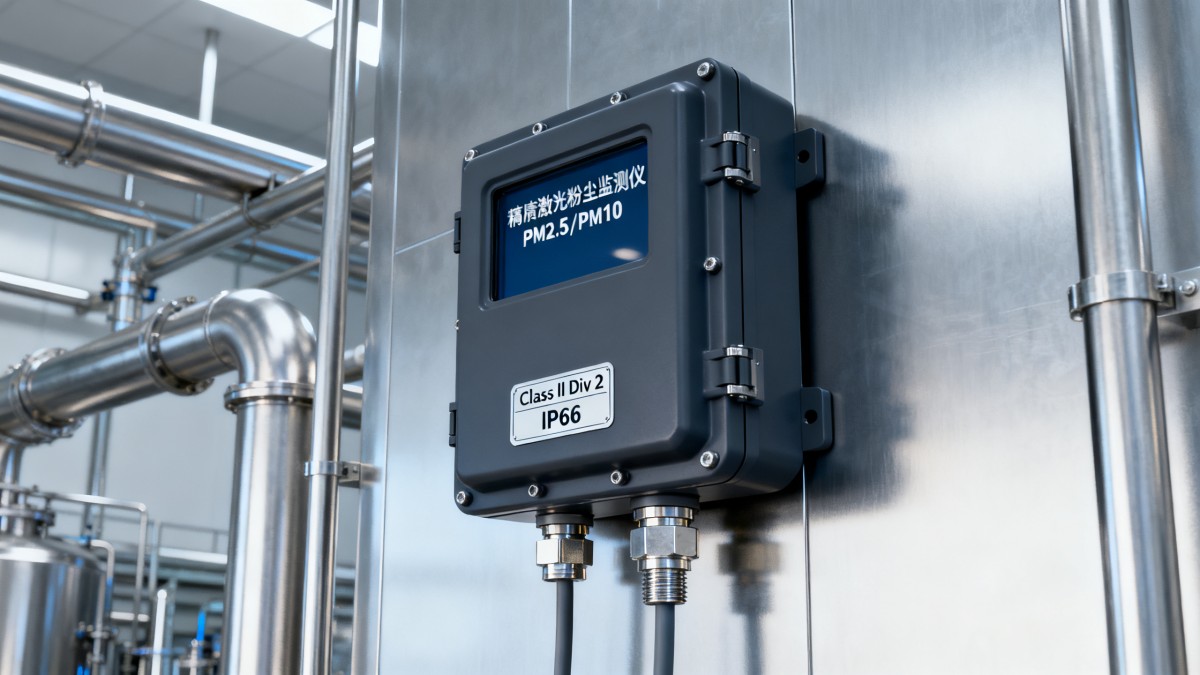
On April 29, 2026, the Korean Agency for Technology and Standards (KATS) updated Annexes to KC 61000-4, mandating explosion-proof enclosures for industrial laser dust monitors (PM2.5/PM10) deployed in chemical and pharmaceutical manufacturing facilities. This requirement—aligned with KCS 21302 (equivalent to IEC 60079-15 Class II Div 2)—takes immediate effect and directly impacts exporters of such instruments from China and other third countries.
Event Overview
The Korean Agency for Technology and Standards (KATS) issued an update to the KC 61000-4 series annexes on April 29, 2026. The revision explicitly requires all industrial laser-based particulate matter (PM2.5/PM10) detection instruments intended for use in chemical and pharmaceutical production environments to comply with KCS 21302 for explosion protection. Compliance is defined as full-unit certification to Class II Division 2 under the Korean Standard, which is technically equivalent to IEC 60079-15. The regulation entered into force on the date of publication, and manufacturers exporting to Korea must now conduct complete system-level explosion-proof testing.
Industries Affected by This Update
Direct Exporters (China-based instrument manufacturers)
Manufacturers exporting laser dust monitors to Korea are directly affected because KC certification is a mandatory market access requirement. The update shifts compliance from functional safety or EMC-only assessment to full-system explosion-proof certification—requiring physical redesign (e.g., enclosure reinforcement, thermal management, ingress protection) and retesting of the entire assembled unit—not just components.
Contract Manufacturers & OEMs
OEMs supplying laser dust monitoring modules or subassemblies to final equipment integrators must verify whether their downstream partners intend to deploy products in classified hazardous locations in Korea. If so, module-level certifications alone no longer suffice; integration-level verification—including housing interface, cable glands, and surface temperature limits—becomes necessary.
Distribution & Certification Service Providers
Importers, distributors, and KC certification support agencies serving the Korean industrial instrumentation market face revised technical review criteria. Applications submitted after April 29, 2026 must include KCS 21302 test reports covering the complete device. Pre-certified units without explosion-proof housing cannot be grandfathered in for new applications.
What Relevant Enterprises or Practitioners Should Focus On — And How to Respond Now
Monitor official KATS and KC certification body announcements for implementation guidance
KATS has not yet published detailed interpretation documents or transitional provisions. Exporters should track updates from accredited Korean certification bodies (e.g., KTL, KTR) regarding accepted test report formats, recognized laboratories (including overseas labs with mutual recognition), and documentation requirements for retrofitting existing models.
Identify high-priority product lines and deployment contexts
Not all laser dust monitors require KCS 21302: only those specified for use in chemical/pharmaceutical workshops—i.e., locations where combustible dust atmospheres may occur. Enterprises should audit current product datasheets, user manuals, and marketing claims to determine whether their devices fall within the regulated scope. Units labeled for ‘general indoor air quality monitoring’ or ‘non-hazardous area use’ are outside this mandate.
Distinguish between regulatory signal and operational readiness
This update reflects a tightening of application-specific safety enforcement—not a broad revision of KC electromagnetic compatibility or general safety rules. It signals heightened scrutiny of environmental monitoring equipment used in process-critical, classified zones. However, it does not imply changes to KC marking procedures, factory audits, or surveillance testing frequency for non-explosion-proof categories.
Initiate internal technical assessment and lab coordination ahead of formal submissions
Because full-unit explosion-proof testing involves mechanical redesign, thermal validation, and extended lead times, manufacturers should begin reviewing enclosure designs and engaging accredited test labs (domestic or internationally recognized under IECEE CB Scheme) now—even before submitting formal KC applications. Delaying this step risks shipment holds or rejection at Korean customs post-April 29 for newly shipped batches.
Editorial Perspective / Industry Observation
Observably, this update is less a sudden policy shift and more a formal codification of long-standing safety expectations for instrumentation deployed in potentially explosive dust environments. Analysis shows that KCS 21302 adoption aligns Korea’s industrial sensor requirements with international practice—particularly in sectors already applying IEC 60079-15 for non-sparking equipment. From an industry perspective, it underscores how functional performance standards (e.g., PM measurement accuracy) are increasingly inseparable from location-specific safety certification. Current attention should focus not on whether the rule applies broadly, but on precisely defining the operational context—‘where and how’ the device is used—as the decisive factor for compliance.
Conclusion
This KC update reinforces that regulatory compliance for industrial environmental sensors in Korea is now intrinsically tied to installation environment classification. It does not expand the scope of KC certification itself, but refines its applicability based on end-use risk. For stakeholders, the most constructive interpretation is that this is a targeted, application-driven requirement—not a generalized upgrade—and that accurate scope determination remains the first and most critical step in response planning.
Information Sources
Main source: Korean Agency for Technology and Standards (KATS), KC 61000-4 series annex update published April 29, 2026.
Note: Details on transitional arrangements, retroactivity for previously certified units, and list of approved test labs remain pending official clarification and are subject to ongoing observation.
Technical Specifications
Expert Insights

Chief Security Architect
Dr. Thorne specializes in the intersection of structural engineering and digital resilience. He has advised three G7 governments on industrial infrastructure security.
Related Analysis
- Apr 30, 2026Egypt SMIIC Mandates Arabic Energy Labels for Industrial PumpsAuthor :Heavy Industry Strategist
- Apr 30, 2026TÜV SÜD Launches China Industrial Optics Fast TrackAuthor :Precision Metrology Expert
- Apr 30, 2026LME Nickel Surges 5.2% on April 29, 2026: Impact on Stainless Bearings & SealsAuthor :Heavy Industry Strategist
Core Sector // 01
Security & Safety
- KC Certification Update: Industrial Laser Dust Meters Require Class II Div 2 Explosion-Proof HousingAuthor :Precision Metrology Expert

- ESMA Mandates EN 14181 QA/QC Level 3 for Industrial Water Sensors in UAEAuthor :Precision Metrology Expert

- 6th National Auto Standards Committee Launched, Impacts Optical Test Equipment ExportAuthor :Precision Metrology Expert

- How Accurate Should a Video Measuring Machine BeAuthor :Precision Metrology Expert

- 6th National Auto Standardization TC EstablishedAuthor :Precision Metrology Expert
![]()
- EN 61000-4-30:2026 Published: New Harmonic Group Immunity Testing for PQ AnalyzersAuthor :Precision Metrology Expert
![]()
- China Launches World's Largest Agri-Meteorological Observation NetworkAuthor :Precision Metrology Expert
![]()
- Meeting new sensor industrial standardsAuthor :Precision Metrology Expert