ESMA Mandates EN 14181 QA/QC Level 3 for Industrial Water Sensors in UAE
Author
Date Published
Reading Time
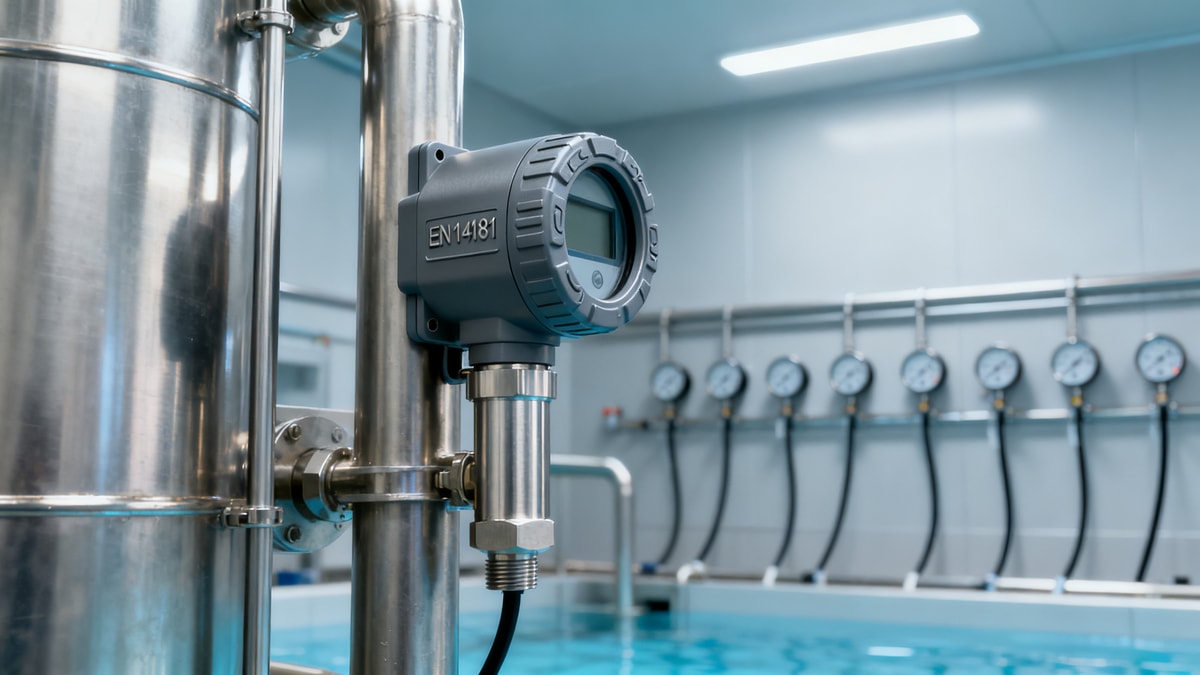
On 29 April 2026, the Emirates Authority for Standardization and Metrology (ESMA) issued a new directive requiring online industrial water quality sensors — specifically pH, dissolved oxygen (DO), conductivity, and turbidity sensors — used in oil & gas, power generation, and municipal water sectors to comply with EN 14181’s Quality Assurance/Quality Control (QA/QC) Level 3 on-site comparative testing. Annual revalidation is mandatory. This requirement directly affects exporters, system integrators, and service providers supplying to these regulated infrastructure sectors in the UAE.
Event Overview
On 29 April 2026, ESMA published the Industrial Water Sensors Certification Directive. The directive stipulates that all online pH, DO, conductivity, and turbidity sensors deployed in petroleum, electricity, and municipal water applications must undergo EN 14181-defined QA/QC Level 3 field comparison certification. Certification requires on-site calibration and performance verification against reference methods, conducted by an ESMA-authorized local representative. Validity is limited to one year, after which full recertification is required.
Industries Affected
Direct Exporters (e.g., Chinese sensor manufacturers)
Exporters supplying sensors into UAE industrial markets are directly subject to the directive. Compliance is not optional: devices without valid Level 3 certification cannot be legally placed on the market or commissioned for use in covered sectors. Impact manifests in delayed project timelines, increased pre-deployment costs (e.g., local representative engagement, on-site verification logistics), and potential non-acceptance of existing inventory lacking certified status.
System Integrators & EPC Contractors
Integrators specifying or installing water monitoring systems for oil, power, or municipal clients must now verify sensor certification status prior to procurement and commissioning. Failure to do so risks contractual non-compliance, rejection during acceptance testing, and liability for rework. The directive adds a mandatory validation step to technical submittals and FAT/SAT documentation packages.
Aftermarket & Calibration Service Providers
Local authorized representatives — who perform the required annual on-site QA/QC Level 3 comparisons — become essential gatekeepers. Their capacity, accreditation scope, and reporting turnaround now directly constrain deployment and maintenance schedules. Service providers without ESMA-recognized authorization cannot issue valid compliance reports.
Key Actions for Affected Entities
Confirm local representation and authorization status
Manufacturers and exporters must verify whether their appointed UAE representative holds current ESMA authorization to conduct EN 14181 Level 3 field comparisons — including documented scope covering pH, DO, conductivity, and turbidity. Unverified or expired authorization invalidates the entire certification process.
Review and update technical documentation for UAE projects
All sensor datasheets, commissioning checklists, and QA/QC plans submitted to UAE clients must now explicitly reference EN 14181 Level 3 certification status, including report issuance date, representative name, and validity period. Pre-2026 certificates are not grandfathered; recertification is required post-29 April 2026 for continued operation.
Plan for annual on-site verification cycles
Organize logistics, access permissions, and downtime windows well in advance of expiry dates. EN 14181 Level 3 verification requires coordinated presence of sensor, reference equipment, trained personnel, and site-specific operational conditions — it cannot be completed remotely or off-site.
Monitor ESMA’s official portal for updated lists and guidance
ESMA has not yet published a public register of authorized representatives or detailed interpretation notes. Stakeholders should regularly consult ESMA’s official website for updates on recognized bodies, reporting templates, and clarifications regarding sensor categories or transitional arrangements.
Editorial Observation / Industry Insight
Observably, this directive signals ESMA’s shift from product-type conformity to performance-based, lifecycle-controlled oversight of environmental monitoring infrastructure. It reflects growing regulatory emphasis on data integrity in critical utilities — where sensor drift or unverified calibration could impact process safety, emissions reporting, or public health compliance. Analysis shows this is less a standalone technical update and more an enforcement escalation aligned with UAE’s broader National Metrology Strategy and federal environmental monitoring frameworks. From an industry perspective, it functions primarily as a compliance gate — not a technical standard revision — meaning its immediate effect is procedural and administrative, rather than requiring hardware redesign.
Current interpretation suggests the directive is already enforceable as of 29 April 2026, with no announced grace period. However, actual field enforcement cadence, audit frequency, and penalties for non-compliance remain unconfirmed and require ongoing observation.
Conclusion
This directive establishes a binding, recurring operational requirement for sensor performance validation in key UAE industrial sectors. Its significance lies not in introducing novel measurement science, but in institutionalizing rigorous, auditable, and time-bound QA/QC accountability at the point of use. For stakeholders, it is best understood as a regulatory milestone confirming that sensor certification is now a live, annual operational obligation — not a one-time pre-market formality.
Information Sources
Primary source: Emirates Authority for Standardization and Metrology (ESMA), Industrial Water Sensors Certification Directive, issued 29 April 2026. Publicly available via ESMA’s official website (esma.gov.ae). Note: ESMA’s list of authorized representatives and formal interpretation guidance remain pending publication and are under active observation.
Technical Specifications
Expert Insights

Chief Security Architect
Dr. Thorne specializes in the intersection of structural engineering and digital resilience. He has advised three G7 governments on industrial infrastructure security.
Related Analysis
- Apr 30, 2026Egypt SMIIC Mandates Arabic Energy Labels for Industrial PumpsAuthor :Heavy Industry Strategist
- Apr 30, 2026TÜV SÜD Launches China Industrial Optics Fast TrackAuthor :Precision Metrology Expert
- Apr 30, 2026LME Nickel Surges 5.2% on April 29, 2026: Impact on Stainless Bearings & SealsAuthor :Heavy Industry Strategist
Core Sector // 01
Security & Safety
- KC Certification Update: Industrial Laser Dust Meters Require Class II Div 2 Explosion-Proof HousingAuthor :Precision Metrology Expert

- ESMA Mandates EN 14181 QA/QC Level 3 for Industrial Water Sensors in UAEAuthor :Precision Metrology Expert

- 6th National Auto Standards Committee Launched, Impacts Optical Test Equipment ExportAuthor :Precision Metrology Expert

- How Accurate Should a Video Measuring Machine BeAuthor :Precision Metrology Expert

- 6th National Auto Standardization TC EstablishedAuthor :Precision Metrology Expert
![]()
- EN 61000-4-30:2026 Published: New Harmonic Group Immunity Testing for PQ AnalyzersAuthor :Precision Metrology Expert
![]()
- China Launches World's Largest Agri-Meteorological Observation NetworkAuthor :Precision Metrology Expert
![]()
- Meeting new sensor industrial standardsAuthor :Precision Metrology Expert