Why Environment & Ecology costs vary in water treatment projects
Author
Date Published
Reading Time
In water treatment projects, Environment & Ecology cost can shift dramatically from one site to another, directly affecting budget approvals, risk exposure, and long-term operational value. For financial decision-makers, understanding what drives these cost differences—from regulatory compliance and discharge standards to technology selection and lifecycle efficiency—is essential to making defensible, ROI-focused investment decisions.
Why scenario differences matter more than average benchmarks
Many budget reviews still begin with a simple question: “What does a typical water treatment project cost?” For finance teams, that question is too broad to support approval. Environment & Ecology cost is rarely determined by treatment capacity alone. It changes according to water source quality, discharge obligations, local permitting, land constraints, sludge handling routes, energy pricing, and the reputational risk profile of the asset owner.
That is why scenario-based evaluation is more useful than industry averages. A municipal reuse facility, a food processing plant, and a mining operation may all process similar daily volumes, yet their Environment & Ecology cost profiles differ sharply. One may be dominated by nutrient removal and odor control, another by high-COD pretreatment and cleaning chemicals, and another by metals, brine, and tailings-related environmental safeguards. For financial approvers, the real task is not to find the cheapest number, but to verify whether the proposed cost structure matches the actual operating scenario.
Where Environment & Ecology cost usually rises in water treatment projects
Before comparing sectors, it helps to understand the common cost drivers that appear across most projects. These drivers do not affect every site equally, which is exactly why budgets vary.
- Stricter influent or effluent quality requirements, especially for nitrogen, phosphorus, heavy metals, PFAS-related risks, or ultra-low turbidity targets
- Higher environmental compliance burden, including environmental impact assessment, monitoring systems, permitting, and reporting
- Technology intensity, such as membrane systems, advanced oxidation, tertiary polishing, or zero liquid discharge
- Residuals management, including sludge dewatering, hazardous waste classification, transportation, and disposal fees
- Site-specific civil and ecological controls, such as bunding, stormwater segregation, odor enclosures, and noise mitigation
- Lifecycle factors including power consumption, chemical dosing, membrane replacement, and operator skill requirements
In practice, the largest source of budget deviation is often not the treatment unit itself, but the supporting environmental controls that make the system approvable, operable, and defensible over time.
Scenario comparison: the same project category can carry very different cost logic
For approval teams, the most useful lens is to compare scenarios by dominant risk and cost behavior rather than by equipment line items alone.
This comparison shows why Environment & Ecology cost cannot be judged fairly through a generic cost-per-cubic-meter metric. The business case must reflect the environmental exposure of the specific asset.
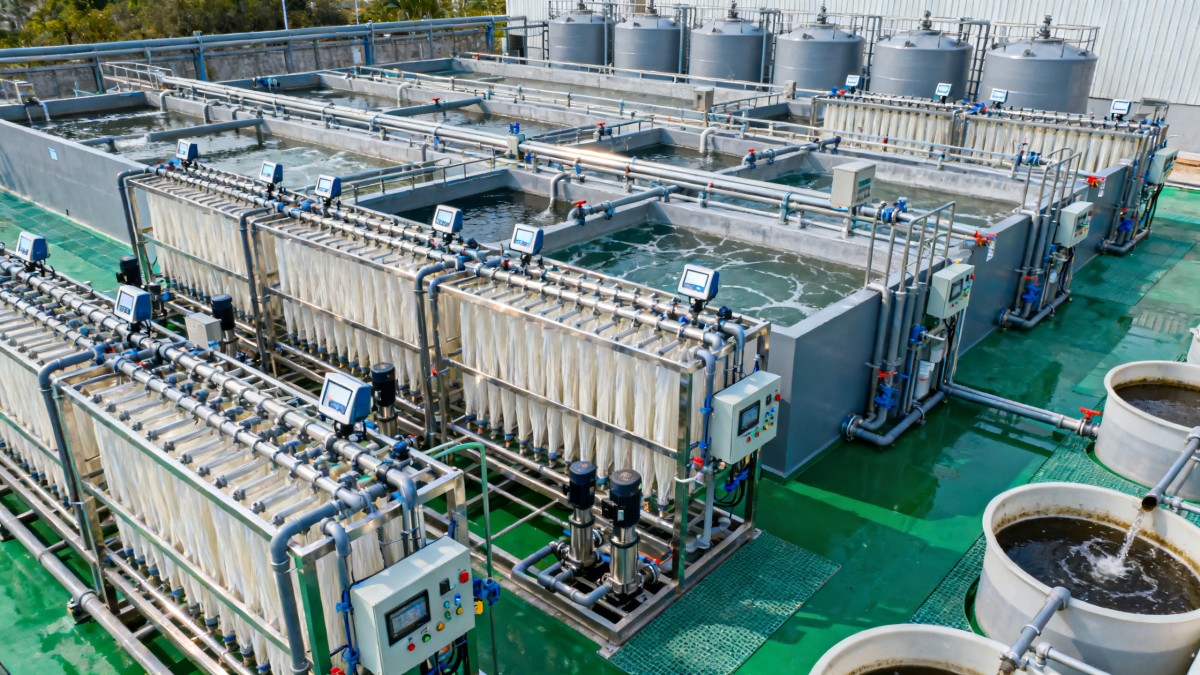
Scenario 1: Municipal and public-visibility projects
Municipal upgrades and public utilities often face the highest scrutiny, even when treatment chemistry is familiar. Their Environment & Ecology cost tends to rise because failure is visible, politically sensitive, and difficult to explain after commissioning. The budget usually includes odor management, robust online monitoring, redundancy, and stronger documentation for regulators and communities.
For financial approvers, the key question is whether higher upfront spend avoids a far larger downstream liability. If nutrient discharge limits are tightening, approving only the minimum legal design may create stranded capital within a few years. In this scenario, lifecycle resilience is usually a more reliable decision criterion than first-cost minimization.
Scenario 2: Industrial plants where production continuity drives decisions
In sectors such as food processing, pulp and paper, textiles, electronics, and general manufacturing, Environment & Ecology cost is closely linked to production stability. A water treatment failure here does not only create environmental risk; it can interrupt output, damage product quality, or trigger discharge surcharges from local utilities.
These projects often need balancing tanks, pretreatment stages, automation, and spare capacity to handle fluctuating loads. As a result, budgets may seem expensive compared with steady-flow assumptions. Yet those additions are often justified because they protect plant uptime. Finance teams should test whether the design has been built around average loading or real peak conditions. Underdesigned equalization is a common source of hidden future cost.
Scenario 3: High-compliance sectors with complex waste streams
Pharmaceutical, specialty chemical, semiconductor, and laboratory-related facilities usually experience elevated Environment & Ecology cost because treatment is not only about pollutant concentration; it is about unpredictability, trace contaminants, and proof of control. Advanced oxidation, activated carbon, membrane combinations, and expanded lab testing may be required to satisfy internal EHS standards or external permits.
In these settings, the budget must also reflect expertise. Specialist operators, validation procedures, and monitoring protocols can materially change annual operating expense. A financially attractive capex proposal can become misleading if it assumes commodity-level operation for a technically complex treatment train. For this scenario, the strongest approval practice is to assess total cost of compliance, not only construction cost.
Scenario 4: Remote, extractive, and heavy-industry environments
Mining, metals, power generation, and remote industrial sites often carry a very different Environment & Ecology cost pattern. Here, the challenge is not only treatment performance but location. Reagent delivery, sludge transport, harsh climate adaptation, backup power, and low local service availability all increase both capex and opex.
This is one of the most common scenarios where financial underestimation occurs. A proposal may benchmark well against an urban site, yet fail to include remote logistics, environmental contingencies, or emergency storage. For approval, decision-makers should ask whether the proposal includes realistic assumptions for disposal routes, seasonal changes, and maintenance response time. These factors can swing project economics significantly over the first five years.
What different buyer profiles should focus on
Although the project may be technical, approval criteria differ by role. For CFOs and investment committees, the main concern is whether Environment & Ecology cost reduces risk-adjusted value or improves it. For plant managers, the focus is service continuity. For procurement leaders, it is specification accuracy and supplier reliability. For ESG or compliance leads, it is evidence that the selected system will remain defensible under audit and future regulation.
This means one budget narrative rarely fits all. Strong proposals translate technical selections into decision language: avoided fines, lower surcharge exposure, predictable chemical use, reduced freshwater dependency, improved permit security, and less retrofit risk. When a vendor cannot connect cost to scenario-specific business outcomes, the budget deserves extra scrutiny.
Common misjudgments that distort Environment & Ecology cost evaluation
- Comparing projects by plant size only, while ignoring influent complexity and discharge obligations
- Treating sludge, brine, odor, or monitoring as secondary items rather than core environmental costs
- Approving the lowest capex option without stress-testing operator skill, maintenance burden, and energy intensity
- Assuming current permits will remain stable over the asset life
- Using vendor performance data from a mismatched application scenario
These mistakes matter because they usually appear later as change orders, commissioning delays, unstable operating costs, or non-compliance remediation. For finance teams, scenario mismatch is a more dangerous issue than price variance.
A practical approval framework for scenario-fit budgeting
To evaluate whether proposed Environment & Ecology cost is justified, use a scenario-fit checklist before approval:
- Confirm the actual water profile, including peak loads, contaminant variability, and seasonal factors.
- Map the required compliance endpoint: discharge, reuse, internal recycle, or zero liquid discharge.
- Separate mandatory environmental controls from optional optimization features.
- Model five-year operating cost under realistic energy, chemical, labor, and disposal assumptions.
- Check whether the reference projects presented by the supplier truly match the intended scenario.
- Quantify avoided risk: fines, downtime, truck-out costs, retrofit exposure, and permit delays.
This framework helps financial approvers move from “Is the number high?” to “Is the number appropriate for the scenario and risk profile?” That is a much stronger basis for governance.
FAQ: scenario-based questions financial approvers often ask
Why does Environment & Ecology cost increase so much for reuse projects?
Reuse projects usually need tighter polishing, more monitoring, and stronger reliability controls because the treated water returns to operations. The value case may still be strong if freshwater tariffs, supply risk, or ESG targets are material.
When is the lowest-cost proposal actually the highest-risk option?
When it excludes residuals management, underestimates peak loading, relies on unrealistic operator capability, or assumes lenient compliance conditions that do not match the project scenario.
How should finance compare two proposals with very different technology choices?
Compare them on total lifecycle outcome: compliance certainty, operating volatility, maintenance dependency, disposal costs, and upgrade flexibility. Scenario fit is more decision-relevant than equipment similarity.
Final decision lens for high-stakes approvals
Environment & Ecology cost varies in water treatment projects because water treatment is never only a mechanical purchase. It is a site-specific environmental risk management system shaped by application scenario, compliance pressure, operating conditions, and long-term asset strategy. For financial decision-makers, the best approvals come from matching cost to context rather than forcing every project into an average benchmark.
If your organization is reviewing a municipal upgrade, an industrial expansion, a reuse initiative, or a high-compliance treatment investment, the most valuable next step is to validate scenario-specific assumptions before locking the budget. A disciplined review of environment, ecology, compliance, and lifecycle factors will produce stronger approvals, fewer surprises, and better capital efficiency over the life of the project.
Technical Specifications
- SASO Mandates Dual Energy Label for Industrial Transformers in Saudi Arabia from May 2026Author :Grid Infrastructure Analyst
- EN 61000-4-30:2026 Enforced: Class A Harmonic Traceability Mandatory for EU PQ AnalyzersAuthor :Precision Metrology Expert
- US DOE Level 3 Transformer Efficiency Standard Effective July 1, 2026Author :Grid Infrastructure Analyst
Expert Insights

Chief Security Architect
Dr. Thorne specializes in the intersection of structural engineering and digital resilience. He has advised three G7 governments on industrial infrastructure security.
Related Analysis
- May 06, 2026SASO Mandates Dual Energy Label for Industrial Transformers in Saudi Arabia from May 2026Author :Grid Infrastructure Analyst
- May 06, 2026EN 61000-4-30:2026 Enforced: Class A Harmonic Traceability Mandatory for EU PQ AnalyzersAuthor :Precision Metrology Expert
- May 06, 2026US DOE Level 3 Transformer Efficiency Standard Effective July 1, 2026Author :Grid Infrastructure Analyst
Core Sector // 01
Security & Safety
- Vietnam MOIT: Industrial Water Monitors Must Adopt MQTT v5.0 + SM4 by Jun 30, 2026Author :Environmental Engineering Director

- Vietnam MOIT Waives SM4 Encryption Upgrade Fee for Chinese Water MonitorsAuthor :Environmental Engineering Director

- What makes an Environment & Ecology exporter easier to approveAuthor :Environmental Engineering Director

- Environmental compliance certification delays and how to avoid themAuthor :Environmental Engineering Director

- Why Environment & Ecology costs vary in water treatment projectsAuthor :Environmental Engineering Director

- Vietnam MOIT: Industrial Water Monitors Must Upgrade to MQTT v5.0 + SM4 by Jun 30, 2026Author :Environmental Engineering Director

- How to Assess an Environmental Engineering Manufacturer EarlyAuthor :Environmental Engineering Director

- Environmental Engineering Solutions That Fix Repeat Compliance IssuesAuthor :Environmental Engineering Director