What makes an Environment & Ecology exporter easier to approve
Author
Date Published
Reading Time
For business evaluators, approving an Environment & Ecology exporter is not just about price or product range—it is about verifying compliance, technical credibility, and supply-chain reliability. The right exporter demonstrates clear certifications, proven project experience, and consistent quality controls, making risk assessment faster and approval decisions more confident in highly regulated industrial procurement environments.
Why scenario differences matter when reviewing an Environment & Ecology exporter
An Environment & Ecology exporter may serve wastewater treatment projects, air emission control systems, hazardous waste handling, industrial filtration, environmental monitoring, or ecological restoration supply programs. On paper, many exporters look similar: they list broad product categories, mention ISO standards, and claim international experience. In practice, approval becomes easier only when the exporter’s strengths match the exact application scenario being evaluated.
For a business evaluator, this means the approval process should not start with a generic vendor checklist alone. It should begin with use-case alignment. A supplier that performs well in municipal water treatment may not be equally suitable for petrochemical wastewater, mining tailings management, or stack gas monitoring in power generation. The more clearly an Environment & Ecology exporter can map its capabilities to a buyer’s operating environment, regulatory burden, and project delivery model, the faster trust is built.
This is especially true in industrial procurement, where environmental products are often tied to permits, audit obligations, safety interfaces, and long-term operating performance. Evaluators are not approving a catalog; they are approving execution risk. That is why scenario-based assessment is often the shortest path to a confident decision.
The business settings where approval standards are usually highest
The easiest Environment & Ecology exporter to approve is usually the one that already understands the buyer’s project environment. In real procurement cycles, approval criteria change depending on contract type, plant criticality, and regulatory exposure.
EPC project procurement
In EPC-led projects, evaluators prioritize documentation discipline, drawing accuracy, specification traceability, and on-time logistics. Here, an Environment & Ecology exporter is easier to approve when it can respond to datasheets quickly, manage deviations transparently, and align with project milestones. Detailed submittals and revision control matter as much as the physical product.
Operating plant replacement and retrofit
For live facilities, downtime risk dominates the approval process. Evaluators want an exporter that can guarantee compatibility with installed systems, support urgent spare requirements, and prove field performance under similar operating conditions. Ease of approval depends on whether the exporter can reduce shutdown uncertainty.
Compliance-driven environmental upgrades
When purchases are tied to stricter discharge or emission requirements, the exporter must support audit readiness. Business evaluators will look for test reports, calibration records, material traceability, and evidence that the supplied solution can help the end user pass inspections. In this scenario, technical proof shortens approval time more than commercial flexibility.
Cross-border distributor or channel sourcing
If the buyer is a regional distributor, approval is easier when the Environment & Ecology exporter has stable packaging standards, multilingual documentation, consistent SKU coding, and predictable lead times. Channel buyers are often less concerned with one-off engineering customization and more focused on repeatability and after-sales coordination.
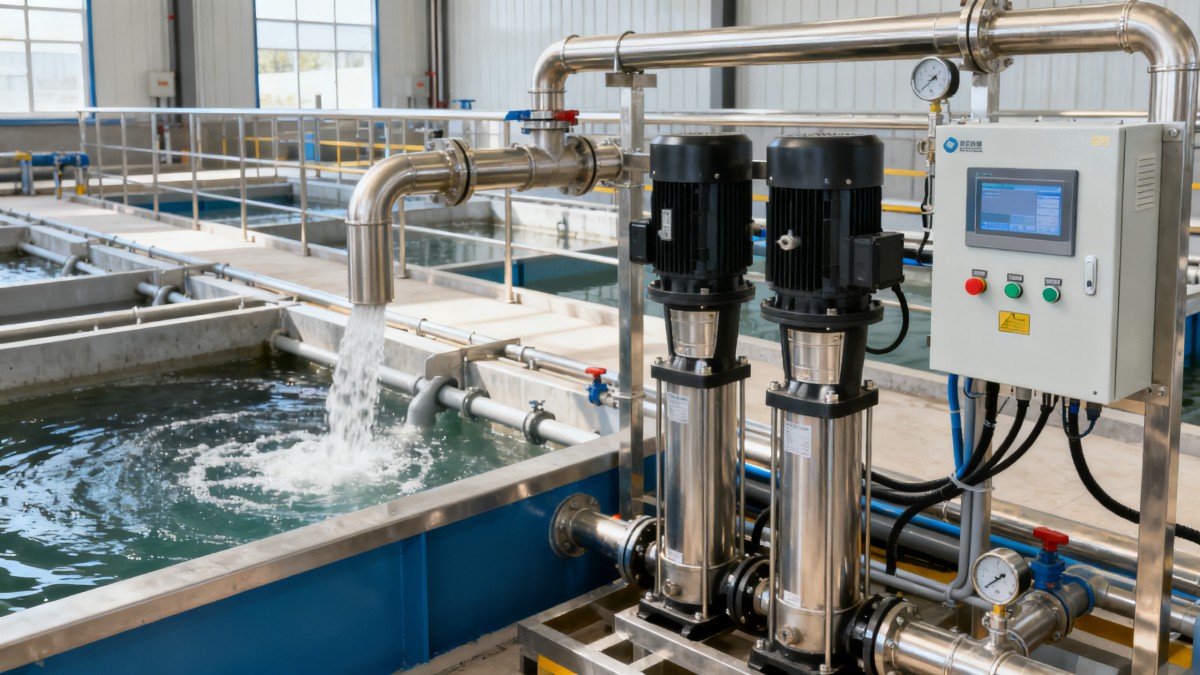
Scenario comparison: what evaluators check first
The table below shows why the same Environment & Ecology exporter may be easy to approve in one setting and difficult in another. The difference is usually not basic product capability, but fit-for-purpose evidence.
What an Environment & Ecology exporter must show in each scenario
A business evaluator usually gains confidence when an exporter can move from general claims to scenario-specific proof. The following capability areas often determine whether approval is smooth or delayed.
1. Compliance evidence that matches the destination market
International buyers often need CE, ISO, RoHS, REACH, local environmental registration, or test reports recognized by project consultants. An Environment & Ecology exporter becomes easier to approve when it provides a certification matrix by product line and export region rather than a vague statement about “global standards.” Evaluators appreciate documents that are current, complete, and easy to cross-check.
2. Technical relevance to the actual process condition
Environmental equipment is highly condition-sensitive. Flow rate, contamination profile, corrosion exposure, ambient climate, continuous duty cycle, and utility constraints all affect performance. A strong Environment & Ecology exporter does not oversell universal suitability. Instead, it clarifies operating limits and offers selection guidance based on real inputs.
3. Supply-chain consistency
Approval often stalls when the evaluator cannot confirm production stability. A credible exporter should identify manufacturing location, key component sources, quality checkpoints, batch controls, and contingency planning. This matters even more for repeat projects, framework agreements, or multi-country rollouts.
4. Documentation quality
For industrial buyers, poor documentation is often interpreted as hidden execution risk. Datasheets, installation manuals, P&ID interfaces, calibration procedures, warranty terms, and inspection plans should all be coherent. An Environment & Ecology exporter with disciplined documentation is easier to approve because evaluators spend less time resolving ambiguity.
How approval criteria differ by buyer type
Not every evaluator works for the same kind of organization. The approval path often changes depending on who is buying and how the supplied environmental product will be used.
EPC contractors
They value schedule control, drawing compliance, and technical responsiveness. For them, the right Environment & Ecology exporter is one that can support bid-stage clarification, post-award submittals, and inspection coordination without slowing the project.
Plant owners and facility managers
They focus on reliability, maintenance burden, spare availability, and lifecycle economics. Approval becomes easier when the exporter can show total cost of ownership logic, not just acquisition cost.
Industrial distributors
They need repeatable quality, commercial consistency, and market-ready support materials. A distributor-friendly Environment & Ecology exporter will offer structured product data, clear packaging, and predictable replenishment.
Compliance and audit teams
These stakeholders look for evidence integrity. If the exporter can provide documented test methods, revision history, and traceable records, cross-functional approval usually moves faster.
Common misjudgments that make the wrong exporter look acceptable
Many approvals go wrong not because the evaluator ignored risk completely, but because the wrong indicators were used. One common mistake is overvaluing product breadth. A broad catalog does not prove process suitability. Another is treating certifications as enough without checking whether they apply to the exact model, configuration, or export destination.
A second misjudgment is confusing trading capability with technical ownership. Some companies market themselves as an Environment & Ecology exporter but rely heavily on unstable third-party sourcing with limited engineering control. That does not automatically disqualify them, but it does require deeper review of traceability, substitution policy, and after-sales accountability.
A third issue is ignoring service practicality. Environmental systems often need commissioning support, consumables, recalibration, or troubleshooting. If the exporter cannot define service response routes, spare stock logic, or communication procedures, approval may look easy at first but become costly after deployment.
A practical approval checklist for scenario-fit evaluation
To shorten assessment cycles, business evaluators can use a scenario-fit checklist before entering final commercial comparison. An Environment & Ecology exporter is usually easier to approve when most of the answers below are clear and documented.
- Does the exporter have references in the same process environment, not just the same broad industry?
- Are certifications model-specific, current, and valid for the target market?
- Can the supplier explain material selection, performance limits, and operating assumptions?
- Is documentation complete enough for engineering review, QA review, and customs clearance?
- Are lead time, packaging, labeling, and spare strategy appropriate for the project scenario?
- Is there a defined process for nonconformance, replacement, and technical escalation?
- Can the exporter support future repeat orders with stable specifications?
How strong exporters reduce evaluator workload
The best Environment & Ecology exporter does more than answer questions after they are asked. It structures information in a way that helps business evaluators approve faster. That includes organized compliance files, version-controlled technical documents, application notes by industry, and a clear contact path between sales, engineering, and quality teams.
This is where a data-driven sourcing perspective becomes valuable. In sectors tied to safety, environmental regulation, and industrial continuity, trust signals matter. Exporters that can combine certifications, engineering evidence, inspection transparency, and supply reliability are more likely to pass both internal vendor qualification and external project scrutiny. For industrial buyers working through complex procurement ecosystems, that structured credibility often matters more than aggressive pricing.
FAQ: scenario-based approval questions business evaluators often ask
Is a certified exporter automatically easy to approve?
No. Certifications help, but approval depends on whether those certifications align with the specific application, model, and destination market. A certified Environment & Ecology exporter still needs to prove technical and operational fit.
What matters more: manufacturer status or exporter experience?
Both can work, but the key issue is control. If the company is not the manufacturer, evaluators should check how it manages quality, substitutions, traceability, and after-sales responsibility across the supply chain.
Which scenario usually requires the deepest review?
Compliance-sensitive projects such as emissions control, hazardous waste handling, and regulated wastewater discharge usually require the deepest review because product performance may directly affect legal and operational exposure.
How can an evaluator speed up approval without increasing risk?
Use a scenario-based review structure. Ask for evidence tied to the exact operating condition, project model, and market requirement. This reduces unnecessary discussion and exposes mismatches earlier.
Final decision guidance for selecting the right Environment & Ecology exporter
An Environment & Ecology exporter becomes easier to approve when its capabilities are visible in the buyer’s real-world scenario: the regulations to satisfy, the process conditions to withstand, the documents to submit, and the delivery risks to control. For business evaluators, the smartest path is to compare exporters not only by product and price, but by application fit, evidence quality, and execution reliability.
If your project involves industrial environmental systems, start by defining the use case clearly: retrofit or greenfield, compliance-driven or efficiency-driven, standardized or customized, single-site or multi-region. Then request proof from each Environment & Ecology exporter against that exact scenario. The exporter that makes approval easier is usually the one that makes uncertainty smaller.
Technical Specifications
- SASO Mandates Dual Energy Label for Industrial Transformers in Saudi Arabia from May 2026Author :Grid Infrastructure Analyst
- EN 61000-4-30:2026 Enforced: Class A Harmonic Traceability Mandatory for EU PQ AnalyzersAuthor :Precision Metrology Expert
- US DOE Level 3 Transformer Efficiency Standard Effective July 1, 2026Author :Grid Infrastructure Analyst
Expert Insights

Chief Security Architect
Dr. Thorne specializes in the intersection of structural engineering and digital resilience. He has advised three G7 governments on industrial infrastructure security.
Related Analysis
- May 06, 2026SASO Mandates Dual Energy Label for Industrial Transformers in Saudi Arabia from May 2026Author :Grid Infrastructure Analyst
- May 06, 2026EN 61000-4-30:2026 Enforced: Class A Harmonic Traceability Mandatory for EU PQ AnalyzersAuthor :Precision Metrology Expert
- May 06, 2026US DOE Level 3 Transformer Efficiency Standard Effective July 1, 2026Author :Grid Infrastructure Analyst
Core Sector // 01
Security & Safety
- Vietnam MOIT: Industrial Water Monitors Must Adopt MQTT v5.0 + SM4 by Jun 30, 2026Author :Environmental Engineering Director

- Vietnam MOIT Waives SM4 Encryption Upgrade Fee for Chinese Water MonitorsAuthor :Environmental Engineering Director

- What makes an Environment & Ecology exporter easier to approveAuthor :Environmental Engineering Director

- Environmental compliance certification delays and how to avoid themAuthor :Environmental Engineering Director

- Why Environment & Ecology costs vary in water treatment projectsAuthor :Environmental Engineering Director

- Vietnam MOIT: Industrial Water Monitors Must Upgrade to MQTT v5.0 + SM4 by Jun 30, 2026Author :Environmental Engineering Director

- How to Assess an Environmental Engineering Manufacturer EarlyAuthor :Environmental Engineering Director

- Environmental Engineering Solutions That Fix Repeat Compliance IssuesAuthor :Environmental Engineering Director