Environmental Engineering Solutions That Fix Repeat Compliance Issues
Author
Date Published
Reading Time
When compliance issues keep returning, they drain budgets, delay schedules, and expose projects to greater operational risk. Effective environmental engineering solutions do more than resolve a single violation—they identify root causes, strengthen system resilience, and support long-term regulatory performance. For project leaders, the right strategy can turn recurring environmental setbacks into measurable improvements in efficiency, safety, and stakeholder confidence.
Why repeat compliance issues are becoming a bigger project risk
A clear shift is happening across industrial and infrastructure projects: environmental nonconformities are no longer treated as isolated technical incidents. Regulators, investors, insurers, and owner-operators increasingly view repeated exceedances, reporting gaps, wastewater instability, dust releases, stormwater failures, or emissions deviations as indicators of weak operational governance. That change matters because the cost of recurrence is often far greater than the original violation.
For project managers and engineering leads, this trend changes the role of environmental engineering solutions. In the past, teams could often respond with a corrective action plan focused on the immediate issue. Today, recurring compliance failures trigger deeper scrutiny into design assumptions, maintenance practices, contractor alignment, monitoring reliability, and change-management discipline. The question is no longer only, “How do we close this finding?” but also, “Why does this issue return under changing operating conditions?”
This is especially relevant in heavy industry, utilities, processing facilities, logistics hubs, and large EPC-driven developments where environmental controls interact with mechanical systems, power reliability, instrumentation accuracy, and site operations. The market is rewarding teams that embed environmental engineering solutions earlier in planning, commissioning, and asset optimization rather than treating compliance as a downstream documentation task.
The strongest signals shaping the next phase of environmental compliance
Several signals explain why repeat issues are drawing more attention and why environmental engineering solutions are evolving from reactive support tools into strategic project controls.
- Permitting conditions are becoming more specific, especially around discharge quality, emissions monitoring, hazardous materials handling, and stormwater accountability.
- Digital monitoring is making deviation patterns easier to detect, which reduces tolerance for “temporary” noncompliance that keeps resurfacing.
- Clients and financiers expect demonstrable resilience, not just permit possession, particularly for facilities with cross-border supply obligations.
- Operational volatility, including load swings, feedstock variability, weather extremes, and phased expansions, is exposing weaknesses in legacy control designs.
- Internal governance is shifting toward integrated EHS, asset reliability, and performance management, making environmental failures more visible to executive decision-makers.
Together, these changes mean project leaders must judge environmental performance as a system outcome. Effective environmental engineering solutions now depend on how well environmental controls align with instrumentation, maintenance planning, utility stability, operator behavior, and emergency response logic.
What is driving repeat noncompliance despite more technology
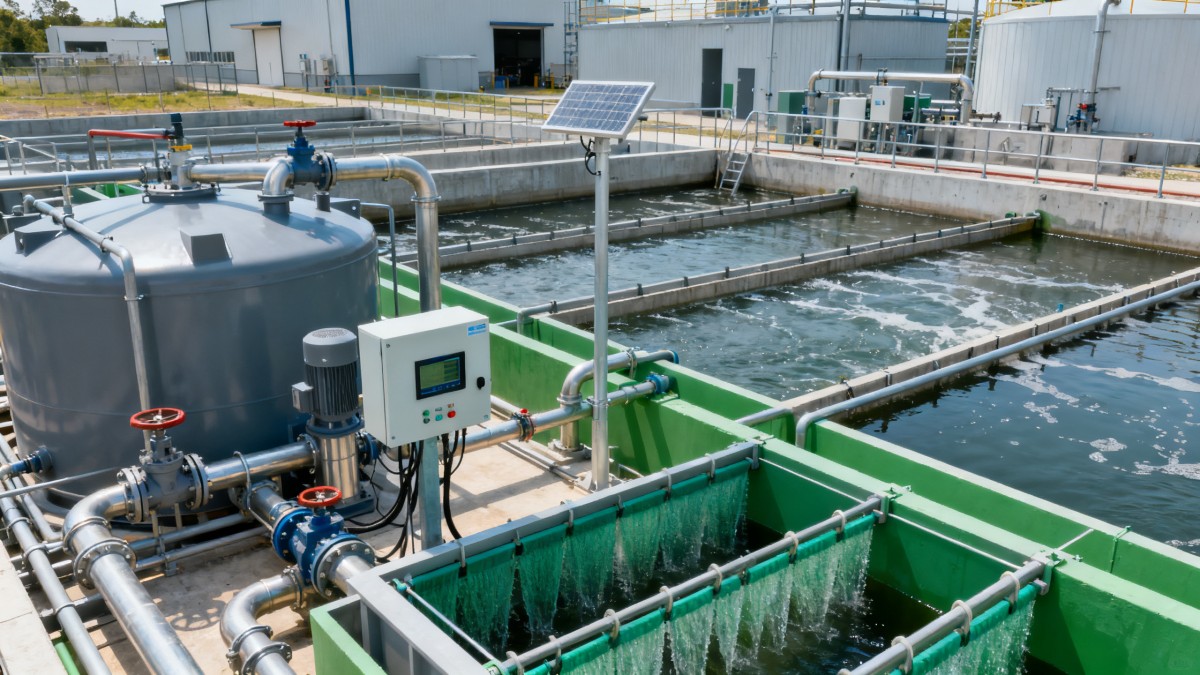
One of the most important industry observations is that repeat compliance issues are rarely caused by a single missing technology. In many cases, sites already have treatment units, dust suppression systems, containment measures, analyzers, or reporting tools. The real problem is fragmentation. Environmental engineering solutions fail when design intent, operating reality, and compliance evidence no longer match.
Common drivers include undersized systems after production changes, control setpoints that were never updated after commissioning, poor calibration discipline, incomplete contractor handoffs, and preventive maintenance plans that ignore environmental-critical assets. Another frequent cause is relying on manual intervention in systems that should be stabilized through automation or better redundancy.
There is also a growing gap between static permit assumptions and dynamic operating environments. A wastewater system designed for one flow profile may struggle when shifts, raw materials, or cleaning cycles change. Air control equipment may meet limits under normal loading but fail during startup, shutdown, or upset conditions. That is why stronger environmental engineering solutions increasingly combine process engineering, environmental design, and data validation rather than treating them as separate disciplines.
A practical view of the trend: from corrective action to resilience engineering
The transition underway can be summarized as a move from event-based correction to resilience-based design and management. For project leaders, this shift changes budget priorities, procurement requirements, and success metrics.
This trend does not mean every site needs large capital upgrades. It means environmental engineering solutions must be selected based on recurrence risk, operating variability, regulatory exposure, and the business cost of instability. In some projects, the answer may be improved equalization, enclosure redesign, better drainage segregation, or analyzer redundancy. In others, the real fix is governance: alarm response standards, maintenance ownership, or change-control discipline.
Which project stakeholders are feeling the impact most
The impact of recurring environmental failures is uneven, but several roles are under growing pressure. Understanding this helps project managers coordinate better decisions and avoid narrow fixes.
For industrial organizations, the bigger lesson is that recurring noncompliance is becoming a shared business issue. Environmental engineering solutions are now part of reliability, reputational protection, and capital efficiency—not only environmental reporting.
Where smarter environmental engineering solutions are creating the most value
In current market conditions, the highest-value environmental engineering solutions tend to appear in a few recurring areas. First is root-cause mapping across process, infrastructure, and data layers. Teams that investigate not only “what exceeded” but “what changed” are more likely to stop repeated failures. Second is control reliability: sensors, sampling points, backup power, dosing consistency, containment integrity, and drainage logic often determine whether a system performs as designed.
Third is design adaptation for variable conditions. Facilities increasingly need environmental controls that remain effective during ramp-up, maintenance bypass, weather stress, temporary construction, and production transitions. Fourth is documentation quality tied to evidence. Better environmental engineering solutions create a traceable link between design basis, operating procedures, inspection records, and actual performance data.
This is where organizations like Global Industrial Core create decision value. In sectors where safety, instrumentation precision, power reliability, environmental performance, and mechanical durability are tightly connected, project leaders need trusted technical intelligence that crosses discipline boundaries. That multi-pillar view is increasingly important when selecting vendors, validating retrofit options, or benchmarking long-term compliance strategies.
Signals project leaders should monitor over the next planning cycle
Looking ahead, several signals deserve attention. If a site is seeing more short-duration excursions, more maintenance overrides, more sampling disputes, or more dependence on manual corrective action, those are early indicators that existing environmental engineering solutions may not be resilient enough. Likewise, if production plans are changing faster than environmental control assumptions, the risk of repeat compliance problems will rise.
Project teams should also watch procurement specifications. When environmental-critical equipment is purchased only on initial price without sufficient attention to certification, compatibility, calibration support, spare strategy, or material durability, recurrence risk increases later. The same applies when environmental systems are commissioned separately from the process conditions that actually stress them.
A final signal is organizational: if compliance ownership sits only with EHS while operations, maintenance, and engineering treat it as secondary, repeat findings are more likely. Effective environmental engineering solutions work best when accountability is distributed but clearly defined.
How to respond without overbuilding or overspending
The smartest response is not to overdesign every system. It is to rank recurring issues by business impact, regulatory severity, and controllability. Start by separating chronic low-level drift from high-consequence event risk. Then identify whether the problem is driven mainly by capacity, controls, maintenance, human factors, or changing site conditions.
From there, environmental engineering solutions can be phased. Short-term actions may include calibration recovery, alarm rationalization, drainage corrections, temporary containment improvements, or revised sampling protocols. Medium-term actions may involve retrofit engineering, instrumentation upgrades, enclosure changes, or revised treatment sequencing. Long-term actions often center on design standard updates, integrated data architecture, vendor qualification, and lifecycle planning.
This phased approach helps project leaders defend capital decisions while showing regulators and internal stakeholders that corrective action is both credible and durable. It also improves the quality of supplier discussions because technical requirements are tied to verified failure modes rather than broad assumptions.
Questions to ask before choosing the next solution path
If your organization wants to judge how emerging compliance pressures affect current projects, focus on a few practical questions. Are repeated issues linked to design limits or to operating discipline? Do monitoring systems provide trustworthy, decision-ready data? Has site expansion changed hydraulic, emissions, or waste profiles? Are environmental-critical components specified with the same rigor as safety-critical equipment? Can your team prove sustained performance after corrective action, not just closure on paper?
These questions help separate superficial fixes from robust environmental engineering solutions. For project leaders, the real opportunity is not only to avoid the next violation. It is to build a project environment where compliance becomes more predictable, assets perform more reliably, and stakeholder trust grows instead of erodes. In today’s industrial landscape, that is no longer a narrow environmental objective. It is a strategic operating advantage.
Technical Specifications
- US DOE Level 3 Transformer Efficiency Rule Takes Effect July 1, 2026Author :Grid Infrastructure Analyst
- INMETRO Proposes EMP Immunity Requirement for Industrial Laser Distance Meters in BrazilAuthor :Precision Metrology Expert
- Indonesia BPOM Fast-Tracks Chinese Industrial Air PurifiersAuthor :Environmental Engineering Director
Expert Insights

Chief Security Architect
Dr. Thorne specializes in the intersection of structural engineering and digital resilience. He has advised three G7 governments on industrial infrastructure security.
Related Analysis
- May 05, 2026US DOE Level 3 Transformer Efficiency Rule Takes Effect July 1, 2026Author :Grid Infrastructure Analyst
- May 05, 2026INMETRO Proposes EMP Immunity Requirement for Industrial Laser Distance Meters in BrazilAuthor :Precision Metrology Expert
- May 05, 2026Indonesia BPOM Fast-Tracks Chinese Industrial Air PurifiersAuthor :Environmental Engineering Director
Core Sector // 01
Security & Safety
- Vietnam MOIT: Industrial Water Monitors Must Upgrade to MQTT v5.0 + SM4 by Jun 30, 2026Author :Environmental Engineering Director

- How to Assess an Environmental Engineering Manufacturer EarlyAuthor :Environmental Engineering Director

- Environmental Engineering Solutions That Fix Repeat Compliance IssuesAuthor :Environmental Engineering Director

- Why Environment & Ecology Cost Often Rises After Project HandoverAuthor :Environmental Engineering Director

- Vietnam Enforces Blockchain-Linked Remote Calibration for Industrial Water AnalyzersAuthor :Environmental Engineering Director

- Environmental engineering standards that affect equipment selectionAuthor :Environmental Engineering Director

- Industrial ecology trends changing plant upgrade prioritiesAuthor :Environmental Engineering Director

- SASO AI Sensor Compliance: Saudi Arabia Enforces AI Module Registration for Industrial Water SensorsAuthor :Environmental Engineering Director