Screw Press Sludge Dehydrator or Belt Press for Wet Sludge?
Author
Date Published
Reading Time
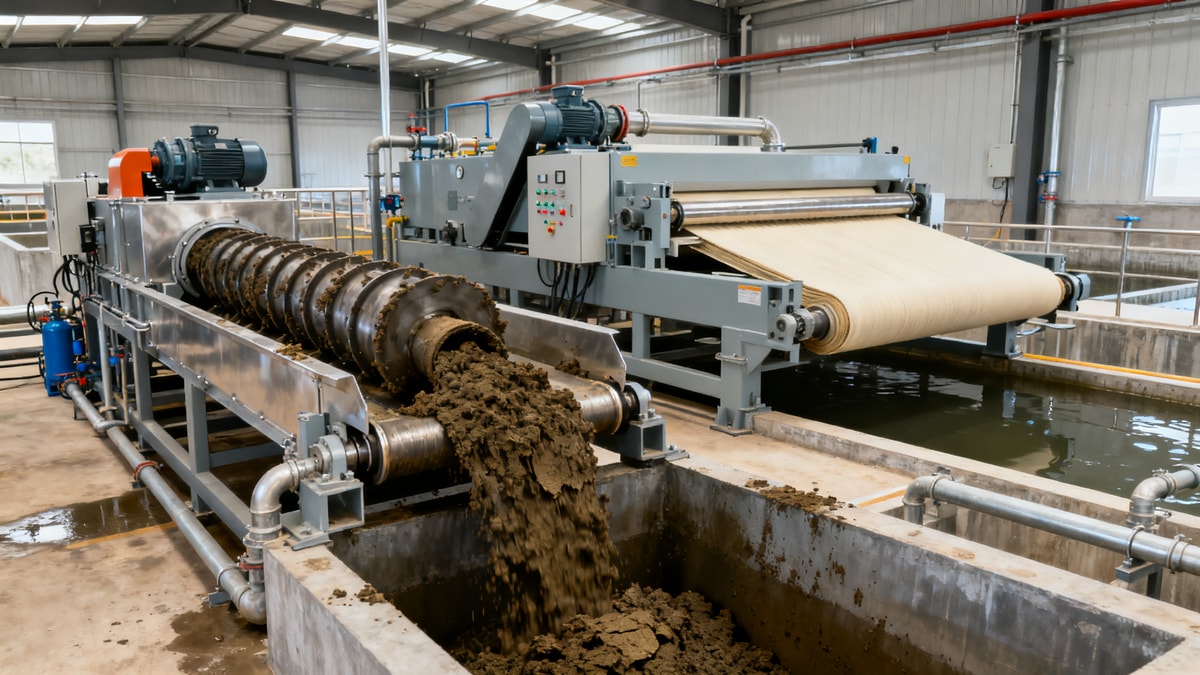
When evaluating wet sludge dewatering options, the choice between a screw press sludge dehydrator and a belt press can directly affect operating stability, maintenance demands, and lifecycle cost. For technical assessors, understanding how each system performs under varying sludge characteristics, throughput requirements, and compliance pressures is essential before making a capital decision.
Why the dewatering decision is changing faster than before
Across wastewater treatment, food processing, municipal utilities, paper mills, chemical plants, and other industrial sites, sludge handling is no longer treated as a secondary utility issue. It has become a strategic operating concern shaped by energy cost volatility, labor shortages, tighter discharge expectations, and pressure to reduce total waste hauling volumes. In that context, the comparison between a screw press sludge dehydrator and a belt press is no longer only about initial capacity. It is increasingly about resilience, staffing reality, wash water demand, polymer consumption, downtime tolerance, and the ability to keep compliance risk under control.
This shift matters because wet sludge characteristics are becoming less predictable. Facilities now process more mixed influent streams, more seasonal variation, and more upstream process changes than they did a decade ago. As a result, technical assessment teams are being asked to evaluate dewatering systems not as isolated machines, but as part of a broader sludge management strategy. The best answer is often not the machine with the highest nominal throughput, but the one that remains stable under real operating fluctuation.
The main signals driving renewed interest in screw press systems
The renewed attention on the screw press sludge dehydrator is being driven by several converging signals. First, many facilities are under pressure to reduce operator intervention. Second, water conservation targets are making high wash water equipment less attractive. Third, maintenance teams increasingly favor simpler mechanical layouts that can be serviced without extended shutdowns. Fourth, buyers are placing more weight on lifecycle cost instead of purchase price alone.
Belt presses still hold a strong position, especially where very high throughput and established operator familiarity matter. However, the market conversation is changing. More evaluators are asking whether a belt press remains optimal when sludge volumes are moderate, staffing is lean, and cleaning water carries a measurable cost. In those cases, a screw press sludge dehydrator often enters the shortlist much earlier than in past procurement cycles.
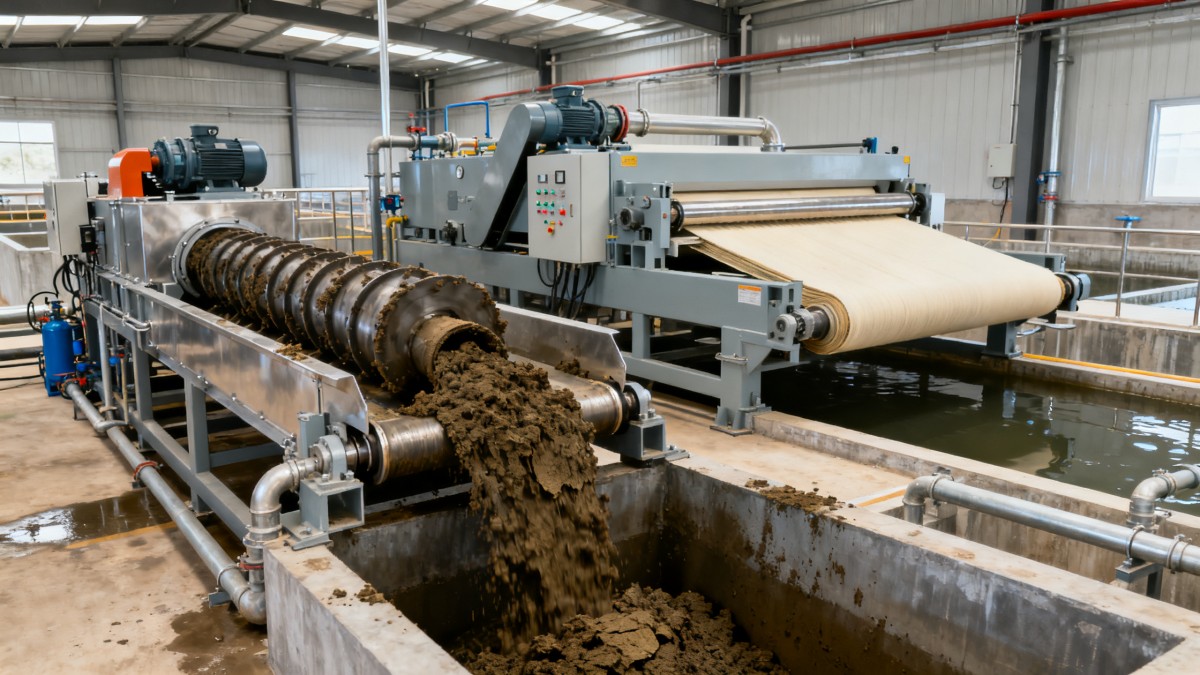
Where belt presses still remain competitive
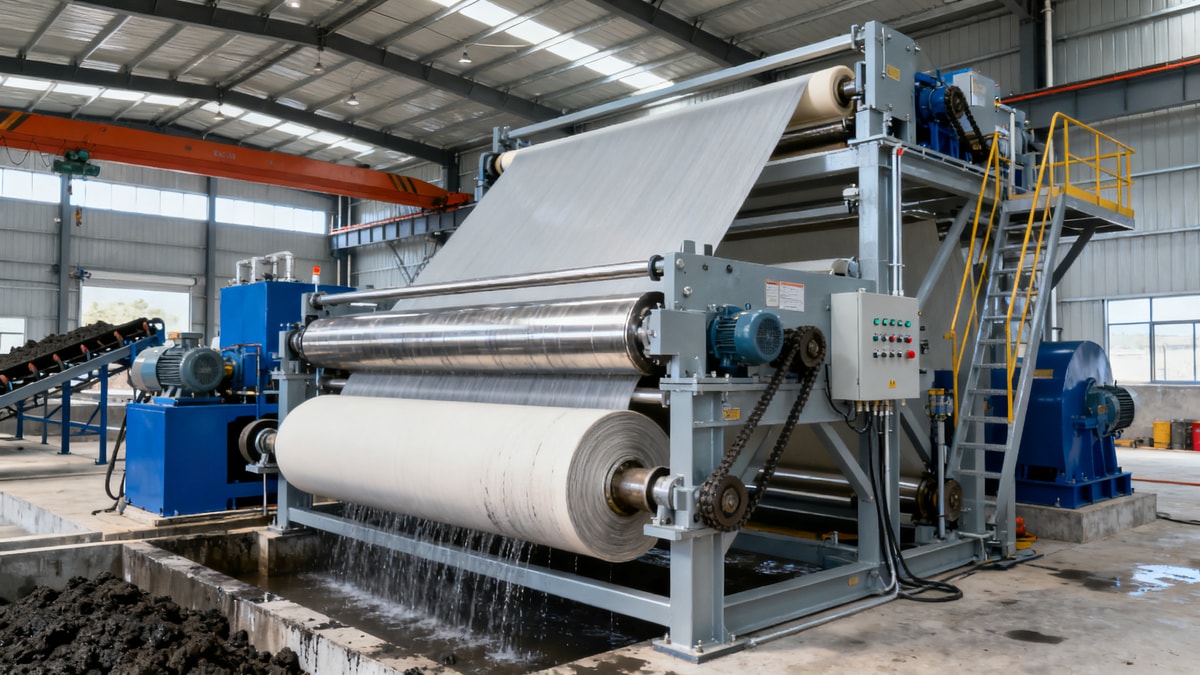
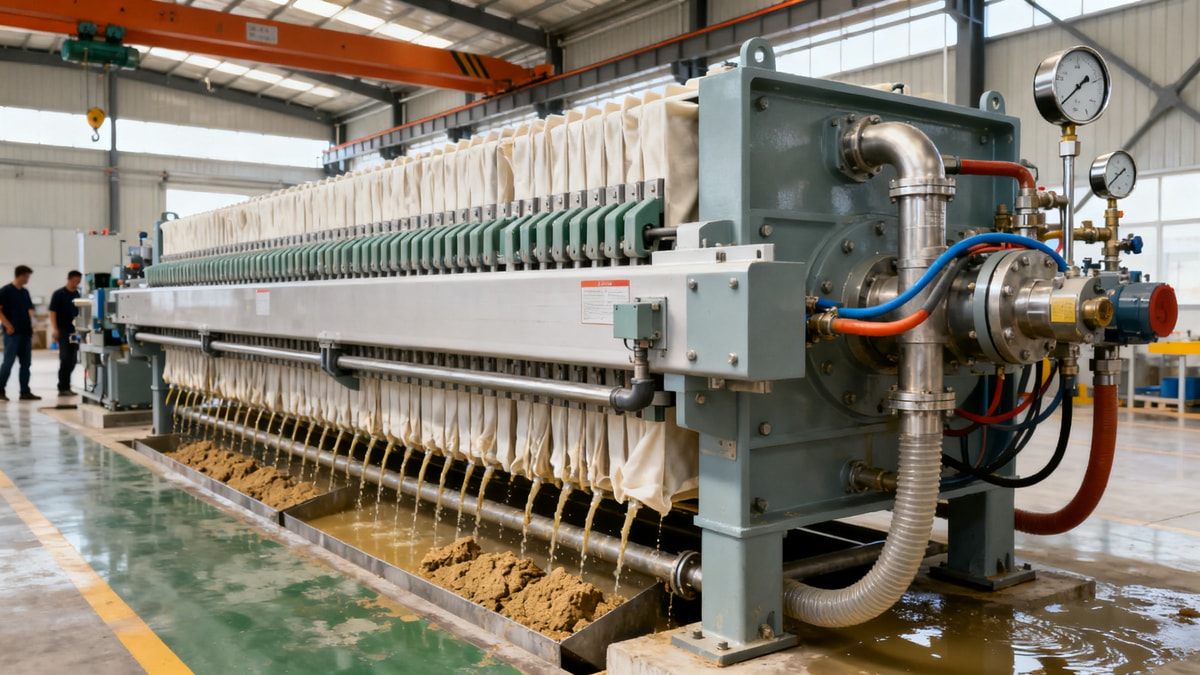
A trend-focused assessment should not assume that newer preference automatically means universal replacement. Belt presses remain highly relevant in large-scale applications where high continuous throughput is required and where operators already understand belt tracking, tension management, and wash system maintenance. In facilities with stable sludge consistency, sufficient staffing, and space allocated for support systems, belt presses can still deliver an effective dewatering result.
This is especially true when an existing plant already has downstream logistics designed around belt press cake solids and operating rhythm. In such settings, the replacement decision is not simply screw press sludge dehydrator versus belt press in abstract terms. It becomes a question of whether the site’s current process, utilities, and maintenance organization benefit enough from a change to justify retraining, process tuning, and equipment transition.
The most important technical shift: from peak performance to stable performance
One of the clearest changes in industrial buying criteria is the move from peak performance claims to stability under imperfect conditions. Technical assessors increasingly want to know how equipment behaves when polymer quality changes, sludge concentration drifts, influent solids swing, or operators are not continuously present. That shift has practical consequences.
A screw press sludge dehydrator is often favored in this stability-oriented framework because it operates at lower speed, typically with less noise, less spray, and lower wash water requirement than a belt press. It is also commonly viewed as more forgiving in unattended or semi-attended operating environments. By contrast, a belt press may still offer strong output, but often demands closer process attention to maintain optimum belt condition, drainage performance, and cleaning efficiency.
That does not mean the screw press is always superior in dryness or capacity. It means the evaluation baseline has changed. In many procurement reviews, the winning machine is the one that delivers acceptable solids capture and cake dryness consistently, even when the site cannot support ideal operating discipline every hour of the day.
How different stakeholder groups are affected
The decision affects more than the treatment department. It changes work patterns, utility loads, maintenance planning, and compliance exposure across the facility. For that reason, a trend-aware review should include multiple functions before technology selection is finalized.
The hidden factors now shaping buying decisions
Several factors that once sat in the background are now moving to the center of technical evaluation. The first is wash water. Belt presses often require substantial cleaning water to maintain performance, and in regions with rising water tariffs or internal reuse targets, this becomes a visible operating burden. The second is floor environment. Spray, housekeeping load, and access for maintenance are increasingly considered during site modernization projects.
The third is process flexibility. A screw press sludge dehydrator may be more attractive where future sludge composition is uncertain, such as plants adding pretreatment, changing chemical recipes, or integrating new production lines. The fourth is digital operations. Remote monitoring and lower-touch operation are becoming stronger buying signals, especially in facilities trying to manage multiple utility assets with limited staff.
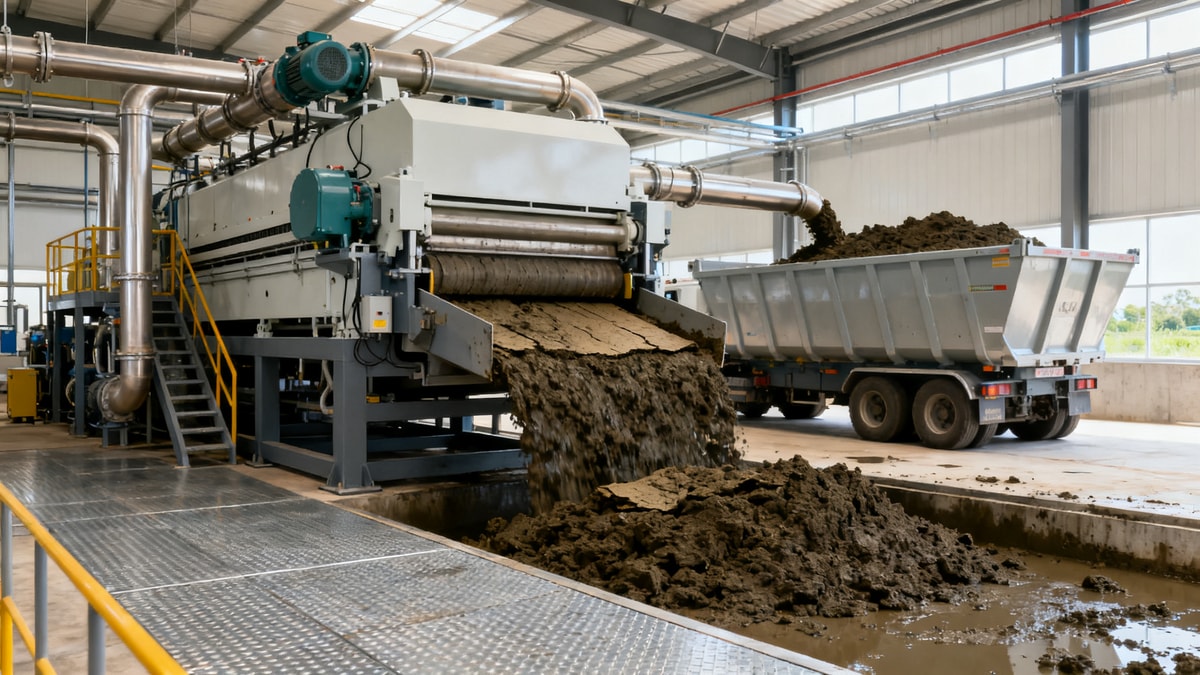
Finally, there is the issue of disposal economics. Even small improvements in dewatered cake consistency can influence transport efficiency and downstream handling. Technical teams should therefore avoid evaluating only machine-side metrics. The more useful approach is to connect dewatering performance with hauling frequency, container management, storage time, and disposal contract structure.
How to judge a screw press sludge dehydrator against a belt press in current market conditions
A sound comparison should reflect today’s operating realities rather than a generic vendor checklist. Start with sludge variability: primary sludge, biological sludge, mixed sludge, oily sludge, or fibrous sludge can behave very differently. Then assess expected throughput range rather than only maximum design load. A machine that performs well at average loading may be more valuable than one optimized for a rare peak condition.
Next, review utility context. If water use is a strategic constraint, the screw press sludge dehydrator may gain an advantage. If very high throughput in a stable environment is non-negotiable, the belt press may remain the stronger choice. Then compare maintenance philosophy. Sites with strong mechanical support and established wash systems may absorb belt press complexity more easily. Sites with limited service windows may prefer the lower-speed, more compact operating profile often associated with screw press equipment.
What technical assessors should monitor over the next procurement cycle
Looking ahead, the strongest signal is not a single technology winner but a more disciplined purchasing model. Technical assessors should expect future tenders to demand clearer proof of operating cost assumptions, sludge-specific performance verification, and better alignment between machine selection and plant staffing reality. Factory references are useful, but site-relevant pilot data, sludge testing, and utility consumption estimates are becoming more decisive.
There is also growing value in evaluating support capability, spare parts access, commissioning depth, and controls integration. A screw press sludge dehydrator with good after-sales support may outperform a theoretically cheaper alternative that lacks local service. The same applies to belt press systems where cleaning, belt replacement, and alignment expertise significantly influence long-term performance.
Practical decision guidance for industrial teams
In practical terms, teams should frame the selection around five priorities: sludge type, throughput profile, water and energy constraints, operator availability, and downstream disposal economics. If the site values low intervention, lower wash water demand, and stable operation under variable feed conditions, the screw press sludge dehydrator deserves serious consideration. If the site requires high-volume continuous processing with trained operators and established maintenance routines, a belt press may still fit better.
The most effective next step is to compare both options using the plant’s own sludge samples and operating assumptions, not generic brochure values. Ask whether the system can maintain performance during seasonal changes, whether utility demand matches plant targets, and whether maintenance resources are realistic over the equipment life. These questions matter more today than headline claims about capacity alone.
Final takeaway: focus on fit, not fashion
The current market direction shows why the screw press sludge dehydrator is gaining attention: industrial users want predictable operation, lower resource intensity, and better lifecycle visibility. Yet belt presses remain relevant where scale, familiarity, and established infrastructure support them. For technical assessors, the right judgment is not about following a trend blindly. It is about recognizing that the basis of comparison has changed.
If your organization wants to judge how these trends affect its own sludge dewatering strategy, confirm three things first: how variable your sludge really is, how constrained your operators and utilities have become, and how disposal cost responds to changes in cake consistency. Those answers will usually reveal whether a screw press sludge dehydrator or a belt press is the stronger long-term fit.
Technical Specifications
Expert Insights

Chief Security Architect
Dr. Thorne specializes in the intersection of structural engineering and digital resilience. He has advised three G7 governments on industrial infrastructure security.
Related Analysis
- May 02, 2026Chemical Metering Pumps: Which Dosing Errors Cost the Most?Author :Environmental Engineering Director
- May 02, 2026What Sets One Belt Filter Press Manufacturer Apart?Author :Environmental Engineering Director
- May 02, 2026Moving Bed Biofilm Reactor MBBR Retrofit Benefits and LimitsAuthor :Environmental Engineering Director
Core Sector // 01
Security & Safety
- Chemical Metering Pumps: Which Dosing Errors Cost the Most?Author :Environmental Engineering Director

- What Sets One Belt Filter Press Manufacturer Apart?Author :Environmental Engineering Director

- Moving Bed Biofilm Reactor MBBR Retrofit Benefits and LimitsAuthor :Environmental Engineering Director

- Wholesale Ozone Generators: Output Claims vs Real PerformanceAuthor :Environmental Engineering Director

- How Sludge Dewatering Machine Choice Affects Disposal FeesAuthor :Environmental Engineering Director

- Wholesale Dosing Pumps: Which Materials Last Longer?Author :Environmental Engineering Director

- Dissolved Air Flotation DAF Problems That Raise Sludge VolumeAuthor :Environmental Engineering Director

- Chamber Filter Press Cycle Time: What Slows It Down?Author :Environmental Engineering Director