Chamber Filter Press Cycle Time: What Slows It Down?
Author
Date Published
Reading Time
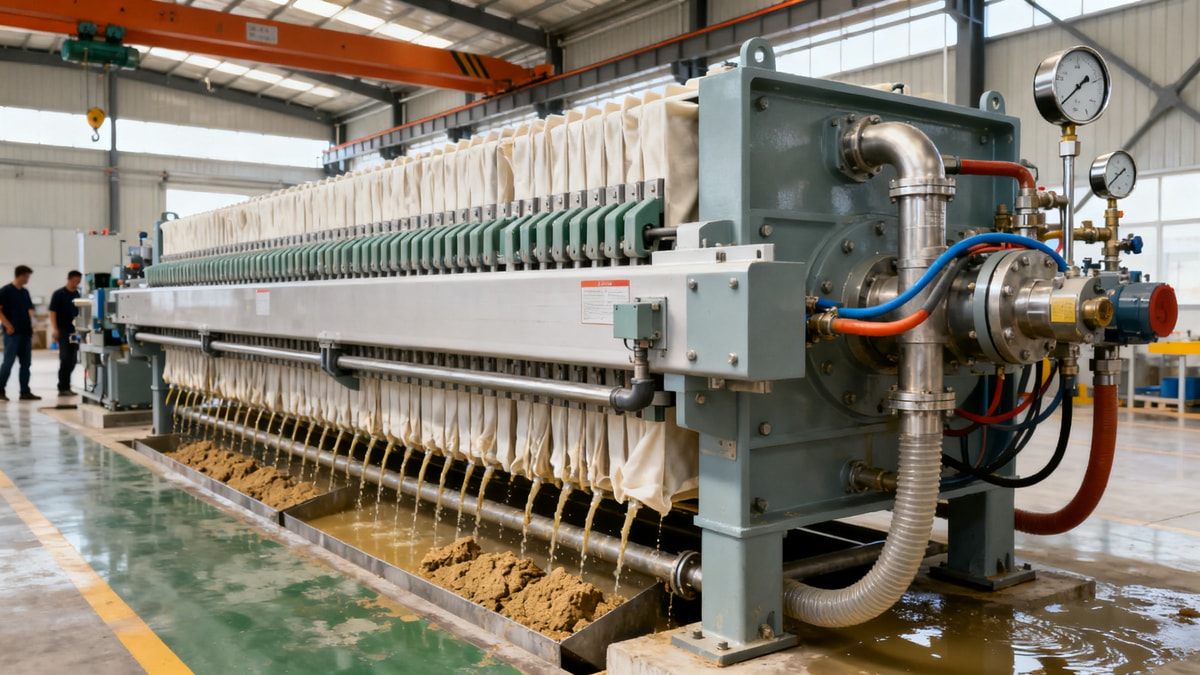
When a chamber filter press runs slower than expected, the problem is rarely just one setting or one worn part. Cycle time is influenced by feed pressure, slurry characteristics, cloth condition, plate sealing, and operator control. Understanding what slows a chamber filter press down is the first step toward improving throughput, reducing downtime, and keeping filtration performance stable in demanding industrial operations.
For most operators, the real question is not simply “What is chamber filter press cycle time?” It is “Why is this batch taking too long, and what can I check first?” In practice, long cycles usually come from a small group of repeat causes: poor slurry feed conditions, blinding filter cloths, cake release problems, hydraulic or plate issues, and inconsistent operating routines.
If your chamber filter press is slowing down, the best approach is to break the cycle into stages and identify where time is being lost. That gives you a practical path to faster cycles without guessing, over-adjusting pressure, or replacing parts that are not the real issue.
Where does cycle time get lost in a chamber filter press?
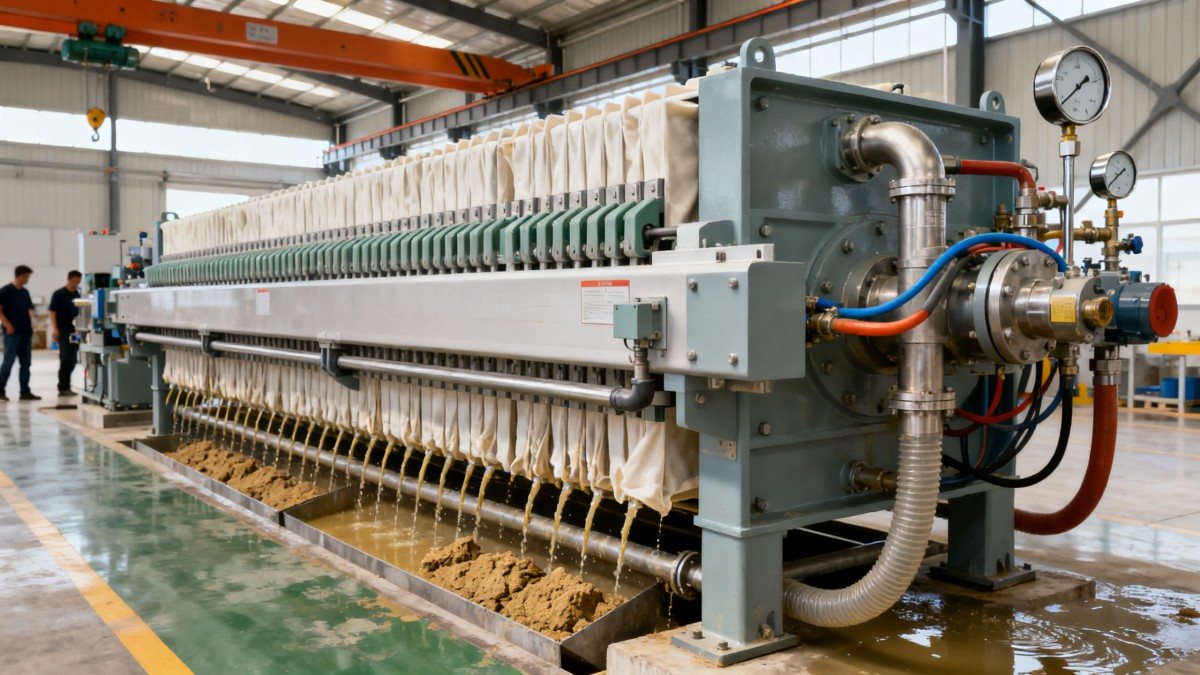
A chamber filter press cycle includes several time-consuming steps: closing the press, feeding slurry, building cake, optional membrane or air operations if used in the wider system, stopping feed, opening the press, discharging cake, and preparing for the next run. Even in a standard chamber filter press without membrane squeezing, most delays happen during feed, dewatering, and cake discharge.
Operators should start by asking a simple diagnostic question: which phase has become longer than normal? If plate closing is slow, the issue may be hydraulic, alignment-related, or linked to operator delay. If filling takes too long, focus on slurry concentration, feed pressure, pump performance, and cloth permeability. If cake discharge drags on, inspect cloth condition, cake moisture, plate cleanliness, and sticking behavior.
This stage-based view matters because the same total delay can come from very different causes. A press with low feed pressure and a press with badly blinded cloths may both show long cycles, but the correction is not the same. Good troubleshooting depends on isolating the bottleneck rather than reacting to overall time alone.
Why feed pressure and pump performance often control the whole cycle
In many plants, the biggest reason a chamber filter press slows down is inadequate or unstable feed pressure. The press depends on a consistent differential pressure to move liquid through the cloth and form cake inside the chambers. If the feed pump cannot maintain proper pressure as resistance increases, cake build-up becomes slow and the cycle stretches out.
This is especially common when pump wear goes unnoticed. As internal clearances increase, the pump may still run, but actual delivery under load drops. Operators sometimes compensate by extending the cycle instead of identifying the hydraulic loss. The result is lower throughput and uneven cake quality.
Pressure instability can also come from upstream process variation. If the slurry tank level fluctuates, if air enters the line, or if valve positions are inconsistent, the press may feed unevenly. That often creates misleading symptoms: one cycle seems acceptable, the next becomes much longer, and the problem appears random.
A practical check is to compare expected feed pressure, actual pressure profile during filling, and the time required to reach normal terminal pressure. If pressure rises too slowly, stalls early, or never reaches the expected range, the issue is likely upstream of the plates. Operators should inspect pump condition, suction stability, pipeline restrictions, and pressure instrumentation before changing press settings.
How slurry characteristics can make a normal press run slow
A chamber filter press is only as fast as the slurry allows it to be. Even when the machine is mechanically healthy, changes in solids concentration, particle size, viscosity, temperature, or chemical conditioning can significantly increase cycle time. This is one of the most overlooked causes because the press gets blamed for feed that has become harder to filter.
Low solids concentration is a common example. If the slurry is thinner than usual, the press has to process more liquid to build the same amount of cake. That naturally lengthens filling time and often reduces overall productivity. The machine has not become slower by itself; the batch simply contains more water to remove.
Particle size distribution also matters. Very fine particles can block the filter cloth surface or create a dense, low-permeability cake. Once that happens, filtrate flow drops sharply and cycle time increases. In some applications, chemical conditioning or flocculation quality has a direct effect on whether the cake remains permeable or turns into a tight barrier.
Temperature is another variable operators should not ignore. A colder slurry may become more viscous and filter more slowly. Seasonal changes, utility fluctuations, or upstream process shifts can all affect this. If cycle time drifts over weeks rather than failing suddenly, slurry condition should be reviewed alongside equipment checks.
When troubleshooting, compare current slurry properties with historical “good cycle” conditions. Solids content, pH, reagent dose, viscosity, and particle behavior under actual operating conditions can explain slow cycles better than repeated mechanical adjustments alone.
What clogged or blinded filter cloths do to cycle time
Filter cloth condition is one of the first areas operators should inspect when a chamber filter press starts taking longer to reach completion. Cloth blinding reduces permeability, meaning filtrate passes through more slowly even if feed pressure remains normal. The press then spends more time forcing liquid through a restricted surface.
Blinding can come from fine particles, oily contaminants, chemical scaling, incomplete washing, or simply long service life. In some operations, the cloth may look acceptable on the surface while the pores are already partially blocked. That is why visual inspection alone is not always enough.
Typical warning signs include slower filtrate flow at the start of feed, higher pressure with lower output, wetter cake, and increased differences between chambers. If only a few cloths are affected, the press may show uneven performance, local leakage, or irregular cake formation across plates.
Routine cleaning is essential, but cleaning method matters. Water washing may remove loose solids without clearing embedded fines or chemical deposits. Depending on the application, operators may need chemical cleaning procedures that match the contaminant type and cloth material. Using the wrong cleaning agent can damage the cloth and create new filtration problems.
Cloth tension and installation quality also affect performance. A wrinkled, loose, or poorly seated cloth can trap solids, interfere with sealing, and make cake release inconsistent. If the plant keeps extending cycles even after pressure adjustments, cloth maintenance should move higher on the troubleshooting list.
When plate sealing, alignment, and leaks quietly reduce throughput
Not all slow cycles come from the filtration media or slurry. Mechanical condition of the plate pack can also add hidden time loss. If plates are misaligned, sealing surfaces are dirty, or gaskets and cloth edges are not seating correctly, the chamber filter press may develop leaks or incomplete chamber formation.
Even minor leaks matter because they reduce effective system efficiency and often force operators to slow the cycle, stop for cleanup, or reopen the press to correct a fault. In severe cases, leakage prevents proper pressure build-up and makes the machine appear underpowered when the real problem is sealing integrity.
Plate shifting can also interfere with smooth opening and discharge. If plates do not separate cleanly, operators spend more time clearing material, manually assisting movement, or resetting the pack. Those minutes add up over repeated cycles and directly reduce daily throughput.
Regular inspection should include plate faces, sealing edges, cloth seating, plate handles, shifting mechanisms, and hydraulic closing force. A small defect repeated across every cycle can have a larger productivity cost than a major fault that happens only occasionally.
Why cake release problems can be the real bottleneck
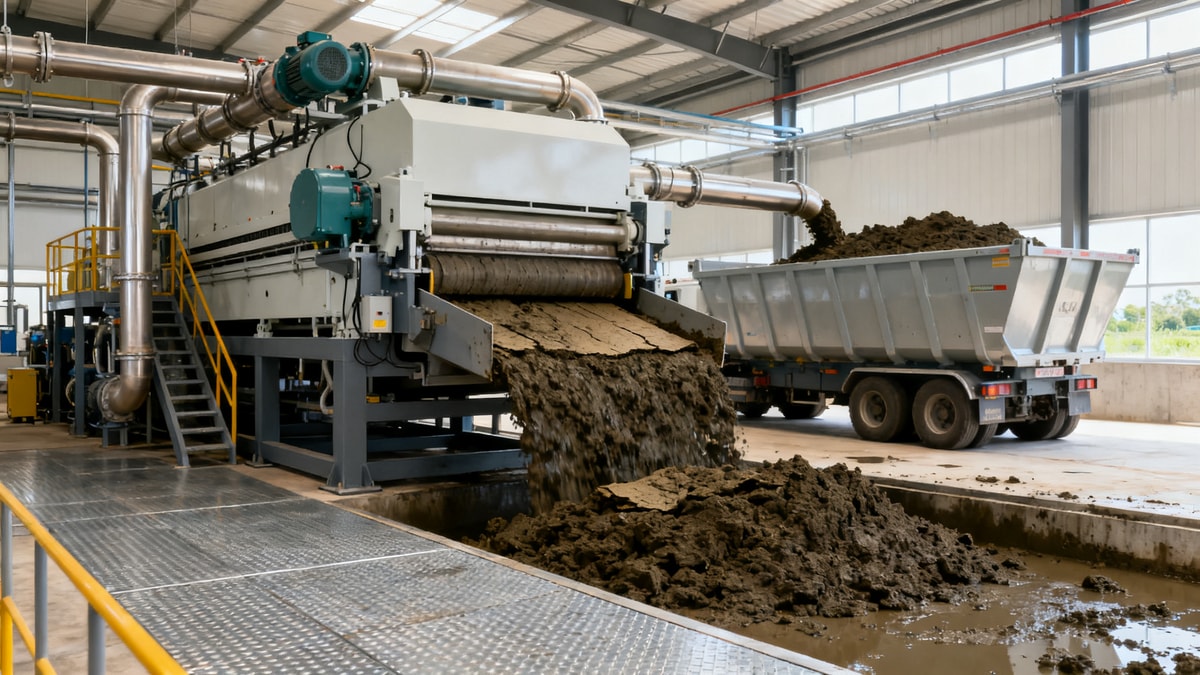
In many operations, the press reaches end-of-feed conditions on time, but the overall cycle is still slow because cake does not discharge cleanly. This is especially frustrating for operators because the filtration stage appears normal while turnaround time remains poor.
Sticky cake can result from slurry chemistry, excessive moisture, cloth surface condition, damaged plate surfaces, or insufficient solids structure. When cake hangs in the chamber, breaks unevenly, or requires manual scraping, discharge time rises and labor demand increases. It also raises safety concerns if operators must intervene too often near moving plates.
Operators should note whether sticking occurs on all plates or only in specific positions. Localized sticking may point to damaged cloths, warped plates, or flow distribution issues. System-wide sticking usually suggests a process or conditioning problem, such as cake that is too wet or too fine.
Sometimes the attempt to shorten feed time actually creates a discharge problem. If the cake is not formed properly, it may be too soft to release. In that case, “faster” operation at one step slows down the total cycle. The right target is not the shortest feed stage alone, but the best full-cycle balance between filtration speed and reliable cake drop.
How operator practices and control settings affect repeatability
Even a well-maintained chamber filter press can perform inconsistently if operating routines vary by shift or by operator. Small differences in startup sequence, feed cutoff timing, plate cleaning, cloth washing, or inspection discipline can lead to major differences in cycle time over a week or month.
One common issue is relying too heavily on fixed time settings without checking actual process behavior. If slurry solids change but the cycle stays locked to an old timer value, the press may be stopping too early, running too long, or producing unstable cake moisture. Time-based habits are convenient, but they are not always responsive to real operating conditions.
Better results often come from using a standard operating window based on measurable indicators: feed pressure trend, filtrate flow change, cake formation behavior, and discharge quality. Operators do not need to overcomplicate the process, but they do need consistent checkpoints that connect actions to actual press performance.
Shift handover quality is another factor. If one crew notices slower filtrate, partial leakage, or rising discharge difficulty but does not document it clearly, the next crew may continue running until the delay becomes severe. Good reporting turns gradual performance loss into an early maintenance action instead of a production problem.
A practical troubleshooting sequence for slow chamber filter press cycles
For operators, the most useful response is a repeatable diagnostic sequence. Start with the question: which phase is longer than normal—closing, filling, pressure build-up, final dewatering, opening, or cake discharge? Once that is clear, move from the simplest checks to the more process-specific ones.
First, verify instruments and actual operating data. Confirm feed pressure readings, pump behavior, cycle timestamps, and any alarm history. A sensor problem can send troubleshooting in the wrong direction, so basic data confidence comes first.
Second, inspect the slurry side. Check feed tank condition, solids concentration, agitation, temperature, chemical conditioning, and pump suction stability. If the slurry itself has changed, mechanical interventions alone may not restore normal cycle time.
Third, inspect filter cloths and plates. Look for blinding, damage, poor seating, cloth wrinkles, plate contamination, leakage paths, and uneven cake formation patterns. These often provide the clearest visual clues.
Fourth, review discharge behavior. If the cake is wet, sticky, or inconsistent, identify whether the root cause is incomplete dewatering, cloth condition, or upstream slurry chemistry. Do not treat discharge delay as a separate issue when it may be linked to earlier filtration performance.
Finally, compare current operation with a known good baseline. Plants that track average cycle time, fill time, terminal pressure, cake moisture, cloth cleaning interval, and pump maintenance history solve press problems faster than plants relying on memory alone.
What improvements usually deliver the fastest results
If you need practical gains quickly, the highest-value actions are usually not dramatic equipment changes. They are disciplined maintenance and process control steps that remove the most common causes of slow cycles.
Start with cloth management: establish inspection frequency, cleaning criteria, and replacement rules based on actual performance rather than only on calendar time. Next, confirm pump health and pressure stability under load, not just during idle or low-resistance conditions.
Then review slurry consistency. If solids concentration, flocculation, or temperature varies widely, the chamber filter press will always be harder to optimize. Stabilizing feed quality often produces a larger throughput gain than aggressive mechanical adjustment.
Also standardize operator checks during each cycle. A simple checklist covering leakage, pressure rise, filtrate clarity, cake condition, and discharge behavior can prevent long-term drift. In many facilities, the real productivity improvement comes from making good operation repeatable.
Conclusion: slow cycle time is usually a system problem, not just a press problem
When a chamber filter press runs slowly, the cause is rarely a single isolated fault. Long cycle time usually reflects interaction between feed pressure, slurry properties, cloth permeability, plate condition, cake release, and operator practice. That is why random adjustments often fail to solve the issue.
The most effective approach is to identify where time is being lost in the cycle, then check the factors most likely to affect that stage. For operators, that means focusing on real process clues: how pressure builds, how filtrate behaves, how the cake forms, and how cleanly it releases.
In day-to-day industrial use, faster chamber filter press performance does not come from rushing the machine. It comes from stable feed conditions, healthy filtration surfaces, reliable mechanical sealing, and consistent operating discipline. Once those are controlled, shorter cycle times and more predictable throughput usually follow.
Technical Specifications
Expert Insights

Chief Security Architect
Dr. Thorne specializes in the intersection of structural engineering and digital resilience. He has advised three G7 governments on industrial infrastructure security.
Related Analysis
- May 02, 2026Chemical Metering Pumps: Which Dosing Errors Cost the Most?Author :Environmental Engineering Director
- May 02, 2026What Sets One Belt Filter Press Manufacturer Apart?Author :Environmental Engineering Director
- May 02, 2026Moving Bed Biofilm Reactor MBBR Retrofit Benefits and LimitsAuthor :Environmental Engineering Director
Core Sector // 01
Security & Safety
- Chemical Metering Pumps: Which Dosing Errors Cost the Most?Author :Environmental Engineering Director

- What Sets One Belt Filter Press Manufacturer Apart?Author :Environmental Engineering Director

- Moving Bed Biofilm Reactor MBBR Retrofit Benefits and LimitsAuthor :Environmental Engineering Director

- Wholesale Ozone Generators: Output Claims vs Real PerformanceAuthor :Environmental Engineering Director

- How Sludge Dewatering Machine Choice Affects Disposal FeesAuthor :Environmental Engineering Director

- Wholesale Dosing Pumps: Which Materials Last Longer?Author :Environmental Engineering Director

- Dissolved Air Flotation DAF Problems That Raise Sludge VolumeAuthor :Environmental Engineering Director

- Chamber Filter Press Cycle Time: What Slows It Down?Author :Environmental Engineering Director