SASO AI Sensor Compliance: Saudi Arabia Enforces AI Module Registration for Industrial Water Sensors
Author
Date Published
Reading Time

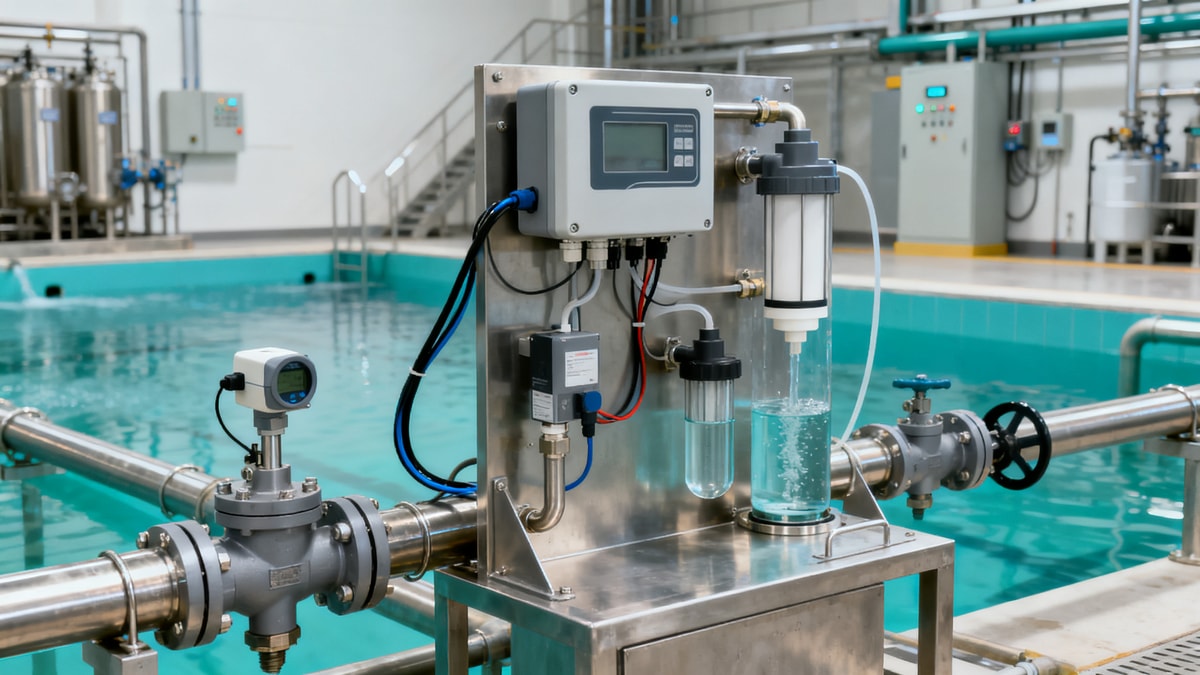
Saudi Arabia’s Standards, Metrology and Quality Organization (SASO) launched a targeted compliance review on May 1, 2026, requiring pre-shipment registration of AI algorithm modules embedded in imported industrial water quality sensors — including pH, dissolved oxygen (DO), turbidity, and residual chlorine sensors. This measure directly affects exporters, manufacturers, and supply chain actors engaged in water treatment equipment trade with Saudi Arabia.
Event Overview
On May 1, 2026, SASO issued an official notice mandating that all industrial water quality sensors equipped with edge AI functionality must complete algorithm model registration via the SASO e-Services platform prior to customs clearance. Required documentation includes the model architecture diagram, training dataset description, and specification of localized inference log format. Products without valid registration will be detained at port and subject to mandatory re-export. Chinese exporters must submit registration at least 72 hours before shipment.
Industries Affected
Direct Exporters (e.g., Chinese Water Equipment Manufacturers)
Exporters shipping AI-enabled water sensors to Saudi Arabia face immediate operational impact: failure to register within the 72-hour pre-shipment window triggers port detention, demurrage costs, and potential penalties. This applies regardless of sensor hardware certification status — only AI module compliance is under review.
Contract Manufacturers & OEMs
OEM suppliers embedding third-party or proprietary AI models into sensor housings must verify whether their firmware-level AI components fall under SASO’s definition of ‘edge AI algorithm’. If so, they bear joint responsibility for documentation accuracy — particularly regarding training data provenance and inference logging structure — even if the final product bears another brand’s label.
Supply Chain & Logistics Service Providers
Cargo agents and freight forwarders handling shipments to Saudi ports must now integrate SASO AI registration verification into pre-departure checks. A missing or incomplete registration file may delay cargo release independent of standard SASO CoC (Certificate of Conformity) approval — introducing a new, non-redundant compliance checkpoint.
Distributor & Channel Partners in KSA
Local distributors importing and reselling such sensors must confirm registration status before accepting delivery. Under current enforcement, unregistered units cannot enter free circulation — meaning inventory held in bonded warehouses or local stock may become non-compliant if retroactive registration is not permitted.
What Stakeholders Should Monitor and Do Now
Confirm whether your sensor’s AI functionality falls under SASO’s scope
Review firmware documentation and AI deployment method: SASO’s notice explicitly targets ‘edge AI algorithms’ — i.e., models executing inference locally on-device, not cloud-based analytics or remote dashboard features. On-device anomaly detection, real-time calibration correction, or adaptive thresholding would likely qualify.
Prepare registration files ahead of first shipment
Allocate internal resources to compile required materials — especially the model architecture diagram and training dataset description. Note: SASO does not require raw training data submission, but does require a clear, English-language summary of data origin, size, and preprocessing steps. Localized inference log format must specify field names, timestamp conventions, and encoding standards.
Align internal timelines with the 72-hour pre-shipment deadline
Build buffer time into export scheduling: registration submission does not guarantee instant approval. While SASO has not published average processing duration, delays in document validation or requests for clarification could consume available window. Treat registration as a hard dependency — not a parallel activity — in the export workflow.
Monitor SASO e-Services platform updates and official FAQs
No public guidance yet exists on grandfathering for sensors already registered under prior SASO schemes (e.g., SASO SABER). SASO may issue clarifications on transitional arrangements, acceptable log formats, or exemptions for legacy models. Bookmark the official SASO e-Services portal and subscribe to its notification service.
Editorial Observation / Industry Insight
This initiative is observably not a broad regulatory expansion, but a precision enforcement action targeting one specific technical layer — AI logic deployed at the sensor edge. Analysis shows SASO is decoupling AI compliance from traditional hardware safety or EMC certification, treating algorithm behavior as a distinct conformity domain. From an industry perspective, this signals growing regulatory attention toward embedded intelligence in industrial IoT devices — especially where outputs influence process control or regulatory reporting (e.g., drinking water quality monitoring). It is better understood as an early-stage signal rather than a finalized framework: no penalty schedule, appeal mechanism, or audit protocol has been published. Continued observation is warranted for how SASO interprets ‘local inference’, handles multi-model devices, or integrates this requirement into future versions of the Saudi Product Safety Program (SPSP).

In summary, SASO’s AI module registration requirement introduces a new, time-bound compliance gate for exporters of intelligent water sensors to Saudi Arabia. Its significance lies less in scale than in precedent: it marks the first known national-level mandate requiring explicit disclosure and registration of embedded AI logic in industrial sensing hardware. For stakeholders, the current priority is procedural readiness — not strategic reassessment — as implementation remains narrowly scoped and operationally defined.
Source: Official SASO notification, effective May 1, 2026; SASO e-Services platform guidelines (as publicly accessible on May 2026). Items under ongoing observation include: SASO’s interpretation of ‘edge AI’ for hybrid cloud-edge deployments; availability of registration grace periods; and alignment with GCC-wide AI governance discussions.
Technical Specifications
- India BIS Draft IS 17832:2026 Sets Noise & Dust Limits for Waste CrushersAuthor :Environmental Engineering Director
- Korea MFDS Mandates Korean UI & KOSHA OEL Database for Industrial Water AnalyzersAuthor :Precision Metrology Expert
- Indonesia BPOM Mandates PM0.1 Efficiency & CADR Decay Labeling for Industrial Air PurifiersAuthor :Environmental Engineering Director
Expert Insights

Chief Security Architect
Dr. Thorne specializes in the intersection of structural engineering and digital resilience. He has advised three G7 governments on industrial infrastructure security.
Related Analysis
- May 03, 2026India BIS Draft IS 17832:2026 Sets Noise & Dust Limits for Waste CrushersAuthor :Environmental Engineering Director
- May 03, 2026Korea MFDS Mandates Korean UI & KOSHA OEL Database for Industrial Water AnalyzersAuthor :Precision Metrology Expert
- May 03, 2026Indonesia BPOM Mandates PM0.1 Efficiency & CADR Decay Labeling for Industrial Air PurifiersAuthor :Environmental Engineering Director
Core Sector // 01
Security & Safety
- SASO AI Sensor Compliance: Saudi Arabia Enforces AI Module Registration for Industrial Water SensorsAuthor :Environmental Engineering Director

- Drainage Cell Systems: Why Load Rating Is Often MisreadAuthor :Environmental Engineering Director

- Oil Skimmer Wholesale: Which Type Fits Light Oil Best?Author :Environmental Engineering Director

- Rainwater Harvesting Tanks: Is Bigger Always More Efficient?Author :Environmental Engineering Director

- Oil Water Separator Commercial Systems: What Drives Service Cost?Author :Environmental Engineering Director

- Water Quality Online Analyzer Selection Mistakes to AvoidAuthor :Environmental Engineering Director

- Chemical Metering Pumps: Which Dosing Errors Cost the Most?Author :Environmental Engineering Director

- What Sets One Belt Filter Press Manufacturer Apart?Author :Environmental Engineering Director