Oil Skimmer Wholesale: Which Type Fits Light Oil Best?
Author
Date Published
Reading Time
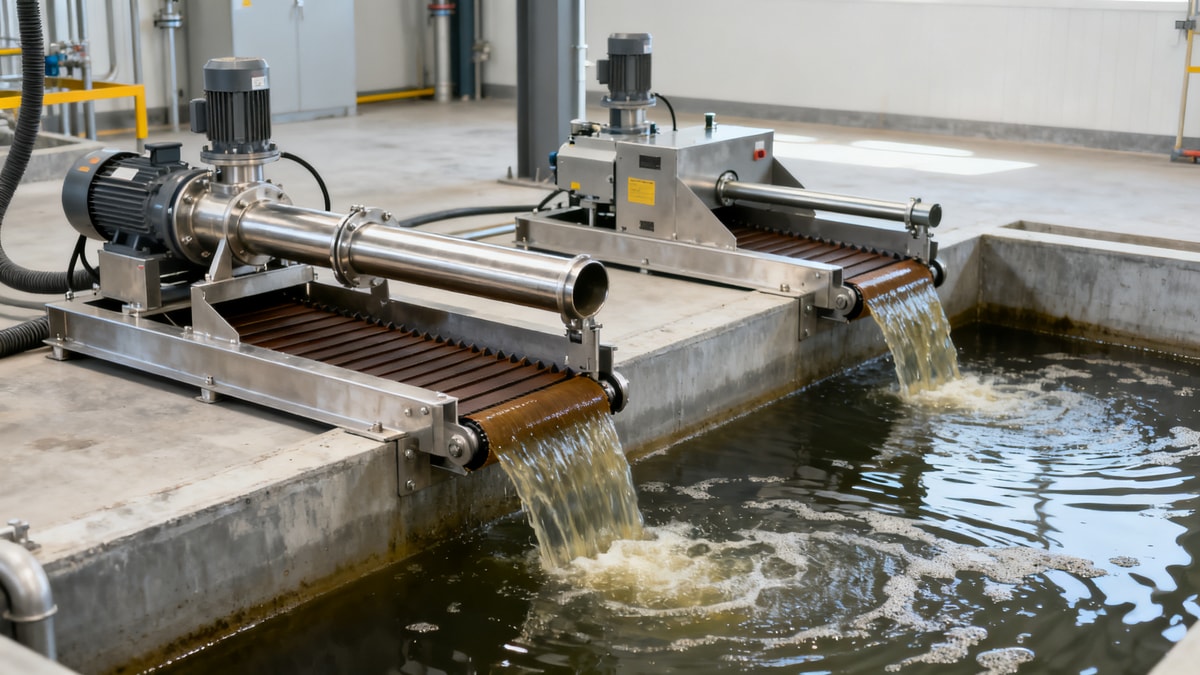
Selecting the right solution in oil skimmer wholesale can directly affect recovery efficiency, maintenance costs, and compliance performance. For procurement teams handling light oil applications, the challenge is not just price but matching skimmer type to oil viscosity, flow conditions, and operating environment. This guide helps buyers identify which oil skimmer design delivers the best results for light oil removal in industrial settings.
Understanding light oil recovery in industrial operations
In industrial wastewater management, “light oil” usually refers to low-viscosity hydrocarbons that float quickly on water surfaces. Common examples include diesel, kerosene, transformer oil, cutting fluids with light fractions, lubricants with low viscosity, and certain condensates found in process plants. These oils spread into thin films, move easily with turbulence, and can be difficult to capture consistently if the skimmer type is not suited to the application.
This is why oil skimmer wholesale has become an important sourcing category for EPC contractors, plant engineers, and procurement directors. A skimmer is not simply an accessory; it is part of a larger compliance and efficiency system tied to wastewater discharge limits, housekeeping standards, fire risk reduction, and oil reclamation targets. For buyers in heavy industry, the correct choice affects uptime, labor requirements, spare parts planning, and total cost of ownership.
For light oil specifically, the ideal skimmer must remove a thin floating layer rapidly while minimizing water pickup. That means the “best” type depends on oil thickness, surface stability, debris level, tank shape, temperature, and whether the buyer values portability, automation, or continuous duty performance.
Why the market pays close attention to oil skimmer wholesale
Interest in oil skimmer wholesale is growing because industrial facilities are under pressure to improve environmental control without adding unnecessary operational complexity. In sectors such as metalworking, power generation, petrochemical processing, food manufacturing, water treatment, and marine maintenance, light oil contamination can lower equipment performance and increase disposal costs. Floating oil also interferes with separators, biological treatment systems, and downstream filtration.
From a sourcing perspective, wholesale purchasing is attractive when projects involve multiple tanks, several plant locations, or framework contracts for recurring maintenance supply. However, procurement teams should avoid treating skimmers as interchangeable commodities. Technical fit matters more than nominal removal rate on a brochure. A unit designed for heavier oil may underperform in light oil service because the oil film is too thin to adhere efficiently or because the collection medium drags excessive water into the recovery tank.
For industrial buyers guided by standards and reliability, vendor evaluation should also consider CE, UL-related electrical suitability where applicable, corrosion resistance, material compatibility, and maintenance access. In hazardous or outdoor environments, motor protection, enclosure ratings, and safe integration with existing systems are often as important as skimming efficiency.
Core oil skimmer types used for light oil applications
Several skimmer designs are commonly offered in oil skimmer wholesale programs. Each has strengths, but not all perform equally well with low-viscosity oils.
Belt oil skimmers
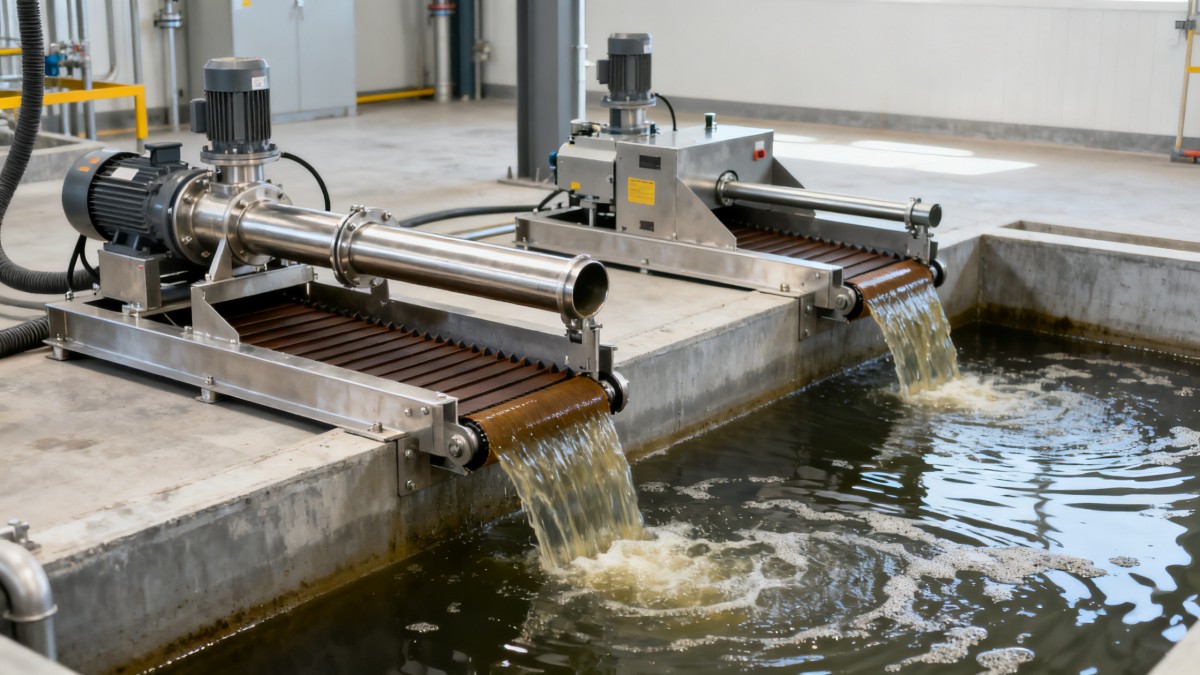
Belt skimmers use a continuous belt that passes through the oil layer and then through wiper blades that strip the collected oil. They are widely used because they are simple, compact, and suitable for tanks, sumps, and coolant systems. For light oil, belt skimmers can work very well when the oil layer is stable and the belt material has strong oleophilic properties. Their main advantage is steady removal and relatively easy installation.
The limitation is that very thin sheens or turbulent conditions may reduce pickup consistency. Water carryover can also rise if the belt surface and speed are not matched to the fluid characteristics.
Tube oil skimmers
Tube skimmers use a floating, oleophilic tube that travels across the liquid surface and carries oil back to scraper blades. In many light oil applications, this design is one of the strongest options because the tube can follow fluctuating liquid levels and travel through irregular tank shapes. It is especially useful where oils form thin layers over broad surfaces.
For procurement teams exploring oil skimmer wholesale for coolant sumps, wash bays, and wastewater pits, tube skimmers often offer a practical balance of low maintenance, flexible installation, and good light oil selectivity.
Disc oil skimmers
Disc skimmers rotate one or more discs through the surface layer and scrape oil from the disc face. They are commonly used in open tanks and separators where the oil layer remains concentrated near the skimmer. For light oil, disc units can deliver efficient recovery with low water entrainment if the oil is free-floating and the surface is not heavily disturbed.
Their effectiveness tends to drop when oil is spread too thinly across a large area, since the capture zone is localized around the disc.
Drum oil skimmers
Drum skimmers use rotating drums that pick up oil on their surface. They are robust and common in larger treatment systems. Drum designs can recover light oil well in calm surface conditions and often provide high throughput in contained areas. Still, compared with tube skimmers, they may be less adaptable in narrow pits or complex layouts.
Weir skimmers
Weir skimmers remove the top liquid layer by allowing it to flow over an adjustable lip. They can handle high volumes, but for very light oil they may collect significant water unless the layer is thick and stable. In oil skimmer wholesale discussions, weir skimmers are usually better suited to bulk recovery or emergency spill situations than to precision removal of thin light oil films.
A practical comparison for procurement teams
The table below gives a high-level view of how common skimmer types align with light oil conditions.
Which type fits light oil best in most industrial settings?
For most low-viscosity, floating-oil applications, tube skimmers are often the best overall fit, especially when the oil layer is thin, the liquid level changes, or the tank geometry is not straightforward. They provide broad surface contact, follow the oil film naturally, and are usually easier to deploy across mixed industrial settings. This makes them a strong candidate in oil skimmer wholesale programs intended for diverse facilities.
That said, belt skimmers are a very close second and may be the better choice where installation space is limited, the oil layer is reasonably stable, and maintenance teams prefer a straightforward mechanical layout. In central coolant management, small wastewater stations, and machine tool sumps, belt units are often favored for their compactness and predictable operation.
If the application involves a dedicated separator bay with calm conditions and oil concentration near one zone, disc or drum skimmers may outperform broader-coverage designs. In contrast, weir skimmers should usually be selected only when large-volume top-layer recovery is more important than selective light oil capture.
Typical industrial scenarios and the preferred choice
Because procurement decisions are context driven, it helps to map skimmer types to real operating environments.
What buyers should evaluate beyond skimmer type
In oil skimmer wholesale sourcing, type selection is only the first step. Procurement teams should also review the following technical and commercial factors before issuing a final order:
- Oil properties: viscosity, density, temperature range, and presence of surfactants.
- Tank conditions: footprint, depth, access restrictions, and liquid level fluctuation.
- Water carryover tolerance: whether reclaimed oil will be reused, disposed of, or sent for further separation.
- Materials and durability: stainless steel, engineered polymers, and resistance to corrosion or chemicals.
- Motor and controls: voltage, hazardous-area suitability, automation options, and overload protection.
- Serviceability: scraper replacement, spare parts availability, and cleaning frequency.
- Supplier credibility: documented performance data, certifications, field references, and support responsiveness.
For organizations that manage multiple sites, it is often wise to standardize on one or two skimmer platforms rather than many unrelated models. This simplifies training, spare inventory, and long-term maintenance planning.
Common specification mistakes in oil skimmer wholesale
One frequent mistake is selecting by nominal capacity alone. A high stated recovery rate may reflect thick-oil test conditions, not real light oil performance. Another mistake is ignoring fluid motion. If pumps, aeration, or inflow turbulence constantly disturb the surface, a skimmer that works well in calm water may produce inconsistent results.
Buyers also sometimes underestimate installation constraints. Even an efficient skimmer can fail commercially if it is hard to mount, difficult to clean, or incompatible with operator access. Finally, some projects overlook disposal and recovery goals. If the recovered product must contain minimal water for reuse or lower waste handling cost, selectivity becomes more important than gross volume.
A practical sourcing approach for industrial procurement
A disciplined oil skimmer wholesale decision process usually starts with a site survey, followed by fluid characterization, operating condition review, and vendor comparison using application-specific data. Ask suppliers for recommendations based on oil type, expected film thickness, and tank dimensions, not just a generic model list. Where possible,
Technical Specifications
- India BIS Draft IS 17832:2026 Sets Noise & Dust Limits for Waste CrushersAuthor :Environmental Engineering Director
- Korea MFDS Mandates Korean UI & KOSHA OEL Database for Industrial Water AnalyzersAuthor :Precision Metrology Expert
- Indonesia BPOM Mandates PM0.1 Efficiency & CADR Decay Labeling for Industrial Air PurifiersAuthor :Environmental Engineering Director
Expert Insights

Chief Security Architect
Dr. Thorne specializes in the intersection of structural engineering and digital resilience. He has advised three G7 governments on industrial infrastructure security.
Related Analysis
- May 03, 2026India BIS Draft IS 17832:2026 Sets Noise & Dust Limits for Waste CrushersAuthor :Environmental Engineering Director
- May 03, 2026Korea MFDS Mandates Korean UI & KOSHA OEL Database for Industrial Water AnalyzersAuthor :Precision Metrology Expert
- May 03, 2026Indonesia BPOM Mandates PM0.1 Efficiency & CADR Decay Labeling for Industrial Air PurifiersAuthor :Environmental Engineering Director
Core Sector // 01
Security & Safety
- SASO AI Sensor Compliance: Saudi Arabia Enforces AI Module Registration for Industrial Water SensorsAuthor :Environmental Engineering Director

- Drainage Cell Systems: Why Load Rating Is Often MisreadAuthor :Environmental Engineering Director

- Oil Skimmer Wholesale: Which Type Fits Light Oil Best?Author :Environmental Engineering Director

- Rainwater Harvesting Tanks: Is Bigger Always More Efficient?Author :Environmental Engineering Director

- Oil Water Separator Commercial Systems: What Drives Service Cost?Author :Environmental Engineering Director

- Water Quality Online Analyzer Selection Mistakes to AvoidAuthor :Environmental Engineering Director

- Chemical Metering Pumps: Which Dosing Errors Cost the Most?Author :Environmental Engineering Director

- What Sets One Belt Filter Press Manufacturer Apart?Author :Environmental Engineering Director