Rainwater Harvesting Tanks: Is Bigger Always More Efficient?
Author
Date Published
Reading Time
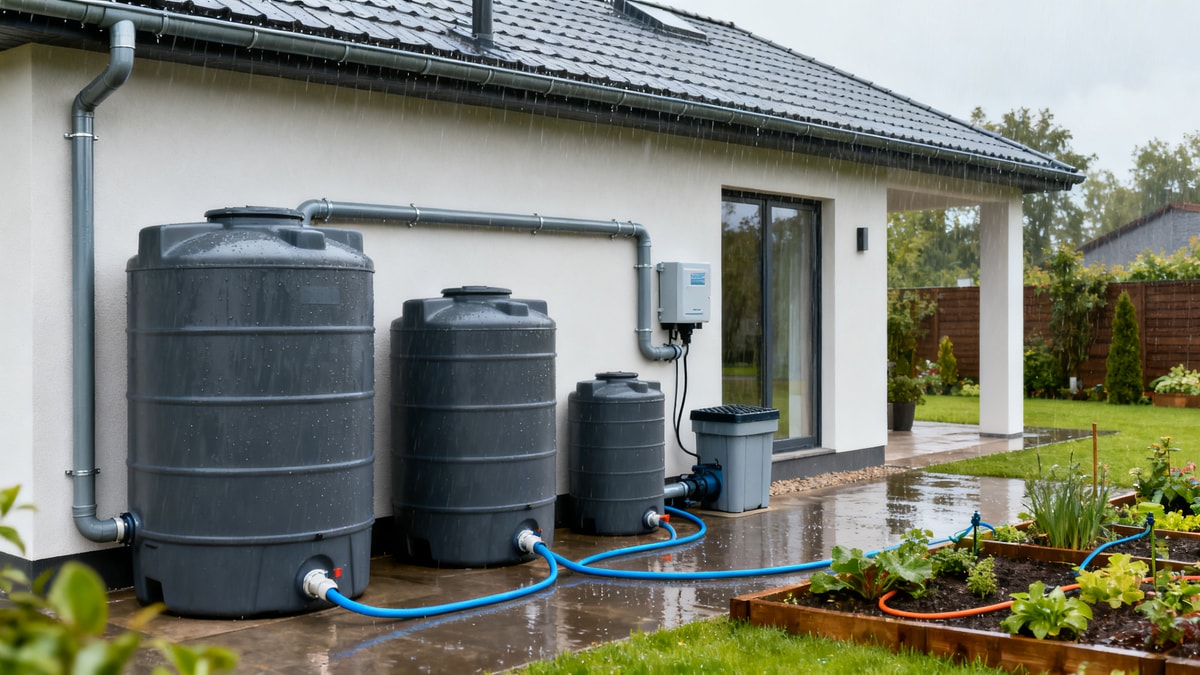
When choosing rainwater harvesting tanks, bigger does not always mean better. The right tank size depends on your roof area, local rainfall, water demand, installation space, and budget. Understanding these factors can help homeowners avoid overspending, improve water efficiency, and build a smarter, more reliable rainwater collection system for everyday use.
If you are comparing tank sizes, the short answer is simple: a larger tank is only more efficient when your home can actually collect, store, and use that extra water. For many households, an oversized tank ties up money, takes up valuable space, and may not improve day-to-day performance. A correctly sized system usually delivers better value than simply buying the biggest option available.
Many homeowners search for rainwater harvesting tanks because they want to cut water bills, improve garden irrigation, prepare for dry periods, or live more sustainably. What they really need is not the largest tank, but the most practical one. That means matching storage capacity to climate, roof catchment, household demand, and maintenance expectations.
Is a bigger rainwater tank actually more efficient?
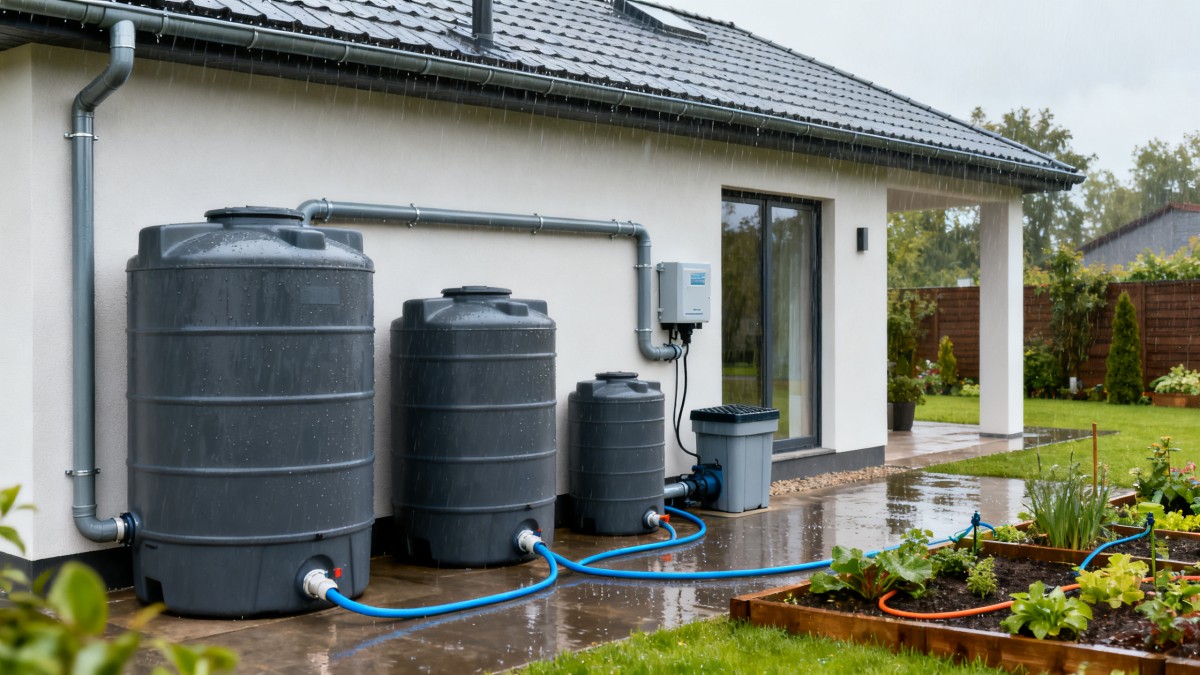
Not always. Efficiency in rainwater harvesting is about how much usable water you collect and how effectively you use it, not just how many gallons or liters your tank can hold. A very large tank can seem like a smart long-term investment, but if it rarely fills or stores more water than your household can use, much of that capacity goes to waste.
For example, a homeowner in a dry region with limited roof area may install a large tank hoping for year-round savings. But if rainfall is low and infrequent, the tank may spend most of the year partially empty. In that case, the extra storage does not improve performance. A smaller, properly sized tank could achieve nearly the same practical benefit at a lower upfront cost.
On the other hand, in areas with regular rainfall and high outdoor water use, a larger tank may improve capture rates and reduce overflow losses. The key point is that size alone does not define efficiency. Real efficiency comes from balance.
What should homeowners look at before choosing tank size?
The best tank size depends on five core factors: roof catchment area, annual rainfall, water demand, available installation space, and budget. Looking at these together gives a much more accurate answer than relying on generic “small, medium, or large” product labels.
Roof area determines how much rain you can capture. A large tank only makes sense if your roof can supply enough runoff to fill it. A small shed roof and a 10,000-liter tank are often a poor match.
Local rainfall matters just as much. Homes in regions with steady rainfall can justify more storage because refill opportunities are frequent. In places with short rainy seasons and long dry spells, storage must be sized more carefully to avoid overinvestment.
Water demand is the practical side of the equation. Are you using harvested rainwater for gardening, toilet flushing, laundry, or only occasional outdoor cleaning? A household using rainwater for several indoor and outdoor tasks will need more storage than one watering a small lawn twice a week.
Installation space can become a hidden constraint. Above-ground rainwater harvesting tanks require room, access, and stable support. Underground tanks save visible space but usually cost more to install and maintain.
Budget includes more than the purchase price. Larger tanks may require stronger bases, additional plumbing, pumps, filters, and delivery or excavation costs. The true system cost can rise quickly.
How to estimate the right size for your rainwater harvesting system
A practical way to estimate tank size is to compare how much rainwater you can collect with how much you expect to use. This does not require advanced engineering for most homes, but it does require realistic assumptions.
A common collection formula is:
Roof area × rainfall × runoff factor = harvestable water
The runoff factor accounts for losses from evaporation, splash, and first-flush diversion. In many residential setups, the actual captured volume is lower than the theoretical maximum, so it is important not to overestimate supply.
For example, if you have a medium-sized roof in a region with moderate annual rainfall, you may collect enough water to support garden irrigation and some non-potable household uses. But if your use is seasonal, such as heavy summer irrigation, your tank should be sized around those peak periods rather than average annual use alone.
Many homeowners make two common mistakes. First, they choose tank size based only on the largest model they can afford. Second, they base it only on water demand without considering whether the roof and rainfall can keep the tank supplied. The right choice sits between those extremes.
When is a larger tank worth the investment?
A bigger tank can be the better option in several situations. The first is when your property has a large roof catchment area and dependable rainfall. In that case, a larger tank helps you keep more of the water you collect instead of losing it through overflow during heavy rain events.
The second is when your household has consistently high water demand. If you are watering a large garden, maintaining landscaping, washing vehicles, or using rainwater for toilets and laundry, extra storage may provide meaningful savings and resilience.
The third is when local water prices are high or water restrictions are common. In those conditions, additional storage may have a stronger financial and practical return. The ability to rely less on municipal water can be especially valuable during droughts.
Another good reason to size up is future planning. If you expect to expand your garden, add irrigation zones, or connect more household uses later, choosing a somewhat larger tank now may prevent costly upgrades in the future. The important word is “somewhat.” Future-proofing is sensible; extreme oversizing often is not.
When does a smaller tank make more sense?
Smaller rainwater harvesting tanks are often the smarter choice for homeowners with limited space, modest outdoor use, or unpredictable rainfall. They can still reduce runoff and lower water bills without creating unnecessary cost or maintenance.
If your main goal is to collect water for potted plants, a compact garden, or occasional cleaning, a smaller tank may perform very well. It can fill more quickly, cycle water more often, and reduce the chance of long-term stagnation. In real use, that can make it feel more efficient than a large tank that rarely reaches capacity.
Smaller systems are also easier to integrate into urban homes where side-yard space, visual impact, or access limitations matter. They are usually less expensive to install and simpler to maintain, making them attractive for first-time users who want practical benefits without a major project.
For many households, starting with a moderate tank size is a low-risk way to learn actual usage patterns. Once you understand how often the tank fills, empties, and overflows through the seasons, you can decide whether expansion is justified.
What hidden costs come with oversized tanks?
Homeowners often focus on storage volume and underestimate the total cost of ownership. Large rainwater harvesting tanks may require reinforced bases, more complex plumbing, stronger pumps, and additional filtration equipment. If the tank is underground, excavation, drainage planning, and access for maintenance can significantly raise the project budget.
Maintenance can also become more demanding. A larger system may hold water longer, which means water turnover could be slower if household use is low. Poor turnover can affect water freshness, especially in warm climates. Gutters, screens, first-flush diverters, and internal tank conditions still need routine inspection regardless of tank size.
There is also an opportunity cost. Money spent on excess storage might deliver a better return if invested in higher-quality filters, better guttering, a more efficient pump, or additional water-saving fixtures around the home. Sometimes improving the whole system creates more value than simply increasing capacity.
Does local climate change the “best” tank size?
Absolutely. Climate is one of the biggest influences on tank sizing. In regions with frequent, moderate rainfall, homeowners can often rely on smaller or medium tanks because the system has regular chances to refill. In those areas, efficient turnover may matter more than maximum storage.
In regions with seasonal rain, larger storage can make more sense because you may need to hold enough water to bridge long dry periods. But even then, the tank must still be realistic relative to collection area and use patterns. A dry climate does not automatically justify the largest tank available.
Storm intensity also matters. Some areas receive rain in short, heavy bursts. If your tank is too small, you may lose a large share of potential collection to overflow. If your tank is too large for normal use, however, you may end up paying for capacity that sits idle much of the year. Climate-aware sizing is more useful than size-focused buying.
How can homeowners choose with confidence?
A smart buying decision starts with a simple question: what do you want your rainwater harvesting tanks to do for your home? If the goal is occasional garden use, your answer will differ from a household seeking regular non-potable indoor supply and drought resilience.
Make a list of expected uses, estimate your weekly or monthly demand, and compare it with realistic collection potential from your roof. Then consider available space, installation type, and your total budget. This process usually narrows the options quickly.
It also helps to think in terms of system performance, not just tank volume. A well-designed medium tank with good filtration, proper overflow handling, easy access for cleaning, and a reliable pump may outperform a larger but poorly integrated system.
If possible, speak with a local installer or water management professional familiar with regional rainfall patterns and building conditions. They can identify issues such as poor placement, unsuitable foundations, mosquito prevention, freeze risks, or local rules affecting installation.
Final answer: bigger is not always better
When it comes to rainwater harvesting tanks, bigger is not automatically more efficient. The best tank size is the one that fits your roof catchment, climate, water demand, space, and budget. Oversizing can increase costs without delivering meaningful extra value, while undersizing can limit water savings and waste collection opportunities.
For most homeowners, the smartest approach is to choose a tank that matches real-world use rather than idealized maximum capacity. A balanced system collects enough water, stores it effectively, and supports everyday needs without unnecessary expense.
If you remember one thing, let it be this: efficiency is not about owning the biggest tank. It is about building a rainwater harvesting system that works well for your home, your habits, and your environment.
Technical Specifications
- India BIS Draft IS 17832:2026 Sets Noise & Dust Limits for Waste CrushersAuthor :Environmental Engineering Director
- Korea MFDS Mandates Korean UI & KOSHA OEL Database for Industrial Water AnalyzersAuthor :Precision Metrology Expert
- Indonesia BPOM Mandates PM0.1 Efficiency & CADR Decay Labeling for Industrial Air PurifiersAuthor :Environmental Engineering Director
Expert Insights

Chief Security Architect
Dr. Thorne specializes in the intersection of structural engineering and digital resilience. He has advised three G7 governments on industrial infrastructure security.
Related Analysis
- May 03, 2026India BIS Draft IS 17832:2026 Sets Noise & Dust Limits for Waste CrushersAuthor :Environmental Engineering Director
- May 03, 2026Korea MFDS Mandates Korean UI & KOSHA OEL Database for Industrial Water AnalyzersAuthor :Precision Metrology Expert
- May 03, 2026Indonesia BPOM Mandates PM0.1 Efficiency & CADR Decay Labeling for Industrial Air PurifiersAuthor :Environmental Engineering Director
Core Sector // 01
Security & Safety
- SASO AI Sensor Compliance: Saudi Arabia Enforces AI Module Registration for Industrial Water SensorsAuthor :Environmental Engineering Director

- Drainage Cell Systems: Why Load Rating Is Often MisreadAuthor :Environmental Engineering Director

- Oil Skimmer Wholesale: Which Type Fits Light Oil Best?Author :Environmental Engineering Director

- Rainwater Harvesting Tanks: Is Bigger Always More Efficient?Author :Environmental Engineering Director

- Oil Water Separator Commercial Systems: What Drives Service Cost?Author :Environmental Engineering Director

- Water Quality Online Analyzer Selection Mistakes to AvoidAuthor :Environmental Engineering Director

- Chemical Metering Pumps: Which Dosing Errors Cost the Most?Author :Environmental Engineering Director

- What Sets One Belt Filter Press Manufacturer Apart?Author :Environmental Engineering Director