Drainage Cell Systems: Why Load Rating Is Often Misread
Author
Date Published
Reading Time
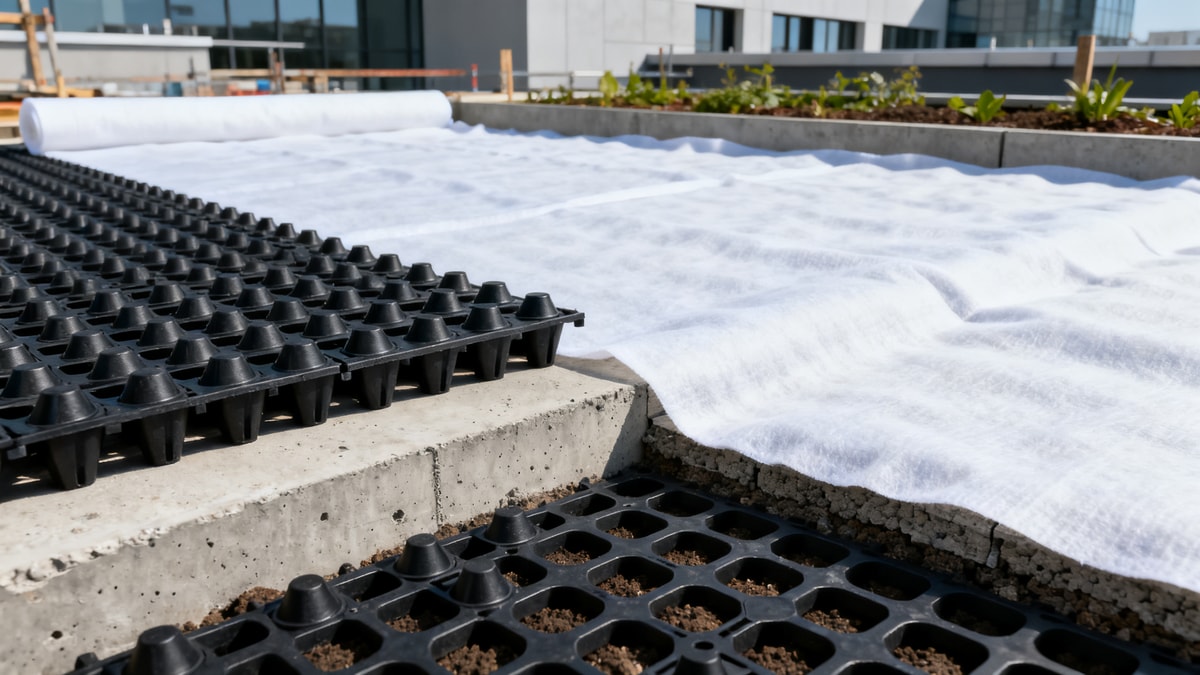
In technical reviews, drainage cell systems are often judged by a single load rating number, yet that figure can be misleading without context. Installation conditions, long-term creep, subgrade support, and test methods all affect real-world performance. For evaluators comparing specifications, understanding why load rating is frequently misread is essential to avoiding underperformance, premature failure, and costly procurement mistakes.
For technical assessment teams, a checklist approach is the fastest way to separate reliable drainage cell systems from products that only look strong on paper. A headline compressive value may be useful, but it is not a complete performance indicator. Procurement decisions for podium decks, green roofs, retaining wall back-drainage, and landscape applications depend on how the system behaves after installation, under sustained load, and within a complete assembly. That is why evaluators should review drainage cell systems through a structured sequence of checks rather than a single data point.
Start Here: The First Questions to Ask Before Comparing Load Ratings
Before reading any datasheet, confirm what the quoted load rating is actually describing. In many cases, suppliers present peak compressive strength, while the project really needs allowable load under long-term service conditions. These are not equivalent. A drainage core that survives a short laboratory test may still deform significantly over time when buried beneath saturated soil, pavers, or traffic-bearing finishes.
- Is the value a short-term compressive strength, an ultimate failure load, or a recommended working load?
- Was the test performed on the drainage cell alone, or on the full drainage cell systems assembly with geotextile and support layers?
- What deformation limit was used to define the result: first yield, 10% strain, collapse, or another criterion?
- Does the rating account for creep under permanent load over years, not just minutes or hours?
- What subgrade or supporting surface was used during testing, and does it match the actual installation?
If any of these points is unclear, the published rating should not be used as the basis for direct comparison. This is where many technical reviews go wrong: two drainage cell systems may display similar load numbers but behave very differently in service.
Core Evaluation Checklist for Drainage Cell Systems
1. Verify the test method, not just the result
The same product can produce very different results depending on the test protocol. Check whether the manufacturer references a recognized standard, an internal method, or a modified laboratory setup. Technical evaluators should ask for the exact test basis, load application method, specimen dimensions, and termination criteria. Without that, the load rating has limited decision value.
A reliable review also checks whether the test simulates concentrated loads, distributed loads, or confinement effects. In built assemblies, drainage cell systems are rarely loaded in the same idealized way shown in marketing literature.
2. Distinguish short-term strength from long-term serviceability
This is one of the most common misreadings. Polymeric drainage cell systems may tolerate high short-term compression yet gradually lose drainage height due to creep. For a roof garden or buried landscaping system, long-term thickness retention matters because flow capacity depends on preserving void space. A cell that crushes only slightly in a quick test may still flatten enough over years to reduce drainage efficiency.
The practical check is simple: ask for long-term compression data, creep reduction factors, or allowable design load at a defined service life and temperature. If only ultimate load is available, treat the result cautiously.
3. Review support conditions below the panel
Drainage cell systems derive performance from both the product and the substrate beneath them. A strong drainage panel placed on an uneven or deformable base can experience point loading, local buckling, or differential settlement. Testing on a rigid steel platen may overstate real-world performance when the project involves insulation boards, compacted fill, waterproofing protection layers, or variable soil support.
For procurement reviews, match the support condition in the test report to the actual site build-up. If the product will rest on soft insulation or irregular subgrade, request evidence under comparable conditions.
4. Check drainage flow under load, not flow at zero load
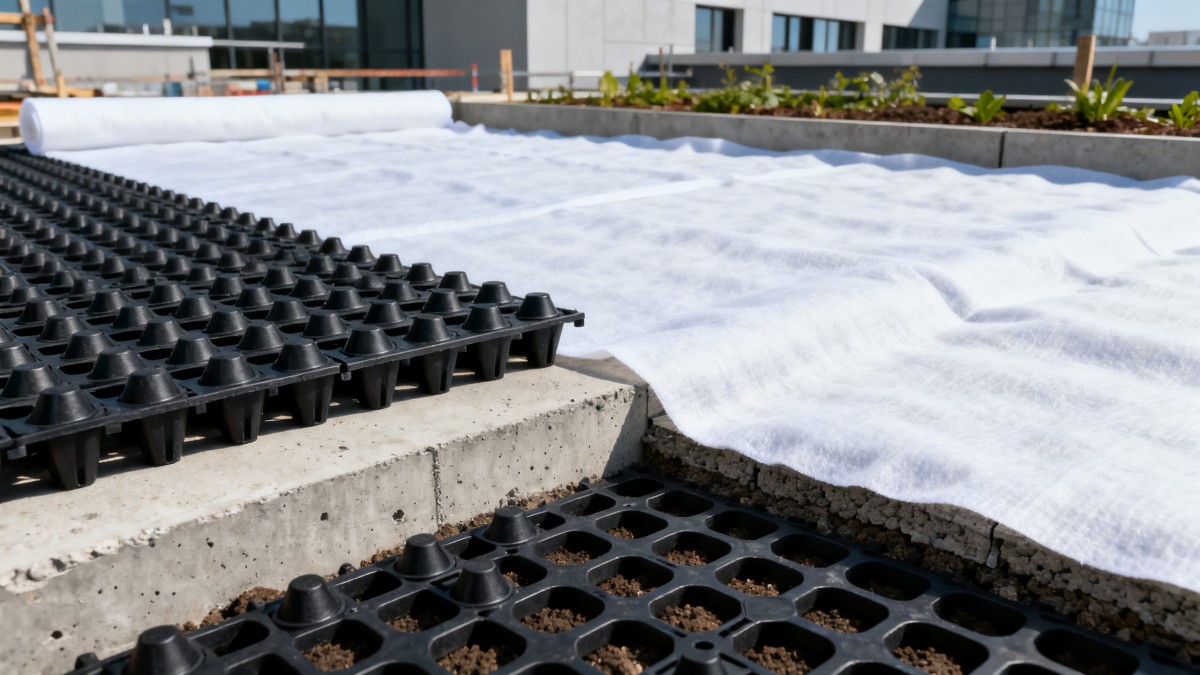
A system can have acceptable compressive resistance and still fail hydraulically if its drainage path collapses. This is particularly important for drainage cell systems specified behind retaining walls, beneath planters, or under green roof media. Technical reviewers should look for transmissivity or flow capacity data at relevant confining pressures. Zero-load flow values may look impressive but tell little about in-service behavior.
5. Confirm geotextile compatibility and intrusion resistance
The drainage core is only one part of the system. If the filter fabric stretches into cell cavities, clogs, or tears under load, effective performance drops. Ask whether the drainage cell systems package has been assessed as an integrated assembly, including geotextile opening size, puncture resistance, and long-term filtration stability. For fine soils, intrusion into drainage voids can be a more immediate risk than cell crushing.
6. Examine connection behavior and edge conditions
Many datasheets focus on the center of a single panel, but field failures often start at joints, cut edges, corners, and transitions. Interlock design, panel overlap, and edge restraint influence whether loads are distributed or concentrated. When comparing drainage cell systems, technical teams should review installation details, not just material properties.
A Practical Comparison Framework for Technical Evaluators
Use the following framework when screening offers from multiple suppliers. It helps convert broad claims into comparable engineering inputs.
Scenario-Based Checks: Where Misreading Happens Most Often
Green roofs and podium decks
In these projects, drainage cell systems operate under permanent dead load from saturated growing media, pavers, and maintenance traffic. The key issue is not just whether the cell survives installation, but whether it retains enough void volume to drain after years of compression. Evaluate long-term compression set, water flow under load, and compatibility with root barriers and waterproofing membranes.
Retaining walls and basement walls
Back-drainage applications place drainage cell systems against vertical surfaces, where soil pressure, fines migration, and construction damage become critical. Here, geotextile clogging resistance and installation robustness may matter as much as nominal load rating. Also check whether the product can maintain a continuous drainage path at overlaps and around penetrations.
Landscaping and buried utility zones
In landscape projects, actual loading can become highly variable due to equipment access, compaction methods, and uneven fill placement. Drainage cell systems selected solely on a brochure strength number may be vulnerable if the fill process creates localized impact or point loads. Review installation staging and protective layers, especially when heavy equipment crosses the area before final cover depth is achieved.
Common Red Flags That Should Trigger Deeper Review
- A very high load rating is shown without identifying the standard or deformation limit.
- The datasheet presents only compressive strength and no hydraulic data under load.
- Performance claims are made for drainage cell systems but only the raw core material has been tested.
- No long-term creep or service-life adjustment is provided for polymer components.
- The supplier cannot explain substrate assumptions, edge restraints, or joint behavior.
- There is no documented reference for similar applications, loads, or climate conditions.
Execution Advice: How to Improve Procurement Accuracy
To reduce specification risk, technical evaluators should define acceptance criteria in functional terms rather than relying on one headline rating. For drainage cell systems, that means specifying the required drainage performance, allowable long-term deformation, expected load duration, installation support condition, and any compliance or test standard requirements. This approach makes supplier responses easier to compare and reduces ambiguity in bid review.
It is also good practice to request project-specific confirmation where conditions are unusual. Examples include high-temperature roofs, weak subgrades, deep soil profiles, or mixed traffic exposure. In these cases, a generic datasheet often leaves too much uncertainty. A competent supplier should be able to provide design guidance, reduction factors, or technical justification linked to the proposed build-up.
FAQ for Technical Reviews of Drainage Cell Systems
Is the highest load rating always the safest choice?
No. The safest choice is the system with verified performance under the actual project conditions. A lower published value with better long-term data and more relevant testing may be the stronger engineering option.
What is more important: compressive strength or drainage capacity?
Both matter, but they must be evaluated together. Drainage cell systems exist to convey water, so structural capacity without retained flow under load is incomplete performance.
When should a third-party review be considered?
Consider it when the project has high consequence of failure, unusual loading, large procurement value, or conflicting supplier claims. Independent review is especially useful when test methods are unclear or product substitution is proposed.
What to Prepare Before the Next Supplier Discussion
If your team needs to move from screening to specification, prepare five items before contacting suppliers: the full build-up section, expected permanent and temporary loads, support condition, required drainage function, and project service environment. With these inputs, discussions about drainage cell systems become more precise and less marketing-driven.
For organizations managing complex industrial or infrastructure procurement, the most effective next step is to request a side-by-side technical submission that covers load basis, creep, flow under pressure, assembly details, and installation limits. That single action will reveal whether a quoted load rating reflects true service performance or only a favorable laboratory number. When parameters, application fit, lead time, certification, budget, or substitution risk still need clarification, those are the issues to prioritize in the next technical meeting.
Technical Specifications
- India BIS Draft IS 17832:2026 Sets Noise & Dust Limits for Waste CrushersAuthor :Environmental Engineering Director
- Korea MFDS Mandates Korean UI & KOSHA OEL Database for Industrial Water AnalyzersAuthor :Precision Metrology Expert
- Indonesia BPOM Mandates PM0.1 Efficiency & CADR Decay Labeling for Industrial Air PurifiersAuthor :Environmental Engineering Director
Expert Insights

Chief Security Architect
Dr. Thorne specializes in the intersection of structural engineering and digital resilience. He has advised three G7 governments on industrial infrastructure security.
Related Analysis
- May 03, 2026India BIS Draft IS 17832:2026 Sets Noise & Dust Limits for Waste CrushersAuthor :Environmental Engineering Director
- May 03, 2026Korea MFDS Mandates Korean UI & KOSHA OEL Database for Industrial Water AnalyzersAuthor :Precision Metrology Expert
- May 03, 2026Indonesia BPOM Mandates PM0.1 Efficiency & CADR Decay Labeling for Industrial Air PurifiersAuthor :Environmental Engineering Director
Core Sector // 01
Security & Safety
- SASO AI Sensor Compliance: Saudi Arabia Enforces AI Module Registration for Industrial Water SensorsAuthor :Environmental Engineering Director

- Drainage Cell Systems: Why Load Rating Is Often MisreadAuthor :Environmental Engineering Director

- Oil Skimmer Wholesale: Which Type Fits Light Oil Best?Author :Environmental Engineering Director

- Rainwater Harvesting Tanks: Is Bigger Always More Efficient?Author :Environmental Engineering Director

- Oil Water Separator Commercial Systems: What Drives Service Cost?Author :Environmental Engineering Director

- Water Quality Online Analyzer Selection Mistakes to AvoidAuthor :Environmental Engineering Director

- Chemical Metering Pumps: Which Dosing Errors Cost the Most?Author :Environmental Engineering Director

- What Sets One Belt Filter Press Manufacturer Apart?Author :Environmental Engineering Director