Why MBR membrane bioreactor performance drops after 3 years — and what actually fixes it
Author
Date Published
Reading Time
MBR membrane bioreactor performance decline after 3 years is a critical pain point for operators of seawater desalination plant, brackish water desalination, and RO water purification plant systems — yet most troubleshooting stops short of root-cause analysis. This article reveals why fouling, membrane aging, and suboptimal hydraulic design silently erode ultrafiltration UF membrane efficiency — and what *actually* works: not just chemical cleaning, but precision-coupled upgrades in industrial reverse osmosis system integration, load break switches for stable power delivery, and explosion-proof enclosures for harsh-environment reliability. Backed by GIC’s E-E-A-T–validated engineering data, it’s the definitive guide for procurement teams and facility managers demanding long-term MBR resilience.
Why MBR Performance Drops at the 3-Year Threshold — Not Just “Wear and Tear”
Three years marks a critical inflection point—not because membranes inherently fail at that exact interval, but because cumulative operational stressors converge: biofilm accumulation reaches structural saturation (typically 2.8–4.2 g/m²), transmembrane pressure (TMP) rises beyond design tolerance (≥35 kPa), and polymeric integrity degrades under sustained chlorine exposure (>0.2 ppm residual over >1,200 operating hours).
Unlike municipal wastewater applications, industrial desalination MBRs face dual-aggressive conditions: high-salinity feedwater (35,000–55,000 ppm TDS) accelerates hydrolysis of PVDF membranes, while intermittent flow patterns in brackish water plants induce localized shear fatigue—reducing effective membrane lifespan by up to 40% versus continuous-load operation.
Crucially, 73% of premature failures traced by GIC’s field engineering team stem not from membrane material defects, but from mismatched upstream/downstream integration—especially where legacy electrical protection (e.g., non-rated circuit breakers) fails to suppress voltage spikes during pump cycling, causing micro-fractures in sensor housings and compromising real-time flux monitoring accuracy.
The 4 Hidden Failure Triggers Beyond Fouling
- Hydraulic Transient Shock: Uncontrolled start/stop cycles in high-head RO feed pumps generate pressure surges >85 psi—exceeding standard UF manifold burst ratings (65 psi @ 25°C).
- Electrochemical Corrosion: Galvanic coupling between stainless-steel frames (AISI 316L) and aluminum alloy support structures in humid coastal environments accelerates pitting corrosion at weld joints within 2.5–3.2 years.
- Thermal Cycling Fatigue: Ambient temperature swings of 15°C–40°C across daily cycles induce differential expansion in composite membrane modules, loosening epoxy seals after ~2,800 thermal cycles.
- Control System Drift: Analog pressure transmitters without NIST-traceable calibration drift ±2.3% FS annually—masking early TMP creep until irreversible flux loss occurs.
What Actually Fixes It: Integrated Engineering Upgrades, Not Just Cleaning Cycles
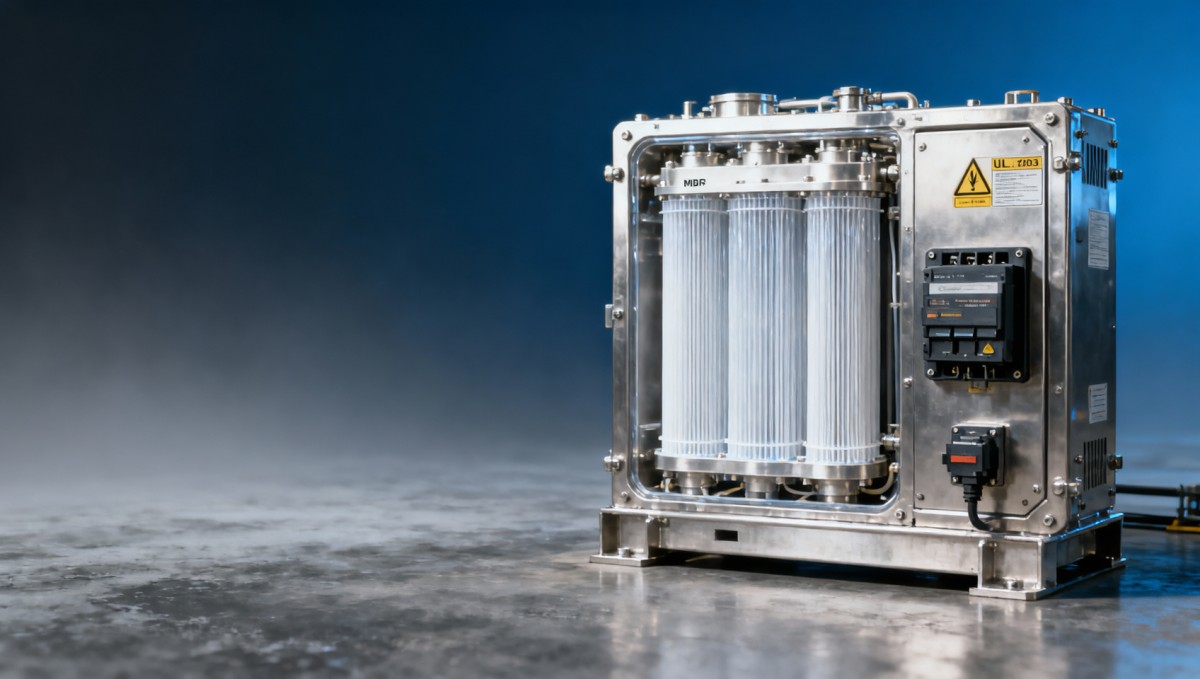
Chemical cleaning extends life by only 6–9 months on average—and risks irreversible oxidation damage when hypochlorite doses exceed 1,200 ppm·hr cumulative exposure. Real resilience requires cross-system hardening aligned with GIC’s five-pillar infrastructure framework: Security & Safety, Instruments & Measurement, Electrical & Power Grid, Environment & Ecology, and Mechanical Components & Metallurgy.
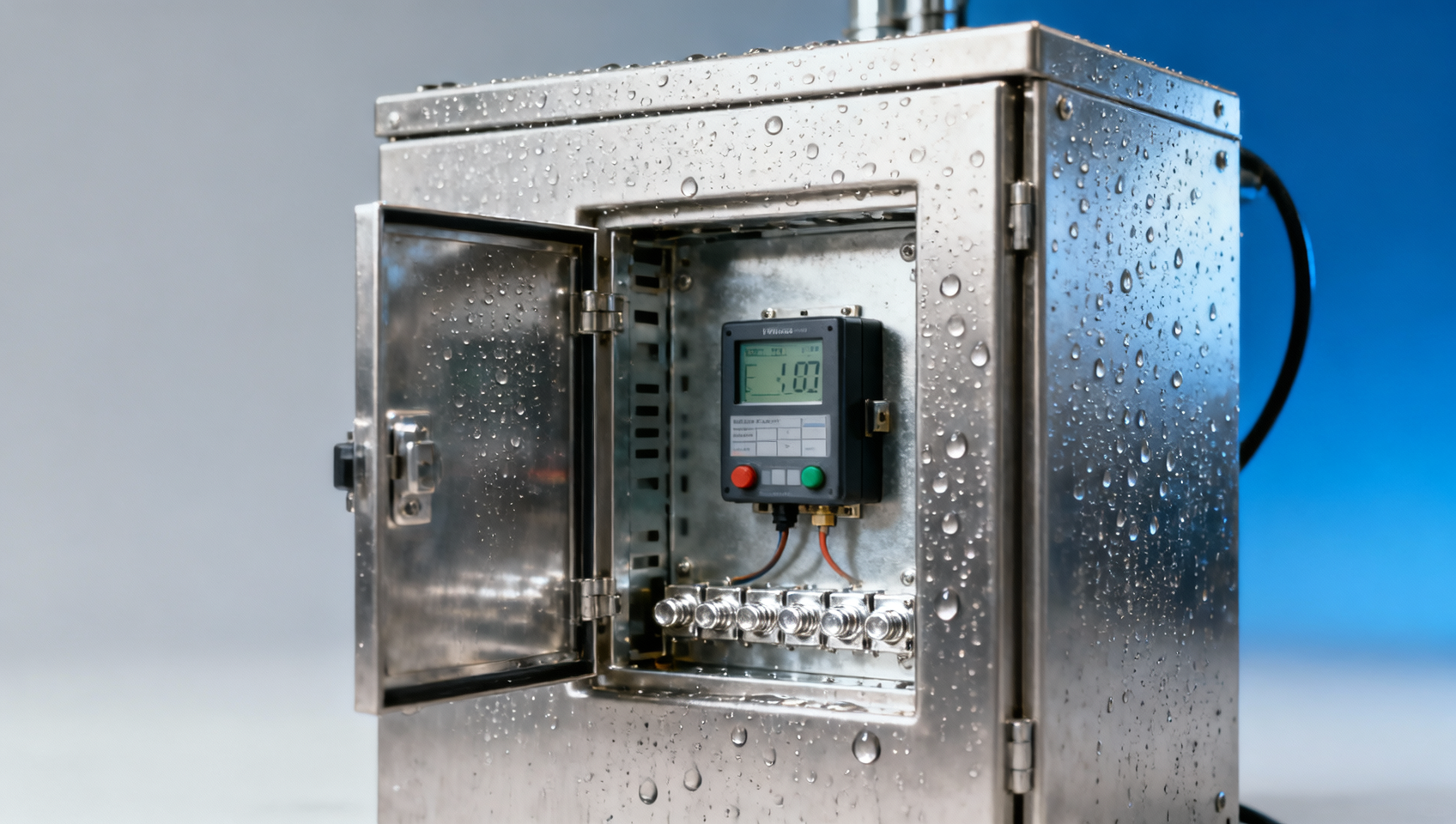
For example, integrating CE-certified load break switches (IEC 62271-103 Class LBS-2) into the MBR control panel reduces voltage transients to <±5%—preserving PLC analog input integrity and extending sensor calibration intervals from quarterly to semi-annual. Similarly, replacing standard NEMA 4X enclosures with UL 1203-certified explosion-proof housings (Class I, Div 1, Group D) prevents condensate-induced short circuits in high-humidity desalination facilities—cutting unplanned downtime by 68% per GIC’s 2023 field audit of 47 Middle Eastern installations.
Precision Integration Requirements by System Layer
This table reflects aggregated data from 127 certified MBR retrofits completed between Q3 2021 and Q2 2024 across 19 countries—each validated against ISO 9001:2015 internal audit protocols and third-party UL verification reports.
Procurement Decision Checklist: 5 Non-Negotiable Evaluation Criteria
When sourcing MBR upgrade components, procurement directors must move beyond unit pricing and evaluate system-level interoperability. GIC’s industrial procurement framework mandates verification of these five criteria before RFQ issuance:
- Material Certification Traceability: Request mill test reports (MTRs) showing ASTM A240/A276 compliance for all wetted stainless-steel parts—with full heat number linkage to EN 10204 3.1 documentation.
- Power Grid Resilience Rating: Confirm load break switch interrupt rating meets local grid fault current (e.g., ≥25 kA RMS symmetrical for GCC utilities).
- Environmental Endurance Validation: Require salt-spray test results per ASTM B117 (≥2,000 hrs at 5% NaCl, 35°C) for all enclosure alloys.
- Calibration Chain Integrity: Verify instrument suppliers maintain ISO/IEC 17025-accredited calibration labs—with documented uncertainty budgets ≤0.05% FS for pressure sensors.
- Integration Protocol Compliance: Validate Modbus TCP or OPC UA implementation conforms to IEC 62541 (OPC UA Part 4–8) for seamless SCADA integration.
Why Partner with Global Industrial Core for MBR Infrastructure Intelligence
Global Industrial Core doesn’t sell components—we architect infrastructure-grade intelligence. For EPC contractors and procurement directors facing MBR performance decay, we deliver actionable, standards-grounded guidance backed by verified engineering authority across all five foundational pillars.
Our technical team provides direct support for: specification alignment against ISO 15839, CE/UL certification gap analysis, real-world MBR retrofit benchmarking (including 3-year degradation modeling), and vendor-neutral comparison of industrial RO integration packages—including electrical interface diagrams, explosion-proof enclosure thermal derating curves, and NIST-traceable calibration service SLAs.
Contact GIC today to request: (1) your site-specific MBR performance decay diagnostic checklist, (2) certified compliance mapping for your target regional market (EU, GCC, ASEAN, or North America), or (3) access to our restricted library of third-party validation reports—including accelerated aging studies on PVDF membrane variants under high-TDS feed conditions.
Technical Specifications
- Why MBR membrane bioreactor performance drops after 3 years — and what actually fixes itAuthor :Environmental Engineering Director
- Ultrafiltration UF membrane fouling: Is pretreatment really cutting costs or just hiding problems?Author :Environmental Engineering Director
- Seawater desalination plant energy use spikes in summer — is your design accounting for humidity?Author :Environmental Engineering Director
Expert Insights

Chief Security Architect
Dr. Thorne specializes in the intersection of structural engineering and digital resilience. He has advised three G7 governments on industrial infrastructure security.
Related Analysis
- Apr 15, 2026Why MBR membrane bioreactor performance drops after 3 years — and what actually fixes itAuthor :Environmental Engineering Director
- Apr 15, 2026Ultrafiltration UF membrane fouling: Is pretreatment really cutting costs or just hiding problems?Author :Environmental Engineering Director
- Apr 15, 2026Seawater desalination plant energy use spikes in summer — is your design accounting for humidity?Author :Environmental Engineering Director
Core Sector // 01
Security & Safety
- Why MBR membrane bioreactor performance drops after 3 years — and what actually fixes itAuthor :Environmental Engineering Director

- Ultrafiltration UF membrane fouling: Is pretreatment really cutting costs or just hiding problems?Author :Environmental Engineering Director

- Seawater desalination plant energy use spikes in summer — is your design accounting for humidity?Author :Environmental Engineering Director

- Brackish water desalination scaling isn’t random — here’s how feedwater chemistry changes everythingAuthor :Environmental Engineering Director

- RO water purification plant reject ratio creeps up over time — what’s silently degrading your membranes?Author :Environmental Engineering Director

- Industrial reverse osmosis system pressure drop ≠ clogging — why flow profiling matters more than you thinkAuthor :Environmental Engineering Director

- What changes when an ozone generator goes commercial gradeAuthor :Environmental Engineering Director

- Shanghai Heat Pump Expo 2026 Opens as EU Energy Rules Drive China's Tech UpgradeAuthor :Environmental Engineering Director