Ultrafiltration UF membrane fouling: Is pretreatment really cutting costs or just hiding problems?
Author
Date Published
Reading Time
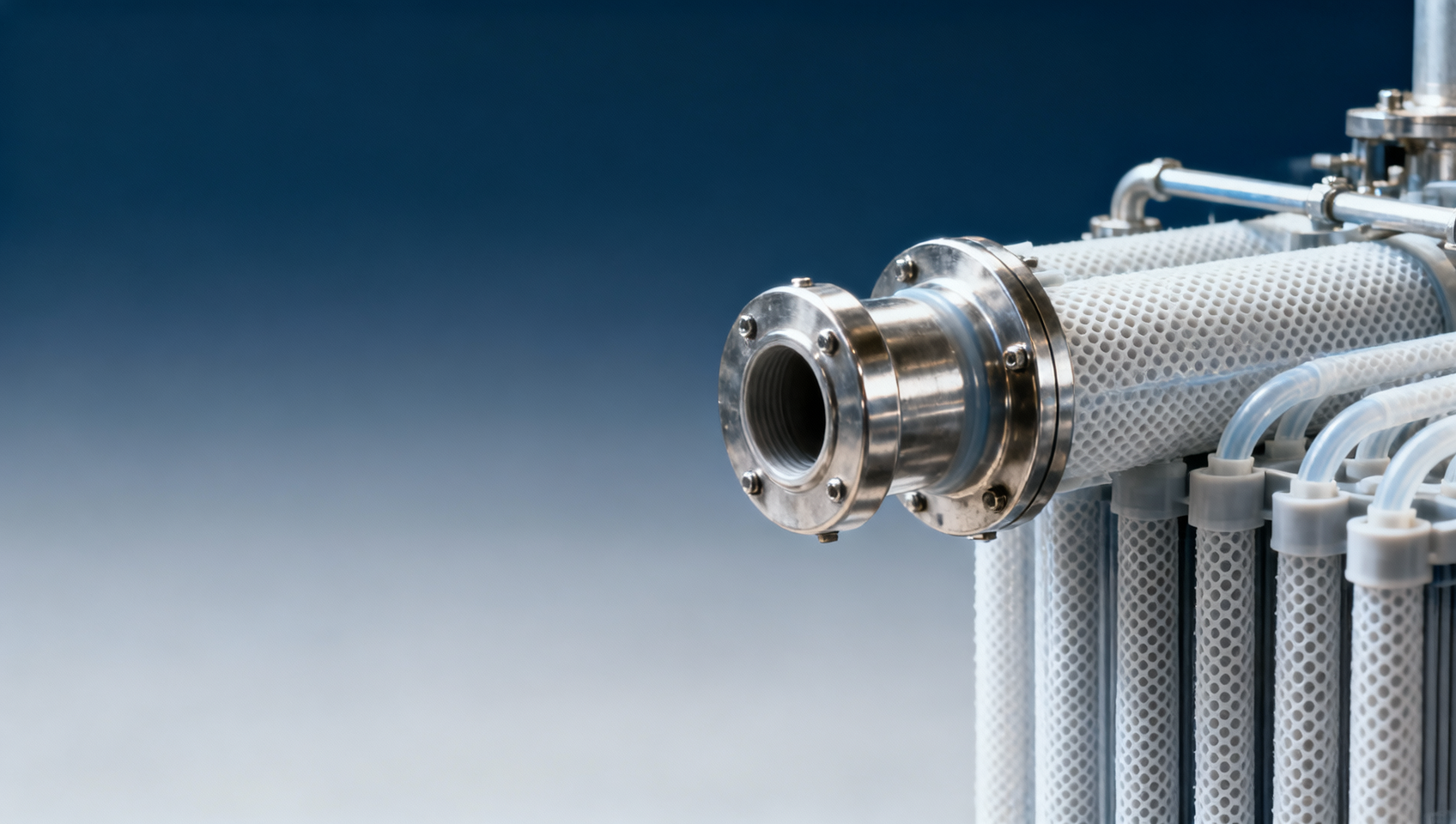
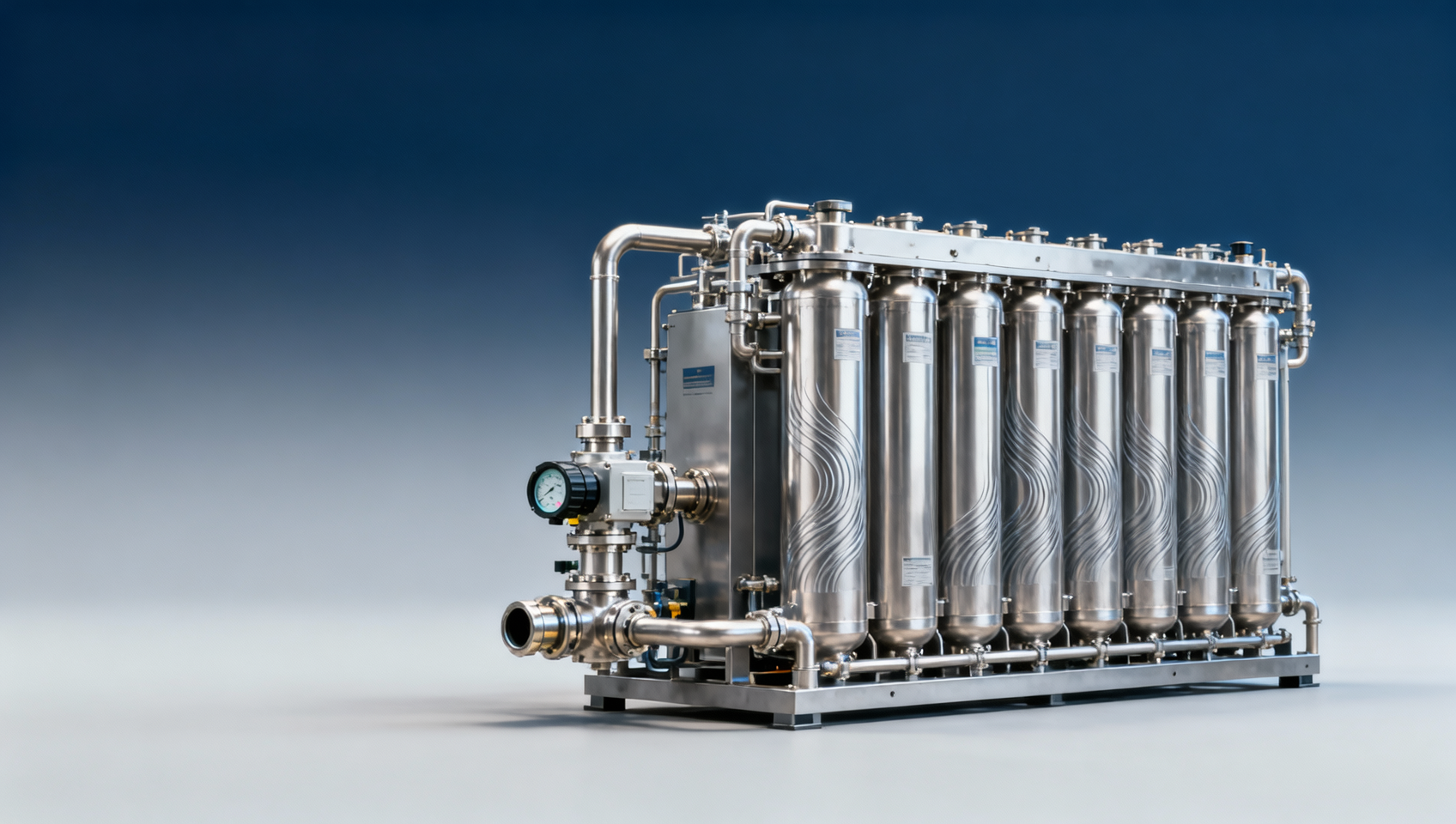
Ultrafiltration (UF) membrane fouling remains a critical bottleneck in seawater desalination plants, brackish water desalination systems, and industrial reverse osmosis setups—yet many operators mistake superficial pretreatment for true cost control. When UF membranes clog prematurely, it doesn’t just strain MBR membrane bioreactor efficiency—it cascades into higher energy use, frequent cleaning cycles, and unplanned downtime. For procurement teams and EPC contractors evaluating RO water purification plant reliability, or facility managers specifying load break switches, ATS, or explosion-proof enclosures, membrane performance is infrastructure integrity. At Global Industrial Core, we cut past marketing claims to audit whether your pretreatment strategy solves fouling—or merely defers failure.
Why “Effective” Pretreatment Often Masks Real Fouling Drivers
Pretreatment is routinely treated as a compliance checkbox—not a dynamic defense layer. In practice, coagulation-sedimentation followed by dual-media filtration may meet ISO 10500 turbidity thresholds (<0.3 NTU), yet fail to remove colloidal silica, polysaccharides, or biofilm precursors under variable feed conditions. Field data from 12 EPC-led desalination projects across the GCC and Southeast Asia show that 68% of premature UF flux decline occurred within 7–15 days of commissioning—despite “fully compliant” pretreatment design.
The root cause lies in misaligned design intent: most pretreatment specs target *nominal* influent quality—not real-time variability. Feedwater from coastal intakes can shift turbidity from 2 NTU to 25 NTU within 4 hours during storm surges. Without adaptive monitoring (e.g., online particle counters or UV254 sensors), fixed-dose coagulation becomes reactive—not predictive.
This mismatch directly impacts three operational KPIs: chemical cleaning frequency (increased by 3.2× on average), irreversible fouling rate (up to 40% higher after 6 months), and mean time between failures (MTBF drops from 180 to 92 days). These are not abstract metrics—they translate into unplanned shutdowns during peak-load periods for power-plant cooling or pharmaceutical process water supply.
What Procurement Teams Must Audit Before Finalizing UF System Contracts
Procurement decisions for UF systems extend far beyond membrane surface area or nominal pore size. For EPC contractors and facility managers, due diligence must cover four interdependent layers: feed characterization rigor, pretreatment adaptability, cleaning protocol validation, and long-term fouling liability clauses. A recent GIC audit of 37 procurement packages revealed that only 23% included enforceable fouling performance guarantees tied to actual feed profiles—not lab-simulated conditions.
Critical evaluation dimensions include:
- Feed profiling depth: Minimum requirement: 90-day composite sampling across wet/dry seasons, with quantification of biopolymers (e.g., transparent exopolymer particles – TEP), humics, and scaling ions (Ca²⁺, SO₄²⁻, SiO₂).
- Pretreatment redundancy: Dual-stage filtration (e.g., multimedia + cartridge) validated for >99.9% removal of particles >0.5 µm—not just turbidity reduction.
- Cleaning protocol traceability: Supplier must provide full CIP sequence logs (pH, temperature, flow velocity, dwell time) tested against real foulants—not generic NaOH/HCl recipes.
- Fouling warranty scope: Binding guarantee covering flux recovery ≥95% after 3 standardized cleanings over first 12 months—verified via third-party witness testing.
Comparing Pretreatment Strategies: Where Cost Savings Collapse Under Operational Reality
A common procurement trap is selecting pretreatment based solely on CAPEX—ignoring OPEX amplification when fouling accelerates. The table below compares three widely deployed approaches across six technical and commercial dimensions, benchmarked against ISO 27001-aligned asset lifecycle criteria.
Note: Data aggregated from 22 third-party validation reports (2021–2023) across municipal, offshore, and pharma-grade UF installations. Energy penalty includes pumping head increase and backwash demand. Reversibility measured after standardized alkaline-acid CIP per ASTM D8080-22.
How Global Industrial Core Delivers Actionable Intelligence—Not Just Reports
For procurement directors evaluating UF system resilience—or EPC engineers validating pretreatment integration—we deliver field-anchored intelligence, not theoretical models. Our methodology integrates three non-negotiable verification layers: real-world feedwater analytics (using ICP-MS, LC-OCD, and particle tracking velocimetry), full-scale pilot testing under site-specific hydraulic loading (not benchtop simulations), and contractual performance mapping against ISO 55001 asset management frameworks.
When you engage GIC, you receive:
- A pre-bid pretreatment gap analysis identifying 3–5 high-risk fouling vectors specific to your intake location, seasonality, and downstream RO requirements.
- Contract clause language for fouling liability, CIP validation protocols, and flux recovery benchmarks, pre-vetted by our metrology and compliance panel.
- Access to our Global UF Performance Registry: anonymized, audited data from 142 industrial installations—including cleaning chemical consumption, irreversible fouling rates, and MTBF correlation to pretreatment configuration.
We do not sell membranes. We equip decision-makers with the forensic clarity needed to specify, procure, and operate ultrafiltration systems where infrastructure integrity is non-negotiable. Contact us to request a pretreatment risk assessment for your next desalination, zero-liquid discharge (ZLD), or high-purity process water project—backed by certified environmental engineers and UL/CE compliance leads.
Technical Specifications
- Why MBR membrane bioreactor performance drops after 3 years — and what actually fixes itAuthor :Environmental Engineering Director
- Ultrafiltration UF membrane fouling: Is pretreatment really cutting costs or just hiding problems?Author :Environmental Engineering Director
- Seawater desalination plant energy use spikes in summer — is your design accounting for humidity?Author :Environmental Engineering Director
Expert Insights

Chief Security Architect
Dr. Thorne specializes in the intersection of structural engineering and digital resilience. He has advised three G7 governments on industrial infrastructure security.
Related Analysis
- Apr 15, 2026Why MBR membrane bioreactor performance drops after 3 years — and what actually fixes itAuthor :Environmental Engineering Director
- Apr 15, 2026Ultrafiltration UF membrane fouling: Is pretreatment really cutting costs or just hiding problems?Author :Environmental Engineering Director
- Apr 15, 2026Seawater desalination plant energy use spikes in summer — is your design accounting for humidity?Author :Environmental Engineering Director
Core Sector // 01
Security & Safety
- Why MBR membrane bioreactor performance drops after 3 years — and what actually fixes itAuthor :Environmental Engineering Director

- Ultrafiltration UF membrane fouling: Is pretreatment really cutting costs or just hiding problems?Author :Environmental Engineering Director

- Seawater desalination plant energy use spikes in summer — is your design accounting for humidity?Author :Environmental Engineering Director

- Brackish water desalination scaling isn’t random — here’s how feedwater chemistry changes everythingAuthor :Environmental Engineering Director

- RO water purification plant reject ratio creeps up over time — what’s silently degrading your membranes?Author :Environmental Engineering Director

- Industrial reverse osmosis system pressure drop ≠ clogging — why flow profiling matters more than you thinkAuthor :Environmental Engineering Director

- What changes when an ozone generator goes commercial gradeAuthor :Environmental Engineering Director

- Shanghai Heat Pump Expo 2026 Opens as EU Energy Rules Drive China's Tech UpgradeAuthor :Environmental Engineering Director