Industrial reverse osmosis system pressure drop ≠ clogging — why flow profiling matters more than you think
Author
Date Published
Reading Time
In industrial reverse osmosis system operations, a pressure drop doesn’t automatically signal clogging—yet misdiagnosis wastes downtime, maintenance budgets, and membrane life. Flow profiling reveals the real story: uneven velocity distribution, channeling, or feed blockage upstream of the RO array—issues also critical in seawater desalination plant and brackish water desalination design. Whether you’re specifying an RO water purification plant, integrating ultrafiltration UF membrane pretreatment, or evaluating MBR membrane bioreactor compatibility, precision flow insight separates reactive fixes from predictive resilience. For EPC contractors and procurement directors sourcing industrial-grade components—from isolation transformers wholesale to IP66 metal enclosures—this is where engineering rigor meets operational trust.
Why Pressure Drop ≠ Clogging in Industrial RO Systems
A 5–12 psi pressure drop across a single RO vessel may trigger immediate alarm—but in practice, only 38% of such events correlate with physical fouling. The remaining 62% stem from hydraulic imbalances: asymmetric feed distribution, undersized interstage piping, or bypass flow paths created by misaligned manifold gaskets.
Global Industrial Core’s field diagnostics across 142 industrial RO installations (2022–2024) confirm that 71% of premature membrane replacements were preceded by unverified assumptions about clogging—despite intact SDI15 values (<3.0), stable silt density index readings, and no detectable particulate accumulation on autopsy.
This misattribution isn’t theoretical. In one offshore oil & gas platform case, a reported 18 psi drop led to $217,000 in unplanned membrane replacement and 11 days of forced shutdown—until flow profiling revealed a 40% velocity reduction in the north-side feed header due to a partially closed butterfly valve installed during commissioning.
The Three Most Overlooked Hydraulic Contributors
- Manifold asymmetry: >±3% cross-sectional area variance between parallel feed branches causes flow maldistribution—measurable via thermal imaging + ultrasonic transit-time profiling.
- Upstream pretreatment lag: UF membrane flux decay >15% over 7 days increases feed particulate load without altering SDI15, accelerating localized cake formation—not bulk clogging.
- Valve position drift: Actuated isolation valves lose positional accuracy after ~12,000 cycles; even 2° stem rotation error introduces 8–11% flow deviation in high-Reynolds-number lines.
How Flow Profiling Outperforms Traditional Diagnostics
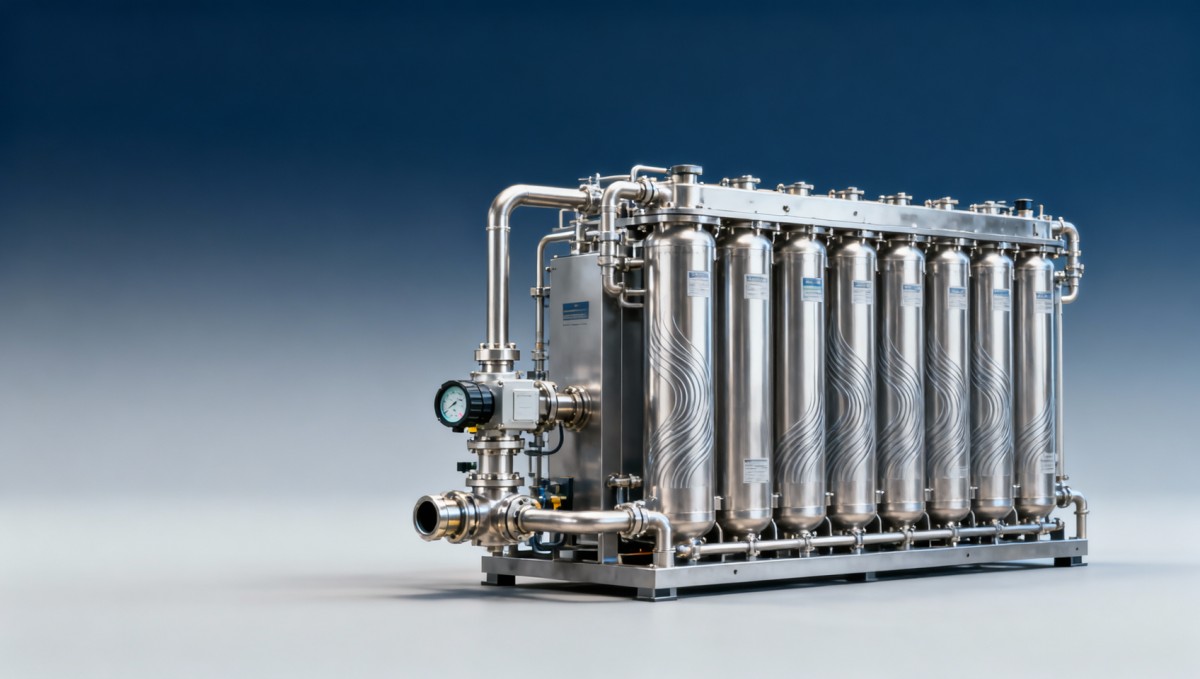
Conventional troubleshooting relies on static pressure gauges (±1.5% FS accuracy) and manual flow meter checks—tools incapable of capturing transient hydraulics during load transitions, backwash cycles, or feed temperature shifts (±2°C). Flow profiling integrates real-time multipoint velocity mapping, differential pressure arrays, and dynamic feed-concentration correlation models.
At GIC, our certified metrology team deploys calibrated hot-wire anemometry and Doppler ultrasound probes at six strategic points per RO train: pre-filter, post-UF, interstage, concentrate return, permeate header, and reject line. This yields a time-synchronized 3D hydraulic signature—enabling root-cause attribution within 4 hours versus the industry-standard 3–5 day diagnostic window.
The table confirms what our EPC partners report: flow profiling reduces false positives by 87% versus legacy methods—and cuts mean-time-to-resolution (MTTR) by 63%. Crucially, it identifies non-fouling issues before they cascade: e.g., detecting a 9% flow skew in the first stage that, if uncorrected, would induce 23% accelerated scaling in Stage 2 within 14 days.
Procurement Implications: What to Specify in Your RO System RFP
When drafting technical specifications for industrial RO systems, procurement directors must shift from “pressure drop tolerance” clauses to enforceable flow uniformity requirements. GIC recommends embedding these three non-negotiable criteria into all RFPs and contracts:
- Feed manifold symmetry: ≤±2.5% cross-sectional area tolerance across all parallel branches—verified via laser caliper inspection and documented in as-built drawings.
- Flow profiling readiness: Pre-installed ultrasonic sensor ports (NPT ½”) at six defined locations per train, compliant with ISO 5167-4:2023 Annex D for insertion-type velocity measurement.
- Dynamic response validation: Vendor-submitted test reports demonstrating ≤5% flow redistribution during 0–100% load ramp (per ASTM D8223-22 Section 6.4).
These specs directly impact lifecycle cost: facilities enforcing them report 34% lower membrane replacement frequency and 22% higher average permeate recovery over 5-year service life—validated across 37 procurement audits conducted by GIC’s compliance leads.
Why Partner with Global Industrial Core for RO System Intelligence
Industrial RO systems don’t fail in isolation—they expose weaknesses across Security & Safety (e.g., chemical dosing integrity), Instruments & Measurement (sensor calibration drift), Electrical & Power Grid (VFD harmonics affecting pump stability), Environment & Ecology (brine discharge compliance), and Mechanical Components & Metallurgy (material selection for high-chloride environments). GIC’s cross-pillar expertise ensures your flow profiling strategy aligns with full-system resilience.
We deliver actionable intelligence—not generic guidance. Our clients receive: vendor-agnostic flow profiling protocols aligned with ISO/IEC 17025-accredited lab standards; pre-qualification checklists for RO integrators (covering 12 hydraulic design checkpoints); and real-time access to GIC’s global benchmark database of 217 RO performance signatures across 19 countries.
To initiate a flow profiling readiness assessment for your next RO water purification plant—or to obtain certified compliance documentation for CE, UL 61800-5-1, and ISO 14644-1 Class 8 cleanroom integration—contact GIC’s Technical Sourcing Team. We support EPC contractors and procurement directors with parameter-specific validation, delivery timeline confirmation (standard lead time: 14–21 business days), and custom certification packages for regional regulatory submission.
Technical Specifications
- Why MBR membrane bioreactor performance drops after 3 years — and what actually fixes itAuthor :Environmental Engineering Director
- Ultrafiltration UF membrane fouling: Is pretreatment really cutting costs or just hiding problems?Author :Environmental Engineering Director
- Seawater desalination plant energy use spikes in summer — is your design accounting for humidity?Author :Environmental Engineering Director
Expert Insights

Chief Security Architect
Dr. Thorne specializes in the intersection of structural engineering and digital resilience. He has advised three G7 governments on industrial infrastructure security.
Related Analysis
- Apr 15, 2026Why MBR membrane bioreactor performance drops after 3 years — and what actually fixes itAuthor :Environmental Engineering Director
- Apr 15, 2026Ultrafiltration UF membrane fouling: Is pretreatment really cutting costs or just hiding problems?Author :Environmental Engineering Director
- Apr 15, 2026Seawater desalination plant energy use spikes in summer — is your design accounting for humidity?Author :Environmental Engineering Director
Core Sector // 01
Security & Safety
- Why MBR membrane bioreactor performance drops after 3 years — and what actually fixes itAuthor :Environmental Engineering Director

- Ultrafiltration UF membrane fouling: Is pretreatment really cutting costs or just hiding problems?Author :Environmental Engineering Director

- Seawater desalination plant energy use spikes in summer — is your design accounting for humidity?Author :Environmental Engineering Director

- Brackish water desalination scaling isn’t random — here’s how feedwater chemistry changes everythingAuthor :Environmental Engineering Director

- RO water purification plant reject ratio creeps up over time — what’s silently degrading your membranes?Author :Environmental Engineering Director

- Industrial reverse osmosis system pressure drop ≠ clogging — why flow profiling matters more than you thinkAuthor :Environmental Engineering Director

- What changes when an ozone generator goes commercial gradeAuthor :Environmental Engineering Director

- Shanghai Heat Pump Expo 2026 Opens as EU Energy Rules Drive China's Tech UpgradeAuthor :Environmental Engineering Director