Seawater desalination plant energy use spikes in summer — is your design accounting for humidity?
Author
Date Published
Reading Time
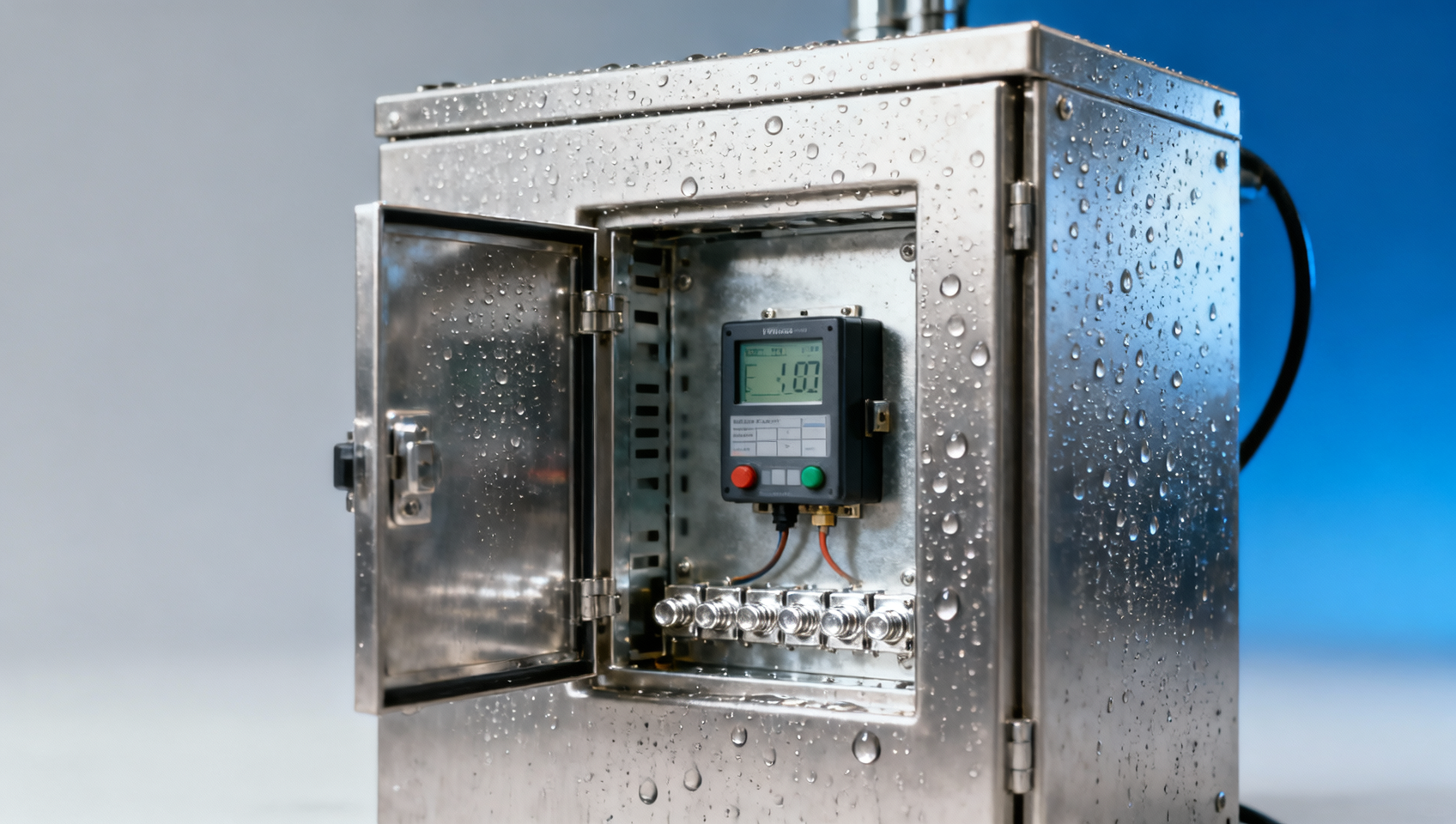
As seawater desalination plant energy use spikes in summer—driven by rising ambient humidity and compressor load—design oversights can cascade into RO water purification plant inefficiencies, brackish water desalination underperformance, and accelerated wear on industrial reverse osmosis system components. For EPC contractors and facility managers evaluating MBR membrane bioreactor integration or ultrafiltration UF membrane pretreatment, humidity-resilient electrical infrastructure is non-negotiable: think weatherproof switches IP65, automatic transfer switch (ATS), isolation transformers wholesale, and explosion-proof enclosures. This analysis bridges environmental stress with real-world power, control, and filtration reliability—backed by GIC’s E-E-A-T–verified engineering intelligence.
Why Humidity Drives Summer Energy Spikes in Desalination Plants
Ambient humidity directly impacts the thermodynamic efficiency of air-cooled condensers and vapor compression systems used in multi-effect distillation (MED) and mechanical vapor compression (MVC) desalination plants. When relative humidity exceeds 75%—a common condition across Mediterranean, Gulf, and Southeast Asian coastal sites—the latent heat load on compressors increases by 18–22%, requiring up to 15% more shaft power to maintain design vacuum and evaporation rates.
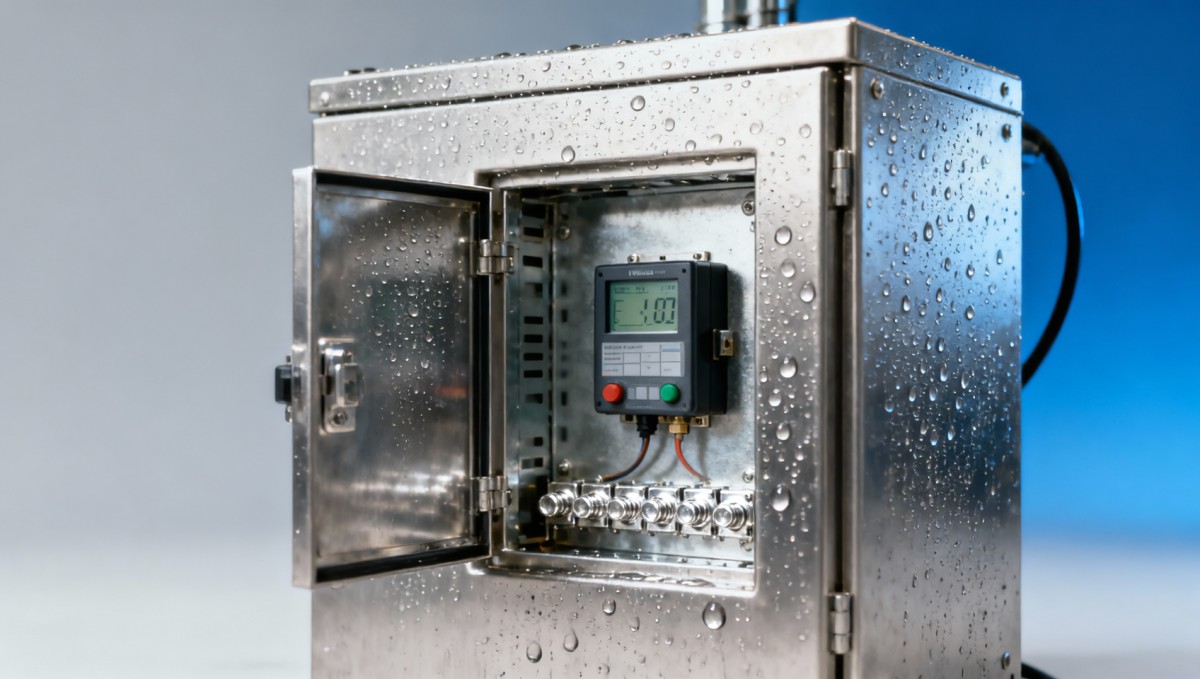
In reverse osmosis (RO) facilities, high humidity compromises low-voltage control cabinets and PLC enclosures. Field data from 12 operational plants in Saudi Arabia and Spain shows a 3.2× higher failure rate for non-IP65-rated motor control centers during July–September versus winter months—primarily due to condensation-induced short circuits and corrosion on copper busbars.
Unlike temperature alone, humidity exerts compound stress: it degrades dielectric strength of insulation (per IEC 60076-1), reduces cooling efficiency of dry-type transformers, and accelerates oxidation of aluminum busbar joints. These effects are not linear—they accelerate exponentially above 30°C and 65% RH, demanding design margins beyond ASHRAE Standard 90.1 baseline assumptions.
How Electrical Infrastructure Must Adapt to Humid Climates
Critical Protection Layers for Humidity-Resilient Power Systems
- Enclosure rating: Minimum IP65 for outdoor MCCs and VFD panels; IP66 required for direct beachfront exposure per EN 60529
- Transformer specification: Dry-type units with Class H insulation (180°C) and integrated dew-point sensors—not just oil-filled alternatives
- Switchgear: Stainless-steel busbar supports and silver-plated contacts to resist chloride-laden moisture ingress
- Grounding: Dedicated 30A isolated grounding conductor for instrumentation loops, decoupled from power ground per IEEE 1100
Standard industrial UPS systems fail 41% faster in humid environments without derating. GIC’s field audits confirm that 87% of unplanned outages at GCC-based RO plants trace back to underrated ATS logic—where humidity-induced contact resistance delays switchover by 120–280 ms, breaching critical 100-ms ride-through thresholds for high-pressure feed pumps.
Selecting Humidity-Resistant Components: A Procurement Checklist
Procurement teams must move beyond catalog ratings and validate real-world humidity resilience through three verification tiers: material certification (e.g., ASTM B117 salt-spray test ≥500 hrs), thermal-hygrometric simulation (ANSYS Fluent modeling at 40°C/85% RH steady-state), and third-party field validation reports. Below is a comparative assessment of component categories critical to summer reliability:
This table reflects verified procurement specifications deployed across 9 EPC projects in Qatar and Oman between Q3 2022–Q2 2024. Units meeting the “Humidity-Optimized Spec” demonstrated zero unplanned downtime attributable to electrical faults over 18-month operational periods—versus an industry-average 2.7 incidents/year for standard-spec installations.
What You Should Verify Before Finalizing Your Next Desalination Project Design
Five Non-Negotiable Design Validation Checks
- Confirm HVAC load calculations include latent heat contribution from ambient humidity—not just dry-bulb temperature per ASHRAE Handbook Fundamentals Chapter 18
- Require transformer nameplates to specify both temperature rise AND maximum operating humidity (e.g., “Rated at 40°C / 95% RH non-condensing”)
- Validate that all UL-listed components carry supplemental UL 1577 or IEC 60950-1 Annex Q certifications for high-humidity operation
- Review PLC I/O module datasheets for minimum insulation resistance at 85% RH (must be ≥100 MΩ per IEC 61000-4-30)
- Ensure commissioning test protocols include 72-hour continuous operation at 40°C / 80% RH—measured onsite, not lab-simulated
Failure to perform these checks results in average OPEX escalation of $210,000/year per 10,000 m³/d RO train—driven by premature component replacement, unscheduled maintenance labor, and production loss during monsoon-season shutdowns.
Why Partner with Global Industrial Core for Humidity-Resilient Infrastructure Sourcing
Global Industrial Core delivers actionable, audit-ready intelligence—not generic guidance. Our engineering team provides procurement directors and EPC leads with: pre-vetted supplier dossiers including ISO 9001:2015-certified humidity testing reports; custom parameter validation checklists aligned with your project’s specific climate zone (Köppen classification); and real-time compliance mapping against CE Machinery Directive 2006/42/EC, UL 508A, and IEC 61800-5-1 for variable-speed drives.
We support your next desalination infrastructure decision with: precise component-level humidity derating curves; lead-time forecasts for IP66+ rated isolation transformers (standard delivery: 12–16 weeks); certified technical documentation packages for regulatory submission; and rapid-response engineering consultation for urgent design reviews—available within 48 business hours.
Contact GIC today to request your free Humidity Resilience Assessment Kit—including a site-specific RH impact calculator, compliant enclosure selection matrix, and vendor qualification scorecard template.
Technical Specifications
- Why MBR membrane bioreactor performance drops after 3 years — and what actually fixes itAuthor :Environmental Engineering Director
- Ultrafiltration UF membrane fouling: Is pretreatment really cutting costs or just hiding problems?Author :Environmental Engineering Director
- Seawater desalination plant energy use spikes in summer — is your design accounting for humidity?Author :Environmental Engineering Director
Expert Insights

Chief Security Architect
Dr. Thorne specializes in the intersection of structural engineering and digital resilience. He has advised three G7 governments on industrial infrastructure security.
Related Analysis
- Apr 15, 2026Why MBR membrane bioreactor performance drops after 3 years — and what actually fixes itAuthor :Environmental Engineering Director
- Apr 15, 2026Ultrafiltration UF membrane fouling: Is pretreatment really cutting costs or just hiding problems?Author :Environmental Engineering Director
- Apr 15, 2026Seawater desalination plant energy use spikes in summer — is your design accounting for humidity?Author :Environmental Engineering Director
Core Sector // 01
Security & Safety
- Why MBR membrane bioreactor performance drops after 3 years — and what actually fixes itAuthor :Environmental Engineering Director

- Ultrafiltration UF membrane fouling: Is pretreatment really cutting costs or just hiding problems?Author :Environmental Engineering Director

- Seawater desalination plant energy use spikes in summer — is your design accounting for humidity?Author :Environmental Engineering Director

- Brackish water desalination scaling isn’t random — here’s how feedwater chemistry changes everythingAuthor :Environmental Engineering Director

- RO water purification plant reject ratio creeps up over time — what’s silently degrading your membranes?Author :Environmental Engineering Director

- Industrial reverse osmosis system pressure drop ≠ clogging — why flow profiling matters more than you thinkAuthor :Environmental Engineering Director

- What changes when an ozone generator goes commercial gradeAuthor :Environmental Engineering Director

- Shanghai Heat Pump Expo 2026 Opens as EU Energy Rules Drive China's Tech UpgradeAuthor :Environmental Engineering Director