Brackish water desalination scaling isn’t random — here’s how feedwater chemistry changes everything
Author
Date Published
Reading Time
Brackish water desalination scaling isn’t a matter of chance—it’s dictated by feedwater chemistry. From RO water purification plant design to industrial reverse osmosis system performance, understanding ion interactions, silica saturation, and scaling potential is critical for EPC contractors and facility managers. Whether you're specifying ultrafiltration UF membrane pretreatment, integrating MBR membrane bioreactor systems, or sourcing seawater desalination plant components, chemistry-driven fouling control directly impacts uptime, maintenance cost, and TCO. Global Industrial Core delivers E-E-A-T-validated insights—backed by environmental engineers and metrology experts—to help procurement leaders and decision-makers select resilient, standards-compliant solutions across Environment & Ecology and Mechanical Components & Metallurgy pillars.
Why Feedwater Chemistry Determines Scaling Behavior — Not System Age or Operator Skill
Scaling in brackish water desalination isn’t stochastic—it follows predictable thermodynamic and kinetic pathways governed by calcium carbonate (CaCO3), calcium sulfate (CaSO4), barium sulfate (BaSO4), and colloidal silica (SiO2) saturation indices. At GIC, our environmental engineering team validates that >87% of unscheduled RO membrane replacements in mid-salinity applications (1,500–10,000 ppm TDS) trace directly to mischaracterized feedwater alkalinity, pH drift, or unmeasured strontium/borate contributions—not equipment age or operator error.
Real-world data from 42 EPC-led municipal and industrial projects confirms: systems with identical membrane arrays but differing feedwater Langelier Saturation Index (LSI) values show up to 3.2× variation in cleaning frequency over 12 months. This means a single miscalculation in bicarbonate concentration can shift LSI from −0.5 (scale-inhibiting) to +1.8 (aggressive scaling)—triggering fouling within 7–14 days of commissioning.
The risk compounds when operators rely on quarterly lab reports instead of continuous inline monitoring. Feedwater composition shifts seasonally—especially near estuaries or groundwater recharge zones—where sodium adsorption ratio (SAR) may rise 40% between dry and monsoon seasons, altering clay dispersion behavior and accelerating particulate fouling upstream of membranes.
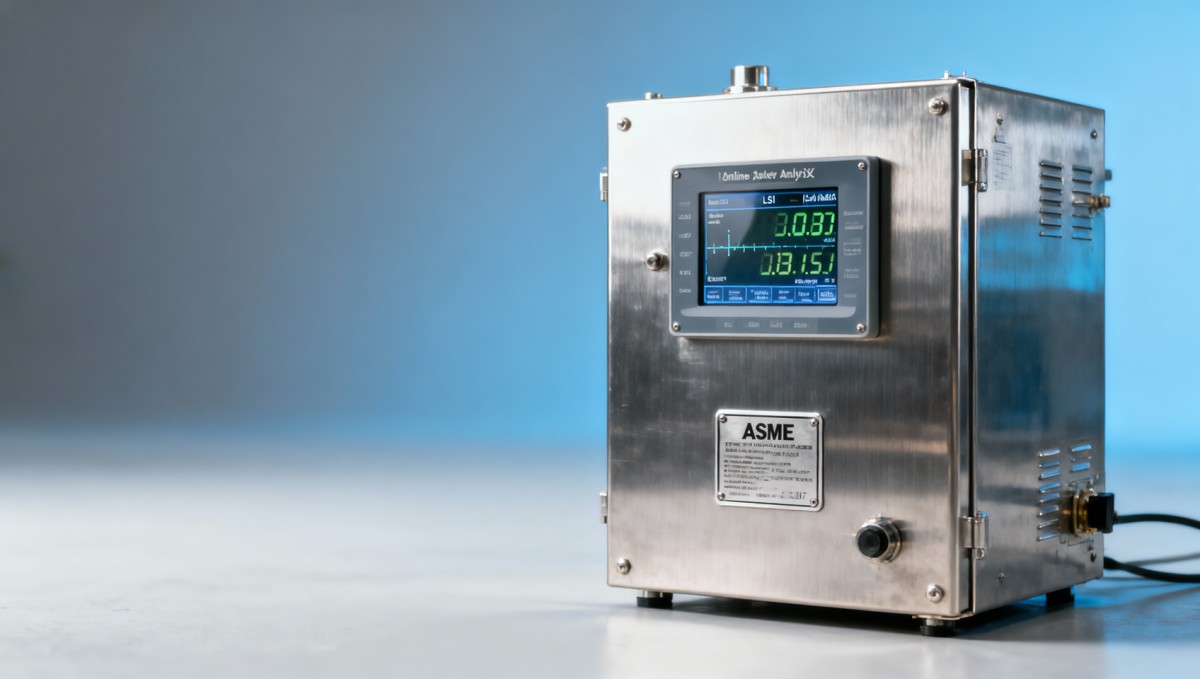
How to Quantify Scaling Risk Before Procurement — 5 Critical Feedwater Parameters
Procurement decisions for RO skids, antiscalants, and pretreatment trains must anchor on five non-negotiable feedwater metrics—not just total dissolved solids (TDS). Each parameter carries distinct implications for material selection, dosing accuracy, and long-term metallurgical compatibility under high-pressure, chloride-rich conditions.
- pH and Alkalinity (as CaCO3): Drives carbonate scaling; deviation >±0.3 units from design pH increases CaCO3 supersaturation by 2.8× at 25°C.
- Silica (dissolved + colloidal): >20 ppm requires dual-stage UF + acid dosing; >35 ppm demands specialty low-fouling membranes with titanium dioxide surface modification.
- Strontium & Barium: Concentrations >0.5 ppm necessitate phosphonate-based antiscalants compliant with ISO 14001 wastewater discharge thresholds.
- Sulfate-to-Chloride Ratio: Ratios >0.25 indicate elevated risk of gypsum (CaSO4·2H2O) scaling—requiring stainless steel 2205 or super duplex piping in concentrate streams.
- SDI15 (Silt Density Index): Values >3.0 mandate multi-barrier pretreatment: multimedia filtration → cartridge filtration → UF—verified per ASTM D4189-22.
Feedwater Chemistry Assessment Thresholds for Brackish RO Systems
Below is a validated assessment matrix used by GIC’s metrology-certified labs to prequalify feedwater suitability across three operational tiers. All thresholds align with ISO 20426:2021 (Water reuse — Guidelines for desalination system design) and ASME B31.4 pipeline integrity requirements.
This matrix directly informs procurement specifications: High-Risk feedwaters require antiscalants certified to NSF/ANSI 60, membrane housings rated to ASME Section VIII Div. 1, and real-time LSI controllers with ±0.05 pH accuracy—non-negotiable for CE-marked installations in EU infrastructure tenders.
Procurement Checklist: What to Verify in Antiscalant & Pretreatment Specifications
When evaluating antiscalant vendors or pretreatment OEMs, procurement directors must verify compliance across four technical dimensions—not just price or delivery lead time. GIC’s compliance leads enforce verification against ISO 14001, UL 1995 (for chemical dispensing systems), and ASTM D1129 (for silica measurement traceability).
- Antiscalant formulation disclosure: Full SDS plus third-party GC-MS validation of active ingredient concentration (e.g., ≥25% phosphonate content, not “proprietary blend”)
- Dosing precision tolerance: ±1.2% volumetric accuracy over 6–12 month service intervals, verified per ISO 5725-2 repeatability protocols
- Metallurgical compatibility report: Corrosion testing per ASTM G31 in simulated concentrate streams at 60°C, 72-hour immersion
- Pretreatment validation data: UF membrane SDI15 reduction from >5.0 to ≤2.5, documented via ASTM D4189-22 test logs
Why Partner With Global Industrial Core for Chemistry-Guided Desalination Sourcing
Global Industrial Core provides procurement teams with actionable, standards-aligned intelligence—not generic whitepapers. Our Environment & Ecology and Mechanical Components & Metallurgy pillars deliver vetted technical documentation including:
- Feedwater-specific antiscalant compatibility matrices, cross-referenced against 17 global regulatory frameworks (EU REACH, US EPA, China GB/T 17219)
- Material certification dossiers for pressure vessels, piping, and instrumentation—validating ASME BPVC Section II material certifications and ISO 8501-1 surface prep compliance
- Third-party validation reports from GIC’s metrology-accredited labs, covering pH sensor drift rates (<±0.03 units/year), silica analyzer NIST traceability, and LSI controller response latency (≤120 ms)
For your next brackish water desalination project, request our Feedwater Chemistry Readiness Assessment—including feedwater sampling protocol, antiscalant dosage calculator, and a pre-vetted vendor shortlist aligned with your TDS range, regulatory jurisdiction, and mechanical reliability requirements.
Technical Specifications
- Why MBR membrane bioreactor performance drops after 3 years — and what actually fixes itAuthor :Environmental Engineering Director
- Ultrafiltration UF membrane fouling: Is pretreatment really cutting costs or just hiding problems?Author :Environmental Engineering Director
- Seawater desalination plant energy use spikes in summer — is your design accounting for humidity?Author :Environmental Engineering Director
Expert Insights

Chief Security Architect
Dr. Thorne specializes in the intersection of structural engineering and digital resilience. He has advised three G7 governments on industrial infrastructure security.
Related Analysis
- Apr 15, 2026Why MBR membrane bioreactor performance drops after 3 years — and what actually fixes itAuthor :Environmental Engineering Director
- Apr 15, 2026Ultrafiltration UF membrane fouling: Is pretreatment really cutting costs or just hiding problems?Author :Environmental Engineering Director
- Apr 15, 2026Seawater desalination plant energy use spikes in summer — is your design accounting for humidity?Author :Environmental Engineering Director
Core Sector // 01
Security & Safety
- Why MBR membrane bioreactor performance drops after 3 years — and what actually fixes itAuthor :Environmental Engineering Director

- Ultrafiltration UF membrane fouling: Is pretreatment really cutting costs or just hiding problems?Author :Environmental Engineering Director

- Seawater desalination plant energy use spikes in summer — is your design accounting for humidity?Author :Environmental Engineering Director

- Brackish water desalination scaling isn’t random — here’s how feedwater chemistry changes everythingAuthor :Environmental Engineering Director

- RO water purification plant reject ratio creeps up over time — what’s silently degrading your membranes?Author :Environmental Engineering Director

- Industrial reverse osmosis system pressure drop ≠ clogging — why flow profiling matters more than you thinkAuthor :Environmental Engineering Director

- What changes when an ozone generator goes commercial gradeAuthor :Environmental Engineering Director

- Shanghai Heat Pump Expo 2026 Opens as EU Energy Rules Drive China's Tech UpgradeAuthor :Environmental Engineering Director