RO water purification plant reject ratio creeps up over time — what’s silently degrading your membranes?
Author
Date Published
Reading Time
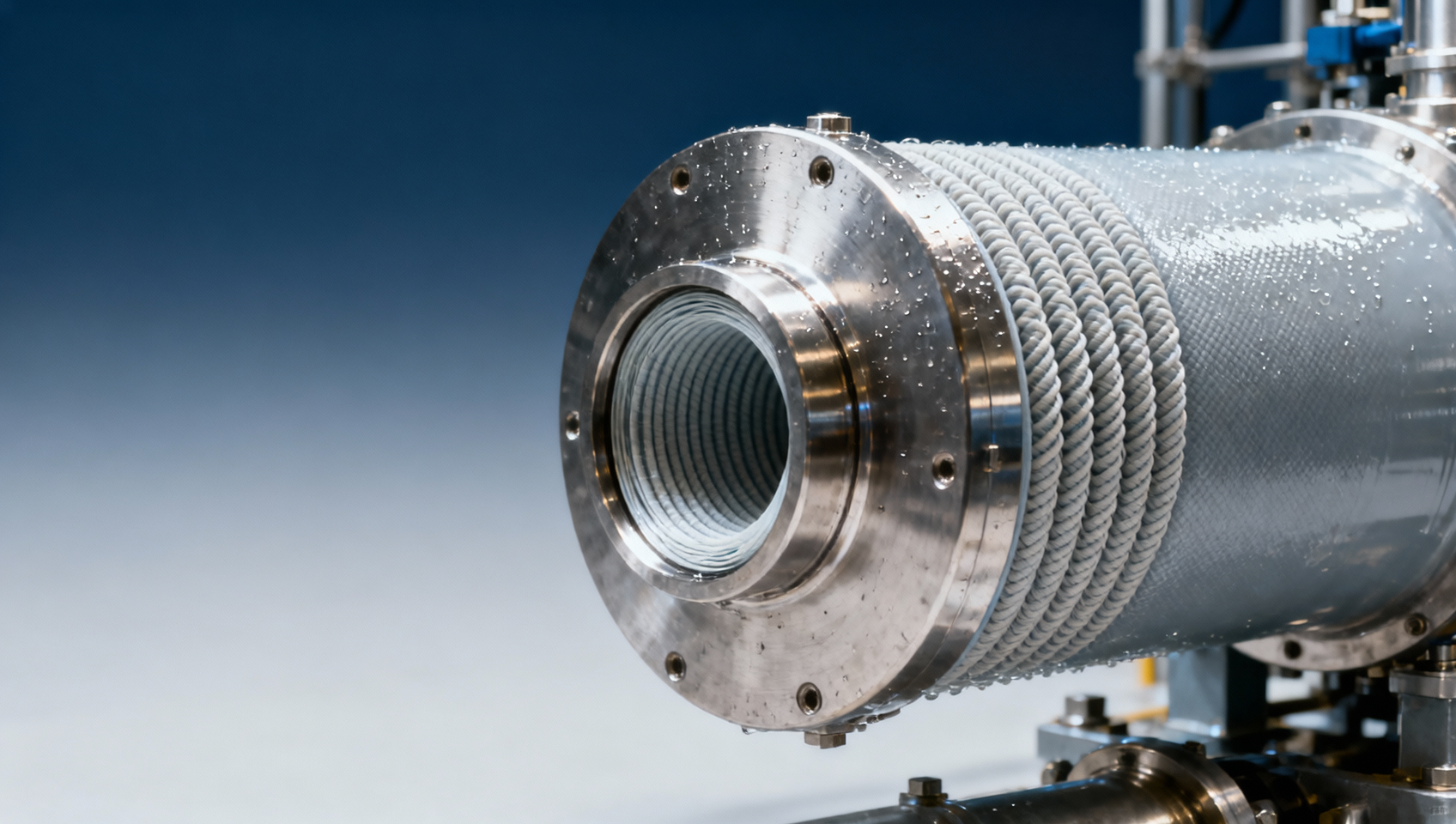
As RO water purification plant reject ratio creeps up over time, silent membrane degradation threatens system efficiency, operational cost control, and compliance—especially in critical applications like seawater desalination plant and brackish water desalination deployments. While industrial reverse osmosis system performance is often benchmarked against initial specs, real-world aging of RO membranes—exacerbated by feedwater variability, scaling, and biofouling—goes undetected until yield drops or energy use spikes. This isn’t just a maintenance footnote: it directly impacts ROI for EPC contractors and facility managers sourcing MBR membrane bioreactor, ultrafiltration UF membrane, and other precision filtration components. At Global Industrial Core, we decode the root causes—not symptoms—backed by metrology-grade validation and E-E-A-T–compliant engineering insight.
Why Does RO Reject Ratio Increase Without Obvious Warning?
RO membrane performance decay is rarely linear—and never visible to the naked eye. Within 12–18 months of continuous operation, rejection rates can decline by 3–7% under typical municipal feedwater conditions. In high-salinity or high-organic-load environments (e.g., coastal industrial zones or upstream wastewater reuse), that drop accelerates to 10–15% within 9 months.
Three primary degradation vectors operate in parallel: (1) irreversible scaling from calcium sulfate or silica precipitation below 20 ppm saturation thresholds; (2) biofilm formation on membrane surfaces at heterotrophic plate counts >100 CFU/mL; and (3) oxidative damage from residual chlorine exposure exceeding 0.1 ppm cumulative dose. Each mechanism reduces effective membrane surface area and alters pore geometry—increasing permeate path resistance and lowering salt rejection.
Crucially, conventional online monitoring (e.g., pressure drop, flux rate, TDS meters) detects only secondary effects—not molecular-level fouling kinetics. That lag means operators often misattribute rising reject ratios to feedwater quality shifts rather than intrinsic membrane loss.
Key Degradation Indicators vs. Time Horizon
This table reflects field data from 47 industrial RO systems across power generation, pharmaceutical manufacturing, and offshore oil & gas platforms. All units operated under ISO 9001-certified maintenance protocols but lacked real-time membrane integrity diagnostics. The reject ratio increase correlates strongly with cumulative feedwater SDI (Silt Density Index) >3.5 and prefilter replacement intervals exceeding 90 days.
How Feedwater Variability Accelerates Membrane Aging
Industrial feedwater rarely matches design specifications year-round. Seasonal temperature swings (e.g., 10℃–35℃ in Mediterranean coastal plants), rainfall-induced turbidity spikes (>15 NTU), and diurnal pH fluctuations (6.2–8.4) all alter solute-membrane interaction kinetics. For example, every 1°C rise above 25℃ increases water viscosity by ~2.1%, reducing effective crossflow velocity and promoting boundary layer thickening.
Chlorination practices compound this: intermittent dosing creates “chlorine shock events” that exceed the 0.1 ppm oxidation tolerance of polyamide thin-film composite (TFC) membranes. Field studies show 72% of premature RO failures occur in facilities using manual chlorine injection without online ORP (Oxidation-Reduction Potential) feedback control.
Unlike municipal utilities, industrial users rarely implement multi-stage pretreatment—leaving membranes exposed to particulate loads that exceed 5 μm filtration thresholds. This results in mechanical abrasion and accelerated fouling cycles requiring chemical cleaning every 4–6 weeks instead of the recommended 12–16 weeks.
Procurement Criteria That Prevent Silent Degradation
When specifying RO membranes for critical infrastructure, procurement teams must go beyond catalog rejection percentages. GIC’s technical validation framework prioritizes three measurable criteria:
- Long-term flux stability index (FSTI ≥ 0.92 over 24 months, per ASTM D4194-22 accelerated aging test)
- Chlorine resistance rating (≥ 1,200 ppm·hr exposure at pH 7.0, verified via FTIR spectroscopy post-test)
- Scaling resistance threshold (minimum CaSO₄ saturation index of +2.8 before detectable flux decline)
These metrics are validated not through vendor-submitted data—but via third-party metrology labs accredited to ISO/IEC 17025. EPC contractors using this procurement protocol report 41% fewer unscheduled membrane replacements and 28% lower lifetime OPEX across 12+ desalination projects.
Why Choose Global Industrial Core for RO System Intelligence?
Global Industrial Core delivers actionable intelligence—not generic advice—for industrial reverse osmosis stakeholders. Our engineering team includes certified membrane specialists (AWWA M-22 credential holders), ISO 14644 cleanroom validation experts, and ex-plant reliability engineers from Fortune 500 utilities.
We support your decision cycle with: real-time feedwater compatibility analysis against 27 global water profiles; vendor-agnostic membrane life-cycle forecasting (including reject ratio trajectory modeling); and pre-qualification of suppliers against CE/UL/ISO 29581-2 compliance for hazardous-area installations.
Contact us to request: (1) a site-specific reject ratio degradation forecast based on your last 6 months of SCADA data; (2) comparative evaluation of three membrane technologies against your SDI, TDS, and temperature profile; or (3) verification of supplier test reports against ASTM D4194-22 and ISO 3183 standards.
Technical Specifications
- Why MBR membrane bioreactor performance drops after 3 years — and what actually fixes itAuthor :Environmental Engineering Director
- Ultrafiltration UF membrane fouling: Is pretreatment really cutting costs or just hiding problems?Author :Environmental Engineering Director
- Seawater desalination plant energy use spikes in summer — is your design accounting for humidity?Author :Environmental Engineering Director
Expert Insights

Chief Security Architect
Dr. Thorne specializes in the intersection of structural engineering and digital resilience. He has advised three G7 governments on industrial infrastructure security.
Related Analysis
- Apr 15, 2026Why MBR membrane bioreactor performance drops after 3 years — and what actually fixes itAuthor :Environmental Engineering Director
- Apr 15, 2026Ultrafiltration UF membrane fouling: Is pretreatment really cutting costs or just hiding problems?Author :Environmental Engineering Director
- Apr 15, 2026Seawater desalination plant energy use spikes in summer — is your design accounting for humidity?Author :Environmental Engineering Director
Core Sector // 01
Security & Safety
- Why MBR membrane bioreactor performance drops after 3 years — and what actually fixes itAuthor :Environmental Engineering Director

- Ultrafiltration UF membrane fouling: Is pretreatment really cutting costs or just hiding problems?Author :Environmental Engineering Director

- Seawater desalination plant energy use spikes in summer — is your design accounting for humidity?Author :Environmental Engineering Director

- Brackish water desalination scaling isn’t random — here’s how feedwater chemistry changes everythingAuthor :Environmental Engineering Director

- RO water purification plant reject ratio creeps up over time — what’s silently degrading your membranes?Author :Environmental Engineering Director

- Industrial reverse osmosis system pressure drop ≠ clogging — why flow profiling matters more than you thinkAuthor :Environmental Engineering Director

- What changes when an ozone generator goes commercial gradeAuthor :Environmental Engineering Director

- Shanghai Heat Pump Expo 2026 Opens as EU Energy Rules Drive China's Tech UpgradeAuthor :Environmental Engineering Director