Vietnam Enforces Blockchain-Linked Remote Calibration for Industrial Water Analyzers
Author
Date Published
Reading Time
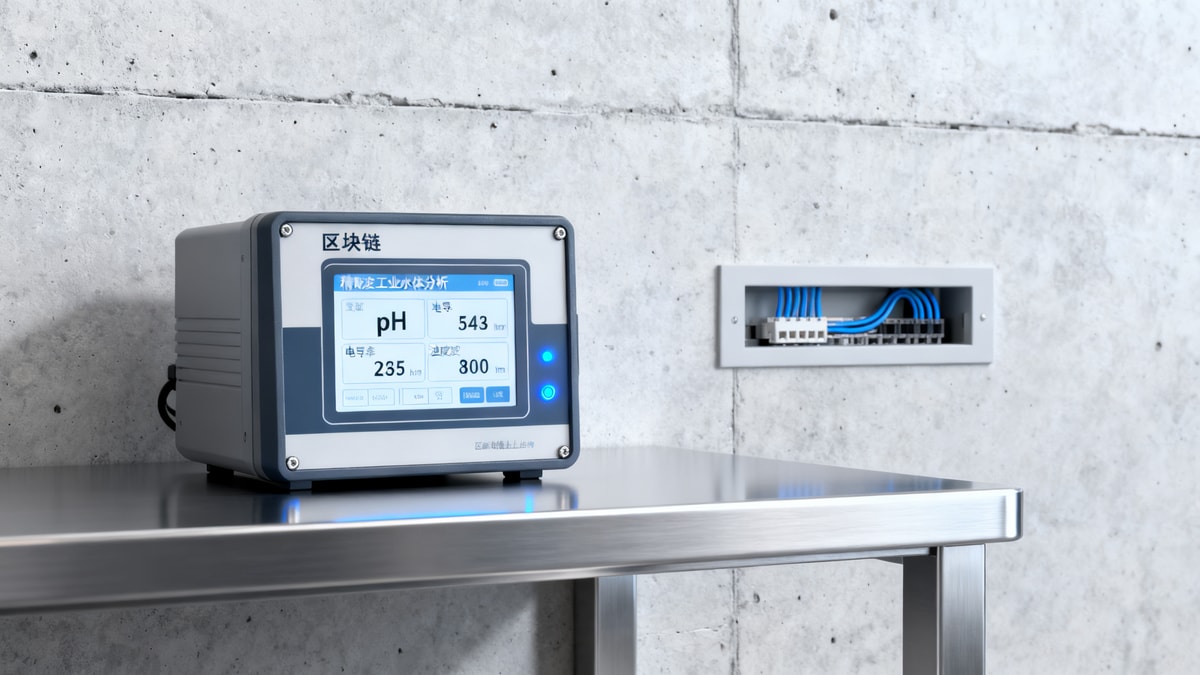
On May 2, 2026, Vietnam’s Ministry of Industry and Trade (MOIT) issued Technical Regulation QCVN 18:2026/BCT, mandating blockchain-based remote calibration data upload for industrial water quality analyzers sold or used in Vietnam — effective October 1, 2026. This regulation directly impacts manufacturers, exporters, and distributors of pH, conductivity, turbidity, and heavy metal detection instruments, particularly those supplying to Vietnamese industrial water monitoring, wastewater treatment, and pharmaceutical manufacturing sectors.
Event Overview
On May 2, 2026, the Vietnamese Ministry of Industry and Trade (MOIT) signed into effect QCVN 18:2026/BCT. The regulation stipulates that, starting October 1, 2026, all industrial water quality analyzers placed on the Vietnamese market — including devices measuring pH, electrical conductivity, turbidity, and heavy metals — must support remote calibration data transmission with cryptographic signature and immutable storage on a blockchain platform linked to the Vietnam National Metrology Institute (VNMIS). Chinese suppliers are required to obtain FOTA (Firmware Over-The-Air) security certification and calibration data signature verification testing through laboratories accredited by China’s National Accreditation Service for Conformity Assessment (CNAS).
Industries Affected
Direct Exporters and Trading Enterprises
Exporters of water analyzers from China and other countries to Vietnam will face new technical compliance barriers before customs clearance or market entry. Non-compliant devices may be rejected at import or barred from registration with VNMIS, affecting sales eligibility and after-sales service authorization.
Instrument Manufacturing Enterprises
Manufacturers must integrate secure firmware capable of generating time-stamped, cryptographically signed calibration logs and transmitting them to VNMIS via approved protocols. Legacy models lacking remote connectivity, secure boot, or digital signature capabilities will require hardware or firmware upgrades — potentially triggering redesign timelines and certification costs.
Supply Chain and Distribution Partners
Distributors and local authorized representatives in Vietnam will need to verify device compliance status on the VNMIS platform prior to resale. They may also assume responsibility for ensuring end-user calibration logs are uploaded and validated — introducing new operational accountability beyond traditional warranty or maintenance roles.
Calibration and Metrology Service Providers
Third-party calibration labs serving Vietnamese industrial clients must align their processes with VNMIS’s blockchain interface requirements. Labs without CNAS-accredited FOTA and signature verification capability — especially those outside China — may lose eligibility to issue valid calibration reports recognized under QCVN 18:2026/BCT.
What Enterprises and Practitioners Should Focus On Now
Monitor official implementation guidelines from VNMIS and MOIT
The regulation confirms the requirement but does not yet specify technical standards for blockchain protocol compatibility, data schema, API endpoints, or accepted cryptographic algorithms. Enterprises should track upcoming guidance documents expected before July 2026 to avoid misalignment in development or procurement decisions.
Identify and prioritize affected product lines and firmware versions
Companies should audit their current portfolio of water analyzers shipped to Vietnam and classify units by remote capability, firmware version, and cryptographic readiness. Devices without OTA update support or secure element integration may require replacement rather than retrofit — influencing inventory planning and customer communication strategies.
Distinguish between regulatory signal and enforceable obligation
QCVN 18:2026/BCT is a national technical regulation with legal force, not a voluntary guideline. However, enforcement capacity — including VNMIS platform readiness, inspection frequency, and penalties for non-compliance — remains unconfirmed. Enterprises should treat compliance as mandatory while observing early enforcement patterns post-October 2026.
Initiate CNAS lab engagement and FOTA certification planning
Chinese suppliers must complete CNAS-recognized FOTA security and signature verification testing before market placement. Given typical lab lead times (8–12 weeks), initiating engagement with accredited labs no later than June 2026 is advisable to meet the October 1 deadline.
Editorial Perspective / Industry Observation
Observably, this regulation marks Vietnam’s first application of blockchain for metrological traceability in environmental instrumentation — signaling a broader shift toward digitally verifiable regulatory compliance. Analysis shows it functions less as an isolated technical update and more as an early indicator of Vietnam’s intent to harmonize industrial measurement oversight with ASEAN digital trade frameworks. From an industry perspective, it reflects growing emphasis on data integrity over physical calibration alone — a trend likely to extend to other sensor-based industrial equipment categories in coming years. Current enforcement scope remains limited to water analyzers, but its architecture suggests scalability across environmental monitoring domains.
Conclusion
This regulation establishes a new baseline for instrument trustworthiness in Vietnam’s regulated industrial sectors. It does not introduce new measurement accuracy requirements, but rather redefines how calibration evidence is generated, secured, and verified. For stakeholders, it is best understood not as a one-time certification hurdle, but as the first step toward a digitally auditable, platform-integrated metrology ecosystem — where firmware, data infrastructure, and regulatory verification converge. A pragmatic interpretation treats October 2026 as a hard go-live date for market access, not a flexible transition period.
Source: Vietnam Ministry of Industry and Trade (MOIT), QCVN 18:2026/BCT, signed May 2, 2026.
Note: VNMIS platform specifications, enforcement procedures, and penalty provisions remain pending official publication and are subject to observation.
Technical Specifications
- US DOE Industrial Transformer Efficiency Rule Effective Oct 2026Author :Grid Infrastructure Analyst
- Indonesia BPOM Launches AI Filter Life Algorithm ReviewAuthor :Environmental Engineering Director
- Global Industrial Waste Shredder Lead Times Extend to 22 WeeksAuthor :Environmental Engineering Director
Expert Insights

Chief Security Architect
Dr. Thorne specializes in the intersection of structural engineering and digital resilience. He has advised three G7 governments on industrial infrastructure security.
Related Analysis
- May 04, 2026US DOE Industrial Transformer Efficiency Rule Effective Oct 2026Author :Grid Infrastructure Analyst
- May 04, 2026Indonesia BPOM Launches AI Filter Life Algorithm ReviewAuthor :Environmental Engineering Director
- May 04, 2026Global Industrial Waste Shredder Lead Times Extend to 22 WeeksAuthor :Environmental Engineering Director
Core Sector // 01
Security & Safety
- Vietnam Enforces Blockchain-Linked Remote Calibration for Industrial Water AnalyzersAuthor :Environmental Engineering Director

- Environmental engineering standards that affect equipment selectionAuthor :Environmental Engineering Director

- Industrial ecology trends changing plant upgrade prioritiesAuthor :Environmental Engineering Director

- SASO AI Sensor Compliance: Saudi Arabia Enforces AI Module Registration for Industrial Water SensorsAuthor :Environmental Engineering Director

- Drainage Cell Systems: Why Load Rating Is Often MisreadAuthor :Environmental Engineering Director

- Oil Skimmer Wholesale: Which Type Fits Light Oil Best?Author :Environmental Engineering Director

- Rainwater Harvesting Tanks: Is Bigger Always More Efficient?Author :Environmental Engineering Director

- Oil Water Separator Commercial Systems: What Drives Service Cost?Author :Environmental Engineering Director