Industrial ecology trends changing plant upgrade priorities
Author
Date Published
Reading Time
Industrial ecology is rapidly reshaping how plant leaders define upgrade priorities, moving beyond compliance toward resilience, efficiency, and long-term value. For business decision-makers, understanding these trends is essential to balancing operational risk, sustainability targets, and capital investment. This article explores the forces driving change and what they mean for smarter industrial modernization.
What does industrial ecology mean in the context of plant upgrades?
In practical terms, industrial ecology is the idea that a plant should no longer be managed as an isolated production unit. Instead, it should be viewed as part of a wider system that includes energy inputs, water use, emissions, material loops, maintenance practices, supply chain dependencies, and even nearby industrial partners. For decision-makers, this changes upgrade logic. A modernization project is no longer judged only by output gains or equipment age. It is also evaluated by how well it reduces waste, improves resource productivity, lowers environmental risk, and strengthens operational resilience.
This is why industrial ecology is gaining strategic attention across manufacturing, utilities, process industries, metals, chemicals, food processing, and large infrastructure operations. It connects sustainability goals with measurable plant performance. A heat recovery system, closed-loop water treatment unit, better instrumentation, cleaner power architecture, or upgraded motors may each look like separate investments. Under an industrial ecology lens, they become connected elements of one system-wide improvement plan.
For senior leaders, the key takeaway is simple: industrial ecology is not a branding phrase. It is a decision framework for choosing upgrades that create both environmental and economic returns.
Why are industrial ecology trends changing upgrade priorities now?
Several forces are pushing industrial ecology from a specialist concept into a board-level priority. First, energy volatility has made efficiency a risk issue, not just a cost issue. Plants that depend on outdated thermal systems, poorly monitored loads, or inefficient compressed air networks are exposed to rising operating uncertainty. Second, environmental regulation is becoming more detailed, with stronger expectations around emissions, water discharge, traceability, and lifecycle accountability. Third, institutional buyers, EPC contractors, and procurement teams increasingly favor suppliers that can demonstrate credible operational responsibility and long-term compliance readiness.
Another reason is technology maturity. Sensors, digital twins, advanced metering, power quality analytics, emissions monitoring, and modular treatment systems are now more deployable than they were a decade ago. This means industrial ecology is no longer limited to large flagship projects. Mid-scale facilities can now prioritize practical upgrades with shorter implementation windows and clearer payback paths.
A final driver is asset resilience. Industrial leaders have learned that supply interruptions, climate stress, and utility instability can quickly expose hidden weaknesses in water systems, electrical infrastructure, safety controls, and material handling. As a result, upgrade priorities are shifting away from isolated capacity expansion toward integrated modernization that protects continuity.
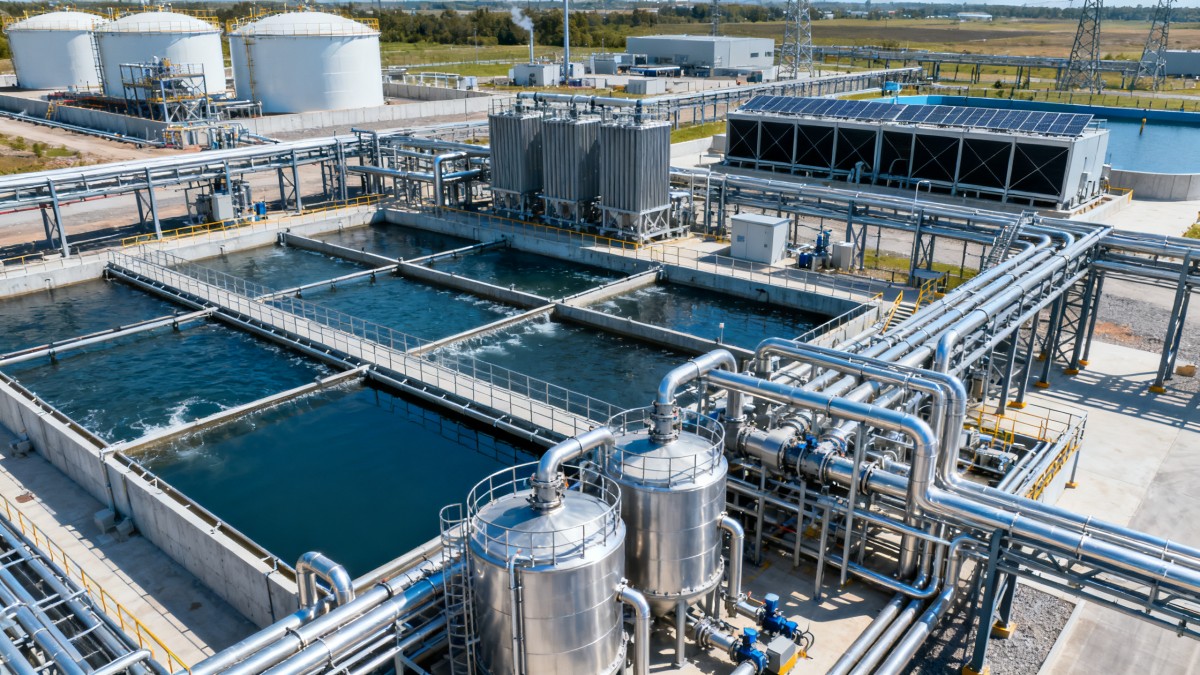
Which plants and business situations are most affected by industrial ecology priorities?
Not every facility will move at the same pace, but industrial ecology trends have the strongest impact in plants where utilities are intensive, compliance exposure is high, or infrastructure is aging. This includes process plants with heavy heat loads, facilities with high water consumption, sites operating under strict air emissions limits, and operations where unplanned shutdowns create major financial consequences.
Business situations that usually trigger action include:
- Capacity expansion projects that reveal utility bottlenecks
- Corporate decarbonization or ESG reporting commitments
- Repeated maintenance failures tied to obsolete support systems
- Rising utility bills without clear consumption visibility
- Customer or regulator pressure for cleaner, traceable operations
- Mergers, global expansion, or supply chain qualification reviews
In these scenarios, industrial ecology helps management identify where an upgrade can deliver multiple benefits at once. For example, a wastewater reuse project may reduce freshwater demand, lower discharge risk, and strengthen local license to operate. An electrical system upgrade may improve power reliability, reduce losses, and support future electrification. A better instrument and measurement architecture may unlock the data needed for both compliance and cost control.
What are the main industrial ecology trends influencing plant investment decisions?
The most influential industrial ecology trends are not random innovations. They are patterns in how plants are redefining performance. Decision-makers should pay attention to at least five areas.
1. Resource loop thinking is replacing linear consumption models
Plants are prioritizing reuse, recovery, and by-product valorization. Waste heat recovery, solvent recovery, process water recirculation, and scrap optimization are no longer side projects. They are increasingly part of core capex screening.
2. Measurement is becoming the foundation of environmental performance
Without reliable data, industrial ecology remains theoretical. Advanced flow meters, emissions analyzers, leak detection, energy sub-metering, and real-time dashboards now shape upgrade sequencing. Plants first need visibility before they can improve.
3. Electrification and cleaner power integration are gaining priority
As firms pursue lower emissions and better efficiency, they are reviewing transformers, switchgear, power quality systems, drives, and backup architectures. Industrial ecology is increasingly linked to electrical modernization because cleaner processes depend on stable, intelligent power infrastructure.
4. Water risk is rising from a local issue to a strategic issue
Facilities in water-stressed regions or highly regulated zones are reassessing treatment systems, recirculation loops, corrosion control, and discharge monitoring. Industrial ecology trends make water productivity a front-line upgrade priority.
5. Cross-functional upgrades are outperforming siloed projects
Plants are getting better results when environmental engineering, maintenance, operations, safety, and procurement evaluate upgrades together. Industrial ecology encourages system optimization rather than single-department spending.
How should business decision-makers judge which upgrades matter most?
A common mistake is to chase visible sustainability projects while ignoring foundational constraints. In reality, industrial ecology works best when leaders rank projects across five decision lenses: operational risk, resource intensity, compliance exposure, scalability, and data readiness. If a facility has frequent power disturbances, poor metering, high water losses, and rising emissions costs, the best upgrade may not be the most public-facing one. It may be the infrastructure project that stabilizes the entire system.
The following table summarizes how many industrial buyers now evaluate industrial ecology opportunities:
Leaders who use these filters tend to make better upgrade decisions because they connect industrial ecology goals to plant realities, not just headline ambitions.
What common mistakes do companies make when responding to industrial ecology trends?
The first mistake is treating industrial ecology as a separate sustainability program instead of an operational strategy. When environmental initiatives sit outside maintenance, engineering, and procurement workflows, projects often stall or fail to scale.
The second mistake is overvaluing new equipment while undervaluing system integration. A high-efficiency asset can underperform if controls, metering, electrical quality, piping conditions, or operator practices remain weak. Industrial ecology rewards whole-system thinking.
The third mistake is using generic payback logic for every project. Some upgrades do save money quickly, but others primarily reduce exposure to outage, compliance penalties, water constraints, or future retrofit costs. These risk-adjusted returns are easy to underestimate.
The fourth mistake is poor verification. If a company cannot prove baseline losses or monitor post-upgrade performance, internal support fades. That is why instrumentation, testing standards, and audit discipline are central to any serious industrial ecology roadmap.
How can a company start applying industrial ecology without disrupting operations?
A practical approach starts with phased diagnosis rather than immediate large-scale capital spending. First, identify where the plant’s biggest interactions occur between utilities, emissions, water, materials, and reliability. Second, establish baseline measurements. Third, rank opportunities by business impact and implementation complexity. Fourth, build a portfolio that mixes quick wins with enabling infrastructure.
In many cases, the best first moves include sub-metering, leak detection, motor and drive reviews, thermal loss audits, water balance mapping, and control system validation. These steps produce evidence. Once visibility improves, larger industrial ecology investments such as heat integration, process recirculation, filtration upgrades, electrification, or modular treatment become easier to justify.
Decision-makers should also involve procurement and compliance teams early. Supplier selection in this area depends on more than price. It requires attention to certifications, lifecycle support, operating conditions, maintainability, and data integrity. The most successful projects usually combine engineering feasibility with sourcing discipline.
What should leaders clarify before moving to procurement, project design, or external partnership?
Before launching a formal upgrade process, companies should align on a few critical questions. What problem is the project truly solving: cost, compliance, risk, or capacity? Which performance indicators will determine success? Are site conditions and existing standards fully documented? What integration points exist with safety systems, electrical assets, instrumentation, and environmental controls? How will post-installation verification be handled?
These questions matter because industrial ecology projects often sit at the intersection of multiple disciplines. A technically sound solution can still fail if spare parts are difficult to source, local operators are not trained, or reporting requirements were not built into the design. Clear early communication reduces these risks and improves supplier alignment.
For business decision-makers, the strategic message is clear: industrial ecology is changing plant upgrade priorities because it turns modernization into a more integrated business case. It links efficiency to resilience, compliance to data, and sustainability to asset performance. If your organization needs to confirm the right direction, timeline, technical scope, investment logic, or sourcing pathway, the best next step is to discuss current pain points, baseline metrics, site constraints, certification needs, and expected lifecycle outcomes before comparing solutions or requesting quotes.
Technical Specifications
Expert Insights

Chief Security Architect
Dr. Thorne specializes in the intersection of structural engineering and digital resilience. He has advised three G7 governments on industrial infrastructure security.
Related Analysis
- May 04, 2026When Components & Metals bulk order pricing stops being cheaperAuthor :Heavy Industry Strategist
- May 04, 2026What makes an Instruments & Measurement supplier dependableAuthor :Precision Metrology Expert
- May 04, 2026How to assess an Environment & Ecology exporter by documentationAuthor :Environmental Engineering Director
Core Sector // 01
Security & Safety
- Environmental engineering standards that affect equipment selectionAuthor :Environmental Engineering Director

- Industrial ecology trends changing plant upgrade prioritiesAuthor :Environmental Engineering Director

- SASO AI Sensor Compliance: Saudi Arabia Enforces AI Module Registration for Industrial Water SensorsAuthor :Environmental Engineering Director

- Drainage Cell Systems: Why Load Rating Is Often MisreadAuthor :Environmental Engineering Director

- Oil Skimmer Wholesale: Which Type Fits Light Oil Best?Author :Environmental Engineering Director

- Rainwater Harvesting Tanks: Is Bigger Always More Efficient?Author :Environmental Engineering Director

- Oil Water Separator Commercial Systems: What Drives Service Cost?Author :Environmental Engineering Director

- Water Quality Online Analyzer Selection Mistakes to AvoidAuthor :Environmental Engineering Director