Chlorine Dioxide Generator Sizing: What Gets Missed?
Author
Date Published
Reading Time
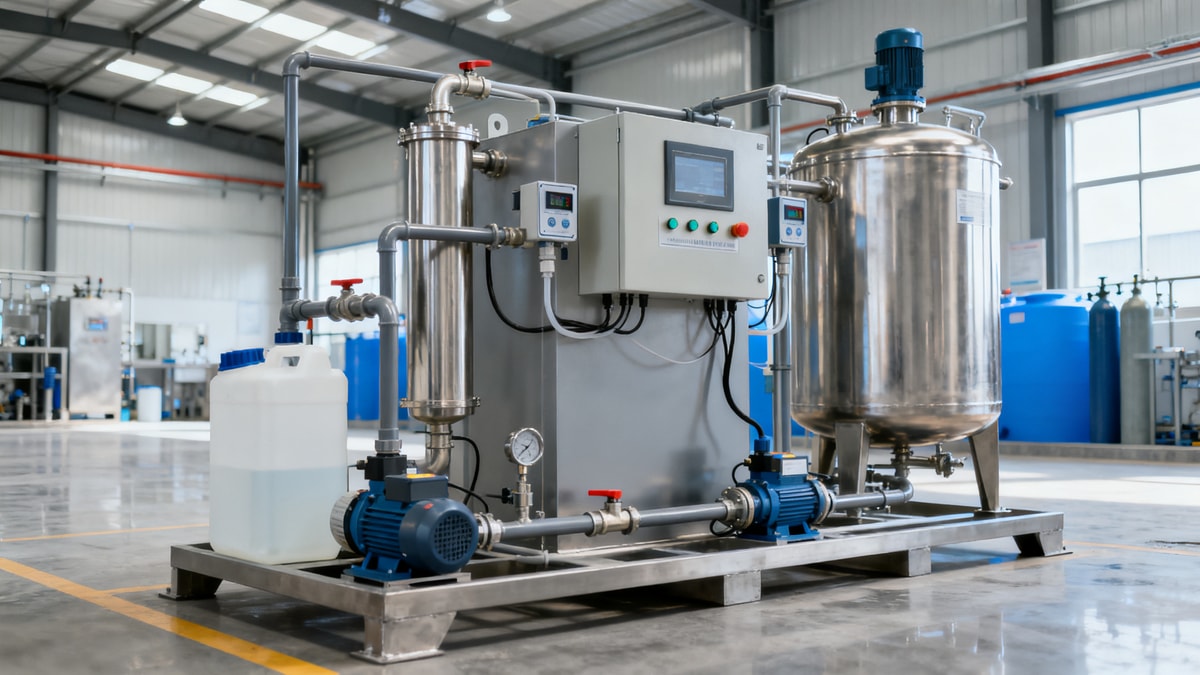
Choosing the right chlorine dioxide generator is not just about matching flow rate or dosage on paper. Operators often overlook water quality shifts, peak demand, chemical strength, contact time, and maintenance realities that directly affect safety, performance, and cost. This guide highlights the sizing factors that are most often missed, so you can avoid underperforming systems and make more reliable operating decisions.
In industrial water treatment, a chlorine dioxide generator is often specified early, but the real operating burden shows up later at commissioning, during seasonal water changes, or when a plant moves from normal load to peak production. For operators in utilities, process plants, food facilities, cooling systems, and wastewater environments, sizing mistakes can lead to unstable residuals, repeated alarms, chemical waste, or poor microbial control.
The practical question is not only how much chlorine dioxide must be produced per hour, but how consistently the system can deliver that output across 24-hour shifts, changing inlet quality, and real maintenance intervals. A unit that looks adequate at 100% theoretical efficiency may become undersized when raw water demand rises by 20% to 40%, when reagent strength drifts, or when injector fouling reduces transfer performance.
Why Basic Sizing Calculations Often Fail in Daily Operation
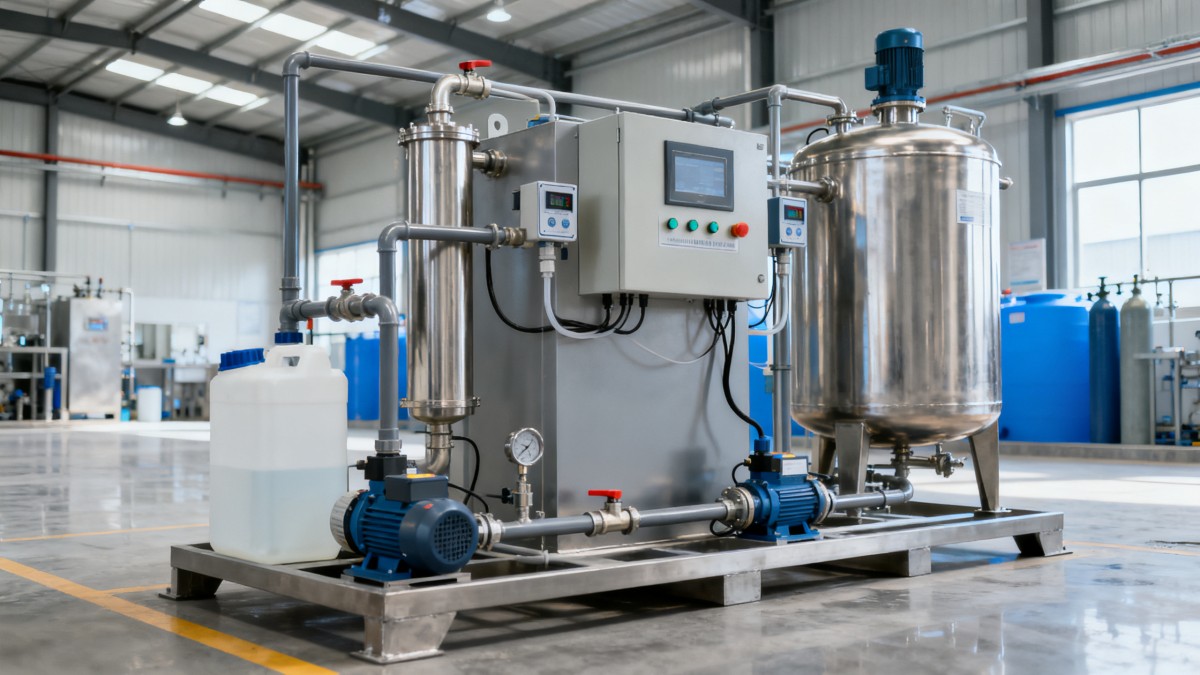
Many chlorine dioxide generator selections begin with two numbers: flow rate and target dosage. That is a useful starting point, but it is rarely enough for industrial reliability. Operators are usually handed a design value such as 2 ppm at 100 m3/h, then expected to run the system across variable demand, upset conditions, and maintenance downtime.
In practice, at least 5 operating variables should be checked before final sizing: minimum flow, peak flow, oxidant demand, reagent concentration range, and required contact time. If even 1 of these is ignored, the chlorine dioxide generator may be technically installed yet operationally mismatched.
The gap between design flow and real flow
A common issue is using average flow instead of peak flow. For example, a system designed around 80 m3/h average demand may face 120 m3/h during shift change, CIP cycles, or summer cooling load. If the chlorine dioxide generator cannot sustain dose during those 30-minute to 2-hour peaks, residual control will drop exactly when biological pressure is highest.
Raw water quality is rarely static
Operators also see seasonal changes in iron, manganese, sulfides, organics, turbidity, or biofilm load. A source water that needs 0.8 ppm in winter may require 1.5 ppm or more during warm months. If the chlorine dioxide generator is sized only to a clean-water baseline, the safety margin disappears during the exact periods when treatment demand is most unstable.
Chemical strength assumptions create hidden error
Another missed factor is reagent concentration. If sodium chlorite or acid feed concentration varies by 5% to 10%, actual production can deviate enough to affect residual targets. This is especially important where drums are manually changed, storage temperatures fluctuate between 10°C and 35°C, or dilution practices differ between operators.
The table below shows where paper sizing and plant reality often diverge for a chlorine dioxide generator in industrial service.
The key takeaway is simple: if the chlorine dioxide generator is sized from static design values alone, the operator inherits the risk. A more robust approach builds in production headroom, accounts for realistic feed conditions, and checks whether the system can still perform at the end of a maintenance cycle, not only on day 1.
The Sizing Factors That Are Most Often Missed
A well-selected chlorine dioxide generator should be based on treatment demand, reaction efficiency, storage and dosing conditions, and operator workload. In many facilities, the missing 10% to 30% of sizing logic is what creates 80% of the operational frustration.
1. Peak demand and upset conditions
Do not size only for average operation. Check the highest credible 1-hour and 4-hour demand periods. In industrial environments, emergency flushing, higher recirculation rates, or contaminated intake events can temporarily raise demand well above normal. A practical sizing review should compare average demand, daily peak, and upset-case demand before finalizing generator output.
Operational rule of thumb
Many operators prefer a chlorine dioxide generator with enough reserve to cover at least 15% to 25% above verified peak requirement, provided safety systems, reagent supply, and contact infrastructure are aligned. This is not over-sizing for its own sake; it is often what keeps the system stable during process variability.
2. Contact time is not optional
Even the best chlorine dioxide generator cannot compensate for poor hydraulic contact. If the injection point is too close to the point of use, or if retention volume is inadequate, operators may increase dose to force a result that should have been achieved by better mixing and residence time. Depending on the application, even 2 to 10 minutes of meaningful contact can change performance dramatically.
3. Turn-down ratio and low-load stability
Oversight also happens at the low end. Some chlorine dioxide generator systems run well near full capacity but become unstable at 20% or 30% output. If your facility has nighttime low-flow periods, weekend shutdowns, or batch production, verify minimum controllable output, not just maximum nameplate capacity.
4. Maintenance access and operator workload
A chlorine dioxide generator may be correctly sized on chemistry but poorly matched to staffing reality. If strainers, injection quills, calibration points, or reagent changeover areas are difficult to access, routine service will slip. A design that requires weekly intervention in a plant staffed for monthly checks is a mismatch, no matter how accurate the dosage math appears.
The table below can be used during specification review to catch missed sizing items before procurement or retrofit approval.
These checks are especially valuable for EPC teams and facility operators working on upgrades, where a new chlorine dioxide generator must fit existing tanks, piping, ventilation, and control architecture. The unit output alone is never the full story.
How Operators Can Size More Reliably Before Purchase or Retrofit
A reliable sizing process should convert treatment goals into practical operating conditions. That means validating not only capacity, but also dosing flexibility, maintenance intervals, alarm strategy, and chemical logistics. For most industrial users, a 4-step review is more useful than a single spreadsheet formula.
Step 1: Build a real demand profile
Collect at least 7 to 14 days of flow and quality data if possible. Include average flow, maximum hourly flow, and any recurring peaks linked to production cycles. If online trends are unavailable, operators should at minimum document three operating conditions: low load, normal load, and peak load. This creates a more reliable base for chlorine dioxide generator sizing than design flow alone.
Step 2: Confirm treatment objective
Not every chlorine dioxide generator application is doing the same job. Some systems target disinfection, others oxidation of iron and manganese, odor control, slime reduction, or process water quality stabilization. The required dose range may differ substantially depending on whether the priority is residual maintenance, shock treatment, or continuous control.
Step 3: Include system losses and service margin
Once theoretical demand is known, add realistic allowances for control lag, injector fouling, reagent variability, and production reserve. In many cases, this means checking whether the selected chlorine dioxide generator can meet target output at end-of-cycle conditions rather than ideal start-up conditions.
Step 4: Match the equipment to the site, not just the chemistry
Review electrical supply, ventilation, bunding, reagent storage, operator access, control integration, and spare parts strategy. A generator that fits the dose requirement but conflicts with site layout or staffing can still become a poor asset. For many plants, service simplicity and safe reagent handling are as important as output capacity.
- Check maximum and minimum operating demand, not just average flow.
- Verify how reagent concentration and storage temperature affect production stability.
- Confirm available contact time, mixing, and injection point quality.
- Review service intervals: daily, weekly, monthly, and quarterly tasks.
- Ensure alarms and controls are understandable for shift operators.
This workflow helps operators ask stronger questions before purchase: Can the chlorine dioxide generator hold stable output across a 3:1 flow swing? What is the actual turn-down ratio? How long does routine cleaning take? What happens if reagent drums are changed during peak demand? These questions prevent costly under-sizing and equally costly over-complication.
Common Sizing Mistakes in Existing Facilities
Retrofits create their own set of errors because the chlorine dioxide generator is often expected to solve older hydraulic or operational problems. When a plant has poor mixing, dead legs, dirty analyzers, or irregular operator checks, increasing generator capacity may only hide the root cause for a short period.
Mistaking poor distribution for insufficient output
If residual is low at distant points but acceptable near injection, the issue may be distribution rather than generator size. In that case, a larger chlorine dioxide generator could increase chemical consumption without fixing line hydraulics, recirculation imbalance, or deposit buildup.
Ignoring downtime during maintenance
Some facilities size to exact demand with no allowance for cleaning or calibration downtime. If routine service takes 30 to 60 minutes and there is no buffer strategy, treatment performance can drop during every maintenance window. This matters even more in 24/7 process plants or high-risk water systems.
Overlooking operator training level
A chlorine dioxide generator with advanced controls is not automatically the better choice if shift teams are rotating, documentation is limited, or there is no strong chemical handling program. Simple, transparent controls often support more reliable dosing than complex logic that only one technician understands.
For buyers and end users, the strongest specification is one that connects treatment objective, process variability, operating labor, and safe maintenance practice. That is where equipment selection becomes durable rather than merely compliant on paper.
What to Ask Suppliers Before You Approve a Chlorine Dioxide Generator
Before final approval, operators and procurement teams should request answers that relate directly to field performance. A serious supplier should be able to discuss output range, control method, reagent assumptions, commissioning support, and routine service requirements in clear operating terms.
- What is the guaranteed output range under the expected reagent concentration and site temperature?
- What is the minimum stable operating rate, and how does the system behave during low flow?
- How often do injectors, lines, sensors, or pumps typically require cleaning or calibration?
- What alarm and interlock logic is included for reagent loss, flow loss, or abnormal production?
- What spare parts should be stocked for the first 12 months of operation?
A properly sized chlorine dioxide generator should support stable operation, not force constant manual correction. For industrial operators, that means fewer residual swings, less emergency adjustment, lower chemical waste, and clearer control of treatment performance across changing plant conditions.
If you are reviewing a new installation or replacing an underperforming unit, focus on the factors that are usually missed: peak demand, contact time, turn-down performance, reagent variability, and maintenance reality. Global Industrial Core can help you evaluate supplier claims, compare technical options, and develop a more dependable selection basis for your site. Contact us to discuss your operating conditions, request a tailored assessment, or explore more industrial water treatment solutions.
Technical Specifications
Expert Insights

Chief Security Architect
Dr. Thorne specializes in the intersection of structural engineering and digital resilience. He has advised three G7 governments on industrial infrastructure security.
Related Analysis
- May 02, 2026Chemical Metering Pumps: Which Dosing Errors Cost the Most?Author :Environmental Engineering Director
- May 02, 2026What Sets One Belt Filter Press Manufacturer Apart?Author :Environmental Engineering Director
- May 02, 2026Moving Bed Biofilm Reactor MBBR Retrofit Benefits and LimitsAuthor :Environmental Engineering Director
Core Sector // 01
Security & Safety
- Chemical Metering Pumps: Which Dosing Errors Cost the Most?Author :Environmental Engineering Director

- What Sets One Belt Filter Press Manufacturer Apart?Author :Environmental Engineering Director

- Moving Bed Biofilm Reactor MBBR Retrofit Benefits and LimitsAuthor :Environmental Engineering Director

- Wholesale Ozone Generators: Output Claims vs Real PerformanceAuthor :Environmental Engineering Director

- How Sludge Dewatering Machine Choice Affects Disposal FeesAuthor :Environmental Engineering Director

- Wholesale Dosing Pumps: Which Materials Last Longer?Author :Environmental Engineering Director

- Dissolved Air Flotation DAF Problems That Raise Sludge VolumeAuthor :Environmental Engineering Director

- Chamber Filter Press Cycle Time: What Slows It Down?Author :Environmental Engineering Director