Is a Commercial Food Waste Composter Worth the Space?
Author
Date Published
Reading Time
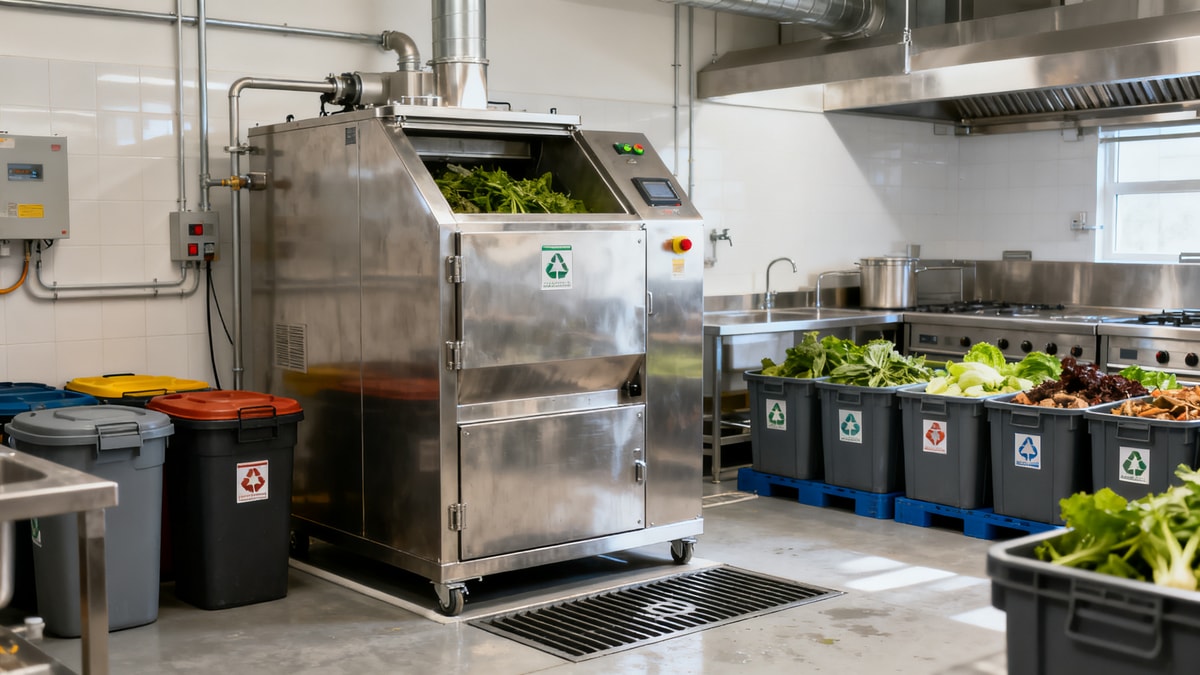
For business decision-makers evaluating sustainability investments, a food waste composter commercial system can be more than a space concern—it may be a long-term operational advantage. From reducing disposal costs to supporting compliance goals and brand reputation, the real question is whether the footprint delivers measurable value. This article examines the practical trade-offs, ROI factors, and facility considerations that determine if it is truly worth the space.
For Most Businesses, the Answer Is: It Depends on Waste Volume, Disposal Costs, and Operational Fit
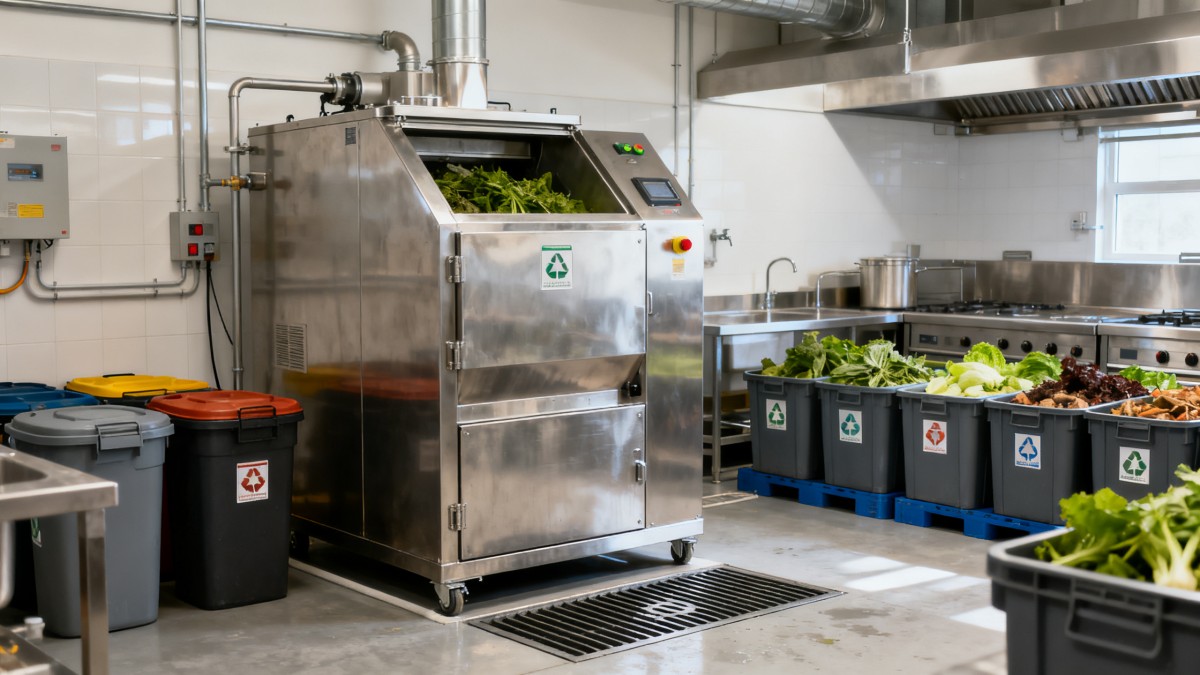
If you are asking whether a food waste composter commercial system is worth the space, you are probably not looking for a sustainability slogan. You want to know whether the equipment will lower costs, reduce operational risk, and make sense within the physical and workflow constraints of your facility.
The short answer is yes—under the right conditions, a commercial food waste composter can absolutely be worth the space. But that value is rarely determined by footprint alone. It depends more on how much food waste your operation generates, what you currently pay for hauling and landfill disposal, whether local regulations are tightening, and whether your team can support proper daily use.
For high-volume generators such as hotels, resorts, hospitals, corporate campuses, food manufacturers, universities, supermarkets, and large restaurants, the case is often strong. If food waste is already a visible cost center, on-site composting or dehydration-based reduction can help cut hauling frequency, improve waste segregation, and support ESG reporting.
For lower-volume sites or operations with inconsistent waste streams, the investment may be harder to justify. In those cases, the machine may occupy valuable back-of-house or utility space without producing enough savings to offset capital and operating costs. That is why the better decision framework is not “Do we have room?” but “What business problem are we solving, and is this the best way to solve it?”
What Decision-Makers Really Need to Evaluate Before Buying
Business buyers usually care about five issues first: total cost, payback period, space impact, operational burden, and compliance value. Those factors matter more than technical marketing claims about composting speed or machine design.
Start with waste volume. A food waste composter commercial unit becomes more compelling when your site produces a predictable daily stream of organic waste. If output swings heavily by season or daypart, the system may be underused for long periods, weakening ROI.
Next, examine your current disposal economics. If you pay high fees for waste hauling, landfill tipping, or compactors, reducing organic volume can create measurable savings. Organic waste is heavy, wet, and expensive to transport. Even partial diversion can change your waste profile enough to lower pickup frequency or avoid overflow issues.
Then consider labor. The technology is not fully self-managing. Staff still need to separate contamination, load the machine correctly, monitor output, and clean around the unit. A composter that saves on hauling but creates daily workflow friction may struggle in real operations.
Utilities also matter. Some systems consume electricity, water, enzymes, filters, or bulking agents. These recurring inputs are often overlooked during procurement. A realistic business case should compare all operating costs against current waste-handling expenses, not just the purchase price.
Finally, think about why your company is considering this investment now. If the driver is landfill cost reduction, your analysis should be financial first. If the driver is compliance, waste diversion targets, or investor-facing sustainability metrics, the value calculation becomes broader and may justify a longer payback period.
How to Tell If the Space Will Create Value Rather Than Just Occupy It
Space in commercial kitchens, service corridors, loading bays, and facility support zones is expensive. In many businesses, square footage has a direct operational opportunity cost. A food waste composter commercial installation is worth that cost only when its footprint produces gains that exceed the value of alternative uses for the same area.
That means looking beyond machine dimensions. You need to assess the full operating envelope: loading access, staff movement, ventilation clearances, maintenance access, drainage requirements, noise impact, and proximity to waste generation points. A compact unit can still create workflow inefficiencies if it interrupts traffic or requires extra handling steps.
One of the most common mistakes is placing the system too far from the source of waste. If employees must transport food scraps across multiple zones, compliance drops and contamination rises. The more friction you create in the process, the less likely the equipment will deliver expected diversion rates.
Another mistake is comparing the composter only against empty floor space. In reality, you should compare it against all alternative uses of that area: cold storage expansion, dry goods storage, prep space, recycling staging, or additional production capacity. In high-value operational environments, a machine must earn its place through measurable performance.
In practical terms, the equipment tends to make the most sense where food waste is already centralized, where there is underutilized service space, or where waste handling inefficiencies are causing recurring cost or hygiene problems.
The ROI Case: Where Commercial Food Waste Composters Usually Pay Off
The strongest business case for a commercial composter usually comes from one or more of the following conditions: high organic waste volume, expensive hauling contracts, landfill diversion mandates, brand pressure around sustainability, or remote locations where waste logistics are difficult.
Hotels and resorts are a good example. They often generate steady volumes from kitchens, buffets, banquets, and landscaping operations. If waste removal is frequent and costly, on-site processing can reduce transport needs and support visible sustainability positioning for guests and corporate clients.
Hospitals and institutional kitchens can also benefit, especially where waste generation is predictable and centralization is possible. Universities, large cafeterias, and corporate campuses may find additional value in using composting programs to support ESG reporting, employee engagement, and procurement standards.
Remote sites can see even stronger returns. When disposal requires long-distance transport, every reduction in volume matters. In these settings, a food waste composter commercial unit may provide value not just by lowering cost, but by reducing logistical dependency and improving site resilience.
Food processing facilities are a more nuanced case. If the waste stream is clean, consistent, and substantial, the economics may work well. But some sites are better served by anaerobic digestion, rendering, or specialized by-product recovery rather than composting equipment. The right answer depends on waste composition and local infrastructure.
For smaller restaurants or mixed-use facilities with limited floor area, the business case can be weaker unless disposal costs are exceptionally high. In those environments, off-site organics collection may be more practical than dedicating space to an on-site system.
What Costs Are Commonly Underestimated in the Buying Process
Capital cost gets the most attention during procurement, but it is not usually the biggest source of disappointment. Underestimated implementation and operating costs are more often the reason projects fail to meet expectations.
Installation may require electrical upgrades, plumbing connections, drainage work, ventilation adjustments, floor reinforcement, odor control measures, or enclosure modifications. In older facilities, these site-preparation costs can materially change project economics.
Training is another hidden cost. If turnover is high, the organization may need repeated onboarding to maintain proper sorting and operation. Contamination from plastics, cutlery, packaging, or cleaning materials can affect output quality and increase maintenance frequency.
Maintenance itself should be modeled realistically. Ask about wear parts, sensor reliability, service intervals, downtime expectations, and service response time. If the unit fails and your staff loses confidence in it, the system can quickly become an expensive idle asset.
You should also verify what the machine actually produces. Some commercial systems create compost-like output; others primarily dehydrate or reduce waste mass. Those are not the same thing operationally or environmentally. If your internal stakeholders believe the machine produces ready-to-use compost when it does not, confusion will follow.
Procurement teams should demand clarity on throughput assumptions, moisture reduction performance, contamination tolerance, cleaning requirements, utility use, and end-product handling. Vendor claims should be tied to real operating conditions, not idealized test scenarios.
Compliance, ESG, and Reputation Benefits Can Matter More Than Direct Savings
Not every investment must pay back through direct disposal savings alone. For many enterprises, the strategic value of a food waste composter commercial system lies in risk reduction, reporting readiness, and brand positioning.
In markets where landfill restrictions, organics diversion rules, or corporate waste reduction targets are tightening, on-site processing can help companies stay ahead of regulation. Even if the financial return is moderate, avoiding future compliance pressure may justify the investment.
ESG reporting is another factor. More investors, customers, and procurement partners want evidence of measurable waste reduction. A commercial composting initiative can support sustainability claims with auditable operational data—especially when paired with tracking on food waste volume, diversion rates, and avoided hauling.
There is also reputational value. For hospitality brands, campuses, and consumer-facing facilities, visible waste reduction efforts can strengthen brand perception. That benefit should not be overstated, but it is real when sustainability is part of how clients, guests, or institutional partners evaluate your business.
Still, executives should distinguish between symbolic and substantive value. A system that looks good in a sustainability report but is poorly utilized on the ground does not create lasting trust. Decision-makers should prioritize measurable operational performance over marketing optics.
When a Commercial Food Waste Composter Is Probably Not Worth the Space
There are clear cases where the answer is no. If your waste volume is low, if your facility lacks practical installation space, or if local organics collection is already affordable and reliable, a composter may not be the smartest solution.
It is also a weak fit where staffing is thin and process discipline is low. Successful operation depends on consistent segregation and daily attention. If the organization cannot sustain that behavior, the unit may become a maintenance burden rather than a performance asset.
Another warning sign is buying the equipment mainly to satisfy an internal sustainability narrative without doing a waste audit first. Without baseline data, there is no credible way to estimate savings, throughput fit, or diversion potential. In that situation, the project is being justified backward.
Facilities with highly contaminated organic waste streams may also struggle. If packaging, liquids, bones, oils, or mixed materials dominate the stream, not every machine will handle them effectively. The result can be odor issues, lower performance, and higher service needs.
Finally, if the same business objective can be achieved more cheaply through source reduction, menu planning, donation programs, or improved waste collection contracts, those options may deserve priority before on-site equipment is installed.
A Practical Decision Framework for Business Buyers
For executives and facility leaders, the best path is a structured evaluation rather than a yes-or-no assumption. Begin with a 30- to 60-day waste audit. Measure daily food waste volume, contamination rates, disposal frequency, hauling costs, and labor touchpoints. Without that baseline, ROI calculations are guesswork.
Next, map the workflow. Identify where waste is generated, how it moves, where it accumulates, and which departments own the process. This reveals whether the machine will simplify operations or create more handling steps.
Then run a total-cost-of-ownership model. Include purchase price, installation, utilities, consumables, labor, maintenance, training, downtime risk, and end-product management. Compare that with current and projected waste disposal costs over three to five years.
After that, assess strategic value. Will the system help meet landfill diversion mandates, customer expectations, or ESG targets? Will it reduce dependence on external waste logistics? Will it improve hygiene, odor control, or loading dock congestion?
Finally, validate vendors carefully. Ask for references from facilities similar to yours in scale, waste type, and operating environment. Site visits or performance case studies are far more useful than generic brochures. Decision-makers should treat vendor selection as an operational risk decision, not just a capital equipment purchase.
Conclusion: Worth the Space When It Solves a Real Operational Problem
So, is a food waste composter commercial system worth the space? For many high-volume operations, yes—especially where disposal costs are high, sustainability targets are real, and facility workflows support consistent use. In those settings, the machine can deliver a mix of cost savings, compliance readiness, and reputational value.
But the footprint only makes sense when it aligns with actual waste volume, site conditions, and management priorities. If the equipment is purchased without a waste audit, without workflow planning, or without a clear ownership model, even a high-quality system may underperform.
The best decision-makers do not treat composting equipment as a standalone green upgrade. They evaluate it as part of a broader waste, compliance, and facility-efficiency strategy. If the system reduces hauling, supports measurable diversion, and integrates cleanly into operations, then the space it occupies is not a cost—it is a productive asset.
Technical Specifications
Expert Insights

Chief Security Architect
Dr. Thorne specializes in the intersection of structural engineering and digital resilience. He has advised three G7 governments on industrial infrastructure security.
Related Analysis
- May 02, 2026Chemical Metering Pumps: Which Dosing Errors Cost the Most?Author :Environmental Engineering Director
- May 02, 2026What Sets One Belt Filter Press Manufacturer Apart?Author :Environmental Engineering Director
- May 02, 2026Moving Bed Biofilm Reactor MBBR Retrofit Benefits and LimitsAuthor :Environmental Engineering Director
Core Sector // 01
Security & Safety
- Copper Wire Granulator Output Depends on More Than Blade SpeedAuthor :Environmental Engineering Director

- Medical Waste Incinerator Compliance Risks Often Missed EarlyAuthor :Environmental Engineering Director

- Compost Turner Machine Size: Bigger Is Not Always BetterAuthor :Environmental Engineering Director

- What to Check Before Buying Smokeless Incinerators WholesaleAuthor :Environmental Engineering Director

- Is a Commercial Food Waste Composter Worth the Space?Author :Environmental Engineering Director

- E Waste Recycling Plant Planning Mistakes to AvoidAuthor :Environmental Engineering Director

- How to Judge Trommel Screen Wholesale Quality FastAuthor :Environmental Engineering Director

- Why Hazardous Waste Treatment Costs Vary So MuchAuthor :Environmental Engineering Director