Compost Turner Machine Size: Bigger Is Not Always Better
Author
Date Published
Reading Time
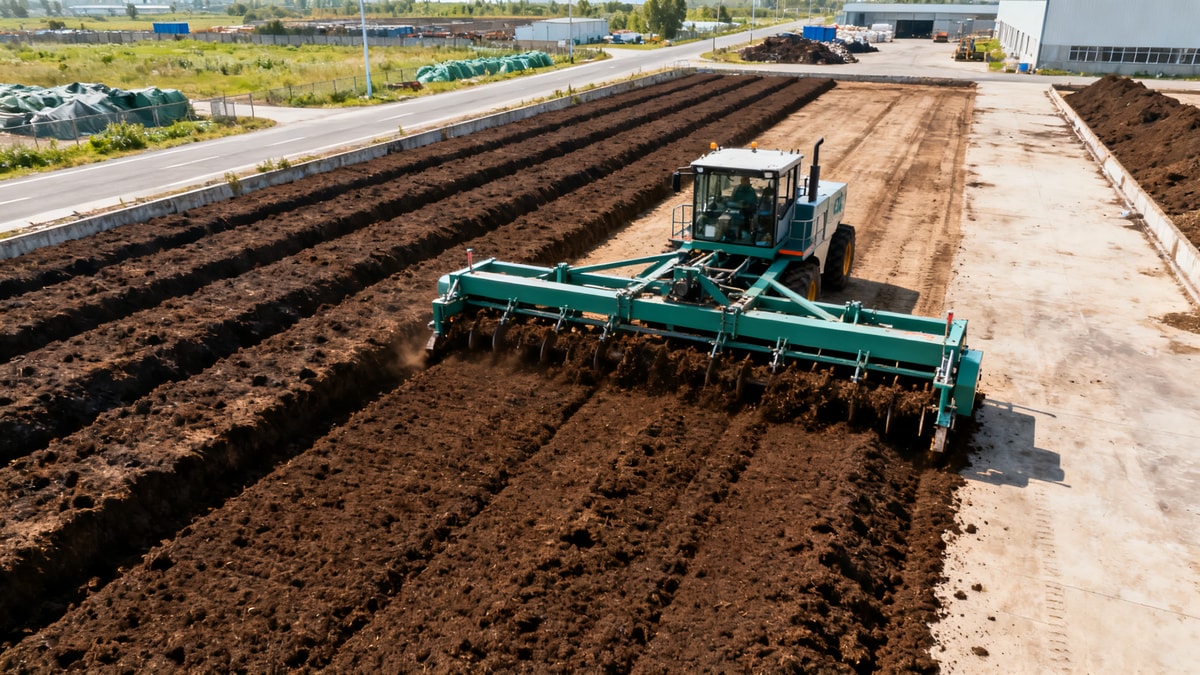
Choosing the right compost turner machine is not simply a matter of going bigger. For project managers and engineering leads, machine size directly affects site layout, throughput efficiency, operating cost, and long-term reliability. This article explains why a properly matched compost turner machine often delivers better performance, easier integration, and stronger ROI than oversized equipment.
In industrial composting projects, equipment selection influences far more than hourly output. A machine that is oversized for the pad, feedstock profile, or aeration plan can create bottlenecks in turning frequency, increase diesel or power demand by 15%–35%, and force costly civil changes after installation. For EPC teams, plant managers, and procurement leads, the better question is not “What is the biggest machine available?” but “What machine size fits the process target, site geometry, and maintenance strategy?”
A properly specified compost turner machine supports stable pile temperatures, more predictable moisture control, and better use of labor and utility infrastructure. This matters whether the project is handling 20 tons per day of agricultural waste or 200 tons per day of mixed organics. In both cases, matching machine size to the operating window reduces hidden risk and improves lifecycle economics.
Why Compost Turner Machine Size Must Match the Process, Not the Brochure
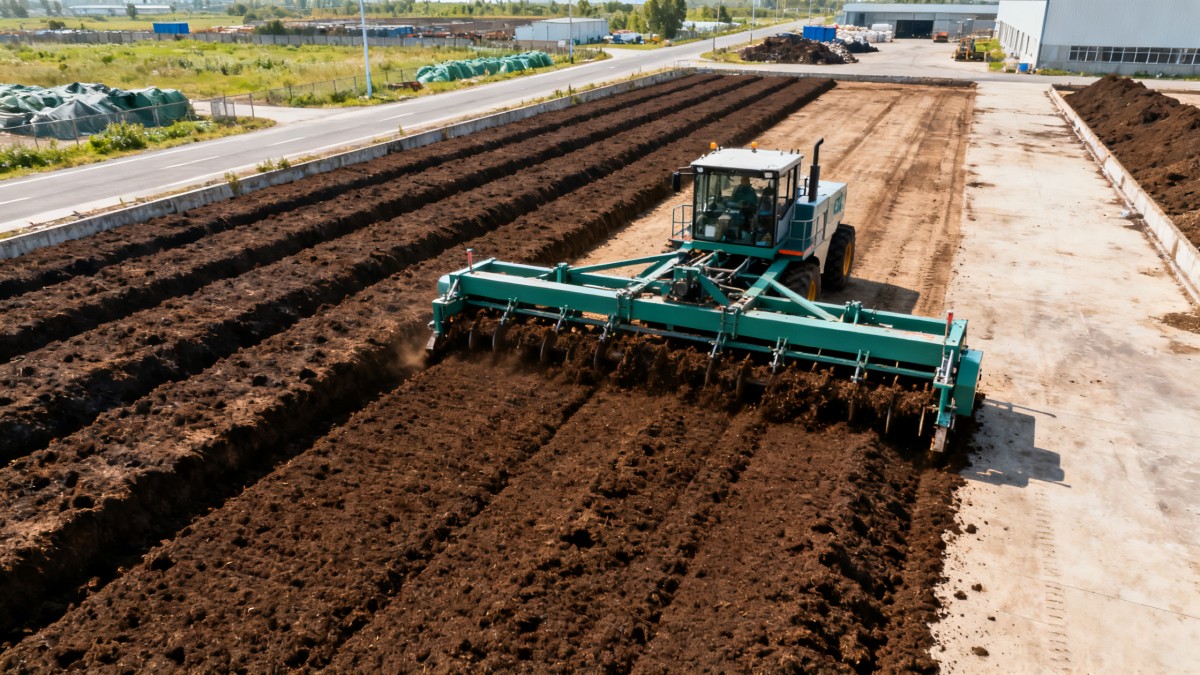
A compost turner machine is part of a system, not a standalone productivity symbol. Its effective size must align with 4 core variables: daily feed volume, windrow dimensions, site circulation, and target composting cycle. If one of these variables is out of balance, a larger unit may actually lower operational efficiency instead of increasing it.
Throughput is more than machine width
Many buyers focus first on turning width, such as 2.5 m, 3 m, or 4 m. Yet true throughput depends on cycle time per row, maneuvering space, pile count, and the number of turns required each week. A 3.0 m compost turner machine operating smoothly across 12 windrows may outperform a 4.0 m machine that loses 20–30 minutes per shift in repositioning and access constraints.
In practical terms, if a facility needs to turn material every 2–3 days to maintain oxygen and temperature, the machine must complete the planned rows inside the daily operating window. That may be 6 hours on one site and 10 hours on another. Oversizing without verifying travel paths, pile spacing, and loader coordination can make the schedule less reliable.
Oversized equipment can strain site design
Larger machines typically require wider lanes, greater turning radii, higher floor bearing confidence, and additional clearance for maintenance. On retrofit sites, this often means sacrificing active composting area to keep the machine moving safely. A machine that appears to raise capacity on paper may reduce the number of usable rows by 1–3 lanes once real operating clearances are applied.
For enclosed facilities, machine height is also critical. Roof beams, ventilation ducts, sprinkler systems, and biofilter ductwork can limit acceptable equipment profiles. Project managers should validate overhead clearance early, especially where building heights are below 8 m or where future automation is planned.
Typical sizing logic by project stage
Before procurement, teams usually evaluate 3 stages: baseline material assessment, site-fit review, and operating model validation. Skipping any one stage increases the risk of buying a compost turner machine that looks efficient in specification sheets but underperforms in field conditions.
- Stage 1: Estimate daily and peak seasonal feedstock volume in tons per day.
- Stage 2: Confirm pad layout, windrow dimensions, and lane access for loaders and service vehicles.
- Stage 3: Match turning frequency, labor shifts, and maintenance intervals to actual production targets.
The table below shows why machine scale should be evaluated against site and process conditions rather than headline size alone.
The key takeaway is clear: size must be justified by system demand. A compost turner machine should increase process control and daily certainty, not just physical scale. For many industrial projects, a well-matched mid-size unit creates the strongest balance between throughput, maneuverability, and total cost of ownership.
How Project Managers Should Size a Compost Turner Machine
Sizing should start from production reality. Project teams need to convert incoming waste volume into row length, turning frequency, and shift capacity. That means evaluating not only nominal tons per hour, but also moisture variation, bulking agent ratio, and the operational target for active composting, which often falls in the 21–45 day range depending on feedstock and climate.
Step 1: Define the daily material load
A facility processing 50 tons per day of source-separated organics has a very different machine requirement than one processing 50 tons per day of manure mixed with straw. Bulk density can vary from roughly 450 kg/m³ to 750 kg/m³, which changes row volume and the time needed for each pass. Without this calculation, buyers often overestimate the machine size needed.
Step 2: Convert volume into windrow geometry
Once daily feed is known, define practical row dimensions. Common windrow widths range from 2.5 m to 4.5 m, while heights often range from 1.2 m to 2.2 m. Larger rows are not automatically better; if the compost turner machine cannot maintain oxygen transfer through the full pile cross-section, hot spots and anaerobic zones become more likely.
Step 3: Verify schedule and redundancy
Turning frequency is often 2 to 4 times per week in active composting. If the site runs 1 shift of 8 hours, the selected machine should complete the required work with time left for fueling, inspection, and unexpected stoppages. A practical planning buffer is 15%–20%. If the machine must run at near 100% of available hours just to keep up, the design is too tight even if the unit appears large enough on paper.
The following table offers a practical sizing framework for project-level discussion.
This framework does not replace engineering review, but it helps cross-functional teams avoid a common mistake: using peak capacity claims as the primary buying criterion. In most projects, the best compost turner machine is the one that keeps the process stable 5 or 6 days per week, not the one with the largest frame size.
Common Risks of Choosing a Compost Turner Machine That Is Too Large
Oversizing can create technical and financial problems long after commissioning. These problems usually appear in 5 areas: underutilization, operating cost, maintenance complexity, site safety, and process inconsistency. For engineering leaders accountable for uptime and budget, these are not minor issues.
Underutilization raises cost per ton
A large compost turner machine working at 40%–50% of its practical capacity rarely delivers attractive economics. Capital cost is higher, wear parts remain costly even at lower utilization, and the machine may need a larger support footprint. When annual tonnage is moderate, the cost per processed ton can exceed that of a smaller unit with a better duty-cycle match.
Maintenance downtime becomes more disruptive
Larger machines often involve more rotating assemblies, more service points, and heavier components for replacement. If planned maintenance takes 6–10 hours and spare parts lead time is 2–4 weeks, the facility may need additional contingency plans. Smaller or mid-size systems can sometimes be serviced more quickly, with less impact on the weekly turning schedule.
Safety margins may tighten on crowded sites
A larger machine moving in confined pads increases the need for disciplined traffic segregation, visibility controls, and turning-area clearance. On sites where loaders, water trucks, and inspection staff share the same circulation routes, oversized equipment can increase near-miss exposure. This is especially relevant where lane widths are limited or operations run across early morning and evening shifts.
Typical warning signs before purchase
- The machine can only fit if windrow spacing is reduced below the operating comfort of loaders.
- Fuel or power demand exceeds the utility plan by more than 10%.
- Maintenance access requires moving nearby piles or shutting down adjacent work zones.
- Peak-season volume is being used to justify year-round oversized capacity.
These signals suggest the project should revisit process assumptions before issuing a final purchase order. A compost turner machine should fit the facility’s annual operating pattern, not just its highest seasonal week.
A Practical Procurement Checklist for Industrial Buyers
For procurement directors and project managers, machine size should be reviewed alongside reliability, serviceability, and integration risk. A disciplined tender process usually compares at least 6 dimensions: capacity fit, energy profile, parts availability, operator safety, civil compatibility, and support response time.
What to ask suppliers before final selection
- What row width and height range is the compost turner machine designed to handle efficiently?
- What is the expected turning output under real moisture conditions, not only ideal test conditions?
- How many lubrication, inspection, and wear-point checks are required per 100 operating hours?
- What spare parts are recommended on-site for the first 12 months?
- What clearance is needed for service access, turning radius, and safe operator visibility?
- Can the machine integrate with the site’s planned drainage, odor control, and traffic flow design?
Decision-making priorities for EPC and operations teams
From a project delivery standpoint, the right compost turner machine is one that supports startup predictability. That means achievable commissioning, operator learning within a reasonable period such as 3–5 working days, and maintenance routines that fit the site’s technical resources. If a machine needs highly specialized support for routine wear items, that dependency should be priced into lifecycle evaluation.
It is also wise to compare expected annual operating hours with warranty conditions and preventive maintenance intervals. For example, if a site expects 1,200–1,800 hours per year, service planning should be explicit from day one. This reduces the risk of premature wear, missed inspections, or disputes over performance after handover.
When bigger does make sense
A larger compost turner machine can be the right choice where 3 conditions are met: sustained high throughput, purpose-built site geometry, and robust maintenance support. If the project is designed around industrial-scale organics processing with consistent feedstock, ample maneuvering area, and trained operators, larger equipment may reduce total passes and support efficient weekly output.
The important point is justification. Bigger should be the result of engineering validation, not assumption. When capacity growth is expected, some teams also evaluate phased expansion rather than immediate oversizing. This can protect cash flow while preserving future scalability.
Fit, Reliability, and ROI Should Lead the Final Decision
A compost turner machine creates value when it fits the material stream, the pad layout, and the site’s operating discipline. For most industrial buyers, selecting the right size means balancing 3 outcomes: process stability, manageable operating cost, and dependable long-term service. A unit that is correctly matched will usually outperform an oversized alternative in daily usability, integration simplicity, and lifecycle return.
For project managers and engineering leaders planning a new composting line or upgrading an existing site, disciplined sizing reduces downstream change orders, improves handover confidence, and supports better budget control. If you need help evaluating compost turner machine options against your throughput goals, site constraints, and procurement timeline, contact Global Industrial Core to discuss a tailored equipment selection strategy and explore more industrial solutions.
Technical Specifications
Expert Insights

Chief Security Architect
Dr. Thorne specializes in the intersection of structural engineering and digital resilience. He has advised three G7 governments on industrial infrastructure security.
Related Analysis
- May 02, 2026Chemical Metering Pumps: Which Dosing Errors Cost the Most?Author :Environmental Engineering Director
- May 02, 2026What Sets One Belt Filter Press Manufacturer Apart?Author :Environmental Engineering Director
- May 02, 2026Moving Bed Biofilm Reactor MBBR Retrofit Benefits and LimitsAuthor :Environmental Engineering Director
Core Sector // 01
Security & Safety
- Copper Wire Granulator Output Depends on More Than Blade SpeedAuthor :Environmental Engineering Director

- Medical Waste Incinerator Compliance Risks Often Missed EarlyAuthor :Environmental Engineering Director

- Compost Turner Machine Size: Bigger Is Not Always BetterAuthor :Environmental Engineering Director

- What to Check Before Buying Smokeless Incinerators WholesaleAuthor :Environmental Engineering Director

- Is a Commercial Food Waste Composter Worth the Space?Author :Environmental Engineering Director

- E Waste Recycling Plant Planning Mistakes to AvoidAuthor :Environmental Engineering Director

- How to Judge Trommel Screen Wholesale Quality FastAuthor :Environmental Engineering Director

- Why Hazardous Waste Treatment Costs Vary So MuchAuthor :Environmental Engineering Director