E Waste Recycling Plant Planning Mistakes to Avoid
Author
Date Published
Reading Time
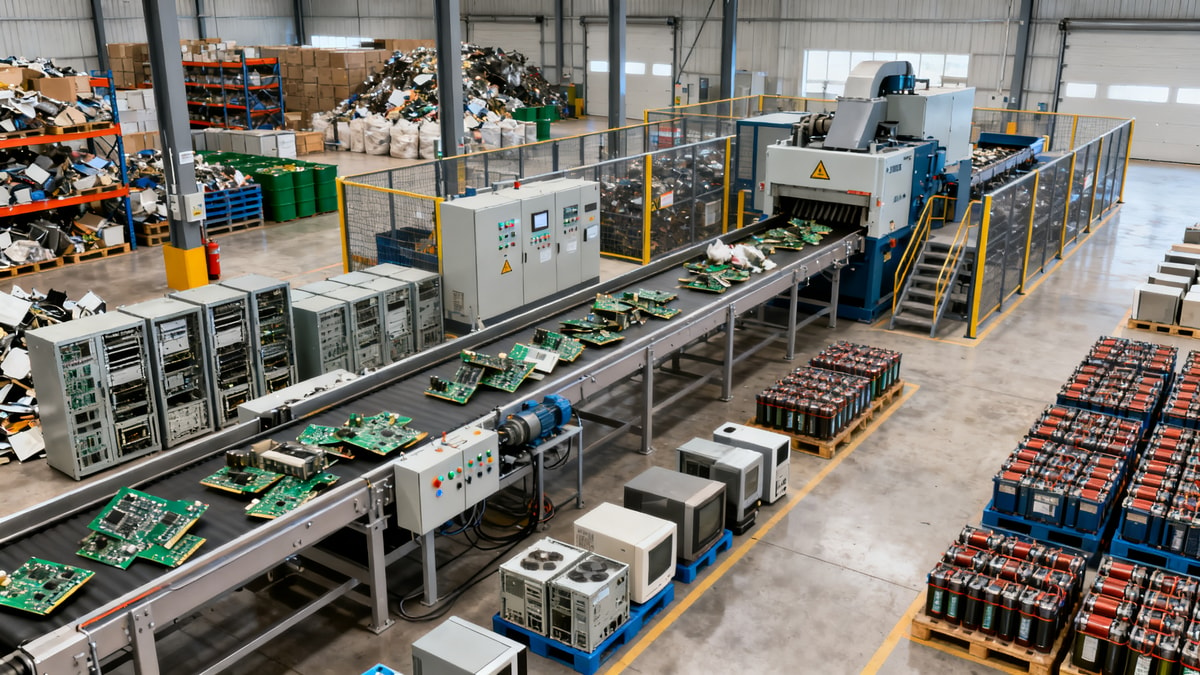
Planning an e waste recycling plant can unlock long-term value, but small early mistakes often lead to costly delays, compliance risks, and inefficient operations. For project managers and engineering leads, understanding what to avoid is just as important as choosing the right technology. This article highlights the most common planning errors and how to build a safer, more scalable, and regulation-ready facility from the start.
Why planning mistakes vary by project scenario
An e waste recycling plant is not a one-size-fits-all project. A facility built to process consumer electronics for an urban collection network faces very different constraints from a plant serving industrial scrap, IT asset disposition programs, or cross-border recovery operations. Project leaders often make the mistake of copying a generic layout, equipment list, or business case without testing whether it fits the feedstock profile, compliance obligations, labor model, and downstream material markets in their own operating context.
For EPC teams and project managers, the real planning challenge is alignment. Site design, material flow, environmental controls, fire safety, storage, utility demand, and data reporting all need to match the intended application scenario. When that alignment is weak, the plant may still be built, but it will struggle with bottlenecks, unsafe handling conditions, permit gaps, or poor recovery economics. That is why the smartest way to avoid failure is to review common mistakes through the lens of actual use cases.
Typical e waste recycling plant scenarios and where errors begin
Before locking in technology or a site, define the operational scenario clearly. The same e waste recycling plant concept can serve multiple business models, but each one requires different planning priorities.
This scenario-based view helps reveal why planning mistakes happen so often. Teams focus on machines before they define operating conditions, material quality, or buyer requirements. In practice, those upstream assumptions determine whether the e waste recycling plant will be profitable and compliant.
Mistake 1: Choosing capacity based on ambition, not verified feedstock
One of the most expensive mistakes is oversizing the e waste recycling plant around optimistic supply forecasts. Many projects are justified using regional e-waste generation estimates, but those numbers do not equal collectible, contractable, and processable feedstock. Access depends on collection partnerships, competition, informal recycling activity, transport economics, and seasonality.
In a municipal scenario, collection spikes may occur after public campaigns, creating uneven inbound flow. In an enterprise IT recovery scenario, volumes may come in batches linked to upgrade cycles rather than steady weekly throughput. If plant sizing assumes full utilization from day one, fixed costs can outpace revenue quickly.
A better approach is to build a phased capacity plan. Validate inbound supply by source, contract type, contamination level, and logistics radius. For project managers, this means linking the process design basis directly to real feedstock commitments rather than market potential alone.
Mistake 2: Designing around equipment brochures instead of material flow
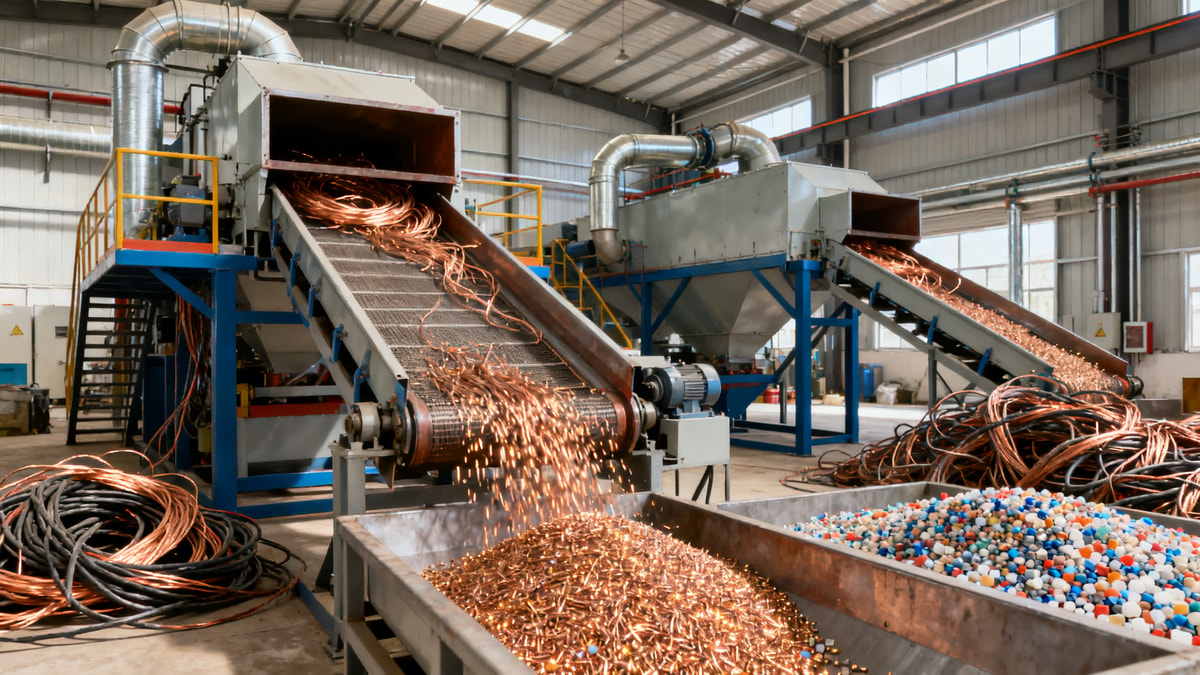
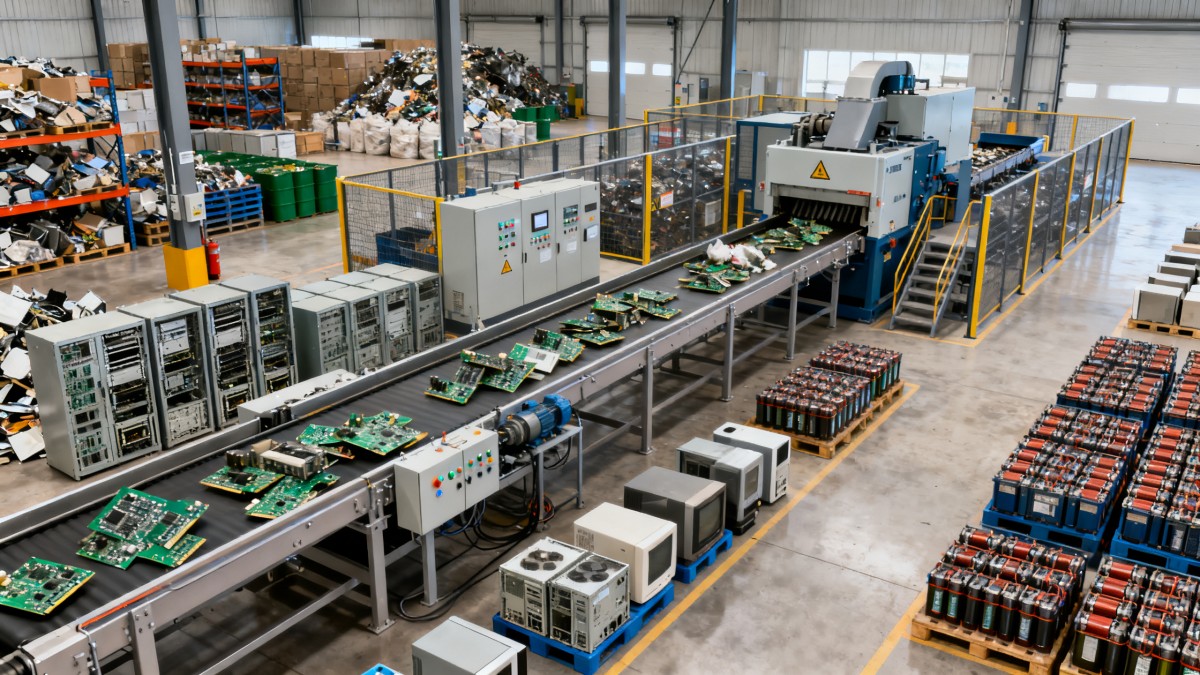
Another common error is selecting shredders, conveyors, separators, or dust collection systems before mapping the full material journey. In an e waste recycling plant, efficiency comes from flow logic: receiving, weighing, inspection, quarantine, dismantling, depollution, size reduction, separation, storage, and outbound dispatch must work as an integrated sequence.
This issue appears differently by scenario. A plant handling high volumes of mixed consumer electronics needs strong front-end sorting and safe battery removal. A facility focused on industrial boards and instruments may require slower but more precise dismantling cells. A data-center decommissioning scenario may need secure cages, serial-number scanning, and separate reuse evaluation lines. If layout planning ignores these differences, the result is congestion, excess handling, and unsafe cross-traffic between forklifts, workers, and hazardous fractions.
Project leaders should require a process flow study before final equipment procurement. The right question is not “Which machine is most advanced?” but “Which flow design protects recovery value, worker safety, and regulatory control in this operating scenario?”
Mistake 3: Underestimating hazardous components and environmental controls
Many e waste recycling plant projects focus heavily on metals recovery but underestimate environmental and safety obligations. Batteries, capacitors, mercury lamps, toner residues, refrigerants, and dust from printed circuit board processing can create major compliance risks. In some scenarios, the hazard profile is far more serious than the average business case suggests.
For example, a mixed municipal stream often contains damaged lithium-ion batteries hidden inside devices. An industrial electronics stream may include legacy components with hazardous substances that require special handling. A plant serving multiple countries may face stricter storage, labeling, and discharge standards than a domestic-only operation.
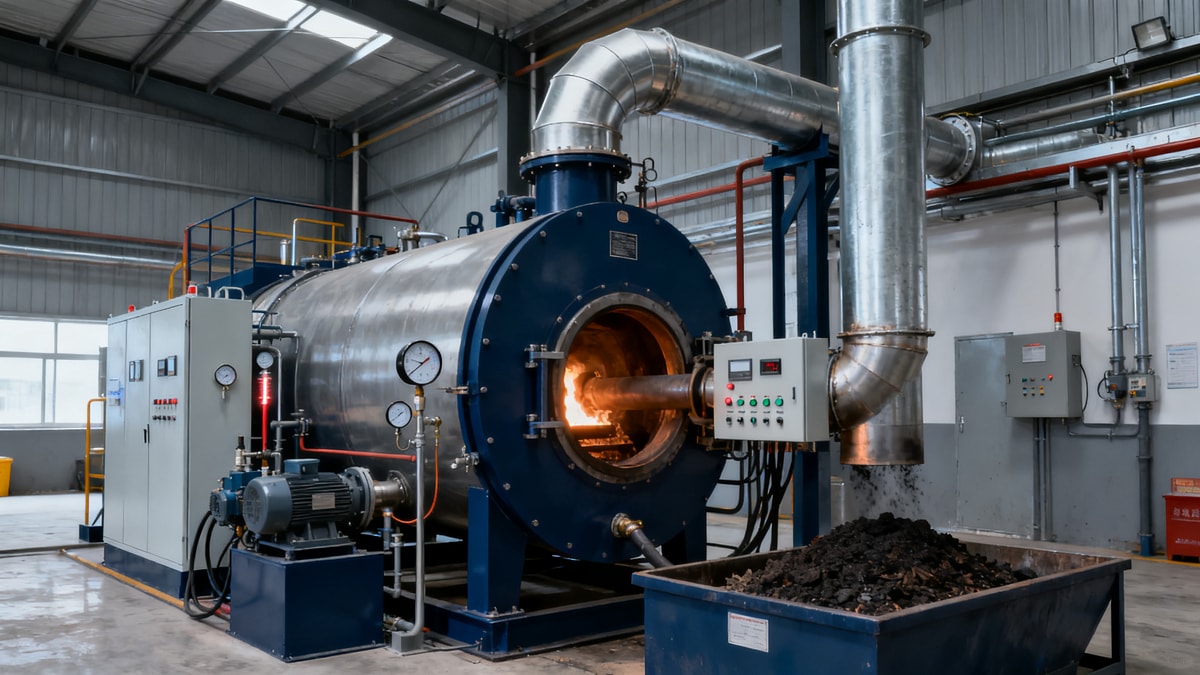
The planning mistake is assuming environmental systems can be added later. In reality, fire detection, air handling, explosion protection, wastewater management, impervious storage zones, and emergency segregation areas should be built into the original engineering basis. For stakeholders influenced by CE, UL, ISO, and local environmental requirements, early compliance integration is not optional; it shapes building design, permitting schedule, insurance approval, and commissioning readiness.
Mistake 4: Ignoring the reuse-and-repair opportunity in certain scenarios
Not every e waste recycling plant should be designed for maximum destruction. In some operating scenarios, the highest-margin output comes from testing, refurbishment, parts harvesting, or controlled resale before material recovery. This is especially true for enterprise IT assets, telecom hardware, and selected industrial electronics.
When planners skip this possibility, they lock the project into a lower-value model. A shred-first design may recover metals efficiently, but it destroys serial traceability, data-bearing component control, and secondary market value. For project managers, the right planning question is whether the plant should support multiple value paths: reuse, component harvesting, and then recycling for the residual stream.
This does not mean every facility needs a refurbishment center. It means the scenario should decide. If inbound material includes large shares of recent-generation laptops, servers, monitors, or controls, omitting a test-and-evaluate zone can be a strategic mistake.
Mistake 5: Weak compliance mapping across permits, standards, and reporting
Compliance failure in an e waste recycling plant rarely comes from a single dramatic violation. More often, it comes from fragmented planning. The project team addresses environmental permits, but not transport licensing. They specify fire systems, but not hazardous storage segregation. They plan traceability software, but not audit-ready reporting for downstream vendors. Each gap may look small in isolation, yet together they delay startup and weaken customer trust.
Scenario differences matter here as well. A local processing facility may mainly need strong municipal and environmental alignment. A cross-border recovery hub must also prepare for shipment documentation, treatment evidence, and buyer-side specification compliance. A plant serving corporate clients may need secure chain-of-custody and documented destruction protocols as part of the service promise.
The solution is to create a compliance matrix during front-end planning. Map each process zone, material type, and operational step against applicable legal, safety, environmental, and customer-specific requirements. This simple discipline prevents the late discovery of “invisible” obligations.
Mistake 6: Building for startup conditions but not future operating complexity
Many teams plan an e waste recycling plant for the first 12 months and forget how fast complexity can grow. New feedstock contracts, stricter regulations, battery volumes, customer reporting demands, and material price swings can all change the operating model. A plant that works at startup may become restrictive once the business scales.
This is especially relevant in fast-growing urban and regional hubs. Space for quarantine, battery isolation, additional sorting lines, or secondary storage often disappears too quickly. Utility systems may be adequate for launch but insufficient for future air handling or automation upgrades. Digital systems may handle basic tickets but fail under audit, traceability, and KPI reporting requirements.
Scalable planning does not always mean larger initial capital spending. It means protecting expansion options: modular layout logic, utility allowances, reserved hazard zones, flexible workflows, and data architecture that can grow with the business.
How to match the plant design to the right scenario
For project managers evaluating an e waste recycling plant, the most practical way to reduce risk is to run a scenario-fit review before detailed engineering. Use the questions below to stress-test assumptions.
If the plant serves municipal or public collection programs
Prioritize inbound variability, safe unloading, manual sorting capacity, public-facing logistics, and strong battery detection controls. Avoid assuming clean, uniform feedstock.
If the plant serves enterprise IT and data-bearing assets
Prioritize chain-of-custody, secure access, data destruction protocols, serial traceability, and evaluation zones for reuse. Avoid designing only for commodity recycling.
If the plant handles industrial electronics and control systems
Prioritize skilled dismantling, hazardous component identification, selective recovery, and engineering-grade work instructions. Avoid using a purely high-speed consumer-electronics model.
If the plant supports regional aggregation or export preparation
Prioritize documentation quality, material grading, contamination control, storage discipline, and shipping compliance. Avoid weak segregation standards that damage downstream acceptance.
Common scenario misjudgments that deserve extra caution
Several misjudgments appear repeatedly across e waste recycling plant projects. Teams assume collection volume equals recoverable value. They treat all electronics as one category. They overlook labor skill requirements for dismantling-heavy operations. They design for current regulations without tracking likely tightening around batteries, emissions, and reporting. They also fail to qualify downstream buyers early, only to discover later that output quality does not match market expectations.
For engineering and procurement leaders, these are not minor oversights. They affect equipment utilization, permit approval, operating cost, contract credibility, and long-term return on investment. In a sector where compliance and process discipline are inseparable, early planning judgment is a strategic asset.
Conclusion: start with the operating scenario, then engineer the plant
The most reliable way to avoid costly mistakes in an e waste recycling plant is to begin with the real use case, not the generic concept. Different scenarios create different priorities for layout, hazard management, traceability, staffing, utility design, and recovery strategy. A plant meant for municipal electronics will not be optimized the same way as a facility focused on enterprise IT assets or industrial dismantling.
If you are planning a new facility or expanding an existing one, define your feedstock sources, compliance duties, recovery targets, and downstream market requirements before finalizing equipment and civil design. That scenario-first approach gives project managers a stronger basis for safer execution, scalable performance, and higher-value outcomes from day one.
Technical Specifications
Expert Insights

Chief Security Architect
Dr. Thorne specializes in the intersection of structural engineering and digital resilience. He has advised three G7 governments on industrial infrastructure security.
Related Analysis
- May 02, 2026Chemical Metering Pumps: Which Dosing Errors Cost the Most?Author :Environmental Engineering Director
- May 02, 2026What Sets One Belt Filter Press Manufacturer Apart?Author :Environmental Engineering Director
- May 02, 2026Moving Bed Biofilm Reactor MBBR Retrofit Benefits and LimitsAuthor :Environmental Engineering Director
Core Sector // 01
Security & Safety
- Copper Wire Granulator Output Depends on More Than Blade SpeedAuthor :Environmental Engineering Director

- Medical Waste Incinerator Compliance Risks Often Missed EarlyAuthor :Environmental Engineering Director

- Compost Turner Machine Size: Bigger Is Not Always BetterAuthor :Environmental Engineering Director

- What to Check Before Buying Smokeless Incinerators WholesaleAuthor :Environmental Engineering Director

- Is a Commercial Food Waste Composter Worth the Space?Author :Environmental Engineering Director

- E Waste Recycling Plant Planning Mistakes to AvoidAuthor :Environmental Engineering Director

- How to Judge Trommel Screen Wholesale Quality FastAuthor :Environmental Engineering Director

- Why Hazardous Waste Treatment Costs Vary So MuchAuthor :Environmental Engineering Director