Indonesia BPOM Fast-Tracks Chinese Dust Purifiers
Author
Date Published
Reading Time
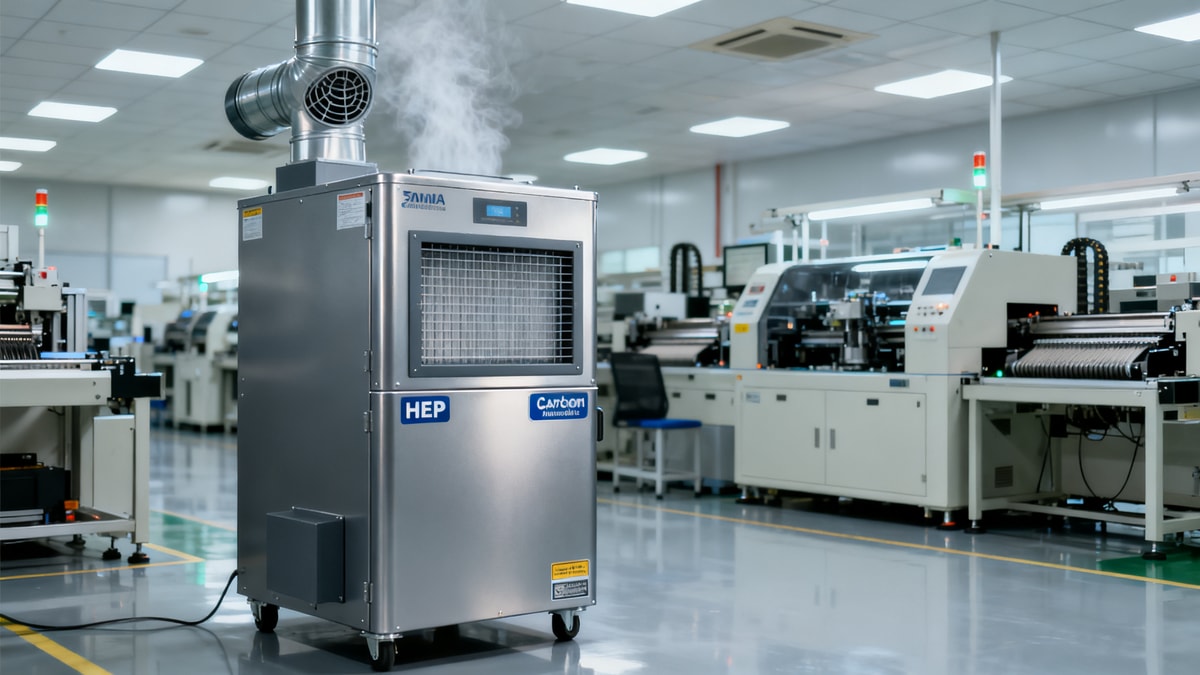
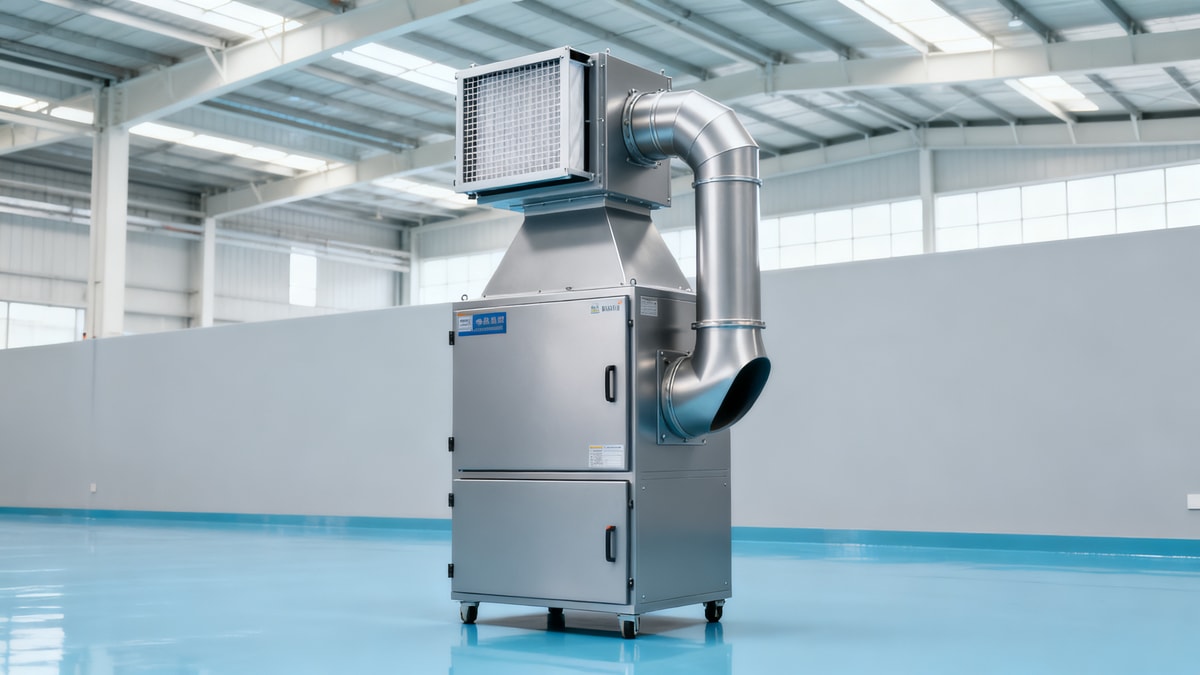
On May 3, 2026, Indonesia’s National Agency of Drug and Food Control (BPOM) issued Regulation No. HK.01.02.2.12345/2026, introducing an expedited review pathway for Chinese-made industrial dust purifiers featuring HEPA + activated carbon filters. The move shortens mandatory bioaerosol filtration efficacy testing from 30 to 7 working days — a development directly relevant to electronics, textile, and food processing manufacturers operating in or exporting to Indonesia.
Event Overview
On May 3, 2026, BPOM published Regulation No. HK.01.02.2.12345/2026, establishing a ‘green channel’ for Chinese industrial dust purifiers with HEPA and activated carbon composite filtration systems. Under this regulation, the required bioaerosol filter performance testing period is reduced from 30 working days to 7 working days. The measure aligns with Indonesia’s 2026 National Occupational Health Action Plan and explicitly supports procurement of high-efficiency air purification solutions by domestic electronics, textile, and food processing facilities.
Which Subsectors Are Affected
Direct Exporters to Indonesia
Manufacturers and exporters of industrial dust purifiers from China face shortened regulatory timelines for market entry — but only for models meeting BPOM’s specified technical criteria (HEPA + activated carbon configuration). This affects time-to-revenue, certification budgeting, and product registration planning. Impact is limited to units intended for industrial use in targeted sectors; general-purpose or residential-grade units are not covered.
Local Distributors & Channel Partners in Indonesia
Distributors handling Chinese industrial air purification equipment may experience accelerated inventory turnover and faster order fulfillment cycles — provided they maintain up-to-date BPOM registration documentation for each model. However, the green channel does not waive other requirements (e.g., local labeling, facility inspection, or post-market surveillance obligations), meaning compliance readiness remains critical.
End-User Manufacturers (Electronics, Textile, Food)
Indonesian factories in electronics assembly, textile dyeing/finishing, and food packaging stand to benefit from quicker access to certified Chinese purification systems. Shorter approval windows support faster implementation of occupational health upgrades mandated under the 2026 Action Plan — though actual procurement decisions remain subject to internal procurement policies, budget cycles, and technical validation beyond BPOM certification.
What Relevant Enterprises or Practitioners Should Monitor and Do Now
Track official BPOM implementation guidance
Regulation No. HK.01.02.2.12345/2026 is confirmed, but BPOM has not yet published detailed procedural notes — such as application prerequisites, test protocol specifications for bioaerosol evaluation, or eligibility verification steps for exporters. Stakeholders should monitor BPOM’s official portal and authorized third-party conformity assessment bodies for updates.
Verify product scope and certification alignment
The fast-track applies exclusively to industrial dust purifiers combining HEPA and activated carbon filtration. Units with alternative configurations (e.g., electrostatic precipitators only, UV-C without HEPA, or non-industrial duty ratings) do not qualify. Exporters must ensure technical documentation explicitly matches BPOM’s defined scope before submission.
Distinguish policy signal from operational readiness
This is a regulatory timeline reduction — not a relaxation of safety or performance standards. Bioaerosol test rigor remains unchanged; only duration is compressed. Companies should avoid assuming automatic qualification and instead treat the green channel as a process efficiency measure requiring full adherence to existing technical and administrative requirements.
Prepare documentation and lab coordination in advance
With testing now scheduled over 7 working days, delays in sample submission, documentation completeness, or lab scheduling could negate time savings. Exporters and local representatives should pre-validate test-ready units, confirm accredited lab availability in Indonesia (or BPOM-recognized overseas labs), and align internal QA/QC handoffs accordingly.
Editorial Perspective / Industry Observation
Observably, this regulation reflects BPOM’s prioritization of occupational health infrastructure modernization — particularly for labor-intensive export-oriented industries facing tightening global ESG expectations. Analysis shows the 7-day bioaerosol testing window is unprecedented for air purification devices in Indonesia, suggesting targeted policy support rather than broad regulatory liberalization. It is more accurately understood as a sector-specific administrative acceleration aligned with national health goals — not a structural shift in import policy or long-term standard harmonization. Continued monitoring is warranted, especially for potential expansion to adjacent categories (e.g., industrial VOC scrubbers) or extension to other ASEAN markets via mutual recognition pathways.
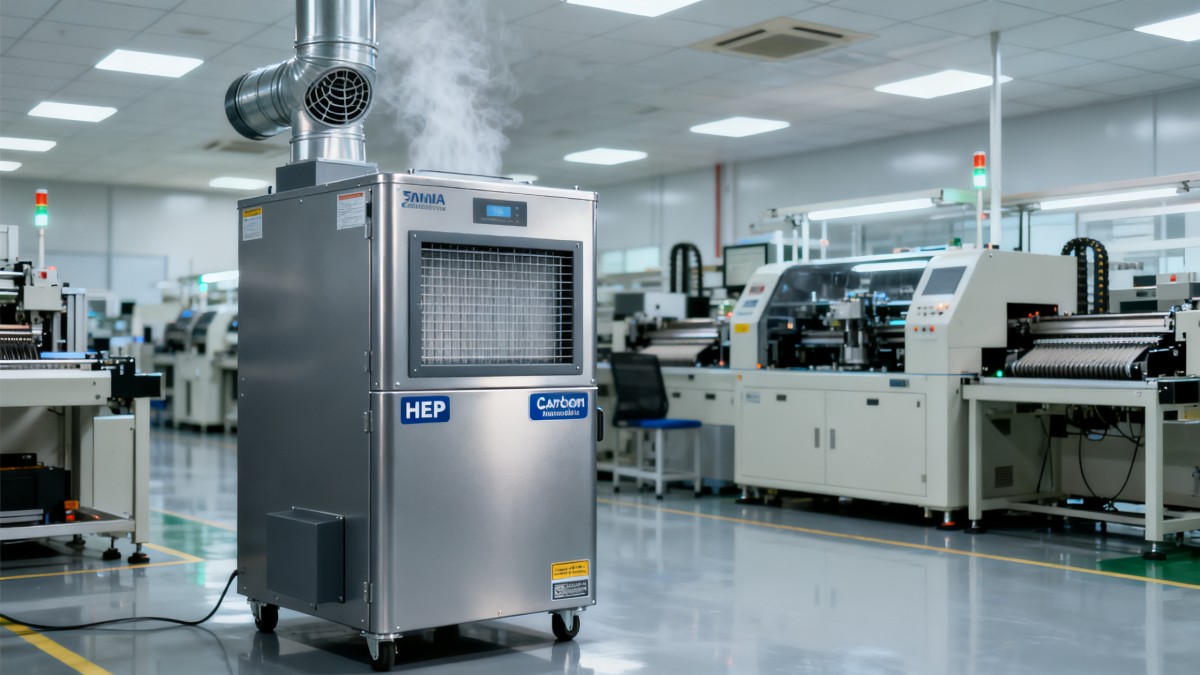
In summary, BPOM’s expedited review for Chinese industrial dust purifiers signals growing alignment between Indonesia’s occupational health priorities and China’s manufacturing capabilities in air quality control — but its immediate impact remains narrowly scoped, procedurally conditional, and operationally dependent on strict compliance execution. It is best interpreted not as a market-opening event, but as a time-sensitive procedural opportunity within a well-defined technical and regulatory boundary.
Source: Indonesia National Agency of Drug and Food Control (BPOM), Regulation No. HK.01.02.2.12345/2026, issued May 3, 2026.
Note: Implementation details, including accredited laboratories and application templates, remain pending official publication and are subject to ongoing observation.
Technical Specifications
- SASO Mandates Dual Energy Label for Industrial Transformers in Saudi Arabia from May 2026Author :Grid Infrastructure Analyst
- EN 61000-4-30:2026 Enforced: Class A Harmonic Traceability Mandatory for EU PQ AnalyzersAuthor :Precision Metrology Expert
- US DOE Level 3 Transformer Efficiency Standard Effective July 1, 2026Author :Grid Infrastructure Analyst
Expert Insights

Chief Security Architect
Dr. Thorne specializes in the intersection of structural engineering and digital resilience. He has advised three G7 governments on industrial infrastructure security.
Related Analysis
- May 06, 2026SASO Mandates Dual Energy Label for Industrial Transformers in Saudi Arabia from May 2026Author :Grid Infrastructure Analyst
- May 06, 2026EN 61000-4-30:2026 Enforced: Class A Harmonic Traceability Mandatory for EU PQ AnalyzersAuthor :Precision Metrology Expert
- May 06, 2026US DOE Level 3 Transformer Efficiency Standard Effective July 1, 2026Author :Grid Infrastructure Analyst
Core Sector // 01
Security & Safety
- Global Industrial HEPA Filter Lead Times Extend to 24 WeeksAuthor :Environmental Engineering Director

- Indonesia BPOM Accelerates Approval for Chinese Dust PurifiersAuthor :Environmental Engineering Director

- Global Industrial HEPA Filter Media Base Fabric Lead Times Extend to 24 WeeksAuthor :Environmental Engineering Director

- Indonesia BPOM Fast-Tracks Chinese Dust PurifiersAuthor :Environmental Engineering Director

- What drives hidden Environment & Ecology costs in dust controlAuthor :Environmental Engineering Director

- Indonesia BPOM Fast-Tracks Chinese Industrial Air PurifiersAuthor :Environmental Engineering Director

- Global Industrial Air Filter Lead Times Extend to 18–24 WeeksAuthor :Environmental Engineering Director

- Why Environment & Ecology Cost Estimates Miss Ongoing MaintenanceAuthor :Environmental Engineering Director