Why Environment & Ecology Cost Estimates Miss Ongoing Maintenance
Author
Date Published
Reading Time
Many Environment & Ecology cost estimates look solid at approval time because the capital line items are visible, benchmarkable, and easy to compare. The problem is that many projects do not fail on purchase price. They fail on the operating burden that follows: inspection schedules, media replacement, calibration, permit renewals, wastewater testing, emissions verification, technician training, and unplanned corrective work.
For financial approvers, the core issue is not whether an environmental system is necessary. It is whether the estimated spend reflects the full lifecycle commitment. If ongoing maintenance is understated, a project that appears efficient in year one can become a recurring source of budget variance, compliance exposure, and avoidable downtime. In practical terms, the most important question is simple: what costs begin after commissioning, and who has accounted for them?
In industrial settings, the answer is often incomplete. Environment & Ecology cost models tend to emphasize equipment procurement and installation while underweighting the long tail of upkeep. That gap matters because environmental systems are not passive assets. They require continuous performance management to remain compliant, effective, and audit-ready.
Why financial approvers should assume initial Environment & Ecology cost estimates are incomplete
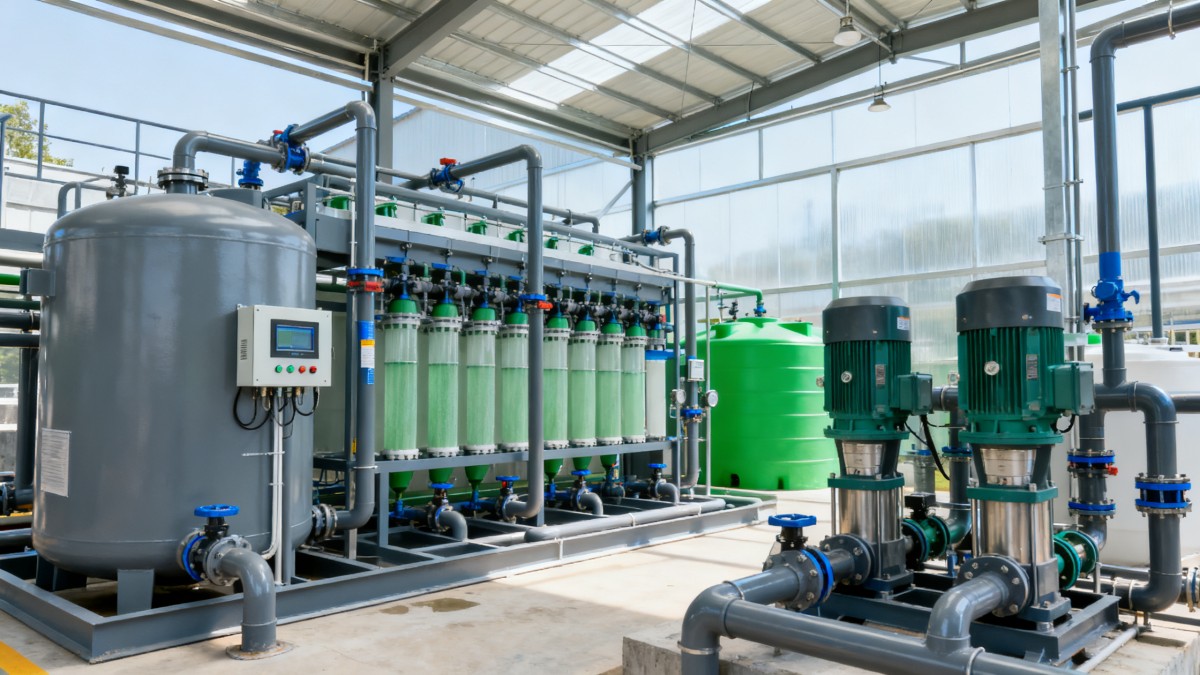
The most common weakness in an Environment & Ecology cost estimate is not a mathematical error. It is a boundary error. The estimate stops at handover, while the financial obligation continues for years. Vendors may quote equipment, engineering teams may budget installation, and project sponsors may secure capex approval, but no one fully prices the operating reality.
This happens for several reasons. First, environmental systems often sit between capital and operating budgets, so ownership is fragmented. Second, compliance requirements evolve over time, making future obligations harder to define in a static estimate. Third, some maintenance costs are low in any single month but material over the life of the asset. Because they are dispersed rather than concentrated, they are frequently missed.
For finance leaders, this creates a classic approval risk. The project can be technically justified and still be financially incomplete. When that happens, later budget requests appear as surprises even though they were always structurally embedded in the asset. The discipline required is not more skepticism about environmental projects. It is more rigorous lifecycle scrutiny before approval.
Where the hidden maintenance burden usually appears
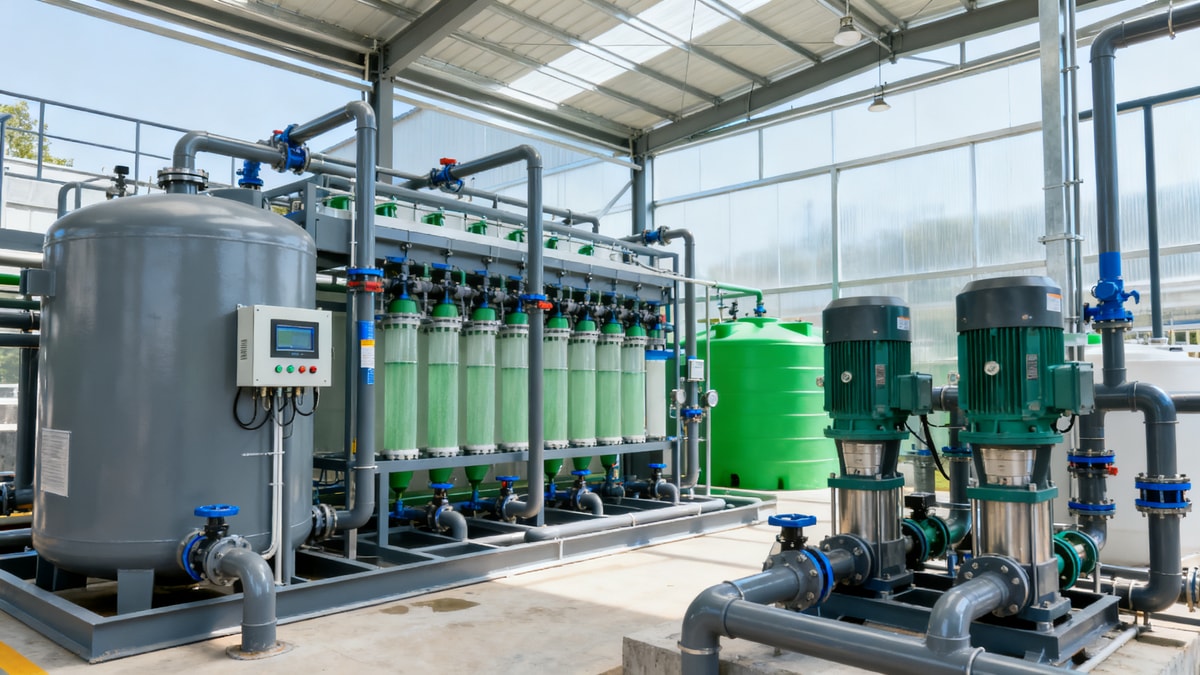
Most underestimation comes from predictable categories. The first is consumables and replacement media. Filtration systems, air treatment units, wastewater treatment skids, dust control systems, and odor mitigation solutions rarely operate indefinitely on original components. Filters clog, membranes foul, activated carbon saturates, reagents expire, and pumps wear. If the estimate captures only procurement and startup, it misses a recurring cost stream that can materially change annual operating expense.
The second category is inspection, calibration, and monitoring. Emissions analyzers, flow meters, pH sensors, turbidity monitors, leak detection systems, and sampling equipment all require periodic verification. In many jurisdictions and industries, this is not optional best practice; it is part of compliance. The cost is not limited to calibration itself. It also includes service labor, documentation, downtime coordination, and in some cases third-party certification.
The third category is regulatory upkeep. Environmental compliance is dynamic. Limits can change, reporting frequency can increase, documentation standards can tighten, and site permits may require periodic updates. A project approved under one regulatory assumption may require incremental investment later simply to maintain legal operation. Finance teams that evaluate only current compliance cost are likely understating future exposure.
The fourth category is corrective maintenance. Environmental equipment often operates in corrosive, wet, dusty, or chemically aggressive conditions. Fans, seals, valves, dosing systems, enclosures, cable runs, and control components degrade faster than generic budget models assume. If the estimate relies on standard industrial maintenance rates rather than environment-specific operating conditions, the forecast can be misleadingly low.
The fifth category is people. Training, standard operating procedure updates, contractor support, emergency response readiness, and audit preparation all have labor costs. These are easy to exclude because they are spread across departments. Yet from a financial perspective, they are part of the true Environment & Ecology cost of owning the system.
Why maintenance gets underestimated even by capable project teams
In many organizations, the capital project team is measured on delivery: on time, on budget, and compliant at startup. That focus naturally prioritizes what is visible during procurement and installation. Ongoing maintenance, however, sits in a different timeline and often a different reporting structure. As a result, the estimate can be professionally produced and still omit key lifecycle costs.
Another reason is supplier quote structure. Vendors frequently provide a base equipment price and may list spare parts or service recommendations as optional. Optional items are then treated as discretionary rather than inevitable. Over a five- to ten-year horizon, however, many of those “optional” items are required to maintain performance, warranty validity, or emissions limits.
There is also a modeling bias toward average operating conditions. Yet environmental assets are often exposed to variable loading, seasonal changes, inconsistent influent quality, upset conditions, and emergency operating scenarios. Systems designed for a nominal duty cycle may need more frequent maintenance when real-world operating conditions deviate from assumptions. Finance approvers should therefore ask whether the estimate reflects ideal conditions or expected site reality.
What financial approvers should ask before signing off
A strong approval process should move beyond “What does it cost to install?” and ask “What does it cost to sustain?” That means requesting a lifecycle cost view, not just a capex summary. At minimum, approvers should require a three- to five-year operating cost forecast with clear assumptions for maintenance intervals, consumable replacement, service labor, and compliance testing.
It is also important to ask who owns each cost line after commissioning. If maintenance labor falls to operations, calibration to engineering, permit management to EHS, and reporting support to external consultants, fragmented ownership can hide the total burden. A consolidated cost map helps finance see the full commitment rather than isolated departmental slices.
Approvers should also request scenario analysis. What happens if throughput rises? What if influent or emissions loads vary? What if permit conditions tighten? What if critical media replacement occurs twice as often as expected? The goal is not to produce perfect precision but to understand sensitivity. A project with narrow cost tolerance and high maintenance volatility may require a different approval decision than one with stable lifecycle economics.
Another valuable question is whether serviceability was considered in design. Two systems with similar acquisition costs can have very different maintenance profiles depending on component access, automation level, remote monitoring capability, spare parts availability, and local technical support. Maintainability is a financial variable, not just an engineering preference.
How to evaluate lifecycle risk without overcomplicating the decision
Financial approvers do not need to become environmental engineers to make better decisions. They need a structured framework. One practical approach is to separate the estimate into five layers: acquisition, commissioning, routine maintenance, compliance upkeep, and asset renewal. If any layer is vague, bundled, or unsupported by assumptions, the estimate should be treated as incomplete.
The second step is to identify the main cost drivers by system type. For air pollution control, these may include filter change frequency, fan energy, sensor calibration, stack testing, and corrosion-related repairs. For wastewater treatment, the major drivers may include chemical dosing, sludge handling, lab analysis, membrane or media replacement, and operator attention. For spill containment and ecological protection systems, inspection cycles, restoration work, and reporting obligations may dominate. Different assets hide different risks, so a generic contingency is often less useful than a targeted driver-based review.
The third step is to compare supplier assumptions against site history. If a facility already operates similar systems, internal maintenance records are often more reliable than brochure expectations. Mean time between failures, annual service call frequency, consumable usage, and inspection findings can materially improve forecast accuracy. Where no internal history exists, approvers should request peer benchmarks or third-party engineering validation.
The fourth step is to examine replacement cycles. Some components have a slower but heavier financial impact than routine maintenance. Examples include blower overhauls, membrane trains, control panel upgrades, lining repairs, analyzer replacement, and structural refurbishment in corrosive environments. These costs may not appear in a first-year budget, but they strongly affect total ownership economics.
The business consequences of ignoring ongoing maintenance
When ongoing maintenance is excluded, the financial consequences show up in several ways. The most obvious is budget overrun. Operating teams return for unplanned funds, and the original business case loses credibility. For finance, repeated post-approval requests create friction and reduce confidence in future project proposals.
A second consequence is compliance risk. Deferred maintenance on environmental systems does not simply reduce efficiency; it can impair permit adherence, reporting accuracy, and defensive documentation during audits. The cost of a missed maintenance action can therefore be larger than the maintenance task itself, especially when fines, production restrictions, remediation work, or reputational damage are involved.
A third consequence is operational disruption. Environmental systems are often deeply tied to production continuity. If a dust collector fails, if a wastewater unit cannot meet discharge requirements, or if an emissions monitoring system is offline, the issue can escalate beyond maintenance into throughput loss or shutdown risk. What looked like a support system becomes a critical path asset.
Finally, there is the ROI distortion effect. Projects can be approved on optimistic payback assumptions when only the visible front-end cost is considered. Once the full maintenance burden appears, the realized return falls below plan. This does not mean the project was wrong to approve; it means the evaluation model was incomplete.
How better estimates strengthen capital discipline and trust
More complete Environment & Ecology cost forecasting does not necessarily mean rejecting projects. In many cases, it leads to better project selection, stronger supplier negotiation, and more realistic reserve planning. When lifecycle costs are visible early, finance teams can compare design options on total cost of ownership rather than sticker price alone.
This also improves cross-functional alignment. Engineering understands the technical basis, operations sees the maintenance burden, EHS confirms compliance obligations, and finance can approve with fewer hidden assumptions. The result is not only a better number but a more durable internal decision.
For industrial procurement and capital planning, one of the most useful shifts is to ask suppliers for documented maintenance schedules, expected annual service costs, critical spare parts lists, recommended calibration intervals, and end-of-life component forecasts. These details often reveal larger differences between competing solutions than the base quote does. A system that costs more upfront but reduces annual service complexity may be the financially stronger option.
A practical approval checklist for finance teams
Before approval, confirm that the estimate includes routine consumables, planned preventive maintenance, corrective repair assumptions, compliance testing, calibration, documentation support, training, spare parts, software or control updates, and major replacement cycles. If any of these are excluded, the estimate should clearly state the omission and its probable budget impact.
Ask for annualized cost by year, not just a single blended average. Many environmental assets have uneven cost curves, with lower spend immediately after startup and higher spend later as components age. A flat annual assumption can hide the real funding pattern.
Require a named owner for every post-commissioning obligation. Hidden costs thrive in gaps between departments. Visibility improves when finance can see who is accountable for execution and reporting.
Finally, test the estimate against downside scenarios. If maintenance frequency increases by 20 percent, if replacement parts have long lead times, or if compliance obligations expand, does the project still make sense? Resilient approvals are built on assumptions that can withstand operational reality.
Conclusion: approve the full lifecycle, not just the installation
Why do Environment & Ecology cost estimates miss ongoing maintenance? Usually because the estimate ends where the real obligation begins. Capital budgets capture what is easy to buy and install, while the harder-to-see costs of monitoring, servicing, documenting, and replacing are left for later. For financial approvers, that is the central risk.
The right response is not to distrust environmental investment. It is to evaluate Environment & Ecology cost through a lifecycle lens. When maintenance, compliance, and renewal are included from the start, approvals become more accurate, ROI expectations become more credible, and operational surprises become less frequent.
In industrial environments where compliance and continuity matter equally, the best financial decision is rarely the cheapest initial quote. It is the option whose total cost of ownership is understood before approval, not discovered after it.
Technical Specifications
- US DOE Level 3 Transformer Efficiency Rule Takes Effect July 1, 2026Author :Grid Infrastructure Analyst
- INMETRO Proposes EMP Immunity Requirement for Industrial Laser Distance Meters in BrazilAuthor :Precision Metrology Expert
- Indonesia BPOM Fast-Tracks Chinese Industrial Air PurifiersAuthor :Environmental Engineering Director
Expert Insights

Chief Security Architect
Dr. Thorne specializes in the intersection of structural engineering and digital resilience. He has advised three G7 governments on industrial infrastructure security.
Related Analysis
- May 05, 2026US DOE Level 3 Transformer Efficiency Rule Takes Effect July 1, 2026Author :Grid Infrastructure Analyst
- May 05, 2026INMETRO Proposes EMP Immunity Requirement for Industrial Laser Distance Meters in BrazilAuthor :Precision Metrology Expert
- May 05, 2026Indonesia BPOM Fast-Tracks Chinese Industrial Air PurifiersAuthor :Environmental Engineering Director
Core Sector // 01
Security & Safety
- Indonesia BPOM Fast-Tracks Chinese Industrial Air PurifiersAuthor :Environmental Engineering Director

- Global Industrial Air Filter Lead Times Extend to 18–24 WeeksAuthor :Environmental Engineering Director

- Why Environment & Ecology Cost Estimates Miss Ongoing MaintenanceAuthor :Environmental Engineering Director

- Indonesia BPOM Launches AI Filter Life Algorithm ReviewAuthor :Environmental Engineering Director

- EU CE Mark Transition Ends for Industrial Dust CollectorsAuthor :Environmental Engineering Director

- Indonesia BPOM Mandates PM0.1 Efficiency & CADR Decay Labeling for Industrial Air PurifiersAuthor :Environmental Engineering Director

- Ambient Air Quality Monitor Placement Can Distort ReadingsAuthor :Environmental Engineering Director

- Wholesale N95 respirators: test reports that deserve a closer lookAuthor :Environmental Engineering Director