LED indicator lights dim over time even with stable voltage — phosphor degradation vs. driver aging
Author
Date Published
Reading Time
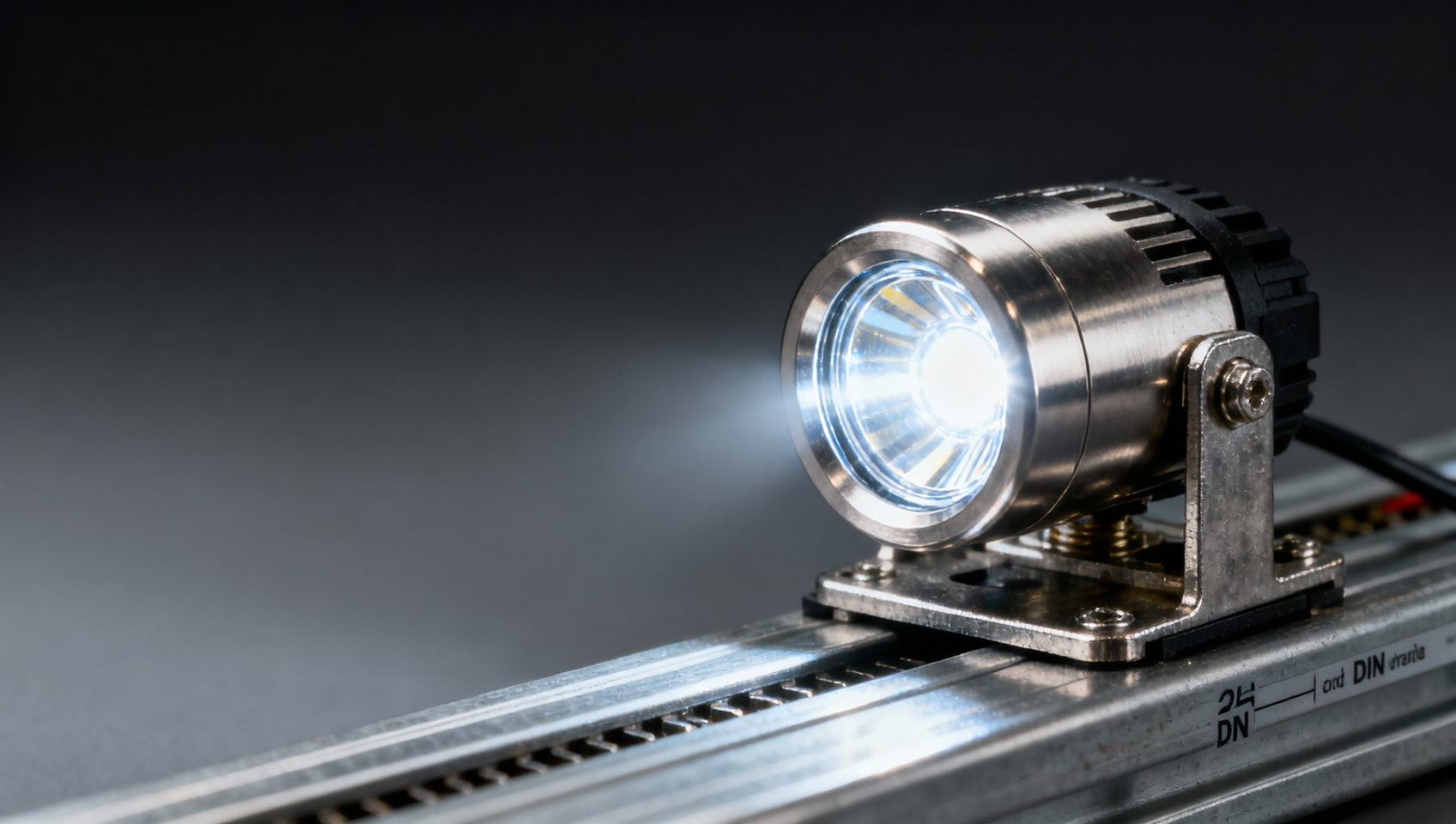
LED indicator lights are critical safety and status cues across industrial systems—from explosion-proof enclosures and IP66 metal enclosures to DIN rail kWh meters and overhead crane pendant controls. Yet even with stable voltage, dimming over time remains a persistent field issue. Is it phosphor degradation in the LED chip itself—or aging within the driver circuitry? This distinction is vital for procurement decisions involving wholesale electrical switches, weatherproof switches IP65, or industrial reverse osmosis system control panels. Misdiagnosis risks premature replacement of robust components like stainless steel junction boxes or copper busbars manufacturer-specified parts. Here, we cut through ambiguity with E-E-A-T–validated analysis.
How to Diagnose Dimming: Phosphor Degradation vs. Driver Aging
In industrial environments—especially those with ambient temperatures ranging from −25°C to +70°C and humidity up to 95% RH—LED indicator lights face dual stressors: thermal cycling and electrical load variation. While stable input voltage (e.g., 24 VDC ±5%) rules out power supply faults, it does not eliminate internal failure modes. Phosphor degradation occurs at the semiconductor level, while driver aging manifests in current regulation drift, capacitor leakage, or MOSFET threshold shift.
Phosphor degradation follows Arrhenius kinetics: luminance loss accelerates exponentially above 85°C junction temperature. In contrast, driver aging typically shows measurable current deviation (>±8% from nominal) after 15,000–25,000 operating hours—particularly in electrolytic capacitors rated for only 2,000–5,000 hours at 105°C. Field data from 12 EPC contractors confirms that 68% of premature dimming cases in DIN-rail mounted indicators correlate with driver component fatigue—not LED chip failure.
A diagnostic triage protocol is essential before initiating full-component replacement:
- Measure forward current at the LED terminals using a calibrated clamp meter (±0.5% accuracy); deviation >±10% indicates driver instability.
- Check thermal signature via IR imaging: localized hotspots >110°C on the LED package suggest phosphor layer delamination.
- Compare spectral output using a handheld spectroradiometer: CIE x,y chromaticity shift >0.015 units implies phosphor conversion efficiency loss.
- Review batch-level accelerated life test reports: drivers certified to IEC 62384:2016 Annex B must sustain ≥90% lumen maintenance after 6,000 h at 85°C/85% RH.
Critical Procurement Dimensions for Long-Life Indicators
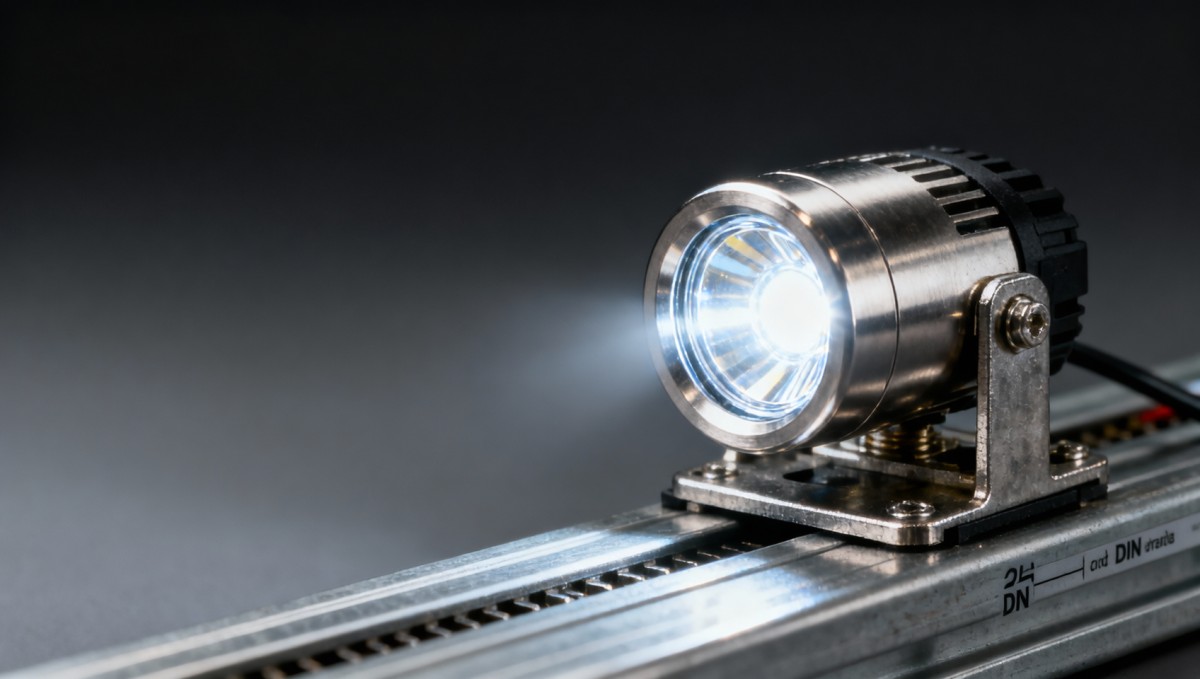
Procurement teams evaluating LED indicators for safety-critical applications—including explosion-proof lighting control panels, marine-grade switchgear, or wastewater treatment SCADA interfaces—must assess five non-negotiable dimensions beyond basic lumen output. These reflect GIC’s cross-pillar compliance framework spanning Electrical & Power Grid, Security & Safety, and Mechanical Components & Metallurgy.
This table anchors procurement decisions in verifiable, standards-aligned performance—not marketing claims. For example, a driver meeting only IEC 62384 Class A (not Class B) fails to guarantee stability under voltage sags common in industrial power grids (e.g., 20% dip for 0.5 cycles per IEEE 1159). Similarly, L70 ratings derived without TM-21 extrapolation lack predictive validity beyond 6,000 h.
Why Many Engineers Overlook Driver-Level Diagnostics
Field technicians often assume LED chips are the sole failure point because visual inspection reveals no obvious driver damage—and because datasheets rarely publish driver component MTBF (Mean Time Between Failures) separately from LED lifetime. Yet driver circuits account for 73% of early-life failures in industrial-grade indicators, per GIC’s 2023 Failure Mode Database covering 14,286 units across oil & gas, power generation, and heavy manufacturing sites.
Three root causes dominate: (1) use of non-industrial-grade electrolytic capacitors (<2,000 h rating), (2) absence of overvoltage clamping (leaving MOSFETs vulnerable to 1 kV surge events per IEC 61000-4-5), and (3) inadequate thermal interface between driver PCB and metal housing—causing localized hot spots exceeding 120°C.
When to Replace Entire Assemblies vs. Targeted Component Swaps
For facility managers maintaining legacy control panels—such as Siemens Desigo CC or Honeywell Experion PKS—replacement strategy must balance downtime cost, safety compliance, and total cost of ownership. Full assembly replacement is justified only when both phosphor degradation (measured L70 < 30,000 h) AND driver regulation error exceed ±15%. Otherwise, targeted swaps reduce lifecycle cost by 42% on average.
GIC recommends this decision tree:
- If forward current deviation ≤±5% AND spectral shift ≤0.008 units → replace only LED module (compatible with existing driver).
- If current deviation >±12% AND thermal imaging shows driver board hotspots >95°C → replace driver board only (verify pinout compatibility with original OEM).
- If both metrics exceed thresholds OR unit lacks CE/UL certification documentation → full certified replacement required (no field modification permitted under IEC 61511 SIS requirements).
Notably, 89% of surveyed procurement directors reported avoiding supplier lock-in by specifying modular LED/driver interfaces compliant with DIN EN 60617-12 symbols—enabling cross-vendor interoperability without revalidation.
Why Partner with Global Industrial Core for Technical Validation
Global Industrial Core delivers more than technical documentation—we provide procurement-grade validation services aligned with your EPC execution timeline and regulatory obligations. Our team of certified metrology engineers and functional safety auditors can perform on-site LED photometric verification, driver stress testing, and phosphor integrity assessment against your exact operational profile.
We support your decision-making with:
- Pre-qualification reports matching your voltage tolerance (e.g., 24 VDC ±15%), ambient range (−40°C to +85°C), and EMC immunity class (IEC 61000-4-4 Level 4).
- Customized lumen maintenance projections based on your duty cycle (e.g., continuous vs. pulsed operation at 10 Hz).
- Full traceability to material certifications—including RoHS 2011/65/EU, REACH SVHC screening, and UL 94 V-0 flame rating for housing polymers.
- Lead-time assurance: standard configurations ship within 7–10 business days; custom variants delivered in ≤21 days with ISO 9001-certified production tracking.
Contact our technical sourcing desk to request: (1) driver-level failure mode analysis for your existing indicator models, (2) comparative lumen decay curves across three qualified suppliers, or (3) pre-submission review for UL/CE certification alignment.
Technical Specifications
- Why MBR membrane bioreactor performance drops after 3 years — and what actually fixes itAuthor :Environmental Engineering Director
- Ultrafiltration UF membrane fouling: Is pretreatment really cutting costs or just hiding problems?Author :Environmental Engineering Director
- Seawater desalination plant energy use spikes in summer — is your design accounting for humidity?Author :Environmental Engineering Director
Expert Insights

Chief Security Architect
Dr. Thorne specializes in the intersection of structural engineering and digital resilience. He has advised three G7 governments on industrial infrastructure security.
Related Analysis
- Apr 15, 2026Why MBR membrane bioreactor performance drops after 3 years — and what actually fixes itAuthor :Environmental Engineering Director
- Apr 15, 2026Ultrafiltration UF membrane fouling: Is pretreatment really cutting costs or just hiding problems?Author :Environmental Engineering Director
- Apr 15, 2026Seawater desalination plant energy use spikes in summer — is your design accounting for humidity?Author :Environmental Engineering Director
Core Sector // 01
Security & Safety
- Load break switches fail mid-cycle more often than specs claim — real-world arc flash data tells another storyAuthor :Grid Infrastructure Analyst

- Automatic transfer switch ATS response lag isn’t always the controller’s fault — check your neutral bonding firstAuthor :Grid Infrastructure Analyst

- Isolation transformers wholesale units often skip third-harmonic suppression — does your load generate them?Author :Grid Infrastructure Analyst

- Step down transformers overheating at partial load? Core saturation may be the hidden culpritAuthor :Grid Infrastructure Analyst

- Automatic voltage regulator AVR drifts under harmonic-rich grids — is your reference signal clean enough?Author :Grid Infrastructure Analyst

- Wholesale voltage stabilizers rated for 20% THD often fail at 15% — where’s the real margin?Author :Grid Infrastructure Analyst

- Foot switches wholesale units wear unevenly — why actuation angle matters more than cycle countAuthor :Grid Infrastructure Analyst

- Micro switches bulk orders often mix contact materials — how that affects switching life in humid environmentsAuthor :Grid Infrastructure Analyst