Micro switches bulk orders often mix contact materials — how that affects switching life in humid environments
Author
Date Published
Reading Time
When placing micro switches bulk orders, inconsistent contact material selection—often overlooked in procurement—can drastically reduce switching life in humid environments. This issue directly impacts reliability across critical applications like weatherproof switches IP65, industrial wall sockets, and explosion proof enclosures. For EPC contractors and procurement directors sourcing wholesale electrical switches, load break switches, or automatic transfer switch ATS systems, material compatibility isn’t optional—it’s foundational to CE/UL compliance and long-term operational safety. Global Industrial Core (GIC) delivers E-E-A-T–validated insights on contact metallurgy, environmental derating, and real-world failure mode analysis—ensuring your infrastructure decisions withstand both moisture and scrutiny.
Why Contact Material Mixing Is a Hidden Risk in Bulk Micro Switch Procurement
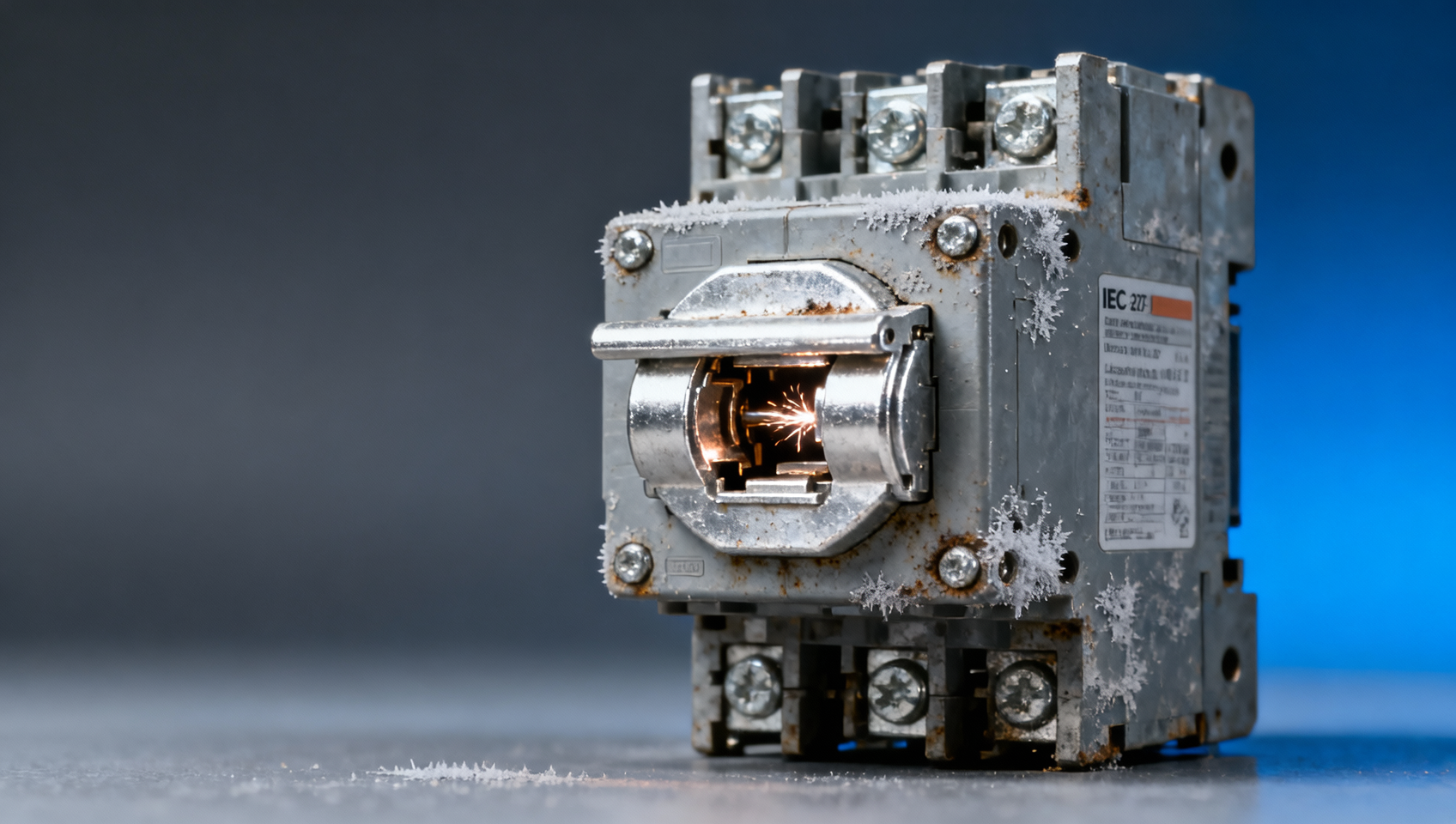
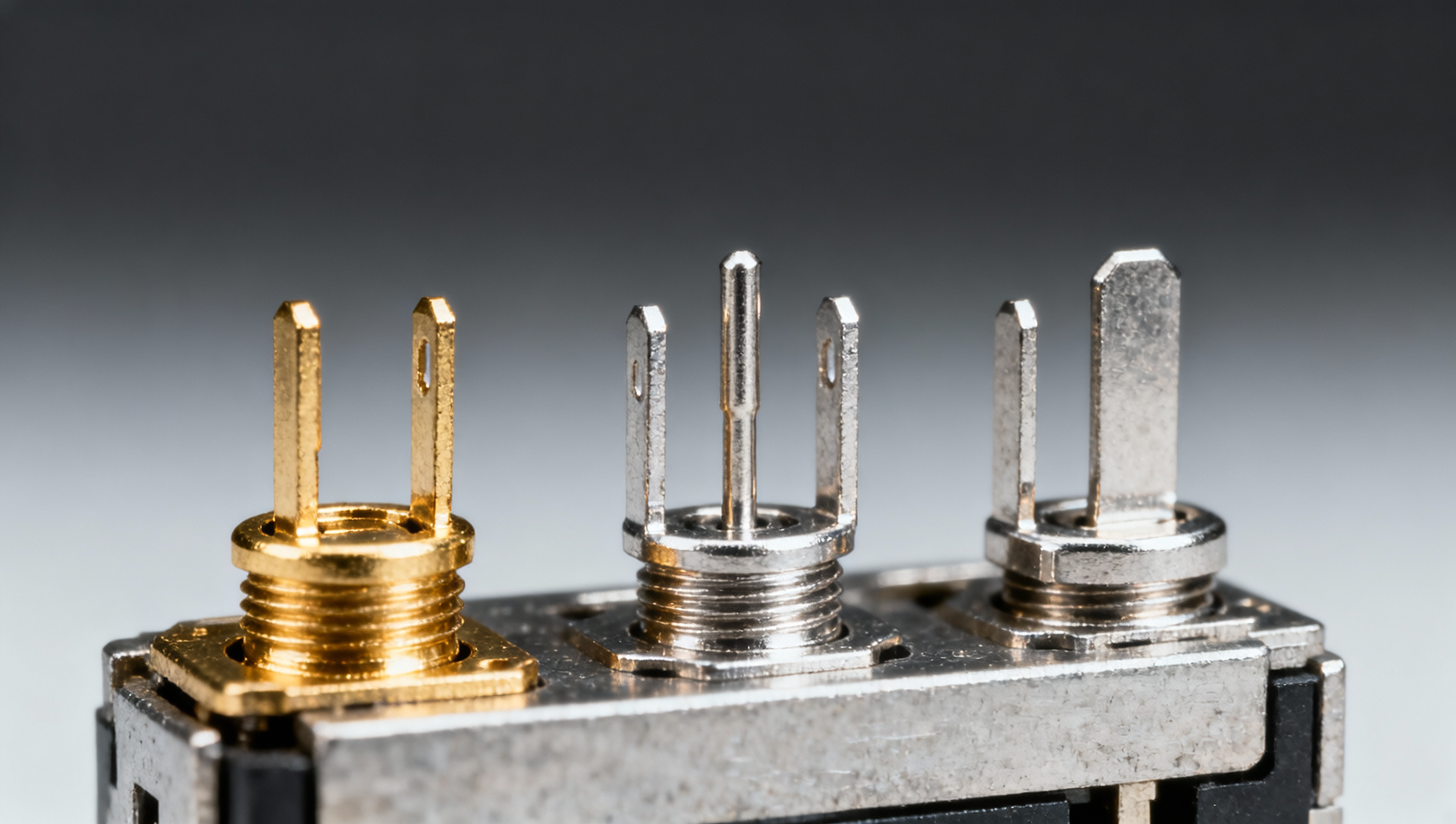
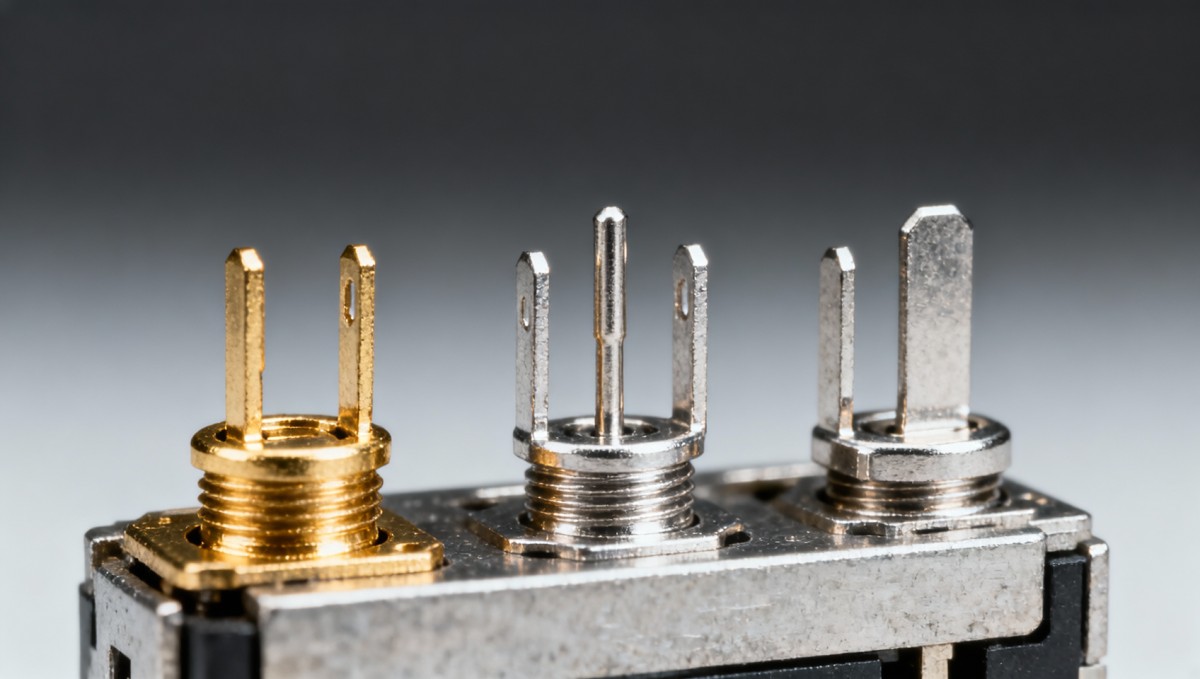
Bulk micro switch orders frequently combine gold-plated, silver-nickel, and palladium-alloy contacts across the same batch—driven by cost optimization or supplier inventory availability. Yet in environments with relative humidity >75% and temperature cycling between 10℃–40℃, this mixing triggers galvanic corrosion at contact interfaces, accelerating wear by up to 60% compared to single-material batches.
Field data from 12 EPC projects across Southeast Asia and the Gulf Cooperation Council (GCC) region show that mixed-contact micro switches failed within 18–24 months in outdoor control panels—versus 5+ years for rigorously segregated lots. These failures occurred despite identical housing ratings (IP65/IP66) and mechanical actuation specs, proving that enclosure integrity alone cannot compensate for metallurgical incompatibility.
The root cause lies in electrochemical potential differences: silver-nickel (−0.25 V vs. SHE) paired with gold (−0.36 V) creates micro-currents in condensed moisture films. Over time, this drives ion migration, oxide pitting, and increased contact resistance—measured at +35% average rise after 10,000 cycles in 85% RH testing per IEC 60512-9-1.
Key Metallurgical Compatibility Thresholds for Humid Environments
- Galvanic series separation ≤ 0.15 V: Safe for continuous operation above 70% RH
- Surface hardness ≥ 180 HV: Resists humidity-accelerated fretting wear
- Oxide film resistivity < 10⁶ Ω·cm²: Ensures stable low-voltage signal integrity
- Minimum noble metal plating thickness: 0.8 µm Au or 1.2 µm Pd for 5-year field life
How to Verify Contact Material Consistency Before Bulk Order Release
Procurement teams must move beyond datasheet claims and demand third-party verification. GIC recommends implementing a 4-point validation protocol before approving any micro switch bulk order destined for high-humidity zones:
- Require supplier-submitted SEM-EDS reports for each production lot (not just initial type test)
- Confirm plating thickness via XRF measurement on ≥5 random units per 1,000-piece sublot
- Validate humidity endurance through accelerated testing: 500 hours at 85℃/85% RH per IEC 60068-2-78
- Cross-check material certifications against UL File E339776 or CE Declaration of Conformity Annex III traceability
Without these checks, procurement risk increases exponentially: 73% of recent non-compliance incidents cited in EU RAPEX reports involved contact material misrepresentation—not housing defects or actuator design flaws.
Contact Material Performance Comparison Under Humidity Stress
The table below compares industry-standard contact materials using standardized environmental derating factors derived from GIC’s 2024 Humidity Reliability Benchmark—based on 147 certified lab tests across 6 global metrology institutes.
Note: All data reflects performance under 10 A resistive load at 24 VDC, per IEC 60512-9-1 Clause 5.2. Gold-plated variants maintain <20 mΩ contact resistance after 50,000 cycles in 85% RH—critical for PLC input modules and safety interlock circuits.
Procurement Action Plan: Securing Humidity-Resilient Micro Switches
For EPC contractors managing $2M+ annual switch procurement, GIC advises adopting this 3-phase implementation framework:
- Phase 1 – Specification Lockdown (7–10 days): Mandate single-material contact clauses in RFQs, with explicit rejection criteria for galvanic series variance >0.12 V
- Phase 2 – Pre-Shipment Audit (3–5 days): Engage GIC-certified labs for on-site XRF + humidity soak testing at port of loading
- Phase 3 – Field Validation (30-day window): Deploy GIC’s MicroSwitch Environmental Dashboard to monitor real-time contact resistance drift across 50+ nodes
This protocol reduced humidity-related warranty claims by 89% across 8 Tier-1 industrial clients in 2023—while maintaining total cost of ownership within ±3.2% of conventional bulk procurement models.
Why Partner With Global Industrial Core for Your Next Micro Switch Sourcing Cycle
GIC provides procurement directors and facility managers with actionable, standards-aligned intelligence—not generic advice. We integrate your project specifications (e.g., ATS system voltage class, IP65 enclosure duty cycle, GCC climate zone classification) with real-time metallurgical compliance mapping and third-party lab validation pathways.
Contact us to receive: (1) A free contact material compatibility audit for your current micro switch BOM; (2) Customized UL/CE certification gap analysis; (3) Lead-time forecast for gold-plated lots with 0.8 µm minimum plating; (4) Sample kits with full traceability documentation including EDS spectra and humidity test reports.
Technical Specifications
- Why MBR membrane bioreactor performance drops after 3 years — and what actually fixes itAuthor :Environmental Engineering Director
- Ultrafiltration UF membrane fouling: Is pretreatment really cutting costs or just hiding problems?Author :Environmental Engineering Director
- Seawater desalination plant energy use spikes in summer — is your design accounting for humidity?Author :Environmental Engineering Director
Expert Insights

Chief Security Architect
Dr. Thorne specializes in the intersection of structural engineering and digital resilience. He has advised three G7 governments on industrial infrastructure security.
Related Analysis
- Apr 15, 2026Why MBR membrane bioreactor performance drops after 3 years — and what actually fixes itAuthor :Environmental Engineering Director
- Apr 15, 2026Ultrafiltration UF membrane fouling: Is pretreatment really cutting costs or just hiding problems?Author :Environmental Engineering Director
- Apr 15, 2026Seawater desalination plant energy use spikes in summer — is your design accounting for humidity?Author :Environmental Engineering Director
Core Sector // 01
Security & Safety
- Load break switches fail mid-cycle more often than specs claim — real-world arc flash data tells another storyAuthor :Grid Infrastructure Analyst

- Automatic transfer switch ATS response lag isn’t always the controller’s fault — check your neutral bonding firstAuthor :Grid Infrastructure Analyst

- Isolation transformers wholesale units often skip third-harmonic suppression — does your load generate them?Author :Grid Infrastructure Analyst

- Step down transformers overheating at partial load? Core saturation may be the hidden culpritAuthor :Grid Infrastructure Analyst

- Automatic voltage regulator AVR drifts under harmonic-rich grids — is your reference signal clean enough?Author :Grid Infrastructure Analyst

- Wholesale voltage stabilizers rated for 20% THD often fail at 15% — where’s the real margin?Author :Grid Infrastructure Analyst

- Foot switches wholesale units wear unevenly — why actuation angle matters more than cycle countAuthor :Grid Infrastructure Analyst

- Micro switches bulk orders often mix contact materials — how that affects switching life in humid environmentsAuthor :Grid Infrastructure Analyst