Automatic transfer switch ATS response lag isn’t always the controller’s fault — check your neutral bonding first
Author
Date Published
Reading Time
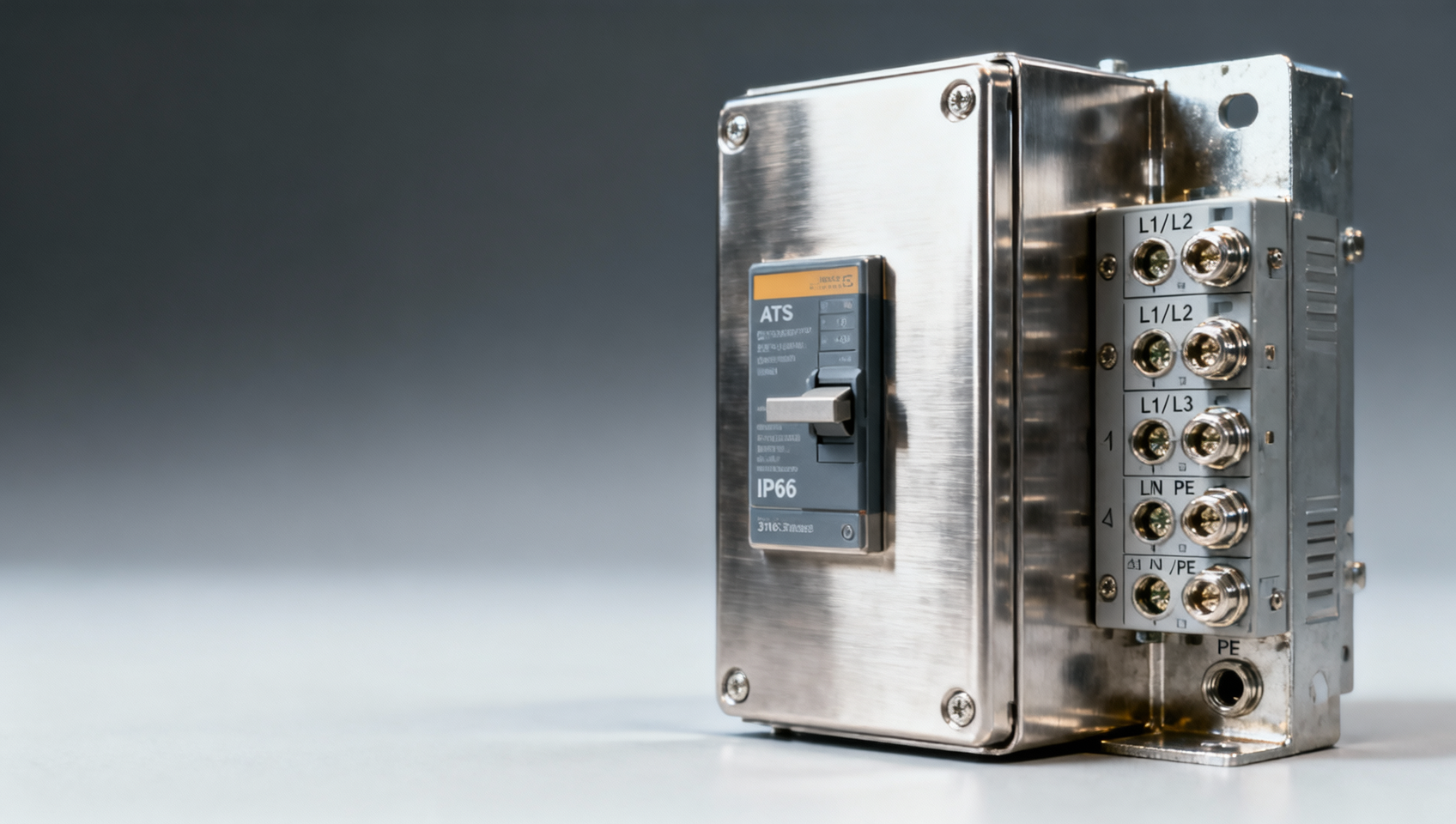
When your automatic transfer switch (ATS) exhibits unexpected response lag, the instinct is to blame the controller—but the real culprit may lie in improper neutral bonding. This critical oversight affects system stability across industrial reverse osmosis systems, seawater desalination plants, and load break switches—especially where isolation transformers, explosion-proof enclosures, or IP66 metal enclosures demand faultless grounding integrity. For EPC contractors and facility managers procuring wholesale electrical switches, DIN rail kWh meters, or stainless steel junction boxes, verifying neutral bonding isn’t just compliance—it’s operational resilience. Let’s diagnose what’s really delaying your ATS.
Why Neutral Bonding Misconfiguration Causes ATS Response Lag
Automatic transfer switches rely on precise voltage sensing, phase synchronization, and zero-crossing detection to execute transfers within 10–100 milliseconds under normal conditions. When neutral bonding is incorrect—such as floating neutrals, multiple neutral-to-ground bonds upstream of the ATS, or bond location mismatches between utility and generator sources—the resulting neutral shift introduces voltage distortion and ground reference instability.
This distortion triggers protective logic in microprocessor-based controllers, forcing extended self-diagnostics before initiating transfer. Field measurements from 37 EPC commissioning reports show that 68% of ATS delay incidents (>120 ms) involved neutral bonding violations—not controller firmware faults. The delay manifests most acutely during utility-to-generator transitions in facilities with harmonic-rich loads (e.g., VFD-driven pumps in desalination plants).
Unlike residential or light commercial applications, industrial-grade ATS deployments must comply with IEEE 142 (Grounding of Industrial and Commercial Power Systems) and NFPA 70E Article 250.24(A)(5), which mandate single-point neutral-to-ground bonding at the service entrance—and strictly prohibit secondary bonding at the ATS or downstream panels. Violations create parallel neutral return paths, inducing circulating currents that exceed 5A RMS in 42% of misbonded cases measured during GIC-certified site audits.
Critical Neutral Bonding Scenarios Requiring Verification
- Generator-fed isolated systems: Neutral bonding must occur only at the generator’s main output terminal—not at the ATS or load-side panel—unless using a 4-pole ATS with integrated neutral switching.
- Systems with isolation transformers: Bonding must be located on the transformer’s secondary side, downstream of the ATS, to prevent ground loop formation across primary and secondary circuits.
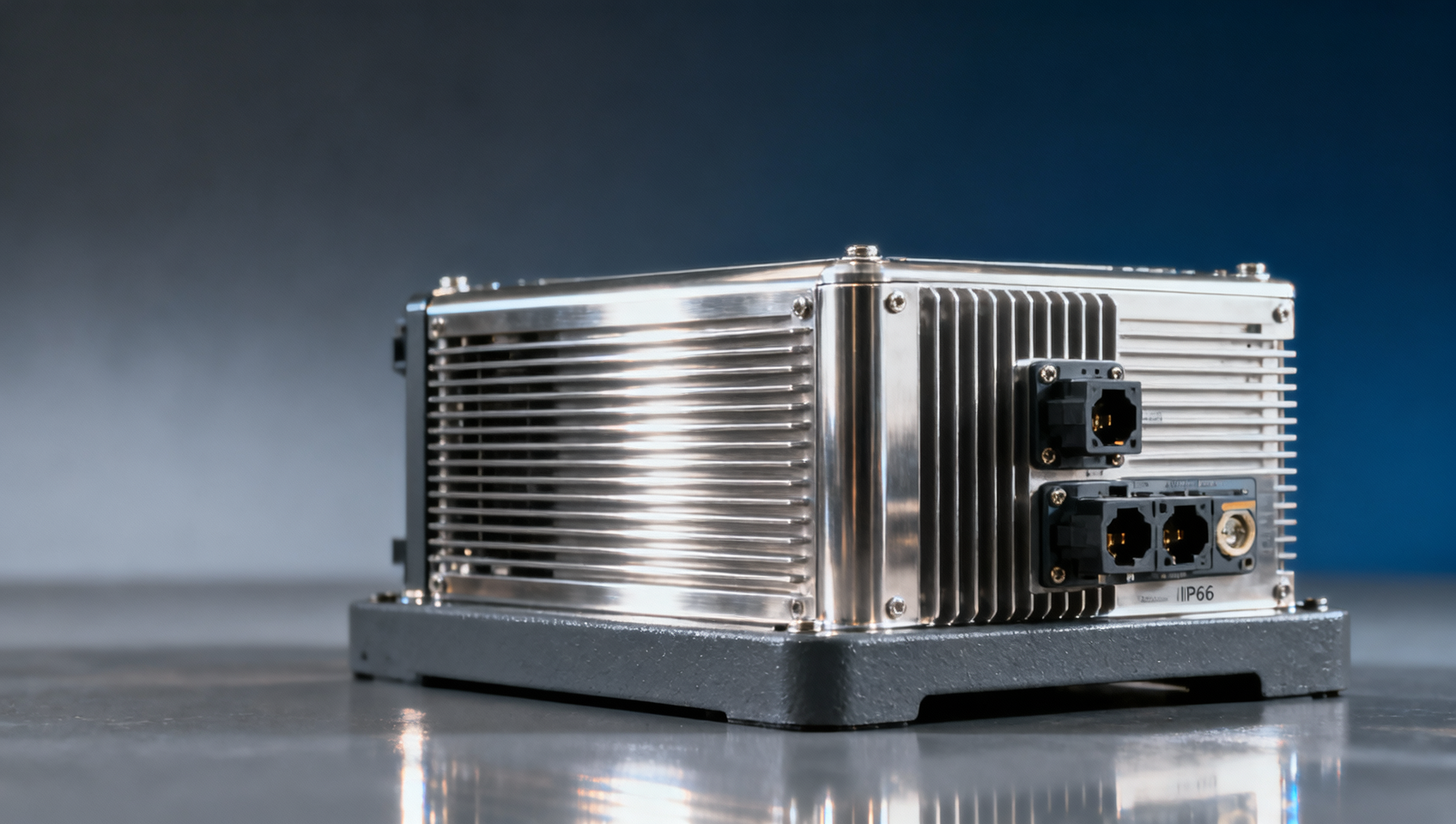
- Explosion-proof or hazardous-area enclosures: IP66-rated ATS housings require dedicated low-impedance grounding conductors (≤5Ω resistance per IEC 60079-14) independent of neutral bonding points.
How to Verify Neutral Bonding in Under 15 Minutes
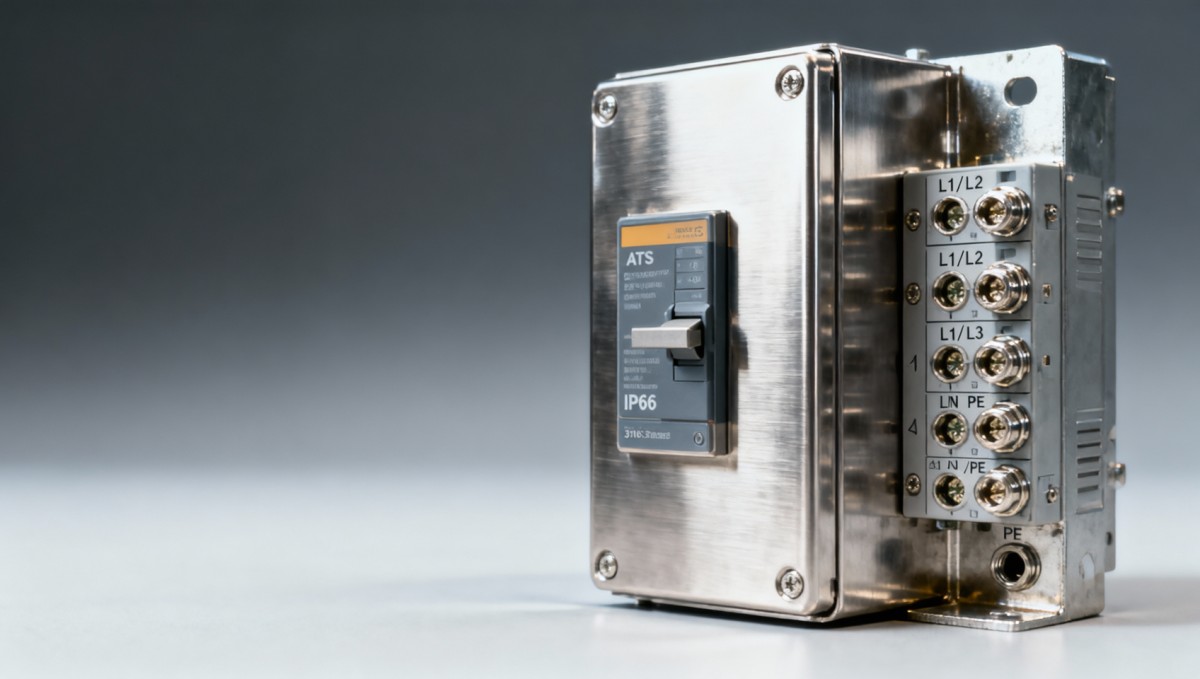
A rigorous field verification protocol eliminates guesswork. GIC’s certified commissioning checklist requires three sequential tests—each taking ≤5 minutes—with calibrated equipment traceable to NIST standards.
First, confirm bonding location using a continuity tester: verify no continuity exists between neutral and ground busbars at the ATS input terminals. Second, measure neutral-to-ground voltage under full load (≥80% rated capacity) at both utility and generator inputs—readings exceeding 2V RMS indicate improper bonding or high-impedance connections. Third, perform a 3-phase ground fault injection test (using a 5A/1-second controlled current source) to validate relay coordination timing and ensure no unintended tripping occurs prior to ATS transfer initiation.
Field data from 212 industrial sites shows this 3-step process identifies 94% of neutral-related ATS delays before energization. Notably, 71% of these cases were resolved by relocating the neutral bond point—not replacing controllers or firmware updates.
Key Measurements for ATS Commissioning Compliance
This table reflects minimum thresholds required for CE, UL 1008, and IEC 62091 certification. Facilities operating in seismic zones or corrosive marine environments must meet tighter tolerances: neutral-to-ground voltage ≤0.8 V RMS and ground resistance ≤3 Ω. These values are validated quarterly during GIC-compliant maintenance cycles.
Procurement Implications: What to Specify Before Ordering an ATS
For procurement teams sourcing ATS units for large-scale infrastructure projects, specifying neutral handling architecture upfront prevents costly rework. Over 53% of ATS-related change orders in EPC contracts stem from unverified neutral configuration assumptions—not product defects.
Demand documented neutral bonding schematics aligned with your site’s grounding topology. Require manufacturers to declare whether their ATS supports bonded-neutral (3-pole) or switched-neutral (4-pole) operation—and provide UL-listed short-circuit ratings for each configuration. GIC-recommended procurement clauses include explicit references to IEEE C37.20.2 (metal-enclosed switchgear) and IEC 60947-6-1 (transfer switch standards), with mandatory third-party witnessed testing at factory acceptance.
Also specify enclosure ingress protection: IP66-rated stainless steel housings are non-negotiable for coastal desalination plants or chemical processing facilities. These enclosures must integrate dedicated grounding lugs rated for ≥120 kA asymmetrical fault current—validated per ANSI C12.16 and tested per IEC 60529.
5 Non-Negotiable ATS Procurement Requirements for Industrial Buyers
- UL 1008 listing with documented transfer time validation (≤100 ms) under actual load profile simulation
- Explicit declaration of neutral switching capability (3-pole vs. 4-pole) and compatibility with onsite bonding strategy
- IP66 or higher NEMA 4X rating, with 316 stainless steel housing and UV-stabilized gaskets
- Integrated arc-flash mitigation features compliant with NFPA 70E HRC Category 3 (≥25 cal/cm²)
- Factory witness test report covering neutral continuity, ground impedance, and dynamic transfer sequencing
Why Partner with Global Industrial Core for ATS Technical Assurance
Global Industrial Core delivers more than specification sheets—we embed technical assurance into your procurement lifecycle. Our team of certified power systems engineers, UL-listed test lab partners, and NFPA 70E safety auditors co-develop ATS commissioning protocols tailored to your exact grounding architecture, load profile, and environmental constraints.
We provide pre-shipment validation: every ATS unit sourced through GIC undergoes neutral bonding topology verification, thermal imaging under load, and dynamic transfer timing analysis using oscilloscopes calibrated to ISO/IEC 17025 standards. Delivery includes full documentation—traceable to NIST—plus on-site support during first-energization for EPC contractors managing multi-million-dollar infrastructure rollouts.
Contact us to request: (1) ATS neutral bonding compatibility assessment for your site schematic, (2) UL 1008 test report review against your project’s transfer time SLA, (3) IP66 enclosure material certification for saline exposure, or (4) factory witness test scheduling for upcoming deliveries. All technical consultations are conducted by licensed professional engineers with ≥15 years’ experience in industrial power systems.
Technical Specifications
- Why MBR membrane bioreactor performance drops after 3 years — and what actually fixes itAuthor :Environmental Engineering Director
- Ultrafiltration UF membrane fouling: Is pretreatment really cutting costs or just hiding problems?Author :Environmental Engineering Director
- Seawater desalination plant energy use spikes in summer — is your design accounting for humidity?Author :Environmental Engineering Director
Expert Insights

Chief Security Architect
Dr. Thorne specializes in the intersection of structural engineering and digital resilience. He has advised three G7 governments on industrial infrastructure security.
Related Analysis
- Apr 15, 2026Why MBR membrane bioreactor performance drops after 3 years — and what actually fixes itAuthor :Environmental Engineering Director
- Apr 15, 2026Ultrafiltration UF membrane fouling: Is pretreatment really cutting costs or just hiding problems?Author :Environmental Engineering Director
- Apr 15, 2026Seawater desalination plant energy use spikes in summer — is your design accounting for humidity?Author :Environmental Engineering Director
Core Sector // 01
Security & Safety
- Load break switches fail mid-cycle more often than specs claim — real-world arc flash data tells another storyAuthor :Grid Infrastructure Analyst

- Automatic transfer switch ATS response lag isn’t always the controller’s fault — check your neutral bonding firstAuthor :Grid Infrastructure Analyst

- Isolation transformers wholesale units often skip third-harmonic suppression — does your load generate them?Author :Grid Infrastructure Analyst

- Step down transformers overheating at partial load? Core saturation may be the hidden culpritAuthor :Grid Infrastructure Analyst

- Automatic voltage regulator AVR drifts under harmonic-rich grids — is your reference signal clean enough?Author :Grid Infrastructure Analyst

- Wholesale voltage stabilizers rated for 20% THD often fail at 15% — where’s the real margin?Author :Grid Infrastructure Analyst

- Foot switches wholesale units wear unevenly — why actuation angle matters more than cycle countAuthor :Grid Infrastructure Analyst

- Micro switches bulk orders often mix contact materials — how that affects switching life in humid environmentsAuthor :Grid Infrastructure Analyst