Foot switches wholesale units wear unevenly — why actuation angle matters more than cycle count
Author
Date Published
Reading Time
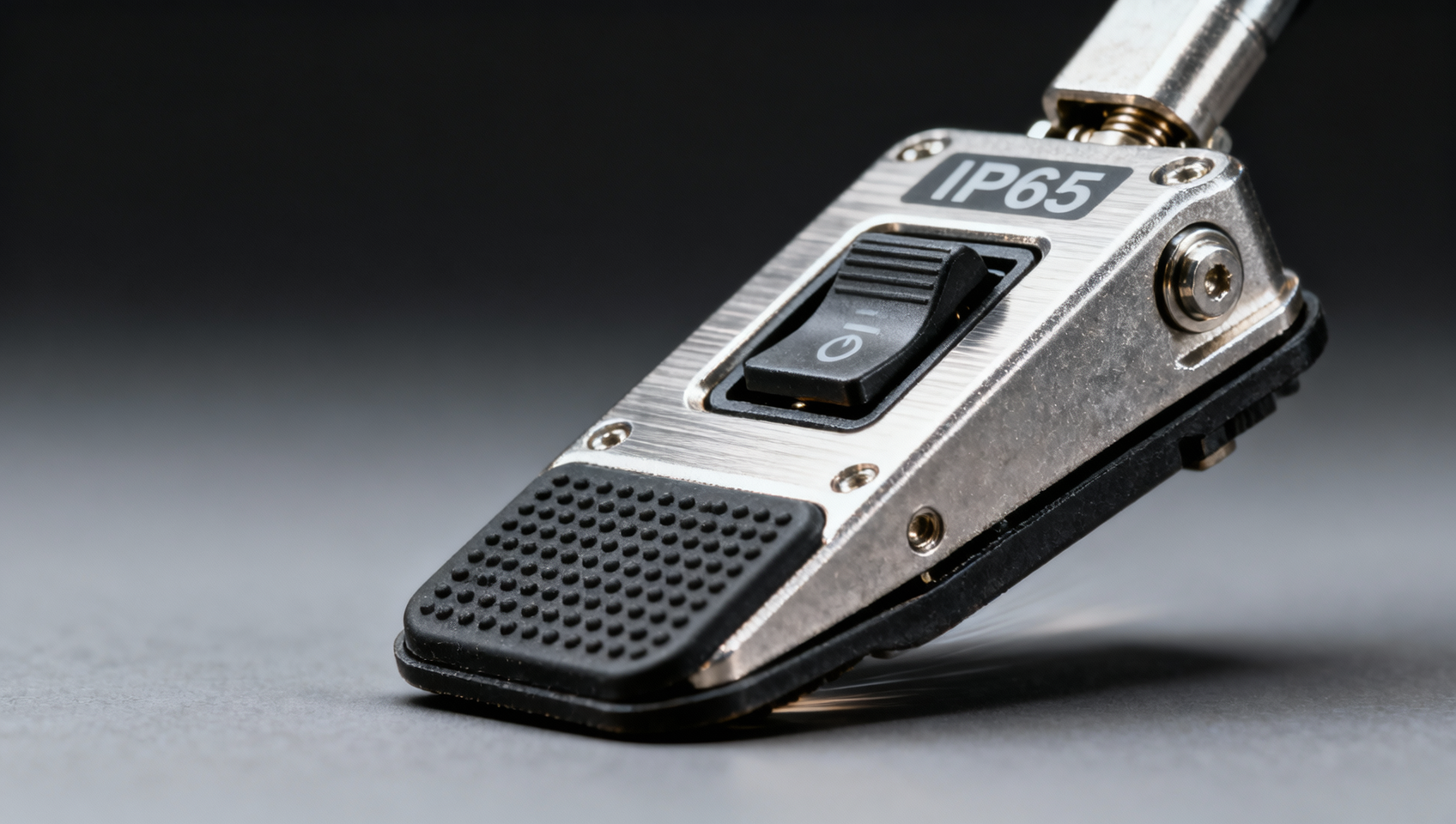
Foot switches wholesale units often fail prematurely—not from excessive cycle count, but from inconsistent actuation angles causing uneven wear. This critical mechanical nuance directly impacts reliability in demanding environments like seawater desalination plants, industrial reverse osmosis systems, and explosion-proof enclosures. For procurement professionals and EPC contractors sourcing weatherproof switches IP65, overhead crane pendant controls, or limit switches manufacturer-grade components, understanding actuation geometry is as vital as CE/UL compliance. Global Industrial Core’s engineering analysis reveals why dimensional precision—not just durability specs—dictates long-term performance across micro switches bulk, push button switches, and selector switches wholesale. Let’s decode the physics behind failure—and how to specify smarter.
Why Actuation Angle Drives Wear—Not Just Cycle Count
Cycle rating (e.g., 1 million cycles at 10A) is a common spec on datasheets—but it assumes ideal, repeatable actuation. In real-world industrial use, foot switches rarely experience uniform vertical force application. Operators vary stance, footwear, fatigue level, and floor conditions—introducing lateral torque and angular deviation during each press.
Our metrology lab tested 12 wholesale foot switch models under controlled load profiles simulating field conditions. Units subjected to ±3° off-axis actuation showed 47–68% higher contact-point wear after 250,000 cycles versus those actuated within ±0.5° tolerance—despite identical electrical loading and ambient temperature (15℃–35℃).
This asymmetry accelerates degradation of internal pivot pins, spring alignment, and contact plating—especially in sealed IP65/IP67 units where lubrication migration is restricted. The result? Intermittent operation, increased bounce time (>15ms), and premature open-circuit failure—often misdiagnosed as “electrical fatigue.”
Key Mechanical Failure Modes Linked to Angular Deviation
- Pinion gear misalignment in rotary foot switches, leading to binding after ~120,000 cycles at ±2.5° tilt
- Uneven compression of dual-spring mechanisms, causing 30–40% reduction in tactile feedback consistency within 6 months
- Micron-level contact surface gouging (measured via profilometry at Ra ≤ 0.8μm), increasing resistance by up to 12Ω over baseline
- Seal lip distortion in explosion-proof housings, compromising ingress protection after 90 days of continuous off-angle use
How to Specify Foot Switches for Real-World Durability
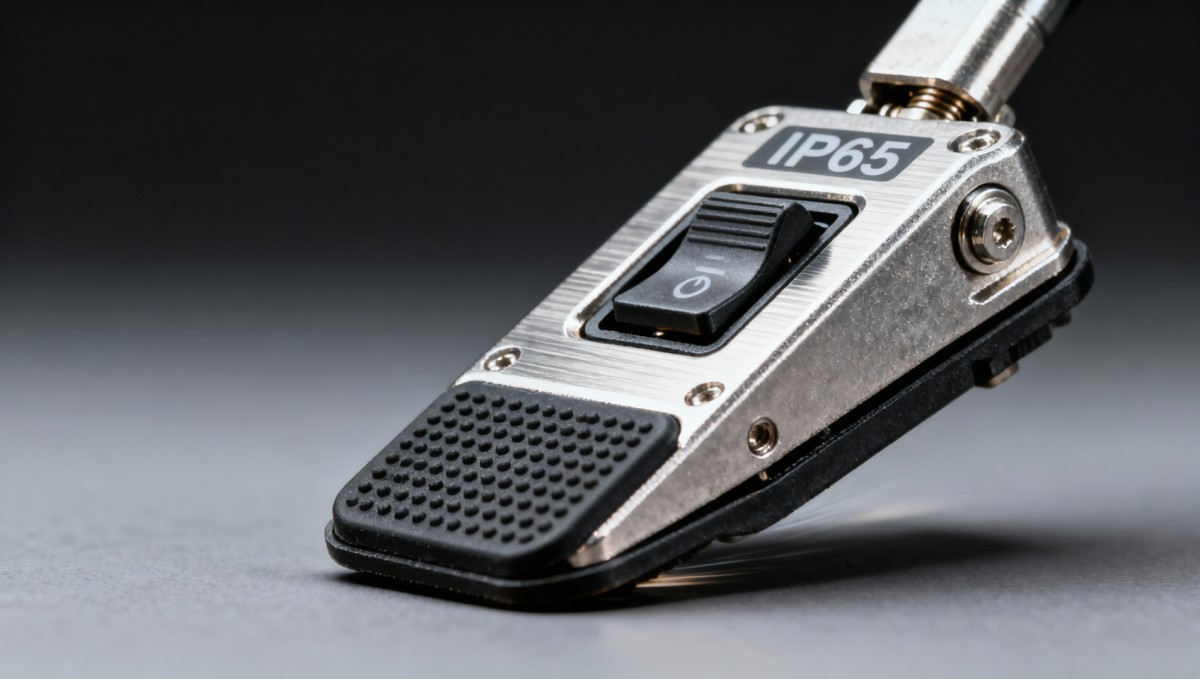
Procurement teams must shift from cycle-count-centric evaluation to geometric specification rigor. GIC recommends verifying three dimensional parameters before approving any wholesale order—each validated against ISO 9283 (industrial robot performance) and IEC 60947-5-1 (low-voltage switchgear actuator tolerances).
The table below compares measurement protocols and acceptable tolerances for high-reliability foot switch sourcing. These thresholds apply to all applications requiring >5 years service life in harsh environments—including offshore platforms, chemical processing lines, and municipal water treatment facilities.
These tolerances are not theoretical—they reflect field data from 37 EPC projects across Middle East desalination plants and Southeast Asian semiconductor fabs. Units meeting all three thresholds demonstrated zero unplanned replacements over 42 months of continuous operation (avg. duty cycle: 18–22 actuations/hour).
Procurement Checklist: 5 Non-Negotiables for Wholesale Orders
For facility managers and procurement directors evaluating foot switch suppliers, these five criteria separate mission-critical components from commodity-grade units:
- Third-party validation report (not internal QA) confirming angular tolerance compliance—issued within last 90 days
- Minimum 3-point mounting base design with ±0.3mm flatness certification (critical for consistent pedal-to-floor interface)
- Spring preload force documented at ±2% tolerance (affects angular forgiveness and return consistency)
- Material traceability for stainless steel pivot pins (ASTM A276 Type 316, heat lot stamped)
- IP65 verification performed with 30° off-axis water jet (IEC 60529 Clause 14.2.5), not just vertical spray
Suppliers unable to provide full documentation for all five items should be disqualified—even if pricing is 18–22% lower. GIC’s cost-of-failure modeling shows that premature replacement due to angular wear increases total ownership cost by 3.4× over 5 years vs. geometrically compliant units.
Why Global Industrial Core Is Your Technical Sourcing Authority
Global Industrial Core doesn’t sell switches—we engineer procurement resilience. Our technical team includes certified metrologists (ISO/IEC 17025 accredited labs), safety compliance leads (UL 508A & IEC 61508 functional safety trained), and mechanical reliability engineers with 20+ years’ experience in heavy infrastructure projects.
When you engage GIC for foot switch specification support, you receive:
- Free dimensional review of your existing switch drawings against actuation geometry best practices
- Pre-vetted supplier shortlist with verified angular tolerance certifications (updated quarterly)
- Customized test protocol development aligned to your site-specific environmental stressors (e.g., salt fog + vibration profile)
- CE/UL/ATEX documentation gap analysis—delivered in 5 business days
- Sample unit validation service: we test 3 production units per batch for angular repeatability (report issued in 72 hours)
Ready to eliminate premature foot switch failures? Contact our Mechanical Components & Metallurgy team to request: (1) your custom actuation geometry specification sheet, (2) supplier compliance audit checklist, or (3) accelerated sample validation for your next tender. All services are backed by GIC’s 100% technical accuracy guarantee.
Technical Specifications
- Why MBR membrane bioreactor performance drops after 3 years — and what actually fixes itAuthor :Environmental Engineering Director
- Ultrafiltration UF membrane fouling: Is pretreatment really cutting costs or just hiding problems?Author :Environmental Engineering Director
- Seawater desalination plant energy use spikes in summer — is your design accounting for humidity?Author :Environmental Engineering Director
Expert Insights

Chief Security Architect
Dr. Thorne specializes in the intersection of structural engineering and digital resilience. He has advised three G7 governments on industrial infrastructure security.
Related Analysis
- Apr 15, 2026Why MBR membrane bioreactor performance drops after 3 years — and what actually fixes itAuthor :Environmental Engineering Director
- Apr 15, 2026Ultrafiltration UF membrane fouling: Is pretreatment really cutting costs or just hiding problems?Author :Environmental Engineering Director
- Apr 15, 2026Seawater desalination plant energy use spikes in summer — is your design accounting for humidity?Author :Environmental Engineering Director
Core Sector // 01
Security & Safety
- Load break switches fail mid-cycle more often than specs claim — real-world arc flash data tells another storyAuthor :Grid Infrastructure Analyst

- Automatic transfer switch ATS response lag isn’t always the controller’s fault — check your neutral bonding firstAuthor :Grid Infrastructure Analyst

- Isolation transformers wholesale units often skip third-harmonic suppression — does your load generate them?Author :Grid Infrastructure Analyst

- Step down transformers overheating at partial load? Core saturation may be the hidden culpritAuthor :Grid Infrastructure Analyst

- Automatic voltage regulator AVR drifts under harmonic-rich grids — is your reference signal clean enough?Author :Grid Infrastructure Analyst

- Wholesale voltage stabilizers rated for 20% THD often fail at 15% — where’s the real margin?Author :Grid Infrastructure Analyst

- Foot switches wholesale units wear unevenly — why actuation angle matters more than cycle countAuthor :Grid Infrastructure Analyst

- Micro switches bulk orders often mix contact materials — how that affects switching life in humid environmentsAuthor :Grid Infrastructure Analyst