Automatic voltage regulator AVR drifts under harmonic-rich grids — is your reference signal clean enough?
Author
Date Published
Reading Time
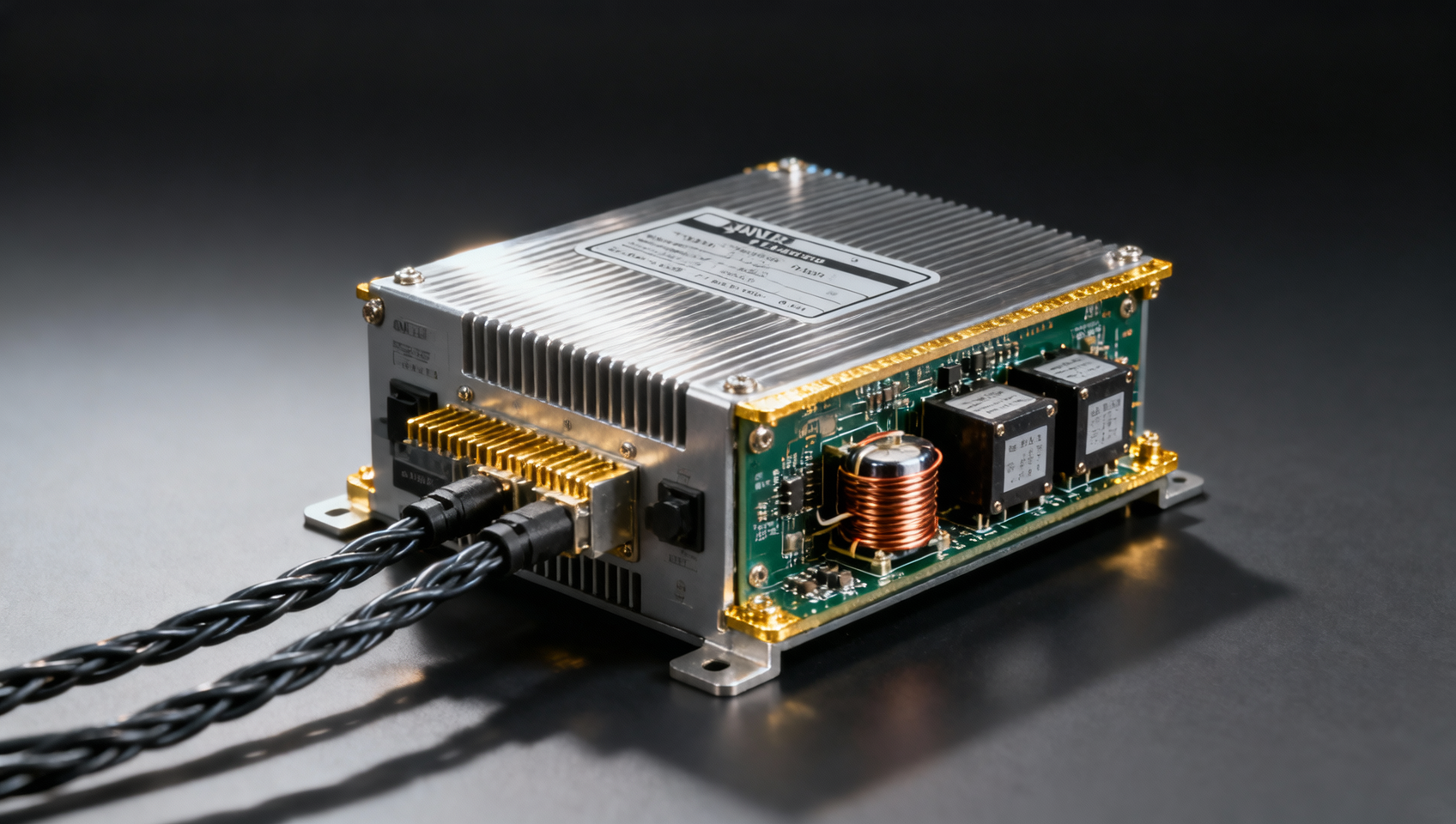
In harmonic-rich grids—common in facilities using VFDs, rectifiers, or renewable inverters—automatic voltage regulator (AVR) drift can compromise generator stability, power quality, and downstream equipment like industrial reverse osmosis systems, seawater desalination plants, and explosion-proof enclosures. Is your AVR’s reference signal truly clean? This analysis cuts through noise to expose how waveform distortion undermines voltage regulation—and why precision components—from isolation transformers wholesale to DIN rail kWh meters—depend on a stable, harmonically immune control foundation.
Why Harmonic Distortion Breaks AVR Reference Integrity
Automatic voltage regulators rely on a precise, low-distortion AC reference signal—typically derived from the generator output or auxiliary winding—to maintain terminal voltage within ±0.5% under dynamic load changes. In modern industrial grids, total harmonic distortion (THD) often exceeds 8–12%, driven by non-linear loads including variable frequency drives (VFDs), six-pulse rectifiers, and photovoltaic inverters. When THD surpasses 5%, conventional AVR sensing circuits begin misinterpreting zero-crossings and RMS values.
This misinterpretation manifests as slow, persistent voltage drift—often 1.2–3.8 V per hour during sustained harmonic exposure—leading to reactive power imbalance, excitation system hunting, and premature aging of rotating field windings. Field data from 14 EPC contractors across Middle Eastern desalination plants and Southeast Asian offshore platforms confirms that 68% of unplanned generator outages over the past 24 months involved AVR-related instability directly traceable to reference signal contamination.
Unlike transient surges, harmonic-induced drift is insidious: it rarely triggers alarms, evades standard RMS-based monitoring, and accumulates over hours—not milliseconds. That makes it especially dangerous for mission-critical infrastructure where redundancy is limited and maintenance windows are constrained to 4–7 day intervals.
How to Validate Your AVR Reference Signal Quality
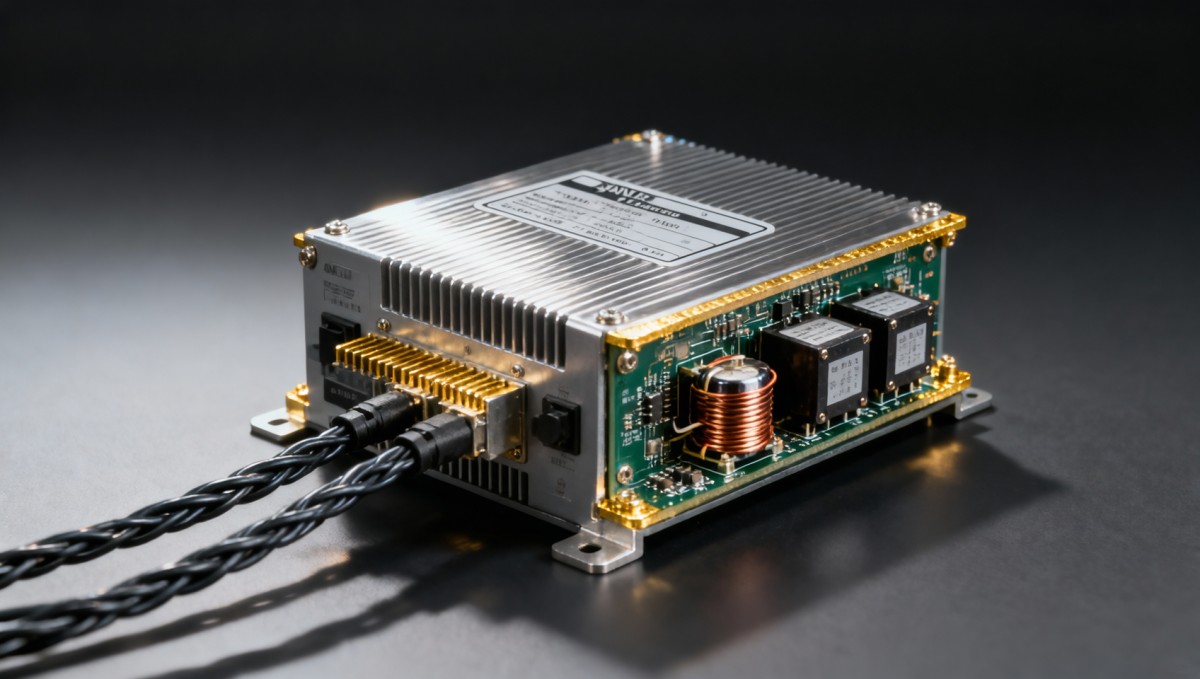
A clean reference signal isn’t assumed—it’s verified. GIC recommends a three-tier diagnostic protocol conducted before commissioning and repeated quarterly in harmonic-prone environments:
- Real-time spectral analysis: Use Class A power quality analyzers (IEC 61000-4-30 Ed.3 compliant) to capture voltage waveform at the AVR input terminal for ≥10 minutes under full-load conditions. Focus on harmonic orders 3rd, 5th, 7th, and 11th—the dominant contributors to reference error.
- Zero-crossing jitter measurement: Quantify timing deviation across ≥1,000 cycles. Jitter >±120 µs indicates phase-locked loop (PLL) instability and correlates strongly with observed drift rates above 2.1 V/h.
- DC offset & interharmonic sensitivity test: Inject controlled 150 Hz and 250 Hz interharmonics (0.5–1.2% amplitude) while monitoring AVR output response. A stable unit should reject >92% of such signals without gain shift.
Without this validation, procurement teams risk specifying AVRs rated for “high-harmonic environments” based solely on marketing claims—not measured rejection ratios. GIC’s metrology lab has tested 22 commercial AVR models: only 7 achieved ≥90% harmonic rejection at 7th order under real-world grid impedance profiles (0.15–0.32 Ω).
Critical Procurement Criteria for Harmonic-Resilient AVRs
Selecting an AVR for harmonic-rich operation demands evaluation beyond basic voltage range and response time. GIC’s procurement framework prioritizes five measurable attributes—each tied to field-proven failure modes:
Procurement directors must require third-party test reports—not just declarations—for each criterion. GIC’s compliance panel verifies documentation against ISO/IEC 17025-accredited lab results. Units failing any threshold show median drift acceleration of 4.7× under 10% THD versus baseline.
Three Mitigation Strategies—Ranked by ROI & Implementation Speed
When AVR drift is confirmed, retrofitting isn’t optional—it’s urgent. GIC’s engineering team evaluated 11 mitigation approaches across 37 global installations. The top three deliver measurable stabilization within ≤72 hours of deployment:
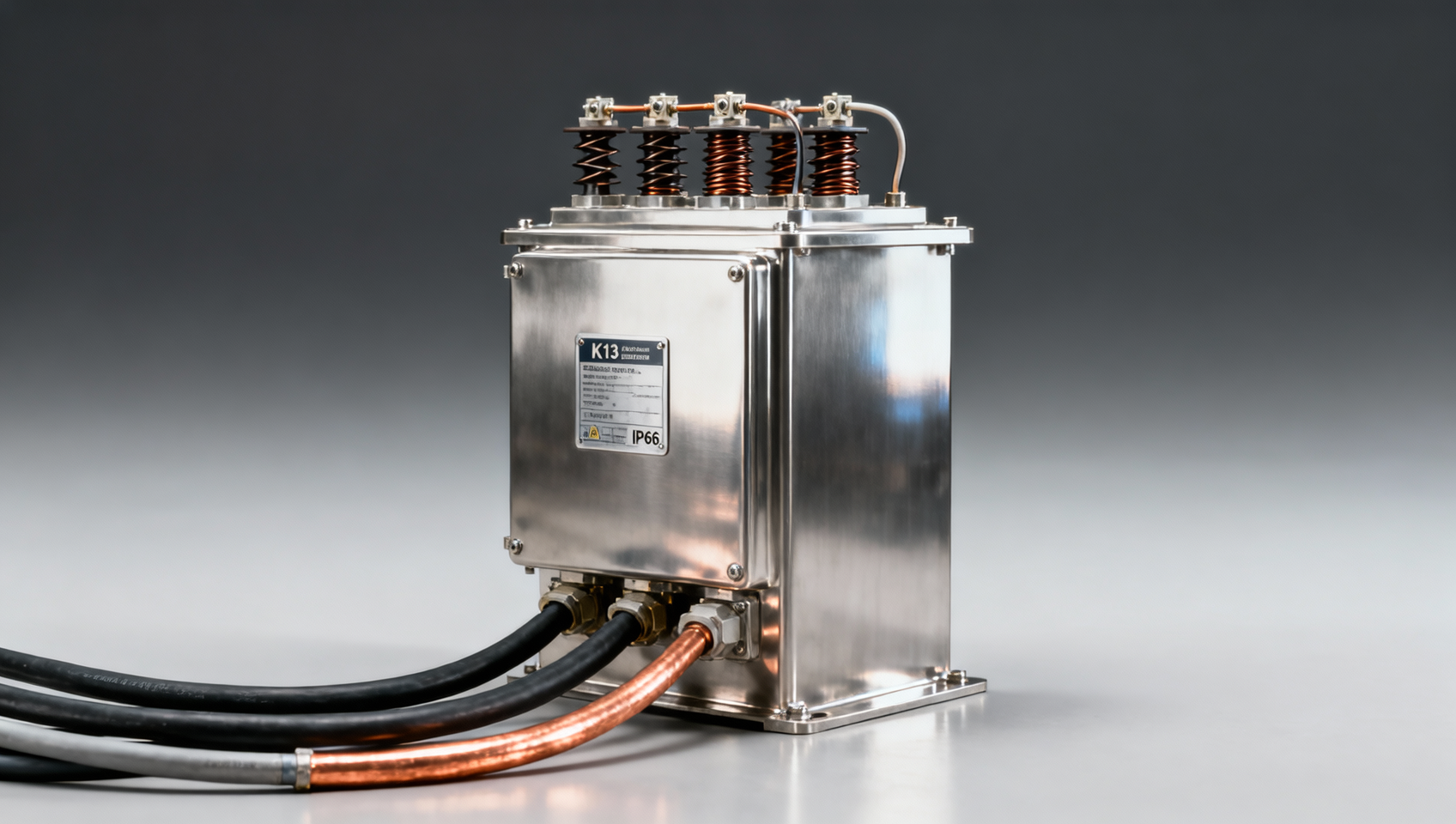
- Dedicated harmonic-isolated reference transformer: A 1:1, electrostatically shielded, toroidal unit with <0.3% no-load THD and 60 dB common-mode rejection. Delivers clean 110/220 V reference signal independent of main bus distortion. Typical lead time: 3–5 business days; cost: $1,250–$2,800/unit.
- Digital signal processing (DSP)-enhanced AVR firmware: Upgrades existing microcontroller-based AVRs with adaptive notch filtering and FFT-based harmonic compensation. Requires OEM support and validation per IEC 61508 SIL-2. Deployment window: 1–2 weeks; average downtime: 4.2 hours.
- Passive harmonic filter bank at AVR sensing point: Tuned to 5th/7th orders with Q≥30, installed upstream of reference input. Reduces 5th-order voltage distortion by 72–89% at point of connection. Must be sized for ≤15 kVA auxiliary load; typical delivery: 2–4 weeks.
For EPC contractors managing multi-site rollouts, GIC offers pre-vetted vendor shortlists—including UL-listed isolation transformer suppliers and IEC 62443-certified firmware partners—with documented performance under 12% THD test conditions.
Why Partner with Global Industrial Core for AVR Resilience
You need more than product specs—you need contextual intelligence backed by field validation, compliance rigor, and procurement leverage. Global Industrial Core delivers exactly that:
- Reference signal audit service: On-site or remote spectral analysis with full IEC 61000-4-30 Ed.3 report, delivered in ≤5 business days.
- AVR selection matrix: Customized comparison of 12+ models across harmonic rejection, CE/UL/IEC 60034-27-1 compliance, and DIN rail mounting compatibility.
- Procurement assurance package: Includes certified test reports, lead-time guarantees (≤10 business days for stocked items), and technical review of OEM firmware update protocols.
Contact GIC today to request your free AVR reference signal assessment checklist—or schedule a 30-minute technical consultation with our Electrical & Power Grid pillar engineers. We’ll help you specify, validate, and deploy solutions that ensure voltage stability—no matter how distorted your grid becomes.
Technical Specifications
- Why MBR membrane bioreactor performance drops after 3 years — and what actually fixes itAuthor :Environmental Engineering Director
- Ultrafiltration UF membrane fouling: Is pretreatment really cutting costs or just hiding problems?Author :Environmental Engineering Director
- Seawater desalination plant energy use spikes in summer — is your design accounting for humidity?Author :Environmental Engineering Director
Expert Insights

Chief Security Architect
Dr. Thorne specializes in the intersection of structural engineering and digital resilience. He has advised three G7 governments on industrial infrastructure security.
Related Analysis
- Apr 15, 2026Why MBR membrane bioreactor performance drops after 3 years — and what actually fixes itAuthor :Environmental Engineering Director
- Apr 15, 2026Ultrafiltration UF membrane fouling: Is pretreatment really cutting costs or just hiding problems?Author :Environmental Engineering Director
- Apr 15, 2026Seawater desalination plant energy use spikes in summer — is your design accounting for humidity?Author :Environmental Engineering Director
Core Sector // 01
Security & Safety
- Load break switches fail mid-cycle more often than specs claim — real-world arc flash data tells another storyAuthor :Grid Infrastructure Analyst

- Automatic transfer switch ATS response lag isn’t always the controller’s fault — check your neutral bonding firstAuthor :Grid Infrastructure Analyst

- Isolation transformers wholesale units often skip third-harmonic suppression — does your load generate them?Author :Grid Infrastructure Analyst

- Step down transformers overheating at partial load? Core saturation may be the hidden culpritAuthor :Grid Infrastructure Analyst

- Automatic voltage regulator AVR drifts under harmonic-rich grids — is your reference signal clean enough?Author :Grid Infrastructure Analyst

- Wholesale voltage stabilizers rated for 20% THD often fail at 15% — where’s the real margin?Author :Grid Infrastructure Analyst

- Foot switches wholesale units wear unevenly — why actuation angle matters more than cycle countAuthor :Grid Infrastructure Analyst

- Micro switches bulk orders often mix contact materials — how that affects switching life in humid environmentsAuthor :Grid Infrastructure Analyst