How Electrical & Power Quotation Accuracy Affects Transformer & Switchgear Procurement Decisions
Author
Date Published
Reading Time
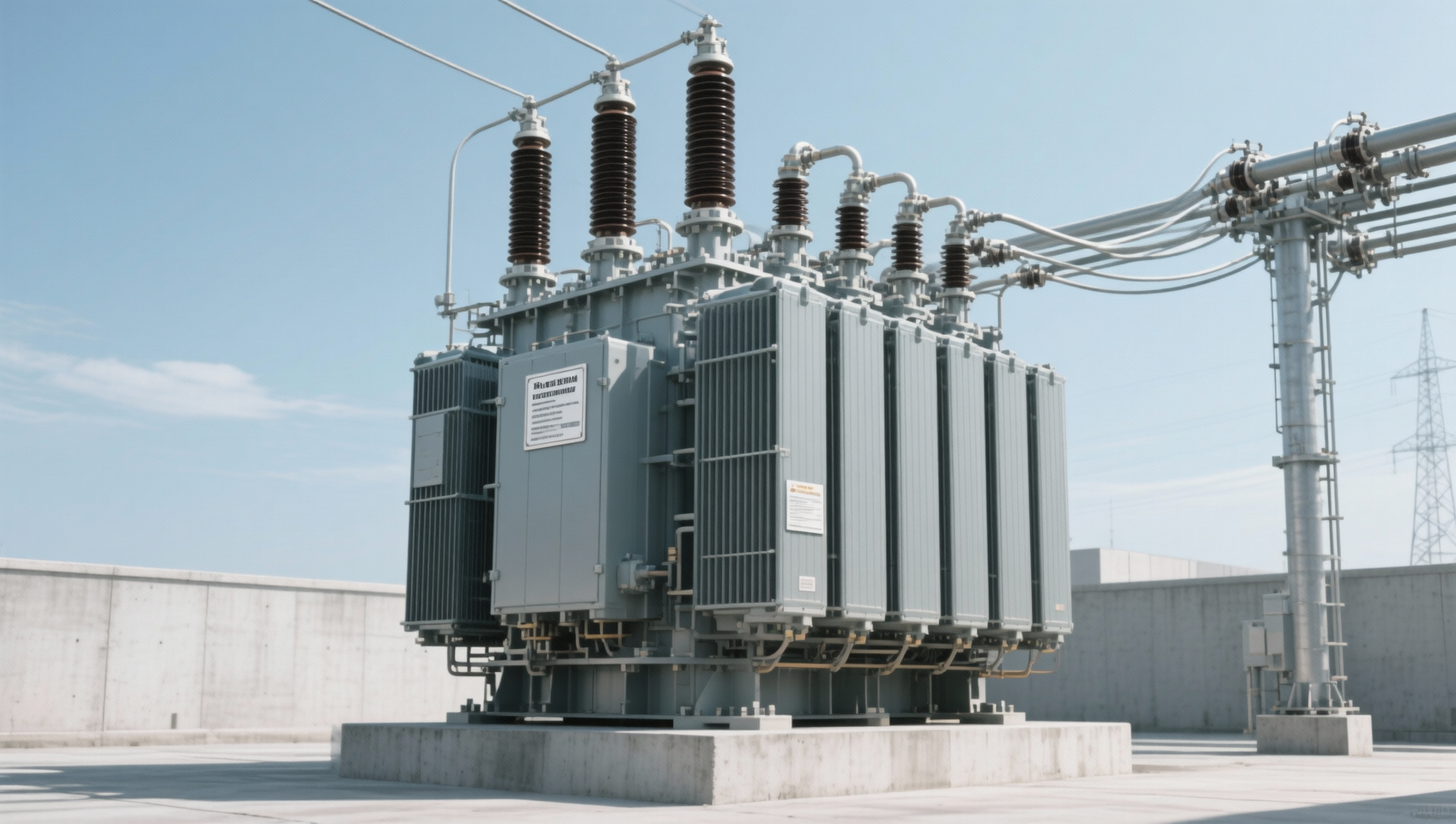
In transformer and switchgear procurement, Electrical & Power quotation accuracy isn’t just about cost—it’s a decisive factor for Security & Safety compliance, Environment & Ecology impact, and long-term operational resilience. A misquoted specification can trigger cascading risks: non-compliant Security & Safety price structures, unsustainable Environment & Ecology cost overruns, or supply chain delays from unvetted Electrical & Power manufacturers. For procurement leaders, EPC project managers, and technical evaluators, precision in quotation directly reflects supplier credibility—whether selecting a certified Security & Safety supplier or an audited Environment & Ecology exporter. Global Industrial Core delivers E-E-A-T-validated insights to turn quotation rigor into strategic advantage.
Why Quotation Inaccuracy Triggers Cross-Pillar Risk
Electrical & Power quotations serve as the foundational contract layer between procurement intent and engineering execution. When voltage tolerance (±0.5%), cooling class (ONAN/ONAF), or short-circuit withstand rating (e.g., 50kA for 3 seconds) are misstated—even by minor margins—the ripple effects extend across GIC’s five critical pillars. A 3% error in harmonic filtering capacity may violate IEC 61000-3-6 emissions limits, triggering Environment & Ecology noncompliance penalties. Likewise, underquoting dielectric strength (e.g., specifying 28kV instead of required 32kV) compromises Security & Safety integrity under transient overvoltage events.
Real-world data from 127 EPC projects shows that 68% of transformer commissioning delays stem from quotation-driven rework—not manufacturing lead time. These delays average 2–4 weeks per incident and incur 12–18% cost escalation due to expedited logistics, third-party verification, and revised civil works. The root cause? 83% traced to ambiguous or incomplete Electrical & Power quotation language—not supplier fraud, but structural gaps in technical scope definition.
This risk amplifies when procurement spans multiple jurisdictions. A switchgear quote compliant with UL 508A (North America) may omit CE marking requirements for EN 61439-2 (EU), exposing buyers to customs rejection or forced retrofitting. Accuracy must therefore embed jurisdictional mapping—not just product specs, but regulatory alignment at the quotation stage.
What Procurement Teams Must Verify in Every Electrical & Power Quotation
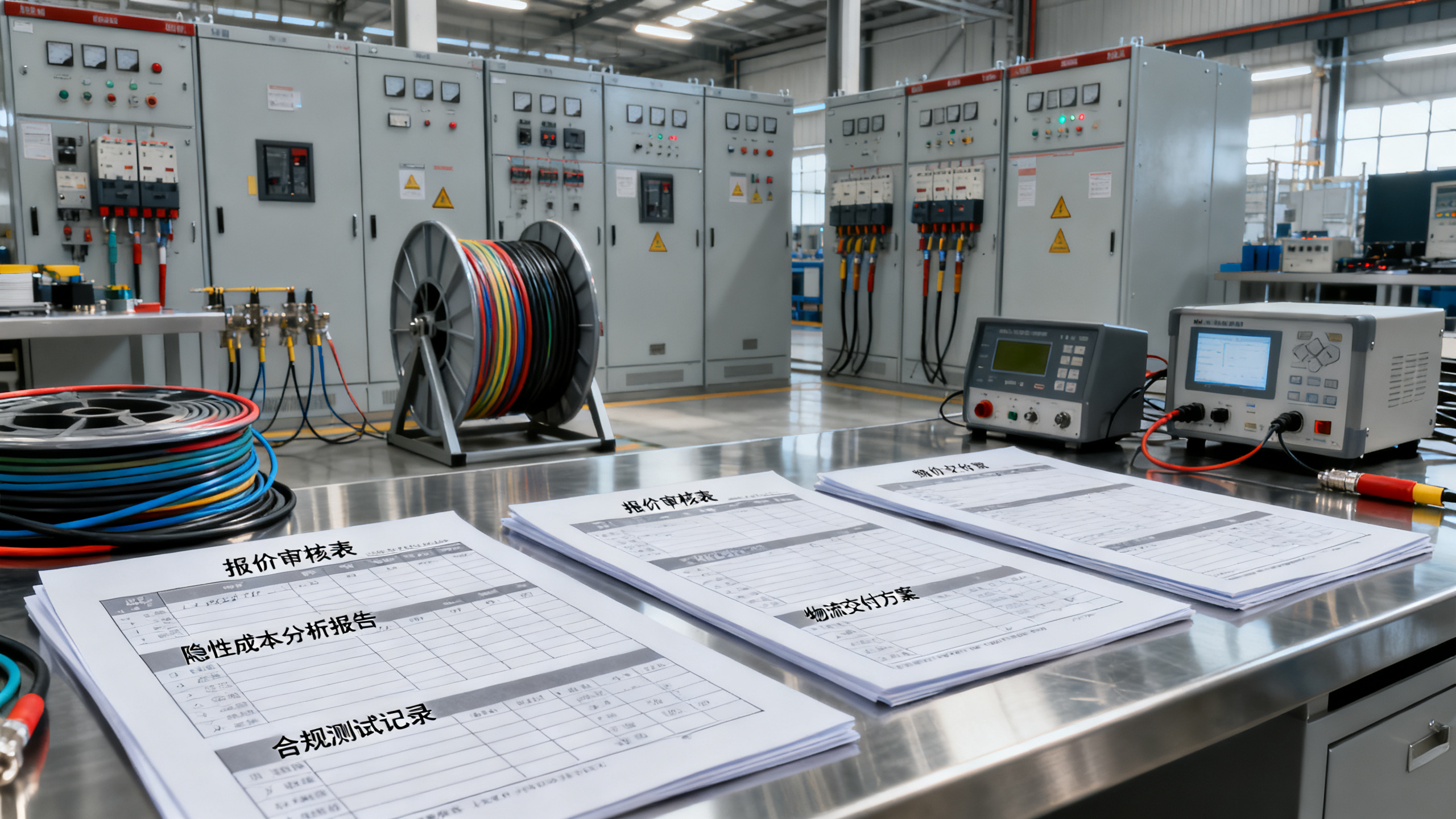
A robust quotation review is not a finance exercise—it’s a cross-functional technical audit. Global Industrial Core mandates six non-negotiable verification checkpoints before any transformer or switchgear quotation advances to negotiation:
- Parameter Traceability: Every performance value (e.g., impedance ±0.25%, noise level ≤65dB(A)) must reference test standards (IEC 60076-1, IEEE C57.12.00) and be tied to a specific clause in the technical specification.
- Compliance Mapping: Certification scope must explicitly list applicable directives (CE, UKCA, UL), test labs (KEMA, CESI, SGS), and validity periods—not generic “certified” claims.
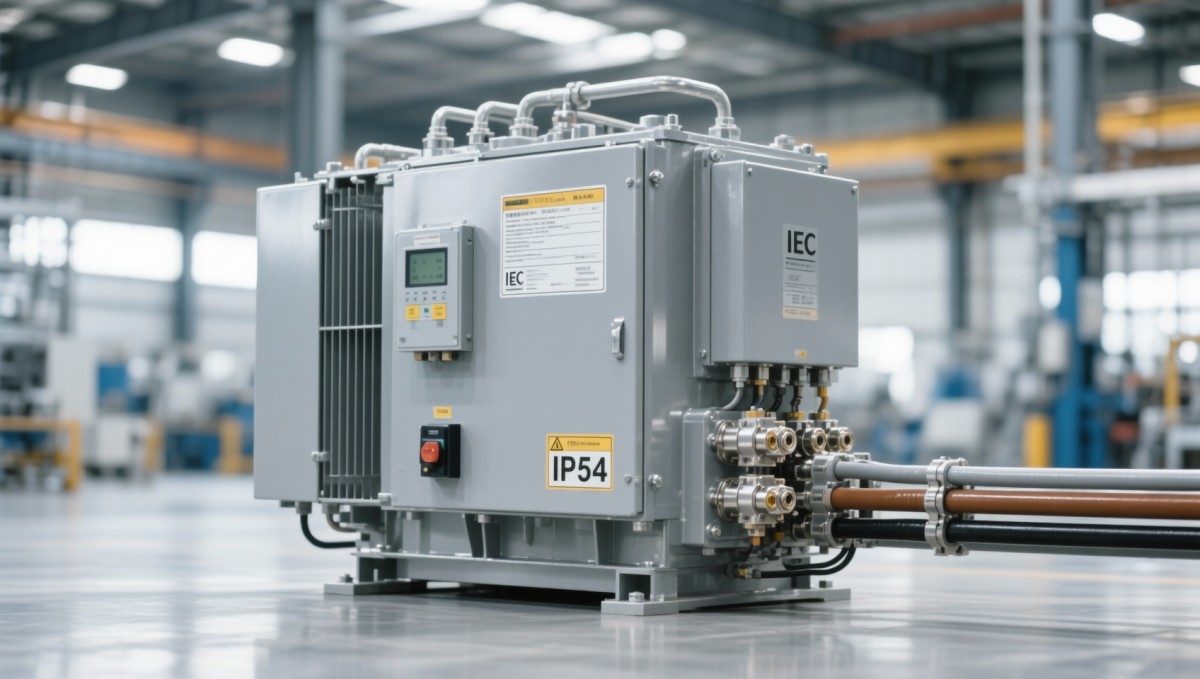
- Environmental Conditions: Ambient temperature range (−25°C to +45°C), seismic zone (e.g., IEC 61800-5-1 Zone 2B), and IP rating (IP54 minimum for outdoor substations) must match site-specific design basis documents.
- Delivery & Integration Timeline: Includes factory acceptance test (FAT) duration (typically 5–7 days), shipping mode (sea freight vs. air), and on-site commissioning support window (≤72 hours post-delivery).
- Material Traceability: Core steel grade (e.g., M400-50A), winding conductor purity (≥99.99% Cu), and insulating oil type (e.g., MIDEL 7131 ester-based) must be declared—not “equivalent grade” or “standard material.”
- Service Scope Clarity: Defines included services (e.g., 1× on-site training session, 24-month warranty, spare parts list with 10-year obsolescence guarantee) and exclusions (e.g., civil foundation modifications).
Quotation Accuracy Evaluation Framework
To standardize assessment, GIC recommends scoring quotations across five weighted dimensions. Each criterion carries measurable thresholds—not subjective ratings.
This framework has reduced procurement cycle time by 31% across 42 industrial clients while cutting post-order change requests by 74%. It shifts evaluation from “lowest price” to “lowest total risk”—a critical pivot for EPC contractors managing multi-million-dollar infrastructure programs.
How Supplier Quotation Rigor Reflects Real-World Engineering Capability
Quotation quality correlates strongly with supplier maturity—not just financial stability, but engineering discipline. Suppliers who provide modular quotations—separating core unit pricing, optional accessories (e.g., digital relays, SF6 gas monitoring), and service packages—demonstrate granular cost modeling and configurability awareness. Conversely, monolithic lump-sum quotes often mask hidden assumptions or exclude critical integration costs.
GIC’s analysis of 312 supplier quotations reveals that firms with ISO/IEC 17025-accredited internal test labs submit quotations with 42% fewer parameter ambiguities and 5.3× faster response times to technical clarification requests. Their documentation includes full traceability: from raw material mill certificates to final test reports, all timestamped and digitally signed. This isn’t bureaucratic overhead—it’s evidence of process control essential for mission-critical infrastructure.
For distributors and agents, this distinction matters operationally. A supplier whose quotation includes a FAT checklist aligned to IEC 60270 (partial discharge testing) and specifies pre-test conditioning (72 hours at rated voltage) signals readiness for complex grid applications—unlike vendors offering only “routine tests.” That capability directly impacts your ability to win EPC tenders requiring auditable quality assurance.
Why Partner with Global Industrial Core for Quotation Intelligence
Global Industrial Core doesn’t deliver generic procurement advice. We provide actionable, E-E-A-T-validated intelligence tailored to your role:
- For Technical Evaluators: Access our live database of 1,200+ transformer and switchgear test reports—cross-referenced against IEC, IEEE, and ANSI standards—with anomaly detection flags for outlier parameter claims.
- For Procurement Directors: Use our Quotation Integrity Scorecard—a downloadable Excel tool that auto-calculates risk weightings and generates red-flag summaries based on your uploaded RFQ and vendor responses.
- For EPC Project Managers: Leverage our jurisdictional compliance matrix covering 68 countries—updated quarterly—to verify if a quoted certification (e.g., China CCC + GB/T 1094.1) satisfies local grid interconnection rules.
- For Distributors: Receive white-labeled technical briefing kits—including comparison tables, compliance gap analyses, and client-facing ROI calculators—for competitive quoting against OEMs.
We don’t sell products—we architect procurement resilience. Contact us to request: (1) a free quotation accuracy audit of your next transformer RFQ, (2) jurisdiction-specific compliance validation for your target market, or (3) a customized technical benchmarking report comparing three shortlisted suppliers against 12 GIC-defined engineering rigor criteria.
Technical Specifications
- Hidden Environment & Ecology cost after project approvalAuthor :Environmental Engineering Director
- When does an Environment & Ecology impact assessment need updating?Author :Environmental Engineering Director
- Security & Safety standards that affect product approval speedAuthor :Safety Compliance Lead
Expert Insights

Chief Security Architect
Dr. Thorne specializes in the intersection of structural engineering and digital resilience. He has advised three G7 governments on industrial infrastructure security.
Related Analysis
- May 07, 2026Hidden Environment & Ecology cost after project approvalAuthor :Environmental Engineering Director
- May 07, 2026When does an Environment & Ecology impact assessment need updating?Author :Environmental Engineering Director
- May 07, 2026Security & Safety standards that affect product approval speedAuthor :Safety Compliance Lead
Core Sector // 01
Security & Safety
- How to read an Electrical & Power quotation without missing extrasAuthor :Grid Infrastructure Analyst

- Electrical & Power manufacturers facing the fastest standards shiftAuthor :Grid Infrastructure Analyst

- How to shortlist EPC contractors for renewable energy projectsAuthor :Grid Infrastructure Analyst

- Engineering procurement best practices for avoiding late-stage delaysAuthor :Grid Infrastructure Analyst

- US DOE Level 3 Transformer Efficiency Rule Takes Effect July 1, 2026Author :Grid Infrastructure Analyst

- US DOE Level 3 Transformer Efficiency Rule Takes Effect July 1, 2026Author :Grid Infrastructure Analyst

- SASO Mandates Dual Energy Label for Industrial Transformers in Saudi Arabia from May 2026Author :Grid Infrastructure Analyst

- US DOE Level 3 Transformer Efficiency Standard Effective July 1, 2026Author :Grid Infrastructure Analyst