How to shortlist EPC contractors for renewable energy projects
Author
Date Published
Reading Time
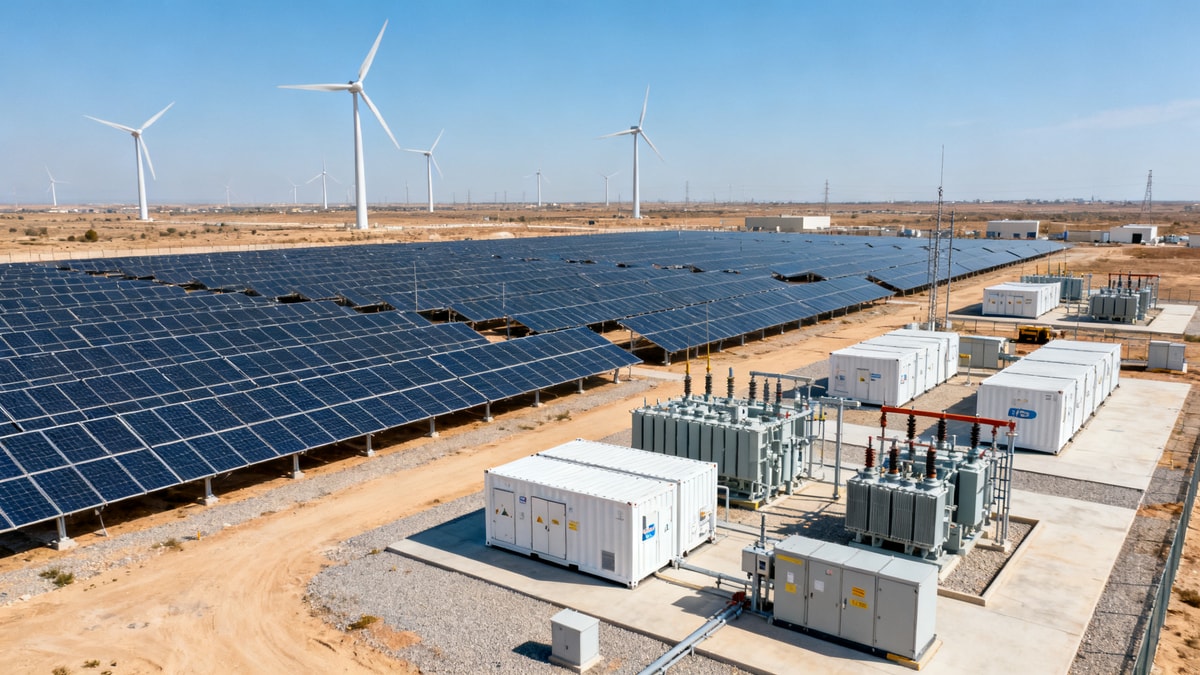
Choosing the right EPC contractors for renewable energy projects can determine whether an investment delivers long-term value or costly delays. For business decision-makers, a strong shortlist must go beyond price to assess technical capability, compliance, delivery record, and risk control. This guide outlines a practical framework to help you evaluate contractors with greater confidence and strategic clarity.
Why scenario differences matter when shortlisting EPC contractors
Many procurement teams start with a generic prequalification checklist and assume the same selection logic applies to every project. In practice, EPC contractors for renewable energy projects should be shortlisted according to the project’s operating environment, financing structure, grid interface, regulatory burden, and execution timeline. A utility-scale solar farm in a stable market does not carry the same contractor risk profile as a hybrid microgrid in a remote industrial zone or an onshore wind project with complex foundation requirements.
For enterprise decision-makers, the real question is not simply whether a contractor is reputable. It is whether the contractor is suitable for the specific business scenario. The wrong shortlist often looks strong on paper but fails under conditions such as strict local content rules, difficult logistics, aggressive commissioning deadlines, or multi-country stakeholder management. That is why a scenario-based framework gives better results than a one-size-fits-all tendering approach.
A high-quality shortlist should therefore connect contractor capability to project reality. It should test not only engineering credentials, but also execution fit, supply chain resilience, HSE maturity, quality control discipline, and proven ability to manage technical interfaces across civil, electrical, environmental, and grid-related scopes.
Typical business scenarios for renewable energy EPC selection
Most organizations evaluating EPC contractors for renewable energy projects fall into a few recurring scenarios. Understanding which one best matches your project helps clarify what matters most during shortlisting.
1. Utility-scale projects backed by institutional capital
In this scenario, lenders and investors typically prioritize bankability, delivery certainty, liquidated damages structure, and documented experience on projects of similar scale. Here, the shortlist should favor contractors with strong balance sheets, robust contract administration, grid interconnection knowledge, and verifiable commissioning records. A cheaper bid is rarely worth the risk if it increases the chance of delay claims or performance underachievement.
2. Commercial and industrial distributed energy projects
For rooftop solar, behind-the-meter systems, or industrial campus power solutions, the emphasis shifts toward site coordination, downtime control, safety around operating facilities, and integration with existing electrical assets. Shortlisted EPC contractors for renewable energy projects in this category should demonstrate strong interface management with facility teams, practical phasing plans, and a disciplined approach to live-site work permits and shutdown windows.
3. Remote or infrastructure-constrained projects
Mining, remote manufacturing, islanded operations, and frontier-grid developments create high execution risk. The contractor must be able to manage transportation, warehousing, camp logistics, local labor training, spares planning, and weather exposure. In these projects, logistics capability can be as important as engineering capability. Shortlisting should include a close review of mobilization planning and contingency management.
4. Multi-technology projects with storage or hybrid systems
Solar plus storage, wind plus storage, or hybrid renewable systems require more sophisticated controls integration, protection coordination, and testing procedures. The best EPC contractors for renewable energy projects in this segment are not necessarily those with the highest project count, but those with clear systems engineering capability and successful commissioning of complex architectures.
A scenario comparison table for decision-makers
The table below helps translate project context into shortlist priorities.
What to assess first in every shortlist
Regardless of project type, there are core filters that should be applied before a contractor reaches the final bid list. These criteria help narrow the field efficiently while keeping quality high.
Relevant experience, not just total experience
A contractor may have completed dozens of energy projects, but that does not automatically make them suitable. Ask for reference projects aligned to your technology mix, climate conditions, country risk, voltage level, and performance guarantees. Relevant experience is a stronger predictor than a broad but loosely related portfolio.
HSE and compliance discipline
For corporate buyers and EPC oversight teams, safety and compliance are not support issues; they are board-level risk issues. Shortlist only contractors with mature HSE systems, documented incident reporting, permit-to-work processes, and compliance familiarity with applicable standards such as ISO frameworks, grid codes, and local environmental regulations. In regulated markets, weak compliance governance can destroy project economics faster than a moderate cost premium.
Supply chain visibility
The strongest EPC contractors for renewable energy projects can explain where critical equipment comes from, what the lead-time risks are, how alternatives are qualified, and how quality is controlled before materials reach site. This matters especially for transformers, switchgear, inverters, modules, batteries, and structural components. Procurement opacity is a serious shortlisting warning sign.
Financial resilience and claims behavior
Contractors under margin pressure may compensate through variation claims, reduced site supervision, or weaker subcontractor controls. Review audited financial strength, bonding capacity, insurance coverage, and claim history where possible. Decision-makers should examine whether the contractor wins work by disciplined delivery or by underpricing and later recovering through contract disputes.
How shortlist priorities change by stakeholder type
Within the same project, different decision-makers often evaluate contractors through different lenses. Aligning these perspectives early reduces internal conflict during award decisions.
Scenario-specific questions to ask before finalizing the bid list
To make the shortlist practical, business leaders should ask focused questions tied to scenario risk.
For utility-scale projects
Can the contractor demonstrate on-time energization for comparable projects? How were grid studies, substation interfaces, and weather-related disruptions managed? What performance guarantees were achieved after commissioning?
For industrial or commercial sites
How will construction be sequenced around active operations? What is the shutdown strategy? How will the EPC team coordinate with plant EHS, maintenance, and electrical supervisors?
For remote projects
What is the logistics map from factory to site? Which components are single points of failure? How will the contractor handle customs delays, inaccessible roads, or labor scarcity? A credible answer should include contingency ownership, not vague assurances.
For hybrid systems
Who is responsible for controls integration and cybersecurity boundaries? How are protection settings, energy management logic, and factory acceptance testing linked to site acceptance? Strong EPC contractors for renewable energy projects will explain these interfaces in detail.
Common shortlist mistakes in renewable energy procurement
Several recurring errors weaken contractor selection and create avoidable downstream issues.
First, organizations often overweight EPC price and underweight execution assumptions. A low bid may rely on unrealistic labor productivity, uncertain sourcing, or incomplete scope understanding. Second, they treat references as a formality instead of probing for project similarity and claims behavior. Third, they fail to test subcontractor strategy, even though specialist civil, electrical, and commissioning partners may determine site performance.
Another common mistake is shortlisting global brands without checking local delivery depth. A recognized name may still depend heavily on local subcontractors with variable quality. Conversely, a regional contractor may offer strong local execution but lack the reporting structure, documentation discipline, or warranty support expected by multinational buyers. The best shortlist balances global governance with local execution credibility.
A practical shortlist process for business decision-makers
An effective process usually works in four stages. First, define the project scenario clearly, including technology, site conditions, regulatory complexity, and business constraints. Second, build a long list using relevant project references, not broad market visibility. Third, score candidates against weighted criteria such as technical fit, HSE maturity, procurement transparency, and risk management capability. Fourth, run focused clarification sessions before issuing final bid invitations.
For organizations managing multiple energy investments, standardizing this framework can improve decision speed without reducing rigor. It also supports stronger alignment between procurement, engineering, finance, and operations. Platforms built around industrial intelligence and supplier validation can be especially valuable here, because they help teams compare credentials, certifications, and execution evidence more consistently across markets.
FAQ: shortlisting EPC contractors for renewable energy projects
How many EPC contractors should be on the final shortlist?
For most projects, three to five qualified bidders is enough. Fewer may reduce competitive tension, while too many can dilute evaluation quality and slow the process.
Should local contractors always be included?
Not always, but local execution capability should always be considered. In some markets, local familiarity with permitting, labor, and logistics is a decisive advantage. In others, governance and technical complexity may favor larger international EPC contractors for renewable energy projects with proven regional delivery structures.
What matters more: technology expertise or balance sheet strength?
The answer depends on scenario risk. Utility-scale financed projects often require both. Hybrid or storage-heavy systems may justify a stronger weighting on integration expertise, while remote infrastructure projects may demand exceptional execution resilience and supply chain depth.
Final decision guidance
The best EPC contractors for renewable energy projects are not simply the lowest-cost or best-known providers. They are the contractors whose delivery model fits your specific scenario, stakeholder expectations, and risk tolerance. For enterprise decision-makers, shortlisting should be treated as a strategic filter rather than an administrative step. When you align contractor capability with project context, you improve the odds of safe execution, predictable commissioning, and long-term asset performance.
Before moving to tender, confirm your scenario priorities, define weighted evaluation criteria, and challenge every contractor on real execution evidence. That disciplined approach will produce a shortlist that is commercially competitive, technically credible, and far more likely to protect project value over the full lifecycle.
Technical Specifications
- Hidden Environment & Ecology cost after project approvalAuthor :Environmental Engineering Director
- When does an Environment & Ecology impact assessment need updating?Author :Environmental Engineering Director
- Security & Safety standards that affect product approval speedAuthor :Safety Compliance Lead
Expert Insights

Chief Security Architect
Dr. Thorne specializes in the intersection of structural engineering and digital resilience. He has advised three G7 governments on industrial infrastructure security.
Related Analysis
- May 07, 2026Hidden Environment & Ecology cost after project approvalAuthor :Environmental Engineering Director
- May 07, 2026When does an Environment & Ecology impact assessment need updating?Author :Environmental Engineering Director
- May 07, 2026Security & Safety standards that affect product approval speedAuthor :Safety Compliance Lead
Core Sector // 01
Security & Safety
- How to read an Electrical & Power quotation without missing extrasAuthor :Grid Infrastructure Analyst

- Electrical & Power manufacturers facing the fastest standards shiftAuthor :Grid Infrastructure Analyst

- How to shortlist EPC contractors for renewable energy projectsAuthor :Grid Infrastructure Analyst

- Engineering procurement best practices for avoiding late-stage delaysAuthor :Grid Infrastructure Analyst

- US DOE Level 3 Transformer Efficiency Rule Takes Effect July 1, 2026Author :Grid Infrastructure Analyst

- US DOE Level 3 Transformer Efficiency Rule Takes Effect July 1, 2026Author :Grid Infrastructure Analyst

- SASO Mandates Dual Energy Label for Industrial Transformers in Saudi Arabia from May 2026Author :Grid Infrastructure Analyst

- US DOE Level 3 Transformer Efficiency Standard Effective July 1, 2026Author :Grid Infrastructure Analyst