How to read an Electrical & Power quotation without missing extras
Author
Date Published
Reading Time
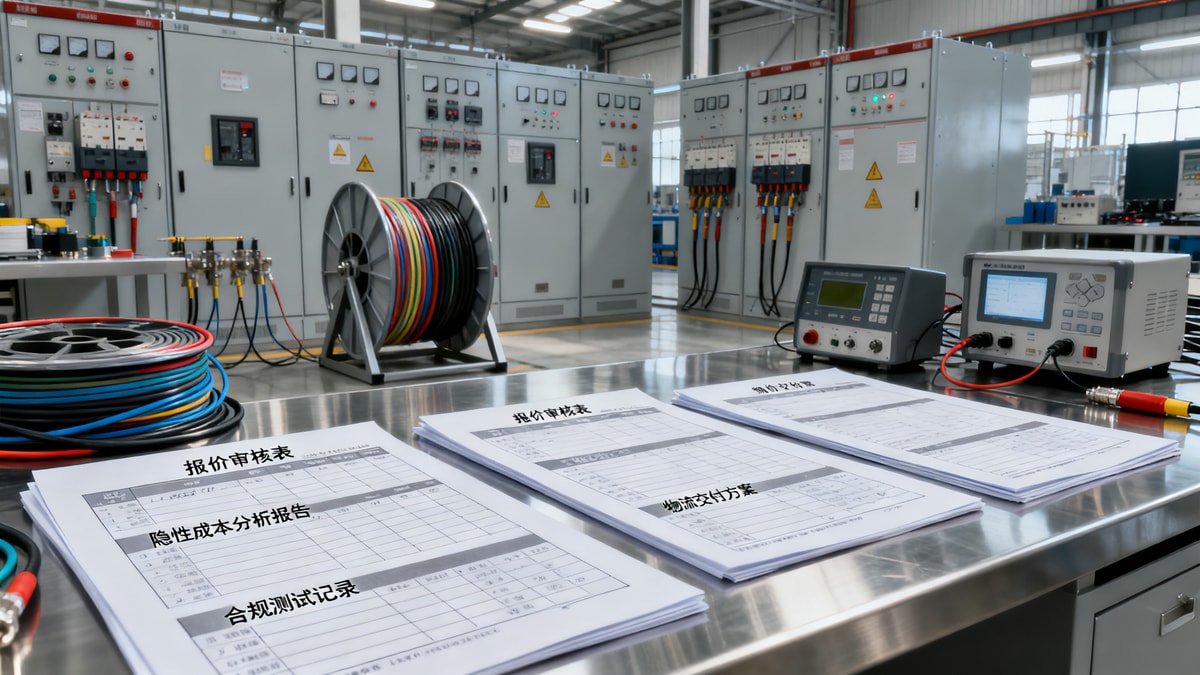
An Electrical & Power quotation can look straightforward at first glance, yet hidden extras in scope, compliance, testing, logistics, or after-sales terms can quickly reshape the true project cost. For business evaluators, knowing how to read an Electrical & Power quotation with precision is essential to avoid budget surprises, compare suppliers fairly, and make decisions that protect both operational reliability and commercial value.
Understanding what an Electrical & Power quotation really represents
An Electrical & Power quotation is not merely a price list for cables, switchgear, transformers, panels, relays, meters, or power distribution accessories. In industrial and infrastructure environments, it is a commercial and technical summary of what a supplier is willing to provide, under which standards, with what limits, and at what risk allocation. For business evaluators, this means the quotation should be read as a scoped commitment rather than as a single number.
In sectors served by engineering, procurement, and construction teams, the difference between a low-risk quotation and a misleadingly cheap one often lies in the details. Two suppliers may quote the same project name and similar headline value, yet one may exclude FAT testing, site commissioning, cable glands, mounting hardware, or certification paperwork. The other may include them. Without a structured review, the cheaper option can become the more expensive one after variation orders, schedule impact, or compliance corrections.
That is why a careful reading of an Electrical & Power quotation matters far beyond procurement. It supports budgeting accuracy, contract clarity, technical comparability, and long-term asset reliability. In heavy industry, where downtime, safety failure, or non-compliance can create major financial exposure, quotation analysis is part of risk management.
Why the market pays close attention to quotation details
Electrical and power systems sit at the center of operational continuity. Whether the project involves a factory expansion, a water treatment site, a logistics hub, a data-supporting utility room, or a process plant, the quoted package must align with local codes, international standards, load requirements, ambient conditions, and installation realities. A quotation that appears competitive may still be commercially weak if it leaves key assumptions undefined.
Global buyers also face variation in standards and documentation quality. One vendor may quote based on IEC design assumptions, another on UL-oriented expectations, and another on internal factory practices. If the Electrical & Power quotation does not explicitly state the design basis, testing level, and certification status, commercial comparison becomes unreliable. This is particularly relevant for evaluators working across borders, where logistics, duties, inspection regimes, and documentation packages can materially affect total landed cost.
For organizations concerned with trust, compliance, and lifecycle value, the quotation review process should reflect E-E-A-T principles in a practical sense: experience in recognizing hidden cost patterns, expertise in technical interpretation, authoritativeness in standard references, and trustworthiness in supplier commitments.
The core sections every evaluator should review
A high-quality Electrical & Power quotation usually contains several layers of meaning. The commercial total is only one layer. Business evaluators should examine the following sections in sequence so that the real offer becomes visible.
- Scope of supply: what equipment, materials, accessories, and documents are included.
- Technical basis: ratings, standards, environmental conditions, and interface assumptions.
- Commercial terms: price validity, currency, taxes, duties, and payment milestones.
- Testing and quality: routine tests, type tests, FAT, SAT, third-party inspection, and traceability.
- Delivery terms: Incoterms, packing, insurance, inland transport, and unloading responsibility.
- After-sales support: warranty, commissioning assistance, spare parts, training, and response time.
A quotation that is strong in one area but silent in another is not automatically incomplete, but silence itself is a commercial signal. Undefined items often become change orders later. Evaluators should therefore read omissions as carefully as inclusions.
Typical hidden extras that change the true project cost
The most common hidden extras in an Electrical & Power quotation do not always appear as separate surcharge lines. Many are buried in exclusions, notes, assumptions, or references to “by others.” Understanding these patterns helps evaluators identify the difference between a complete bid and an incomplete one.
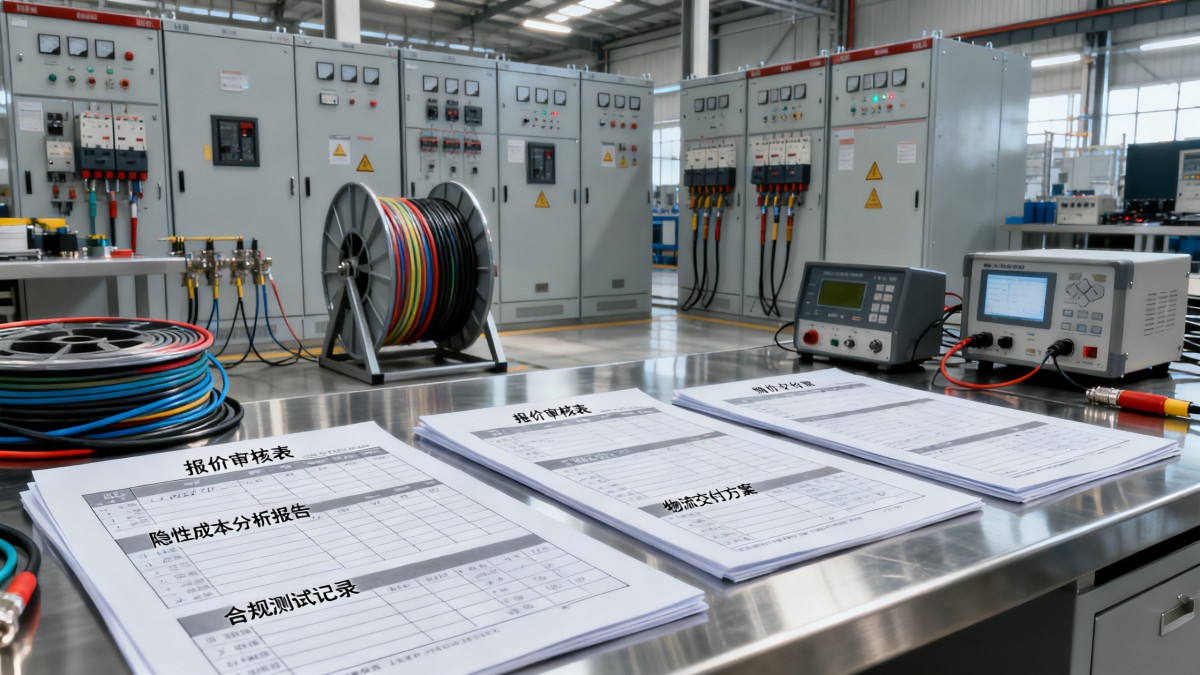
Among these, compliance and testing are especially important in the electrical domain. A quotation may state conformance to CE, UL, ISO, IEC, or local utility requirements, but unless the exact certificate scope and document package are confirmed, the claim may not fully support project approval. Likewise, “tested before shipment” is not the same as a witnessed FAT with signed reports and calibrated measurement records.
How different project contexts change quotation interpretation
Not every Electrical & Power quotation should be read in the same way. The importance of each line item varies by project type, operating environment, and stakeholder expectation. Business evaluators should match quotation review depth to the project’s technical and commercial profile.
This is where disciplined review creates business value. A business evaluator is not expected to replace an electrical engineer, but should be able to identify whether the quotation clearly maps to project needs, or whether unresolved assumptions could affect budget, timing, and accountability.
Practical ways to compare suppliers fairly
Fair comparison requires more than aligning final price. A robust comparison of an Electrical & Power quotation should normalize scope, standards, services, and risk. Otherwise, the evaluation becomes a comparison of unlike offers.
Start with a bid comparison sheet that separates the quotation into technical, commercial, and lifecycle categories. Mark each line as included, excluded, optional, or unclear. Then assign commercial weight to the unclear items. If one supplier excludes FAT and another includes it, the first should not be treated as truly cheaper until the testing gap is costed. The same rule applies to spare parts, commissioning days, software licenses, protection settings, site travel, and as-built documents.
Second, test assumptions against actual project conditions. For example, does the quoted enclosure rating match outdoor exposure, dust load, or corrosive atmosphere? Are voltage, frequency, short-circuit ratings, and control interfaces aligned with the project specification? Does the supplier assume standard packing while the project actually requires export-grade seaworthy packaging? Hidden extras often arise when a quotation is technically generic but the project is not.
Third, examine the wording around validity and escalation. Some suppliers quote aggressively with short validity periods, limited raw material hold, or broad rights to revise delivery times. In electrical markets affected by copper, steel, semiconductor, and freight volatility, these terms can materially affect final cost. A low initial quotation may carry a high adjustment risk.
Red flags that deserve immediate clarification
Certain signals in an Electrical & Power quotation should prompt immediate follow-up before any commercial ranking is finalized. These signals do not always mean the supplier is unsuitable, but they do indicate elevated uncertainty.
- The quotation references drawings or specifications that are not attached.
- Compliance claims are broad but certificate numbers or standards editions are missing.
- Lead times are given without stating approval dependencies or material constraints.
- Optional items include functions that seem essential to system operation.
- Warranty language excludes “improper installation” without defining installation support responsibilities.
- The commercial total is attractive, but the exclusions list is unusually long.
For evaluators in complex industrial settings, the right response is not to reject quickly, but to convert ambiguity into documented clarification. Well-managed clarifications improve comparability and reduce post-award dispute risk.
A disciplined review method for business evaluators
A practical review method can be summarized in four steps. First, verify commercial completeness: total price, taxes, validity, payment, delivery terms, and warranty. Second, verify technical completeness: scope, ratings, standards, accessories, and documentation. Third, verify execution completeness: testing, inspection, packing, transport, site support, and handover. Fourth, verify risk completeness: exclusions, assumptions, liabilities, and change triggers.
This method is particularly useful for organizations handling multiple bids across security, instrumentation, environment, mechanical, and electrical packages, because it creates a common evaluation language. It also aligns with the broader industrial sourcing discipline promoted by data-driven and compliance-centered platforms such as GIC, where the emphasis is not only on price visibility but on operational resilience.
If internal technical support is limited, evaluators should still insist on a supplier response matrix. Ask the supplier to confirm, line by line, whether cable accessories, protection settings, drawings, manuals, test certificates, spare parts, and commissioning services are included. A strong supplier will usually welcome precise clarification because it reduces downstream dispute as much as it helps the buyer.
FAQ on reading an Electrical & Power quotation
Is the lowest Electrical & Power quotation usually the best option?
Not necessarily. The lowest quote may exclude testing, documentation, logistics, or support services that are essential to project success. Evaluators should compare total commercial exposure, not just the visible sales price.
Which hidden extra causes the most disputes?
Scope boundary ambiguity is one of the most common causes. Small excluded items such as lugs, glands, interface wiring, software setup, or FAT witness arrangements can create disproportionate delay and cost when discovered late.
What documents should be checked first?
Start with the scope summary, exclusions list, technical datasheets, compliance references, testing statement, delivery terms, and warranty clause. These documents reveal whether the Electrical & Power quotation is complete, comparable, and realistic.
Closing perspective and next-step guidance
A well-read Electrical & Power quotation is a decision tool, not just a commercial formality. For business evaluators, the real objective is to understand cost integrity, compliance confidence, and execution reliability before commitment is made. Hidden extras are rarely random; they usually appear where scope, standards, logistics, or responsibilities are left open to interpretation.
The most effective approach is to treat each quotation as a technical-commercial package that must stand up to structured scrutiny. When suppliers are assessed on completeness, evidence, and lifecycle implications as well as price, organizations make stronger decisions and reduce avoidable risk. If your team regularly reviews industrial bids, building a standard checklist for every Electrical & Power quotation will improve consistency, speed, and trust across sourcing decisions.
Technical Specifications
- Hidden Environment & Ecology cost after project approvalAuthor :Environmental Engineering Director
- When does an Environment & Ecology impact assessment need updating?Author :Environmental Engineering Director
- Security & Safety standards that affect product approval speedAuthor :Safety Compliance Lead
Expert Insights

Chief Security Architect
Dr. Thorne specializes in the intersection of structural engineering and digital resilience. He has advised three G7 governments on industrial infrastructure security.
Related Analysis
- May 07, 2026Hidden Environment & Ecology cost after project approvalAuthor :Environmental Engineering Director
- May 07, 2026When does an Environment & Ecology impact assessment need updating?Author :Environmental Engineering Director
- May 07, 2026Security & Safety standards that affect product approval speedAuthor :Safety Compliance Lead
Core Sector // 01
Security & Safety
- How to read an Electrical & Power quotation without missing extrasAuthor :Grid Infrastructure Analyst

- Electrical & Power manufacturers facing the fastest standards shiftAuthor :Grid Infrastructure Analyst

- How to shortlist EPC contractors for renewable energy projectsAuthor :Grid Infrastructure Analyst

- Engineering procurement best practices for avoiding late-stage delaysAuthor :Grid Infrastructure Analyst

- US DOE Level 3 Transformer Efficiency Rule Takes Effect July 1, 2026Author :Grid Infrastructure Analyst

- US DOE Level 3 Transformer Efficiency Rule Takes Effect July 1, 2026Author :Grid Infrastructure Analyst

- SASO Mandates Dual Energy Label for Industrial Transformers in Saudi Arabia from May 2026Author :Grid Infrastructure Analyst

- US DOE Level 3 Transformer Efficiency Standard Effective July 1, 2026Author :Grid Infrastructure Analyst