EN 61800-5-2:2026 Effective May 2026: SIL2 Certification Required for EU Industrial Drives
Author
Date Published
Reading Time
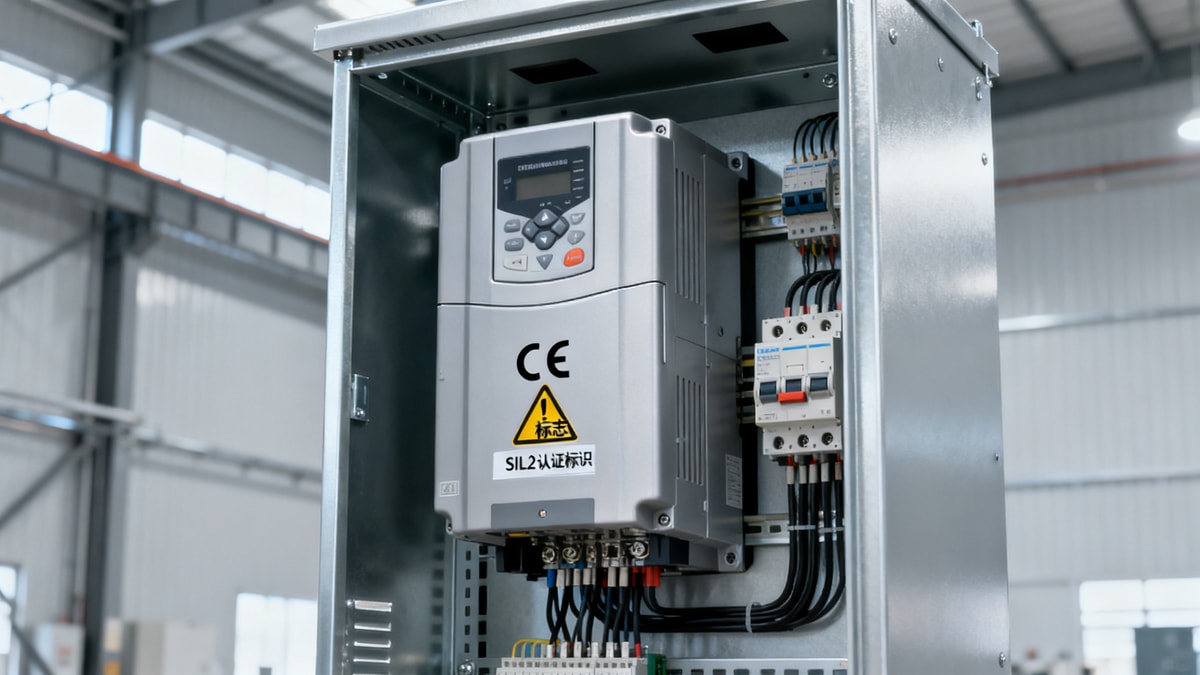
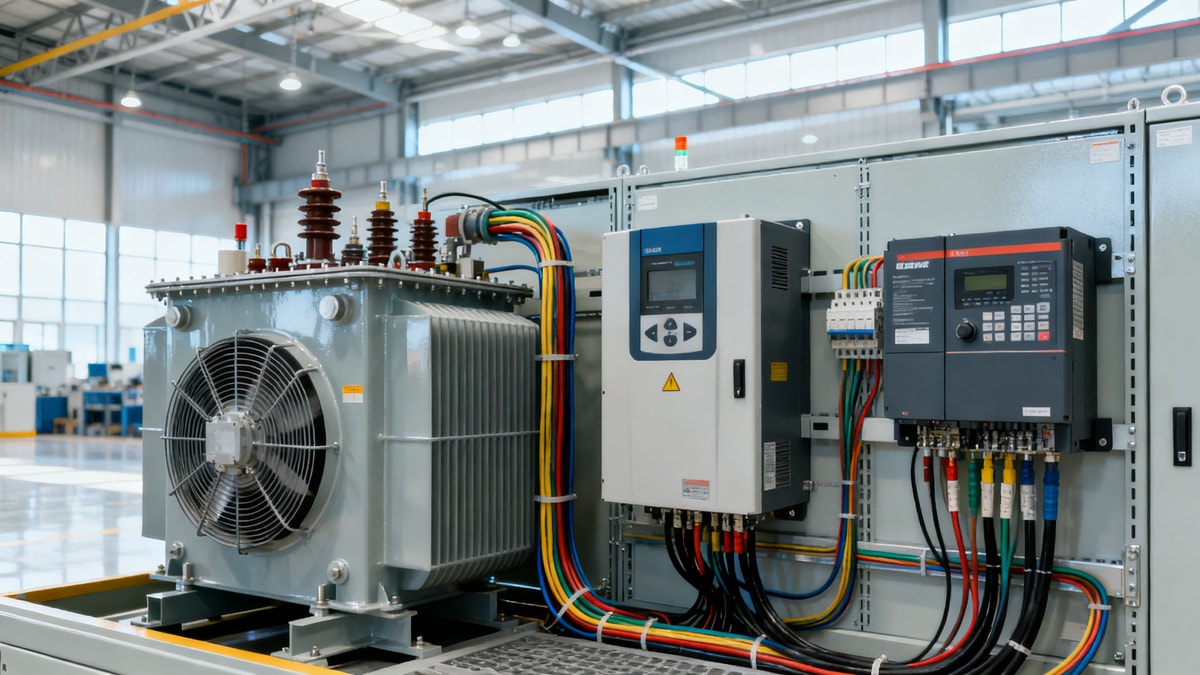
As of 1 May 2026, the revised European standard EN 61800-5-2:2026 enters into force, mandating functional safety certification at SIL2 level for all industrial variable speed drives (including drive systems) placed on the EU market. Exporters of variable frequency drives, soft starters, and motor control panels — particularly those based in China — must now prioritize compliance to maintain CE marking eligibility and avoid customs rejection or project non-acceptance in EU end-user installations.
Event Overview
On 1 May 2026, EN 61800-5-2:2026 becomes mandatory across the European Union. Under this standard, all industrial variable speed drives and integrated drive systems supplied to the EU must demonstrate compliance with Safety Integrity Level 2 (SIL2) requirements per IEC 61508, and must be accompanied by a complete Functional Safety Manual (FSM) issued by an accredited body such as TÜV or DEKRA. This replaces prior editions and tightens conformity assessment requirements for CE marking.
Impact on Specific Industry Segments
Direct Exporters (OEMs & System Integrators)
These entities are directly responsible for CE marking and thus bear full legal liability for compliance. Non-compliant drives cannot be legally placed on the EU market, resulting in immediate loss of market access. Impact manifests in delayed shipments, failed customer audits, and contractual penalties where safety certification is contractually stipulated.
Manufacturers of Motor Control Panels & Drive Assemblies
Companies integrating drives into control cabinets or turnkey systems must verify SIL2 certification status of every embedded drive unit. Absence of valid FSM or SIL2 evidence invalidates the entire assembly’s CE claim under the Machinery Directive. Requalification of existing panel designs may be required if legacy drives lack updated certification.
Supply Chain Distributors & Importers
Distributors placing products on the EU market under their own name or brand assume the role of ‘responsible economic operator’ under EU Regulation (EU) 2019/1020. They must retain copies of SIL2 certificates and FSM documentation and make them available upon request by market surveillance authorities — failure to do so may trigger enforcement actions including product withdrawal.
Key Actions for Affected Enterprises
Verify current certification status of active drive models
Confirm whether existing drive SKUs already hold valid SIL2 certification against EN 61800-5-2:2026 (not earlier versions), and whether the issuing body (e.g., TÜV Rheinland, DEKRA) explicitly references the 2026 edition in its certificate and FSM. Certificates referencing only EN 61800-5-2:2017 are insufficient post-1 May 2026.
Review procurement contracts with drive suppliers
Assess contractual clauses covering compliance liability, certificate validity periods, and obligations to provide updated FSMs. Where supply agreements predate the 2026 standard, initiate formal alignment discussions to clarify responsibility for re-certification costs and timelines.
Update technical documentation and internal CE declaration processes
Revise internal DoC (Declaration of Conformity) templates to reference EN 61800-5-2:2026 explicitly; ensure all supporting evidence — including SIL2 certificate, FSM, and relevant risk assessment reports — is archived per EU traceability requirements (minimum 10 years).
Prepare for customs and project site verification
Expect increased documentary checks at EU borders and during commissioning. Maintain readily accessible digital copies of certified FSMs and SIL2 certificates — formatted for quick retrieval by logistics teams and field engineers — to prevent installation delays.
Editorial Observation / Industry Perspective
Observably, EN 61800-5-2:2026 marks a hard enforcement milestone rather than a transitional signal: it introduces no grace period, and its scope explicitly covers all new units placed on the market after 1 May 2026. Analysis shows that while the SIL2 requirement itself is not new, the binding linkage to the 2026 edition — combined with mandatory FSM issuance by accredited bodies — significantly raises evidentiary thresholds. From an industry perspective, this reflects a broader regulatory trend toward enforceable, auditable functional safety documentation, moving beyond self-declaration. It is less about introducing novel safety logic and more about formalizing accountability across the supply chain.
Current attention should focus on verifiable compliance evidence — not theoretical capability. The standard does not require redesign of core drive hardware in most cases, but it does require demonstrable, third-party-validated safety lifecycle management. That distinction matters for resource planning and timeline estimation.
Conclusion
This regulation crystallizes a long-standing expectation into an enforceable requirement: functional safety for industrial drives is no longer optional in the EU — it is a documented, certified, and auditable condition of market access. For affected enterprises, the practical implication is clear — compliance is now a prerequisite for commercial continuity, not a competitive differentiator. It is best understood not as a one-time certification event, but as the institutionalization of functional safety as an embedded component of technical and regulatory due diligence.
Information Sources
Main source: Official publication of EN 61800-5-2:2026 in the Official Journal of the European Union (OJEU), CENELEC adoption notice. No supplementary data, market forecasts, or stakeholder statements were used. Ongoing monitoring of national market surveillance guidance (e.g., German ZLS, Dutch NVWA) is recommended, as interpretation of FSM content requirements may vary slightly across Member States.
Technical Specifications
- India BIS Draft IS 17832:2026 Sets Noise & Dust Limits for Waste CrushersAuthor :Environmental Engineering Director
- Korea MFDS Mandates Korean UI & KOSHA OEL Database for Industrial Water AnalyzersAuthor :Precision Metrology Expert
- Indonesia BPOM Mandates PM0.1 Efficiency & CADR Decay Labeling for Industrial Air PurifiersAuthor :Environmental Engineering Director
Expert Insights

Chief Security Architect
Dr. Thorne specializes in the intersection of structural engineering and digital resilience. He has advised three G7 governments on industrial infrastructure security.
Related Analysis
- May 03, 2026India BIS Draft IS 17832:2026 Sets Noise & Dust Limits for Waste CrushersAuthor :Environmental Engineering Director
- May 03, 2026Korea MFDS Mandates Korean UI & KOSHA OEL Database for Industrial Water AnalyzersAuthor :Precision Metrology Expert
- May 03, 2026Indonesia BPOM Mandates PM0.1 Efficiency & CADR Decay Labeling for Industrial Air PurifiersAuthor :Environmental Engineering Director
Core Sector // 01
Security & Safety
- EN 61800-5-2:2026 Effective May 2026: SIL2 Certification Required for EU Industrial DrivesAuthor :Grid Infrastructure Analyst

- When Is a Step Down Transformer the Wrong Choice?Author :Grid Infrastructure Analyst

- US DOE IE4 Rule for Dry-Type Transformers Takes Effect May 1, 2026Author :Grid Infrastructure Analyst

- DOE Raises Industrial Dry-Type Transformer Efficiency to IE4Author :Grid Infrastructure Analyst

- Revised Maritime Code Takes Effect May 1, 2026Author :Grid Infrastructure Analyst

- DOE Raises Industrial Dry-Type Transformer Efficiency to IE4Author :Grid Infrastructure Analyst

- Copper Price Surge Impacts Industrial Components BOM CostsAuthor :Grid Infrastructure Analyst

- High Voltage Disconnectors: Key Selection TipsAuthor :Grid Infrastructure Analyst