When Is a Step Down Transformer the Wrong Choice?
Author
Date Published
Reading Time
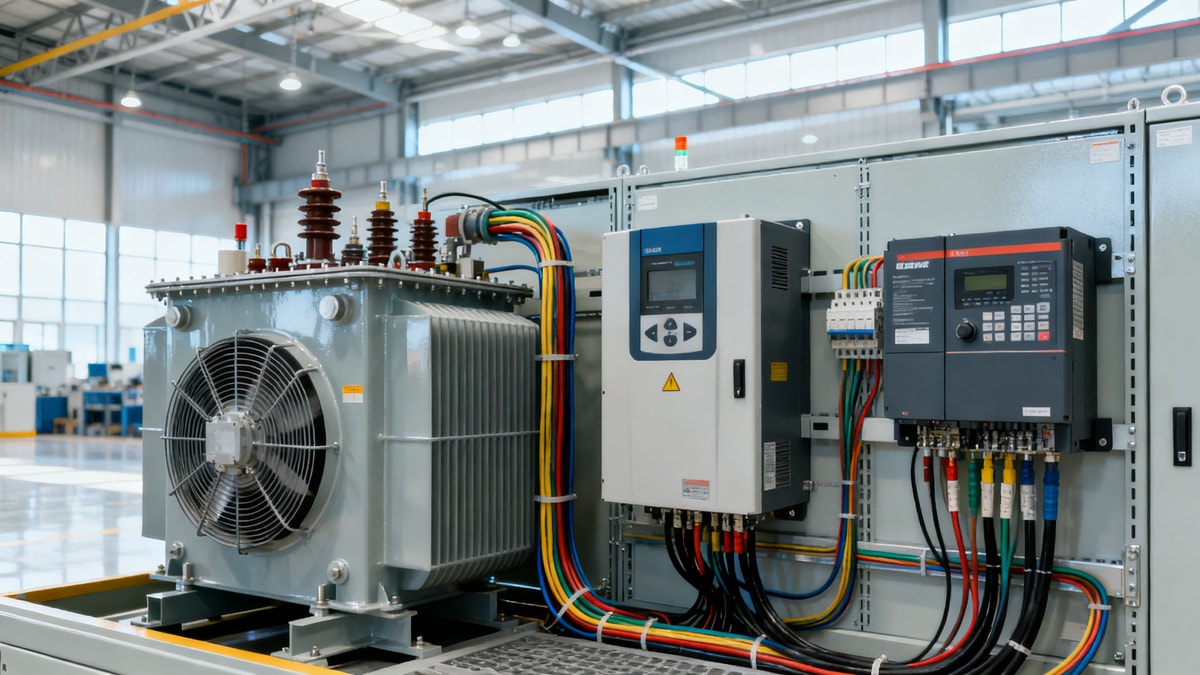
Step down transformers are widely used to reduce voltage safely and efficiently, but they are not always the right solution for every industrial application. For technical evaluators, choosing the wrong transformer can lead to compliance risks, energy losses, equipment incompatibility, and higher lifecycle costs. This article examines when a step down transformer becomes the wrong choice and what factors should guide a more reliable decision.
Why a checklist-based review is the safest way to evaluate step down transformers
In industrial environments, a wrong voltage-conversion decision rarely fails in a simple way. It often creates a chain of problems: overheating, nuisance trips, unstable controls, poor motor performance, premature insulation aging, or audit issues linked to standards and installation practice. That is why technical evaluators should avoid starting with a product catalog and instead begin with a structured decision checklist.
A checklist makes the review practical. It forces the team to confirm supply conditions, load characteristics, grounding method, duty cycle, harmonics, protection coordination, site environment, and maintenance expectations before selecting step down transformers. In many cases, once these points are reviewed, it becomes clear that another solution—such as direct equipment replacement, a power supply redesign, a frequency converter, a stabilizer, or an isolation transformer—is more suitable.
Start with these critical checks before approving step down transformers
Before specifying step down transformers, technical evaluators should verify the following decision points. If several answers raise concern, the transformer may be the wrong choice.
- Is the voltage mismatch the only problem? If the equipment also has frequency, phase, grounding, waveform, or inrush sensitivity issues, simple voltage reduction will not solve the full compatibility gap.
- Does the load include motors, drives, welders, or power electronics? Nonlinear or high-starting-current loads can stress standard step down transformers and distort performance expectations.
- Is regulation tolerance tight? Sensitive instruments, PLC panels, metrology devices, and medical-grade systems may require tighter voltage stability than a basic transformer can provide under fluctuating load.
- Will the installation environment exceed normal assumptions? Heat, dust, corrosive atmospheres, vibration, offshore humidity, or poor ventilation can turn an acceptable paper specification into a field failure risk.
- Do local codes or customer specifications require isolation, shielding, special earthing, or certified enclosures? Some projects need more than standard step down transformers can deliver.
- Has total lifecycle cost been reviewed? Lower purchase price can be offset by energy losses, oversizing, maintenance downtime, cooling needs, and replacement risk.
When technical teams treat step down transformers as a quick fix for every voltage mismatch, they often miss these system-level checks.
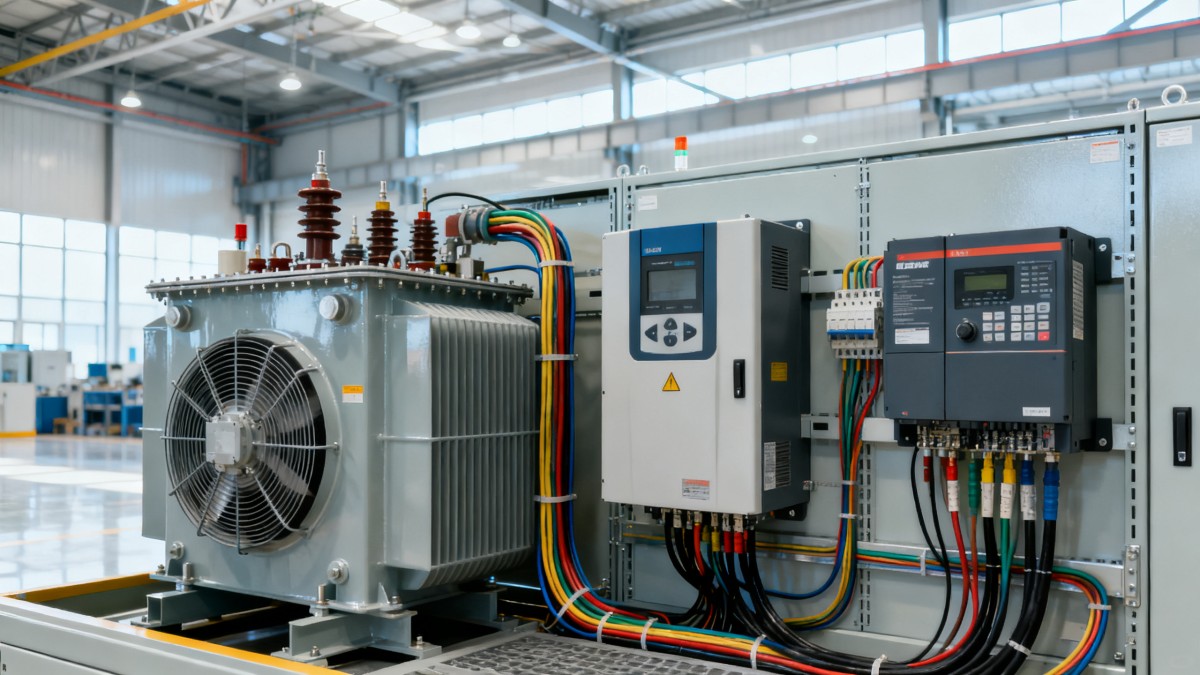
Clear signs that a step down transformer is the wrong choice
1. The application has a frequency mismatch, not only a voltage mismatch
One of the most common errors is using step down transformers where the real issue is 50 Hz versus 60 Hz operation. A transformer can reduce voltage, but it does not correct supply frequency. For motors, pumps, fans, and timing-sensitive machines, frequency mismatch can alter speed, torque, heating, and process control. In those cases, a frequency converter or equipment designed for dual-frequency operation is usually a better decision.
2. The load is highly sensitive to voltage regulation
Many step down transformers perform well for general-purpose distribution, but not all are appropriate for critical instrumentation or high-precision controls. If the secondary voltage must remain within a narrow band during startup, cycling, or changing load, transformer impedance and regulation become decisive. In such cases, a regulated power supply, UPS, power conditioner, or dedicated control transformer may outperform standard step down transformers.
3. Harmonics and nonlinear loads dominate the circuit
Variable frequency drives, rectifiers, switch-mode power supplies, and data-heavy control equipment generate harmonics that raise transformer heating beyond what simple kVA calculations suggest. If the installation has a high harmonic profile, standard step down transformers may run hot, lose efficiency, and suffer shortened insulation life. A K-rated transformer, harmonic mitigation strategy, or revised power architecture should be evaluated instead.
4. The system requires galvanic isolation, but the selected unit does not provide it
Some teams assume all step down transformers offer the same protection benefit. They do not. An autotransformer reduces voltage efficiently, but it does not provide galvanic isolation between primary and secondary. If the project requires isolation for personnel safety, noise reduction, grounding separation, or sensitive electronics protection, an autotransformer is the wrong choice even if it satisfies the voltage target.
5. Space, heat, and energy constraints are severe
In compact control rooms, retrofit cabinets, modular skids, or remote enclosures, step down transformers can become problematic due to weight, heat dissipation, and clearance requirements. If thermal buildup already threatens reliability, adding transformer losses may worsen the condition. In these cases, direct low-voltage equipment procurement or a redesigned distribution layout may be more practical than adding one more passive conversion stage.
6. The load profile includes large inrush or repeated cycling
Contactors, solenoids, compressors, and motor-driven systems can create repeated inrush events. If the transformer is selected only by steady-state load, the result may be voltage sag, relay chatter, nuisance fuse operation, or insulation stress. Technical evaluators should treat repeated inrush as a rejection signal for underspecified step down transformers and consider inrush-rated designs, soft-start solutions, or alternative supply arrangements.
Use this scenario table to decide faster
Extra checks by application type
For motors and rotating equipment
Confirm starting current, duty cycle, ambient temperature, and frequency compatibility first. Step down transformers are often misapplied where motor derating, soft starting, or VFD integration is the real question.
For control panels and instrumentation
Check control voltage tolerance, EMI sensitivity, grounding arrangement, and whether shielded isolation is required. Do not assume standard step down transformers will protect precision devices from transient noise.
For export or multinational EPC projects
Verify CE, UL, IEC, local grid conditions, and project-specific acceptance criteria. A technically workable transformer may still be the wrong choice if certification, labeling, enclosure rating, or short-circuit withstand documentation is incomplete.
Commonly overlooked risks in step down transformer selection
- Ignoring no-load and load losses in energy calculations, especially for continuously energized systems.
- Sizing only for nominal kVA without accounting for inrush, diversity, or future expansion.
- Overlooking secondary protection coordination, which can cause nuisance tripping or unsafe fault clearing.
- Assuming all step down transformers can tolerate poor power quality, voltage imbalance, or elevated harmonics.
- Failing to review cooling clearances, enclosure temperature rise, and maintenance access.
- Choosing by purchase price alone instead of total cost of ownership and expected service life.
A practical decision sequence for technical evaluators
- Document source power: voltage, phase, frequency, fault level, grounding system, and power quality history.
- Define the load accurately: steady-state current, inrush, harmonic content, sensitivity, runtime profile, and expansion margin.
- Check whether the need is conversion only or broader conditioning, isolation, stabilization, or frequency control.
- Review compliance requirements: IEC, UL, CE, local code, enclosure type, insulation class, and environmental ratings.
- Model lifecycle impact: losses, downtime risk, cooling needs, maintenance burden, and replacement interval.
- Compare alternatives before approval. If another architecture reduces risk with similar or lower lifecycle cost, standard step down transformers should not be the default.
What to prepare before requesting quotes or technical proposals
If your team is moving toward procurement, prepare the data that determines whether step down transformers are suitable at all: input and output voltage, frequency, single-phase or three-phase requirement, load type, peak current, installation altitude, ambient temperature, enclosure constraints, required standards, and whether isolation is mandatory. Also provide single-line diagrams, duty cycle details, and any history of overheating, nuisance trips, or voltage instability. Better input leads to better transformer selection—and sometimes to the conclusion that no transformer should be used.
Final decision guide
Step down transformers are the wrong choice when the project involves frequency mismatch, tight voltage regulation, high harmonic distortion, missing isolation, harsh environmental exposure, severe thermal limits, or demanding inrush behavior. For technical evaluators, the safest approach is not to ask, “Can a transformer reduce this voltage?” but rather, “Will this transformer solve the full operational, compliance, and lifecycle requirement?”
If further confirmation is needed, prioritize discussions around source power conditions, load behavior, standards compliance, protection coordination, environmental rating, efficiency targets, and total ownership cost. That conversation will quickly reveal whether step down transformers are the right fit, or whether a different power strategy will deliver a safer and more resilient industrial outcome.
Technical Specifications
Expert Insights

Chief Security Architect
Dr. Thorne specializes in the intersection of structural engineering and digital resilience. He has advised three G7 governments on industrial infrastructure security.
Related Analysis
- May 02, 2026Chemical Metering Pumps: Which Dosing Errors Cost the Most?Author :Environmental Engineering Director
- May 02, 2026What Sets One Belt Filter Press Manufacturer Apart?Author :Environmental Engineering Director
- May 02, 2026Moving Bed Biofilm Reactor MBBR Retrofit Benefits and LimitsAuthor :Environmental Engineering Director
Core Sector // 01
Security & Safety
- When Is a Step Down Transformer the Wrong Choice?Author :Grid Infrastructure Analyst

- US DOE IE4 Rule for Dry-Type Transformers Takes Effect May 1, 2026Author :Grid Infrastructure Analyst

- DOE Raises Industrial Dry-Type Transformer Efficiency to IE4Author :Grid Infrastructure Analyst

- Revised Maritime Code Takes Effect May 1, 2026Author :Grid Infrastructure Analyst

- DOE Raises Industrial Dry-Type Transformer Efficiency to IE4Author :Grid Infrastructure Analyst

- Copper Price Surge Impacts Industrial Components BOM CostsAuthor :Grid Infrastructure Analyst

- High Voltage Disconnectors: Key Selection TipsAuthor :Grid Infrastructure Analyst

- SCFI Surges 12.3% on Apr 26, Shanghai–Rotterdam Rate Hits $4,480/TEUAuthor :Grid Infrastructure Analyst
![]()