Copper Price Surge Impacts Industrial Components BOM Costs
Author
Date Published
Reading Time
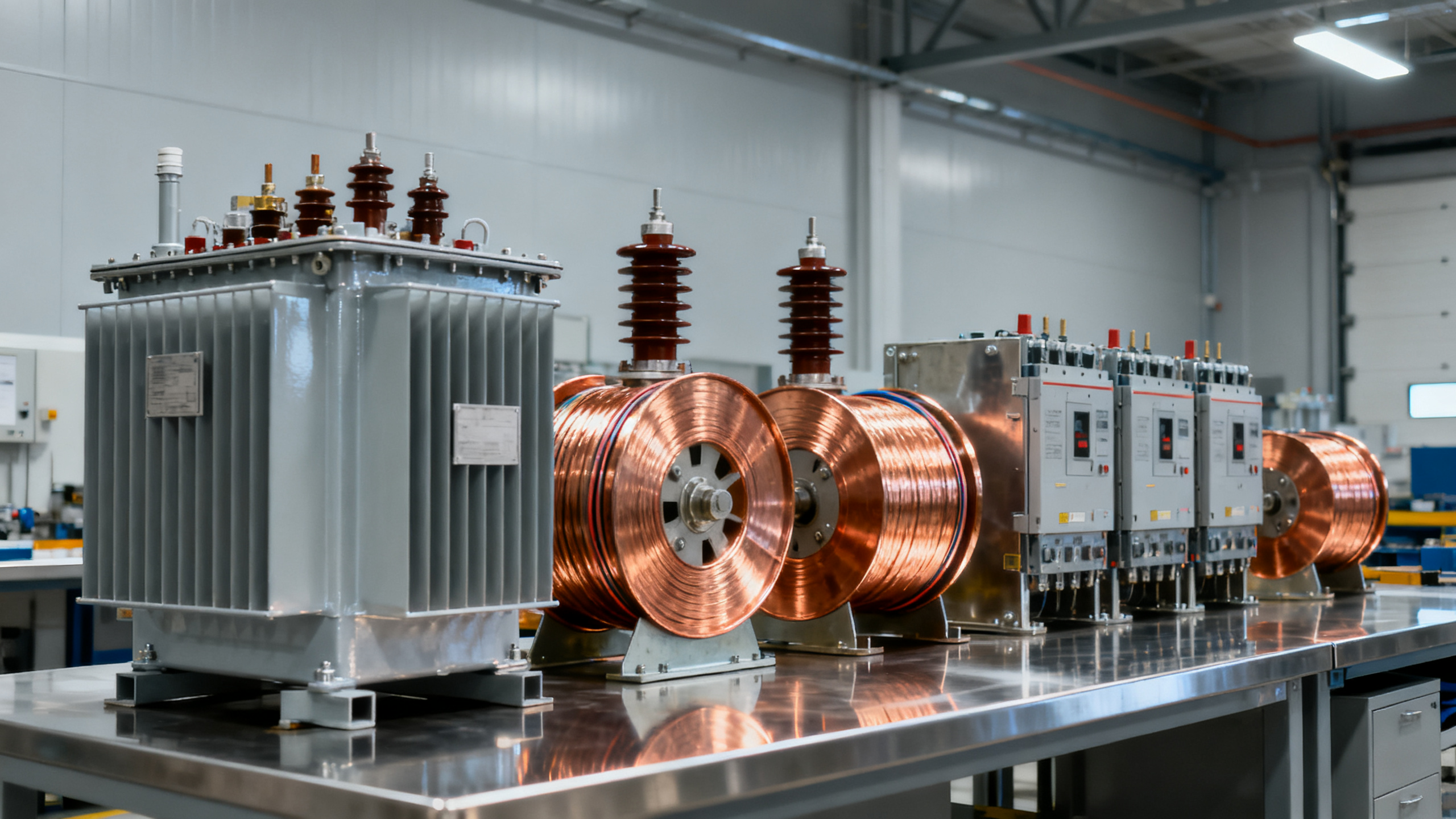
On April 28, 2026, LME copper spot price jumped 3.8% to USD 9,820/ton — the highest level since November 2025 — triggering a 7.1% average increase in bill-of-materials (BOM) costs for copper-intensive industrial components including circuit breakers, dry-type transformers, and medium-voltage cables. This development warrants close attention from manufacturers, exporters, and procurement professionals in the electrical equipment supply chain.
Event Overview
On April 28, 2026, the London Metal Exchange (LME) reported a copper spot price of USD 9,820 per metric ton, reflecting a single-day increase of 3.8%. This marked the highest level since November 2025. The rise follows three consecutive weeks of upward movement, driven by ongoing mine labor strikes in Chile and accelerated Q2 power grid investment in India.
Industries Affected
Manufacturers of Industrial Electrical Equipment
Companies producing industrial circuit breakers, dry-type transformers, and medium-voltage cables are directly exposed, as copper constitutes a major raw material component in their BOM. The 7.1% BOM cost increase affects gross margin per unit and may compress export pricing competitiveness, particularly in price-sensitive markets.
Export-Oriented Trading Firms
Firms quoting or fulfilling international orders for copper-based electrical products face immediate pressure on landed cost calculations. Revised quotations may be required for pending contracts with fixed-price terms, while delivery timelines could be impacted if cost renegotiations delay order confirmations.
Procurement & Supply Chain Teams
Procurement departments sourcing copper or copper-containing subassemblies must reassess current supplier agreements, lead times, and hedging exposure. Spot purchases made after April 28 carry higher input costs, and forward contract coverage may need adjustment depending on existing hedges.
What Enterprises and Practitioners Should Monitor and Do Now
Track official updates on Chilean mining operations and Indian grid tender releases
Analysis shows that the current price surge is tied to two discrete geopolitical and policy-driven factors. Continued disruption in Chilean output or acceleration of Indian infrastructure tenders could extend the upward trend — making these developments key leading indicators.
Review open orders and pricing clauses for copper-linked escalation terms
Observably, many export contracts include raw material price adjustment mechanisms. Companies should audit active orders to determine whether copper-indexed escalators are triggered, and assess timing for formal notifications to buyers.
Assess inventory positioning and near-term copper purchase commitments
From industry perspective, firms holding low copper inventory or relying on just-in-time procurement face greater near-term margin risk. Evaluating buffer stock levels and locking in partial volumes at current rates — if aligned with cash flow and storage capacity — may mitigate further volatility exposure.
Prepare internal communication on margin impact for sales and finance teams
Current more suitable understanding is that this is not an isolated daily fluctuation but part of a sustained three-week uptrend. Cross-functional alignment between procurement, sales, and finance ensures consistent messaging on revised lead times, pricing, and delivery expectations to customers.
Editorial Perspective / Industry Observation
This copper price movement is better understood as a short-to-medium term supply-side signal rather than a fully realized cost shock. While the 7.1% BOM impact is quantifiable, its operational translation depends heavily on contract structures, inventory cycles, and regional market dynamics. Observably, the convergence of labor action in a top copper-producing country and synchronized infrastructure spending in a major emerging-market buyer suggests elevated baseline volatility — not merely transient noise. From industry angle, sustained monitoring over the next 4–6 weeks will clarify whether this marks the start of a broader commodity cycle shift or a contained event.
In summary, the April 28 copper price jump reflects tangible upstream pressure with measurable downstream implications for specific electrical equipment categories. Its significance lies less in the single-day move itself and more in its alignment with structural supply constraints and demand acceleration — warranting calibrated, operationally grounded responses rather than broad strategic pivots. It is currently more appropriate to interpret this as a tactical cost management signal requiring near-term review and adjustment across procurement, pricing, and contract administration functions.
Source: London Metal Exchange (LME) price data, publicly reported on April 28, 2026. Note: Ongoing developments related to Chilean mine labor negotiations and Indian Q2 grid project disbursements remain subject to official confirmation and require continued observation.
Technical Specifications
- 6th National Auto Standards Committee Launched, Impacts Optical Test Equipment ExportAuthor :Precision Metrology Expert
- Copper Price Surge Impacts Industrial Components BOM CostsAuthor :Grid Infrastructure Analyst
- EU CE Update: ULPA Filters Require MVR Testing from Jan 2027Author :Environmental Engineering Director
Expert Insights

Chief Security Architect
Dr. Thorne specializes in the intersection of structural engineering and digital resilience. He has advised three G7 governments on industrial infrastructure security.
Related Analysis
- Apr 29, 20266th National Auto Standards Committee Launched, Impacts Optical Test Equipment ExportAuthor :Precision Metrology Expert
- Apr 29, 2026Copper Price Surge Impacts Industrial Components BOM CostsAuthor :Grid Infrastructure Analyst
- Apr 29, 2026EU CE Update: ULPA Filters Require MVR Testing from Jan 2027Author :Environmental Engineering Director
Core Sector // 01
Security & Safety
- Copper Price Surge Impacts Industrial Components BOM CostsAuthor :Grid Infrastructure Analyst

- High Voltage Disconnectors: Key Selection TipsAuthor :Grid Infrastructure Analyst

- SCFI Surges 12.3% on Apr 26, Shanghai–Rotterdam Rate Hits $4,480/TEUAuthor :Grid Infrastructure Analyst
![]()
- Monitoring oil health in Electrical & PowerAuthor :Grid Infrastructure Analyst

- IEC 61850-90-15:2026 Published: ±100ns Time Sync for Substation SV/GOOSEAuthor :Grid Infrastructure Analyst
![]()
- IEC 61850-90-15:2026 Released — Time Stamp Precision Upgrade Impacts Power Equipment ExportsAuthor :Grid Infrastructure Analyst
![]()
- Shanghai Yangshan Port Launches Green Clearance for Industrial EquipmentAuthor :Grid Infrastructure Analyst
![]()
- How to Vet a Power Transformer ManufacturerAuthor :Grid Infrastructure Analyst