Which Electrical & Power standards matter most in 2026 upgrades?
Author
Date Published
Reading Time
As 2026 upgrade cycles accelerate, technical evaluators do not need a long list of every applicable document. They need to know which Electrical & Power standards most directly affect equipment selection, project approval, grid compatibility, safety certification, and long-term maintainability. In practical terms, the most important standards for 2026 upgrades are the ones that reduce commissioning risk, support interoperability, satisfy local and export compliance, and improve resilience under modern power quality and decarbonization pressures.
For most industrial projects, that means prioritizing standards in five decision-critical areas: low-voltage and medium-voltage equipment safety, switchgear and transformer performance, power quality and system studies, protection and automation communications, and installation or inspection compliance. The exact shortlist depends on whether the upgrade involves substations, motor control, plant electrification, renewable integration, backup power, or modernization of aging assets.
Technical evaluators are usually not asking, “What standards exist?” They are asking, “Which standards should influence our specification now, which ones affect supplier qualification, and which ones can create hidden lifecycle cost if ignored?” That is the lens this guide uses.
What is the real priority for 2026 Electrical & Power upgrades?
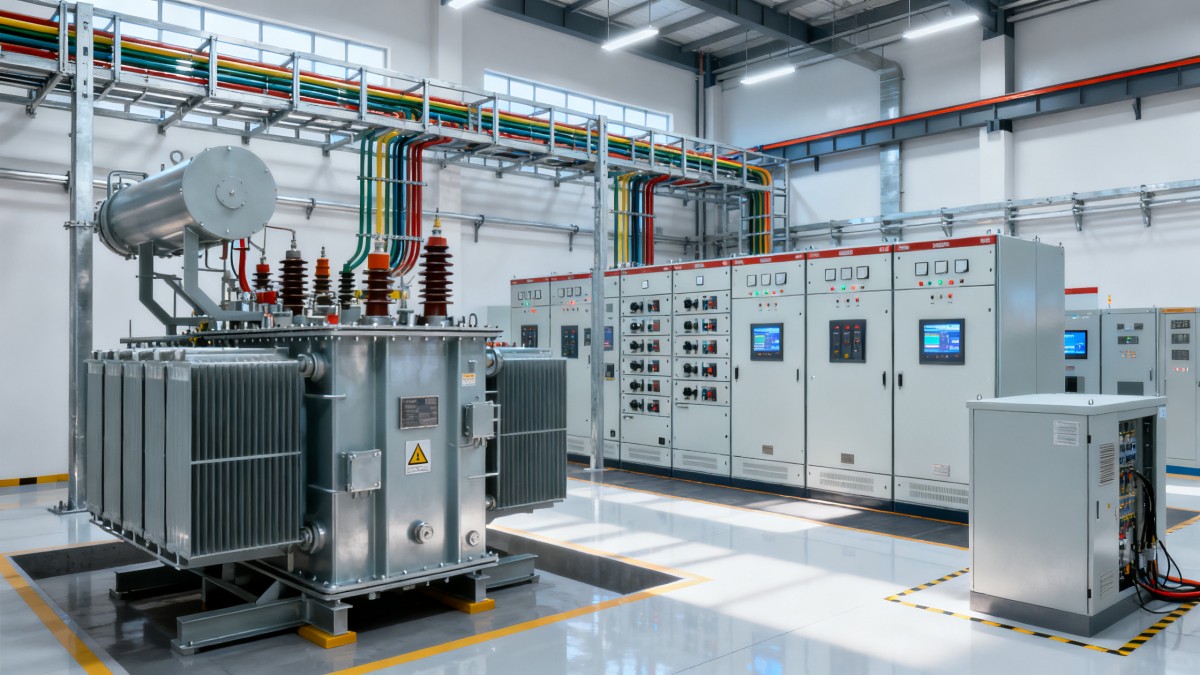
The biggest shift entering 2026 is that standards are no longer just a compliance checkbox. They now shape resilience, digital integration, and procurement confidence. Plants and infrastructure owners are upgrading in a context of aging electrical assets, higher fault-level complexity, stricter safety expectations, more distributed energy resources, and greater scrutiny around downtime risk.
As a result, the standards that matter most are those tied to three outcomes. First, personnel and equipment safety. Second, reliable interoperability across multi-vendor systems. Third, verifiable performance under real operating conditions rather than nameplate assumptions alone.
For technical evaluators, this changes the evaluation process. It is no longer sufficient to confirm that a vendor claims “IEC compliant” or “UL listed.” You need to know which specific standards apply to the function of the asset, whether testing was type-tested or routine-tested, how certification maps to the target market, and whether the standard alignment supports future expansion.
The standards categories that deserve top attention
Instead of treating all Electrical & Power standards equally, it is more useful to rank them by their impact on project risk and asset criticality. In 2026, the following categories deserve the closest attention during specification review and technical bid evaluation.
1. Product safety and market access standards. These determine whether equipment can be legally placed into service, accepted by inspectors, and insured by stakeholders. In many regions, this includes IEC-based conformity, CE-related obligations where applicable, and UL or other nationally recognized certification routes for relevant markets. For export-oriented or multinational projects, mismatched certification pathways can cause expensive redesign late in the project.
2. System design and installation standards. These govern how the equipment performs once integrated into the facility. Even correctly certified components can fail operationally if installation standards, conductor sizing, grounding design, protective coordination, and environmental conditions are not handled correctly. Evaluators should give these standards significant weight because many reliability failures originate at the system level, not the component level.
3. Performance and testing standards. Factory acceptance claims are only meaningful if they align with recognized testing frameworks. Standards covering short-circuit performance, dielectric tests, temperature rise, ingress protection, and electromagnetic compatibility often separate robust industrial equipment from lower-grade alternatives.
4. Automation and communication interoperability standards. As electrical upgrades increasingly include intelligent relays, SCADA visibility, remote diagnostics, and condition-based maintenance, communication standards become central rather than optional. Interoperability weaknesses can undermine a technically strong power upgrade.
5. Grid integration and power quality standards. Facilities adding variable speed drives, harmonic-producing loads, onsite generation, storage, or renewable sources must look beyond simple electrical capacity. Standards and recommended practices related to harmonics, voltage quality, grounding, and interconnection have become high-value filters in technical assessments.
Which IEC standards often matter most in industrial upgrade decisions?
For globally oriented industrial projects, IEC standards remain the backbone of many Electrical & Power specifications. However, not every IEC document carries equal procurement importance. A practical 2026 shortlist usually starts with the standards most likely to affect safety, coordination, and acceptance testing.
IEC 61439 is critical for low-voltage switchgear and controlgear assemblies. For technical evaluators, this standard matters because it addresses verified design, thermal performance, short-circuit withstand capability, and assembly integrity. If an upgrade includes low-voltage distribution boards, motor control centers, or power distribution assemblies, this is often one of the first standards to verify in detail. The key question is not whether the supplier mentions IEC 61439, but whether the actual assembly has been properly verified for the intended configuration.
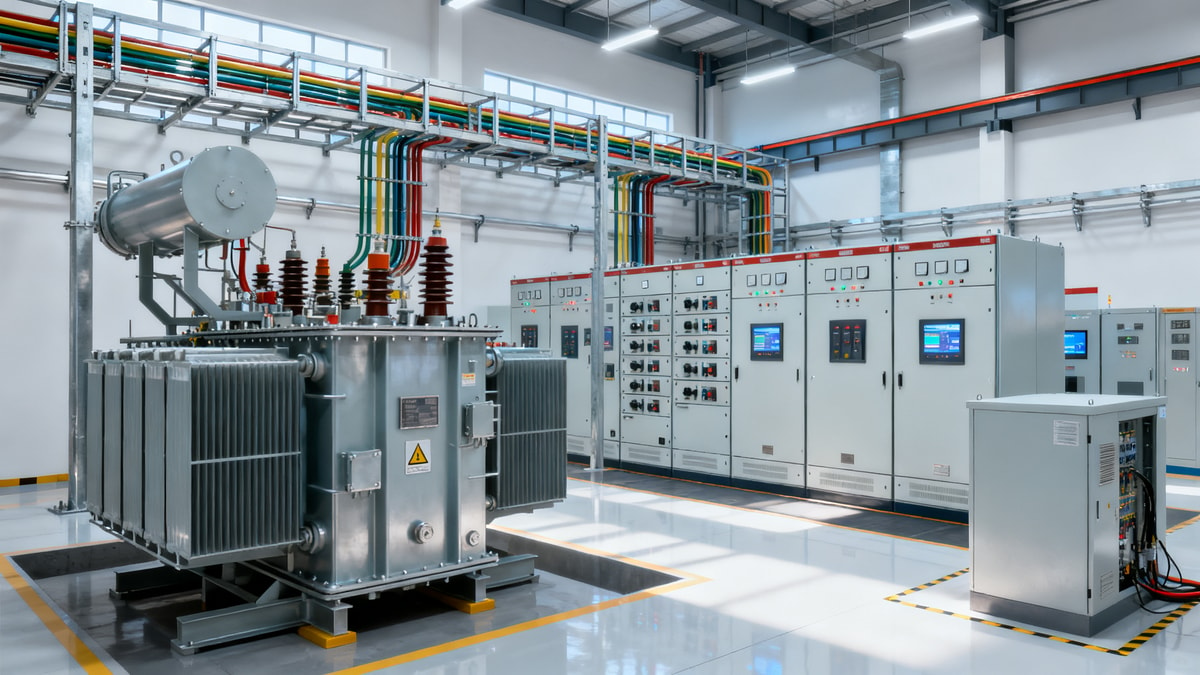
IEC 62271 series is central for high-voltage and medium-voltage switchgear and controlgear. In substation upgrades, ring main units, GIS, AIS, and circuit breaker applications, this family of standards strongly influences selection confidence. Evaluators should check ratings, internal arc classification where relevant, switching duty, insulation coordination, and service condition suitability.
IEC 60076 is fundamental for power transformers. In 2026, transformer evaluation is about more than kVA and voltage ratio. Losses, temperature rise, insulation performance, noise, overload behavior, and test documentation are increasingly important because lifecycle efficiency and resilience now carry greater commercial weight. For large projects, requiring complete routine, type, and special test evidence aligned with IEC 60076 can reduce post-installation disputes.
IEC 60204-1 remains highly relevant where machinery-related electrical equipment is involved. If an upgrade affects process lines, machine safety interfaces, or industrial control systems, this standard directly affects wiring practices, protective measures, and operational safety.
IEC 60364 is one of the most important installation-level standards for low-voltage electrical installations. It influences grounding, protection against electric shock, selection of equipment, verification, and special installations. Even when local codes dominate final acceptance, IEC 60364 often provides the engineering foundation for internationally aligned design.
IEC 60529 for IP ratings is often underestimated. In real industrial settings, enclosure protection against dust, water ingress, and contact can materially affect failure rates. For harsh environments, this standard deserves more than a box-tick review.
IEC 61850 has become strategically important in digital substations and protection automation. If a 2026 project includes intelligent electronic devices, substation automation, or utility-facing integration, IEC 61850 can strongly influence future interoperability, engineering effort, and maintenance flexibility. It is especially important when asset owners want to avoid vendor lock-in.
Where do UL, NFPA, IEEE, and regional codes fit into the decision?
Many technical evaluators work across geographies or support multinational procurement, so they cannot rely on IEC alone. One of the most common evaluation mistakes is assuming that IEC alignment automatically covers local approval, field labeling, or insurer expectations.
In North American contexts, UL standards and NFPA 70 (National Electrical Code) can be decisive. UL listing or recognition may be necessary for certain components or assemblies, while NEC compliance affects installation approval. Technical evaluators should distinguish between component recognition and complete equipment listing, because the difference can affect acceptance by authorities having jurisdiction.
NFPA 70E is also highly relevant where arc flash safety, energized work practices, and maintenance procedures are part of upgrade planning. Even if the project scope is equipment replacement, arc flash labeling and incident energy reassessment can be triggered by system changes. That makes this standard especially important in brownfield upgrades.
IEEE standards and recommended practices often become essential in power system studies and power quality decisions. IEEE 519, for example, remains widely used for harmonic control considerations. For plants adding drives, rectifiers, renewable interfaces, or storage systems, harmonics should not be treated as a late-stage modeling exercise. Early reference to IEEE guidance can prevent expensive mitigation retrofits.
Regional grid codes and utility interconnection rules also deserve early review, particularly for projects involving distributed generation, microgrids, or backup generation that may parallel with the utility. In these cases, the standards that matter most are the ones that determine whether the upgraded system can legally and safely connect to the external network.
What do technical evaluators need to verify beyond the standard number?
One of the most valuable ways to improve evaluation quality is to move past superficial standards referencing. A datasheet that lists five or ten standards is not necessarily reassuring. It may simply be marketing shorthand. What matters is evidence depth, applicability, and traceability.
First, verify scope relevance. Does the cited standard actually apply to the exact product type and configuration being offered? A supplier may reference a family standard without demonstrating that the delivered variant, busbar size, interrupting rating, enclosure class, or environmental option was tested or verified under the same conditions.
Second, verify test status. Was the product type-tested, design-verified, or merely assessed by calculation? Were routine tests performed on the actual unit? Are third-party certificates current and traceable? For critical switchgear, transformers, protection systems, and power assemblies, this distinction matters.
Third, verify site condition fit. Standards compliance does not guarantee suitability for high altitude, corrosive atmosphere, seismic exposure, ambient heat, high humidity, or frequent switching cycles. Technical evaluators should treat service conditions as a parallel approval gate.
Fourth, verify integration consequences. A compliant component can still create noncompliant system behavior when protection settings, cable lengths, fault levels, harmonic loads, grounding methods, or communication architecture are not properly coordinated.
Fifth, verify document completeness. For 2026 procurement, stronger suppliers increasingly provide digital technical files that include certificates, test reports, single-line diagrams, thermal or short-circuit verification references, communication maps, cybersecurity notes where relevant, and maintenance documentation. Documentation quality is often an early indicator of lifecycle support quality.
How should standards priorities change by upgrade type?
The most useful standards shortlist depends on the type of upgrade. Technical evaluators should avoid generic checklists and instead build a priority map around the project scope.
For substation and medium-voltage distribution upgrades, focus heavily on IEC 62271, transformer standards such as IEC 60076, protection interoperability including IEC 61850, insulation coordination, internal arc performance where required, and utility interconnection obligations. Here, the highest risks are service interruption, switching failure, and future integration inflexibility.
For low-voltage distribution and motor control center modernization, IEC 61439, IEC 60364, protection coordination criteria, thermal verification, and arc flash implications deserve top priority. Brownfield projects especially need attention to short-circuit rating compatibility with the existing upstream network.
For industrial machinery and process electrification, IEC 60204-1, applicable machine safety standards, EMC requirements, and functional coordination between drives, controls, and protective devices often matter more than headline equipment ratings alone.
For renewable integration, storage, or microgrid upgrades, power quality guidance, inverter or interconnection compliance, anti-islanding requirements, communication standards, and utility approval pathways become central. In these projects, the standards that matter most are often the ones that sit at the interface between plant operations and the external grid.
For critical facilities and backup power systems, standards affecting transfer reliability, selective coordination, grounding, emergency power architecture, and maintenance safety should be elevated. Downtime costs and compliance exposure make testing and documentation especially important.
Common mistakes that create hidden risk in 2026 upgrade programs
A frequent mistake is over-prioritizing capex and under-prioritizing standards-driven lifecycle risk. Two switchboards may appear equivalent on paper, yet differ significantly in verification depth, temperature performance margin, service support, and fault withstand confidence. The cheaper option may introduce higher outage probability and more difficult maintenance.
Another mistake is treating standards as isolated by discipline. Electrical equipment decisions now overlap with automation, cybersecurity governance, environmental conditions, worker safety, and energy management. A technically narrow standards review can miss problems that only appear during commissioning or expansion.
A third mistake is failing to align specification language with evaluation criteria. If procurement documents mention standards only generically, suppliers may submit technically unequal offers that are difficult to compare fairly. Stronger bid packages define the required standard edition, evidence type, test expectations, and any project-specific deviations.
Finally, many teams still review standards too late. By the time detailed engineering or factory acceptance starts, major compliance and interoperability issues are more expensive to solve. In 2026, standards review works best when integrated early into concept design, vendor prequalification, and risk assessment.
A practical evaluation framework for prioritizing Electrical & Power standards
For technical evaluators who need a simple working method, start by ranking standards against five questions. Does the standard affect legal acceptance? Does it materially change safety performance? Does it influence reliability under your site conditions? Does it enable multi-vendor interoperability? Does it reduce future maintenance and expansion constraints?
Any standard that scores high on three or more of those dimensions should be treated as a top-tier requirement in the procurement process. This approach helps separate genuinely critical Electrical & Power standards from lower-impact references.
Next, build a three-level standards matrix. Tier 1 covers mandatory compliance and safety standards. Tier 2 covers performance, testing, and interoperability standards that influence technical scoring. Tier 3 covers desirable standards or recommendations that support optimization but may not be absolute gatekeepers. This structure improves bid normalization and reduces ambiguity during technical clarification.
It is also wise to involve cross-functional reviewers early. Technical evaluation quality improves when electrical engineers, operations personnel, maintenance stakeholders, safety leads, and procurement teams review the standards matrix together. Each group sees different risk signals, and standards decisions are often strongest when those signals are combined.
Conclusion: the standards that matter most are the ones that reduce uncertainty
For 2026 upgrades, the most important Electrical & Power standards are not simply the most famous ones. They are the standards that directly reduce uncertainty around safety, approval, interoperability, power quality, and lifecycle performance. In many industrial projects, that means close attention to IEC 61439, IEC 62271, IEC 60076, IEC 60364, IEC 60204-1, IEC 61850, relevant UL and NFPA requirements, IEEE harmonic and system guidance, and local grid or installation codes.
For technical evaluators, the practical takeaway is clear: do not ask only whether a product is compliant. Ask which standards matter to this upgrade, how compliance has been demonstrated, whether the evidence matches the actual operating context, and what risks remain at the system level. That is the difference between a standards checklist and a defensible technical decision.
When applied this way, standards become more than a procurement formality. They become a framework for choosing assets that will pass inspection, integrate cleanly, operate reliably, and support industrial resilience long after the 2026 upgrade window has closed.
Technical Specifications
- Hidden Environment & Ecology cost after project approvalAuthor :Environmental Engineering Director
- When does an Environment & Ecology impact assessment need updating?Author :Environmental Engineering Director
- Security & Safety standards that affect product approval speedAuthor :Safety Compliance Lead
Expert Insights

Chief Security Architect
Dr. Thorne specializes in the intersection of structural engineering and digital resilience. He has advised three G7 governments on industrial infrastructure security.
Related Analysis
- May 07, 2026Hidden Environment & Ecology cost after project approvalAuthor :Environmental Engineering Director
- May 07, 2026When does an Environment & Ecology impact assessment need updating?Author :Environmental Engineering Director
- May 07, 2026Security & Safety standards that affect product approval speedAuthor :Safety Compliance Lead
Core Sector // 01
Security & Safety
- Which Electrical & Power standards matter most in 2026 upgrades?Author :Grid Infrastructure Analyst

- Electrical & Power solutions for unstable loads and harsh sitesAuthor :Grid Infrastructure Analyst

- What Makes an Electrical & Power Quotation Hard to CompareAuthor :Grid Infrastructure Analyst

- Submersible Pump Cables: Why Jacket Damage Happens EarlyAuthor :Grid Infrastructure Analyst

- Wholesale Cable Trays: Steel or Aluminum for Corrosive Areas?Author :Grid Infrastructure Analyst

- Marine Cables Wholesale: Which Certifications Actually Matter?Author :Grid Infrastructure Analyst

- Teflon PTFE Wires in High Heat: Where They Really HelpAuthor :Grid Infrastructure Analyst

- What Causes Early Failure in Silicone Rubber Cables?Author :Grid Infrastructure Analyst