Submersible Pump Cables: Why Jacket Damage Happens Early
Author
Date Published
Reading Time
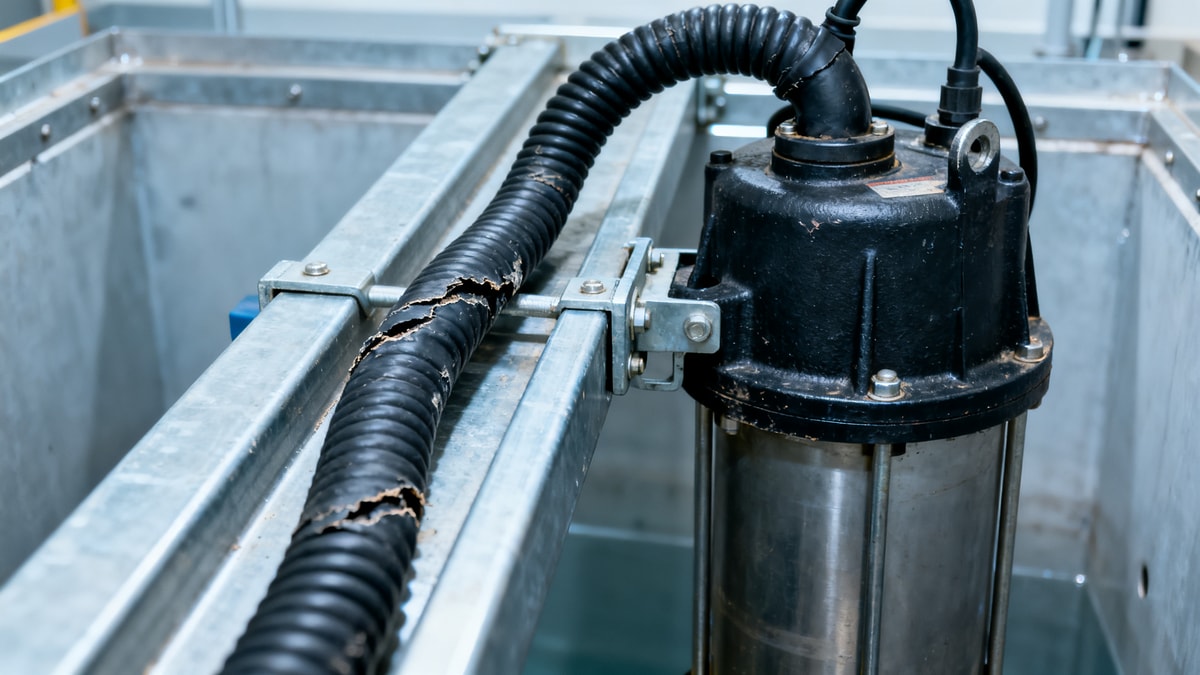
When submersible pump cables fail early, the first visible warning is often jacket damage—but the root cause is rarely surface-level. For after-sales maintenance teams, understanding why submersible pump cables crack, abrade, or swell ahead of schedule is essential to preventing repeat failures, unplanned downtime, and rising repair costs. This article examines the most common causes and what to check before damage spreads.
A checklist-based approach works best because jacket damage on submersible pump cables is usually a symptom, not the full failure mode. If a team only replaces the damaged section without verifying installation stress, fluid chemistry, temperature load, bend radius, or cable support, the same problem often returns within months. For maintenance personnel, the priority is to identify the highest-probability causes quickly, separate cosmetic wear from structural risk, and decide what must be corrected before the pump goes back into service.
Start Here: What to Confirm Before Inspecting Jacket Damage
Before touching the cable, collect a few facts. This saves time and prevents misdiagnosis. Early jacket failure in submersible pump cables is often linked to a mismatch between design assumptions and actual field conditions. A cable rated correctly on paper can still fail early if it is dragged, twisted, exposed to incompatible fluids, or undersized for motor starting current.
- Pump type and motor rating, including startup frequency and load profile.
- Installation depth, cable length, and whether the run is vertical, guided, or free-hanging.
- Liquid type: clean water, wastewater, slurry, oil-contaminated water, chemical solution, or high-mineral content fluid.
- Observed damage pattern: cracking, cuts, flattening, swelling, softening, discoloration, or abrasion.
- Time to failure after installation, and whether the same location failed before.
- Cable construction details such as insulation material, jacket compound, conductor class, and certification standard.
These first checks help determine whether the issue is mechanical, electrical, environmental, or procedural. In many cases, more than one mechanism is involved.
Core Inspection Checklist for Early Damage on Submersible Pump Cables
1) Check for mechanical abrasion first
Mechanical abrasion is one of the most common reasons submersible pump cables show jacket damage early. Look for wear concentrated at clamps, entry points, guide rails, support brackets, or where the cable rests against casing walls. If the damage is localized and the copper conductor remains electrically sound, the root cause is often rubbing rather than thermal aging.
Priority checks include whether the cable was tied too tightly, allowed to swing with pump vibration, or routed across rough metal edges. A cable that moves slightly during every start-stop cycle can lose jacket thickness much faster than expected.
2) Verify bend radius and twisting stress
Submersible pump cables are flexible, but they still have minimum bend radius limits. If the cable is forced around a sharp corner near the pump head or terminal entry, jacket cracking can begin early, especially in cold conditions or where the cable has repeated movement. Twisting is another hidden issue. During installation, crews sometimes rotate the pump assembly and unintentionally preload the cable. Over time, torsional stress opens the jacket or weakens it near the termination.
A useful field sign is spiral deformation, uneven surface strain, or damage appearing near one fixed point rather than across the whole length.
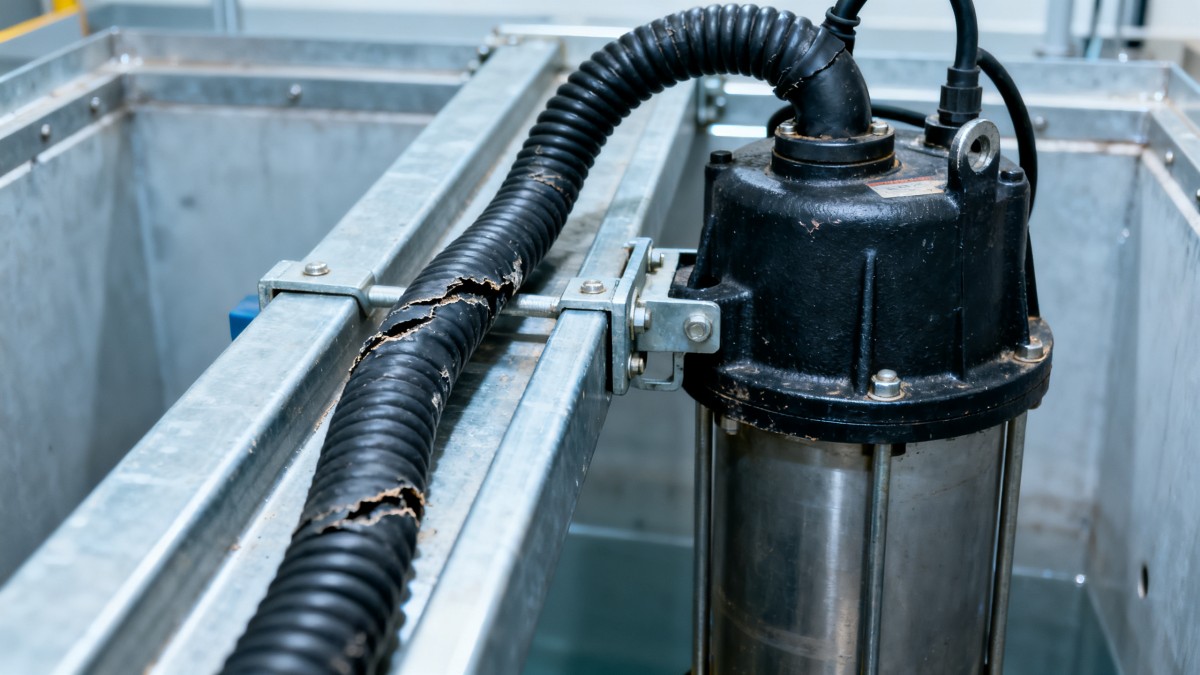
3) Check chemical compatibility, not just water resistance
Many teams assume that because a product is sold as a submersible cable, it is suitable for any wet environment. That is risky. Submersible pump cables may be exposed to oils, detergents, chlorinated water, sewage gases, hydrocarbons, acids, alkalis, or abrasive solids. A jacket compound that performs well in clean water may swell, soften, or crack in wastewater or chemical service.
If the jacket feels gummy, enlarged, blistered, or unusually soft, suspect chemical attack. If it is hard, brittle, and surface-cracked, check for oxidation, UV exposure before installation, or incompatible fluid additives. Maintenance teams should compare the failed cable’s material specification with the actual medium in the pit, well, or sump.
4) Confirm thermal loading and conductor sizing
Jacket damage sometimes starts from internal overheating. If conductors run hotter than expected, the insulation and outer jacket age faster, even when no obvious electrical trip occurs. Common reasons include undersized cable, high ambient liquid temperature, frequent starts, poor heat dissipation in bundled runs, or voltage imbalance causing overcurrent.
Look for discoloration, hardened jacket sections, or failure concentrated near the motor outlet. Review actual current draw against design current, especially during startup. In after-sales cases, this is often missed because the cable is blamed while the motor control problem remains unresolved.
5) Inspect installation support and strain relief
Submersible pump cables should not carry unintended tensile load. If the cable supports part of the pump weight or hangs with insufficient clamping intervals, the jacket can stretch, flatten, or split near support points. This is especially relevant in deep-well and long-drop installations.
Check whether the strain relief method matches the cable diameter and weight. Over-tight cable ties can cut into the jacket, while loose supports allow repetitive motion. Both conditions shorten service life.
6) Review splice, termination, and entry sealing quality
The jacket may appear damaged near a splice or gland, but the real issue may be poor sealing or bad workmanship. If water enters through a weak joint, internal degradation can progress beneath a jacket that initially looks acceptable. On the other hand, overly aggressive stripping tools can nick the jacket and create a stress point that expands later.
Always inspect transitions: cable-to-motor entry, splice kits, gland compression, and any repaired areas. Repeated failures within 300 mm of a termination usually indicate process or design error rather than random cable weakness.
Quick Judgment Guide: What the Damage Pattern Usually Means
For maintenance teams, the visible pattern on submersible pump cables can provide a fast first diagnosis. Use it as a screening tool, then confirm with current, chemical, and installation data.
Scenario-Based Checks: What Changes by Application
Deep well and borehole systems
In deep installations, tensile load and long-term suspension matter more. Submersible pump cables need proper support spacing and secure attachment to riser
Technical Specifications
Expert Insights

Chief Security Architect
Dr. Thorne specializes in the intersection of structural engineering and digital resilience. He has advised three G7 governments on industrial infrastructure security.
Related Analysis
- May 02, 2026Chemical Metering Pumps: Which Dosing Errors Cost the Most?Author :Environmental Engineering Director
- May 02, 2026What Sets One Belt Filter Press Manufacturer Apart?Author :Environmental Engineering Director
- May 02, 2026Moving Bed Biofilm Reactor MBBR Retrofit Benefits and LimitsAuthor :Environmental Engineering Director
Core Sector // 01
Security & Safety
- Submersible Pump Cables: Why Jacket Damage Happens EarlyAuthor :Grid Infrastructure Analyst

- Wholesale Cable Trays: Steel or Aluminum for Corrosive Areas?Author :Grid Infrastructure Analyst

- Marine Cables Wholesale: Which Certifications Actually Matter?Author :Grid Infrastructure Analyst

- Teflon PTFE Wires in High Heat: Where They Really HelpAuthor :Grid Infrastructure Analyst

- What Causes Early Failure in Silicone Rubber Cables?Author :Grid Infrastructure Analyst

- Copper Price Surges 4.1% to Record High in 2026; Impacts BOM Costs for Cable & Transformer MakersAuthor :Grid Infrastructure Analyst

- Copper Price Hits 2026 High, Impacts Cable & Transformer BOM CostsAuthor :Grid Infrastructure Analyst

- SCFI Rises Again: Shanghai–LA Rate Hits $3,920/TEUAuthor :Grid Infrastructure Analyst