Marine Cables Wholesale: Which Certifications Actually Matter?
Author
Date Published
Reading Time
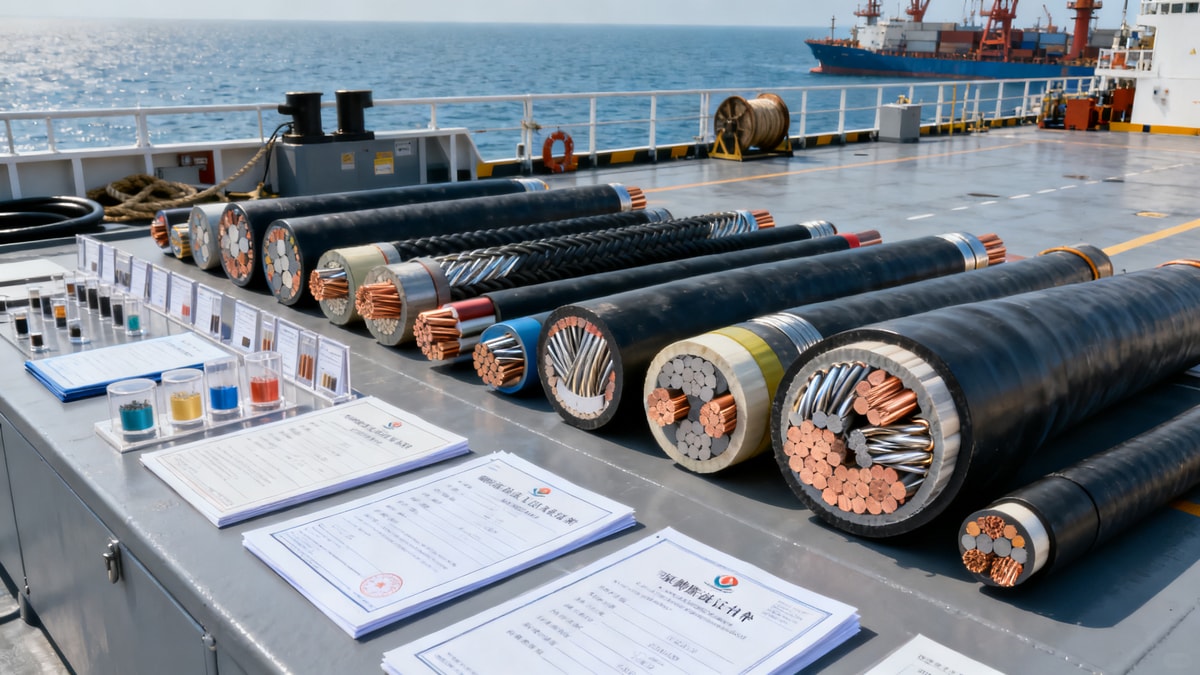
In marine cables wholesale, the real cost of a poor buying decision is not price—it is failure, delay, and compliance risk. For procurement teams, not every certificate carries equal weight. This guide explains which marine cable certifications truly matter for safety, performance, and international project approval, helping buyers source with greater confidence and avoid costly specification mistakes.
What matters most in marine cables wholesale certification decisions?
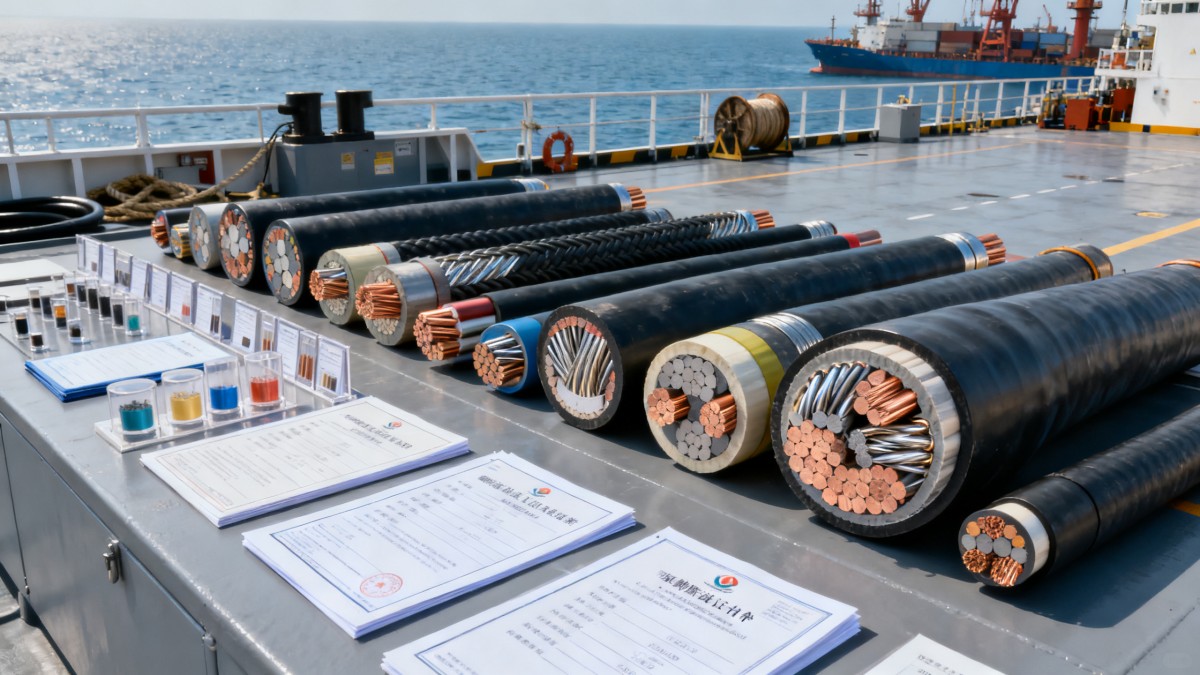
In marine cables wholesale, buyers often face a familiar problem: a supplier presents a long list of approvals, test reports, and factory claims, yet only a portion of those documents will actually affect vessel acceptance, offshore project approval, insurer review, or long-term operating reliability. Procurement errors usually happen when teams treat all certificates as equally valuable.
For industrial and marine projects, the priority is not “how many certifications” a cable has, but whether the certification matches the installation environment, the flag or class requirements, the fire performance expectations, and the electrical duty of the cable. A low-voltage power cable for an engine room, an instrumentation cable on a drilling platform, and a data cable on a harbor automation system may require different proof points.
That is why Global Industrial Core (GIC) approaches sourcing intelligence from a risk-control perspective. For EPC contractors, facility managers, and procurement directors, the most useful question is simple: which certification reduces rejection risk, supports project documentation, and proves the cable will perform under marine conditions?
- Class approval often carries more practical value than a generic factory statement.
- Fire, smoke, and halogen performance usually matters more than cosmetic compliance labels.
- Traceable test reports and production consistency can be as important as the certificate itself.
- The project region may require CE-related conformity, but marine acceptance frequently depends on marine-specific approvals.
Which certifications actually carry weight for procurement teams?
The table below helps procurement teams in marine cables wholesale distinguish between certifications that are usually essential, those that are conditionally important, and those that are often misunderstood during sourcing discussions.
The main lesson is clear. In marine cables wholesale, class approval and application-specific fire performance evidence usually drive acceptance, while general management system certifications support supplier credibility but do not replace product-level compliance.
Marine class approval is often the first filter
For shipyards, offshore engineering, and retrofit work, approvals from recognized marine classification societies are often the first documents technical teams ask for. These approvals indicate that the cable design, materials, and testing align with marine installation requirements. If your project specification references class acceptance, a generic industrial cable certificate will rarely solve the issue.
Fire performance is not optional in many installations
Marine environments compress people, power systems, and critical controls into limited space. That makes fire behavior a procurement issue, not just an engineering issue. Buyers should verify flame retardancy, low smoke emission, and halogen-free characteristics where the project specification or safety policy requires them. In practical terms, this affects evacuation visibility, corrosion damage after fire, and post-incident system survivability.
How should buyers compare the most common certification categories?
Not every project uses the same acceptance logic. The comparison below helps procurement teams align marine cables wholesale decisions with actual project risk rather than brochure language.
This comparison is especially useful when multiple suppliers appear compliant on paper. The stronger supplier is usually the one that can show exact model coverage, up-to-date documentation, and clear traceability between the quoted cable and the certified design.
What should procurement teams verify beyond the certificate itself?
In marine cables wholesale, paperwork can look complete while the supply risk remains high. Buyers should therefore move beyond certificate headlines and inspect the details that determine whether a shipment will pass incoming review, installation checks, and site documentation audits.
Check scope, model coverage, and validity dates
A certificate may apply only to certain conductor classes, voltage ratings, sheath materials, or construction families. If the quote covers a variant outside the approval scope, the certificate may not protect your project. Always ask whether the offered cable construction exactly matches the approval description.
Match the approval to the installation environment
Marine cable installations vary widely. Some are routed near heat sources, some face oil exposure, some operate in wet or UV-heavy deck conditions, and some serve emergency circuits. The certificate list must be read together with environmental and operational conditions, not in isolation.
Review traceability and manufacturing consistency
For serious projects, buyers should request batch traceability, routine test documentation, marking samples, and packing details. These are practical controls. If a factory cannot link the delivered drums to material records and test outputs, compliance on paper may become difficult to defend during inspection or claims review.
- Confirm conductor material, insulation type, sheath compound, and armor design against the approved construction.
- Request cable marking format to ensure identification remains visible after handling and installation.
- Verify whether test evidence is from an independent body, a classification society, or internal factory routine testing.
- Check packaging and drum protection for long-distance export, port handling, and humid storage conditions.
Which certifications matter by application scenario?
Marine cables wholesale becomes easier when procurement teams sort requirements by application instead of trying to create one universal approval checklist. The table below gives a practical scenario-based view.
This scenario view helps buyers avoid overpaying for unnecessary paperwork while still protecting the project from under-specification. The right certification package depends on where the cable will operate, who will inspect it, and what consequence failure would create.
Common mistakes in marine cables wholesale procurement
Many sourcing problems begin with good intentions. A procurement team wants to simplify comparison, so it requests “all available certificates.” The result can be a stack of documents that hides critical gaps. The following mistakes appear frequently across industrial buying cycles.
- Choosing based on price per meter before confirming approval scope. A lower price can disappear quickly if cables fail inspection or require urgent replacement.
- Accepting a test summary instead of the actual approval or report details. Missing appendices can conceal limitations in size range or construction.
- Assuming ISO certification proves marine suitability. It supports process quality, but it does not confirm that the quoted cable is approved for marine duty.
- Ignoring logistics and drum handling. Even approved marine cables can suffer damage if export packing, moisture protection, or drum labeling is poor.
- Failing to align procurement, engineering, and QA review. The fastest quote is not always the safest award if internal stakeholders use different acceptance criteria.
A disciplined marine cables wholesale process should treat certificates as one layer of evidence within a broader evaluation framework that includes construction data, environmental fit, manufacturing control, and delivery execution.
A practical procurement checklist for faster and safer sourcing
For buyers managing tight schedules, the fastest way to reduce risk is to standardize the review process. GIC typically recommends a compact checklist that procurement teams can apply across supplier comparisons and pre-award clarifications.
Before RFQ release
- Define whether the project requires marine class approval, regional conformity, fire performance evidence, or a combination of these.
- State conductor type, insulation, sheath, armor, temperature range, and installation environment clearly in the inquiry.
- Ask suppliers to map each offered cable to the exact supporting approval document.
During technical and commercial evaluation
- Review validity dates, issuing body, and product scope instead of relying on certificate titles alone.
- Compare lead time for approved constructions separately from non-approved standard stock items.
- Clarify documentation to be delivered with shipment, including test reports, packing lists, labels, and certificates.
Before final award
- Request confirmation that supplied cable markings will match purchase order, drum schedule, and technical submittal.
- Confirm whether third-party inspection or witness testing is needed before shipment.
- Align incoterms, export packing, and storage requirements with the project’s actual handling path.
FAQ: what buyers ask most about marine cables wholesale
Is CE enough for marine cables wholesale orders?
Usually not by itself. CE-related conformity may support market access in certain regions, but marine projects often require class approval or product testing aligned with marine standards. If the cable is going onto a vessel, offshore unit, or class-controlled installation, CE alone may not satisfy the technical authority reviewing the project.
Do all marine cables need class approval?
Not always. The requirement depends on the asset type, project specification, owner standards, and inspection regime. Port infrastructure or shore-side industrial systems may accept other compliance routes, while shipbuilding and offshore applications often demand recognized marine approvals. Buyers should check the specification before assuming either path.
What is the biggest red flag in supplier documents?
A common red flag is vague document language that does not clearly identify the quoted cable construction. Another is an approval that appears valid but does not show coverage for the conductor size, voltage level, or sheath material being offered. In marine cables wholesale, ambiguity is a risk signal.
How should buyers handle urgent delivery without compromising compliance?
Separate the urgent question into two parts: stock availability and approval availability. Some suppliers can deliver quickly, but only for non-approved versions or substitute constructions. Procurement should ask for immediate confirmation of both lead time and approval scope. Fast shipment only helps if the delivered cable remains acceptable to the project.
Why work with GIC when evaluating marine cable compliance?
Marine cables wholesale is rarely a simple catalog purchase. It often sits inside larger industrial systems where failure affects schedule, safety, and contractual exposure. GIC supports procurement teams by translating technical, regulatory, and sourcing signals into practical buying decisions that fit EPC, facility, and infrastructure environments.
When buyers engage with GIC, the discussion can focus on the issues that matter most: approval mapping, specification alignment, documentation completeness, supplier comparison logic, and delivery risk. This is especially useful when your team must compare multiple offers across different regions or explain award decisions to engineering, QA, or project leadership.
- Clarify whether a quoted marine cable truly matches required certifications and application conditions.
- Review product selection against power, control, instrumentation, or data cable use cases.
- Discuss realistic delivery timelines for approved constructions, export packing, and batch traceability.
- Assess options for custom construction, documentation packages, sample support, and quotation comparison.
- Confirm which certification requirements are essential and which may only add cost without project value.
If your current marine cables wholesale project involves uncertain certification requirements, mixed supplier documentation, short lead times, or complex application conditions, contact GIC to review parameter confirmation, product selection, delivery planning, certification expectations, sample support, and quotation alignment before final award.
Technical Specifications
Expert Insights

Chief Security Architect
Dr. Thorne specializes in the intersection of structural engineering and digital resilience. He has advised three G7 governments on industrial infrastructure security.
Related Analysis
- May 02, 2026Chemical Metering Pumps: Which Dosing Errors Cost the Most?Author :Environmental Engineering Director
- May 02, 2026What Sets One Belt Filter Press Manufacturer Apart?Author :Environmental Engineering Director
- May 02, 2026Moving Bed Biofilm Reactor MBBR Retrofit Benefits and LimitsAuthor :Environmental Engineering Director
Core Sector // 01
Security & Safety
- Submersible Pump Cables: Why Jacket Damage Happens EarlyAuthor :Grid Infrastructure Analyst

- Wholesale Cable Trays: Steel or Aluminum for Corrosive Areas?Author :Grid Infrastructure Analyst

- Marine Cables Wholesale: Which Certifications Actually Matter?Author :Grid Infrastructure Analyst

- Teflon PTFE Wires in High Heat: Where They Really HelpAuthor :Grid Infrastructure Analyst

- What Causes Early Failure in Silicone Rubber Cables?Author :Grid Infrastructure Analyst

- Copper Price Surges 4.1% to Record High in 2026; Impacts BOM Costs for Cable & Transformer MakersAuthor :Grid Infrastructure Analyst

- Copper Price Hits 2026 High, Impacts Cable & Transformer BOM CostsAuthor :Grid Infrastructure Analyst

- SCFI Rises Again: Shanghai–LA Rate Hits $3,920/TEUAuthor :Grid Infrastructure Analyst