What Makes an Electrical & Power Quotation Hard to Compare
Author
Date Published
Reading Time
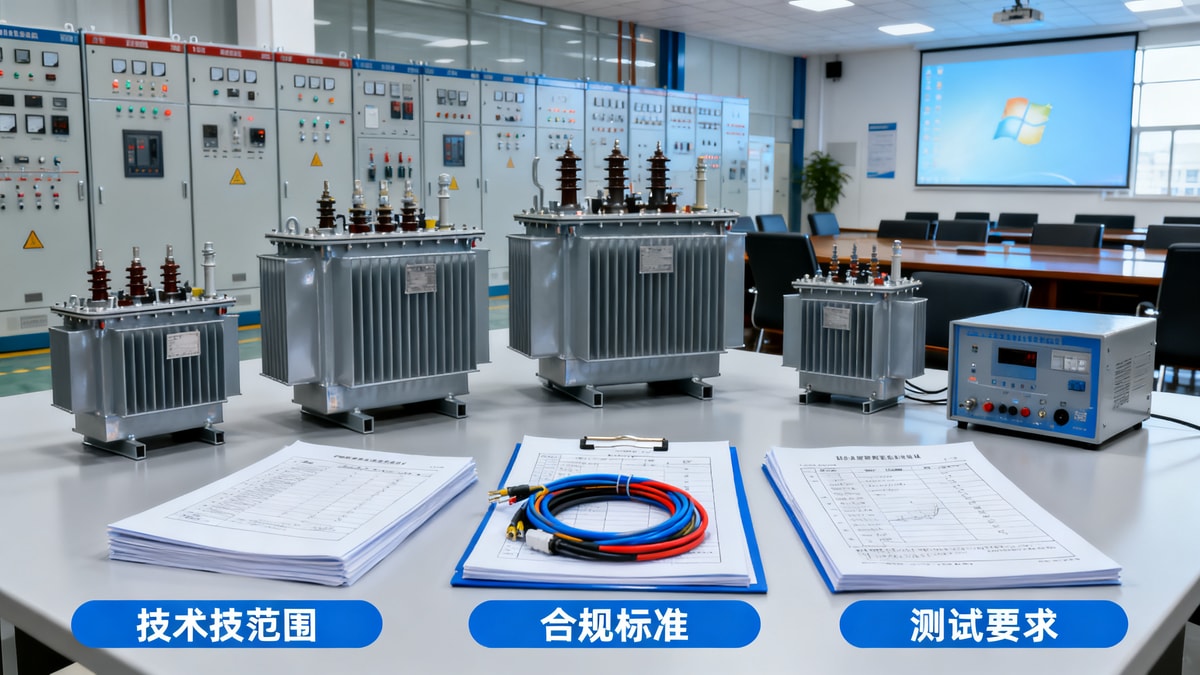
An Electrical & Power quotation often looks straightforward—until procurement teams try to compare multiple offers line by line. Differences in technical scope, compliance standards, testing requirements, material grades, and lifecycle expectations can quickly turn a simple price check into a high-risk decision. Understanding what is really included is the first step toward smarter, safer industrial sourcing.
For most buyers, the core search intent behind “Electrical & Power quotation” is not simply to find a cheaper offer. It is to understand why two quotations that appear to cover the same equipment can differ so much in price, lead time, and risk. Procurement teams want a practical way to compare quotations fairly, expose hidden gaps, and avoid buying a low initial price that later becomes a costly operational problem.
That is exactly why an Electrical & Power quotation is often hard to compare. In industrial procurement, the real issue is not the number at the bottom of the page. It is whether each supplier is pricing the same technical scope, the same compliance burden, the same testing obligations, and the same long-term performance expectations. If those assumptions are different, a side-by-side comparison is misleading from the start.
Why similar-looking quotations can represent very different offers
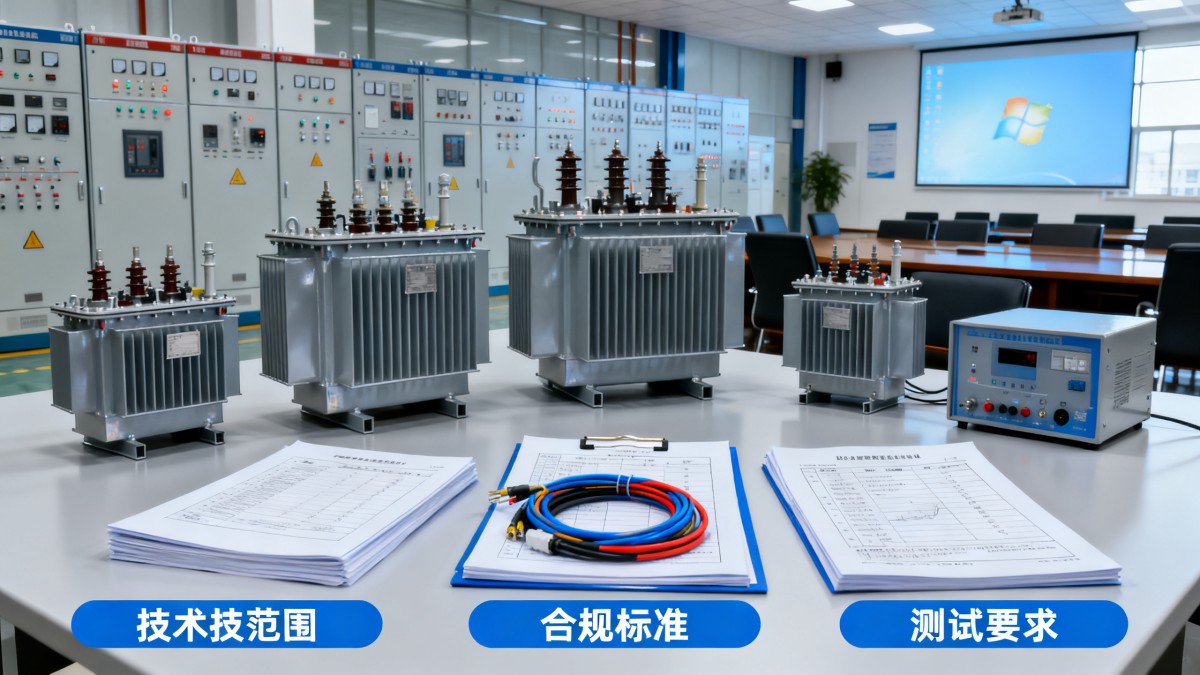
Procurement professionals frequently receive quotations that look comparable because they share the same product label: transformer, switchgear, UPS, cable, motor control center, relay panel, or power distribution unit. But similar names do not guarantee equivalent scope. One supplier may quote only the base equipment, while another includes accessories, protection devices, site documentation, factory testing, spare parts, and startup support.
That difference matters because industrial power systems are rarely purchased as isolated products. They are bought as part of a larger operating environment where downtime, safety exposure, and integration complexity have real financial consequences. A lower quotation may simply reflect a narrower interpretation of what was requested.
In practice, the hardest part of comparing an Electrical & Power quotation is identifying what is assumed rather than what is clearly stated. Many cost drivers sit in footnotes, exclusions, references to standards, or general commercial terms. Buyers who focus only on unit price can miss major gaps that surface later during technical review, installation, commissioning, or regulatory inspection.
What procurement teams are really trying to verify
When buyers search for guidance on quotation comparison, their main concern is usually risk control. They want confidence that the offer they select will meet technical requirements, pass compliance checks, arrive on time, and perform reliably over the expected service life. Price still matters, but only after the quotation has been normalized.
In other words, procurement is trying to answer five practical questions. Are all suppliers quoting the same scope? Are they building to the same standards? Are the materials and components truly equivalent? Are testing and documentation included? And what future cost or operational risk is hidden behind today’s price?
If an article does not help readers answer those questions, it does not really serve the search intent behind an Electrical & Power quotation. Buyers do not need a generic definition of a quotation. They need a decision framework.
Scope gaps are the number one reason comparison breaks down
The first reason quotations become difficult to compare is inconsistent scope definition. One supplier may include cable glands, lugs, terminals, busbar supports, internal wiring, labeling, and mounting hardware. Another may exclude them as “by others.” A third may assume these items are covered elsewhere in the project package.
This issue is common in switchboards, control panels, transformers, generators, and substation packages. Even if the main equipment rating matches the specification, the supporting scope can vary widely. Indoor versus outdoor enclosure, IP rating, anti-corrosion treatment, thermal management, cable entry direction, and remote monitoring features may not be aligned across offers.
Procurement teams should therefore build a scope matrix before comparing price. Break each quotation into categories such as equipment body, protection devices, accessories, software, documentation, FAT, packing, logistics, commissioning support, warranty, and spare parts. If a line item cannot be matched supplier to supplier, the quotation is not yet comparable.
Technical specifications may look aligned while performance assumptions differ
Even where scope appears similar, technical equivalence may still be missing. A quotation for a 1600A switchgear lineup is not automatically equal to another 1600A lineup. Short-circuit withstand rating, insulation class, temperature rise limits, form of separation, arc fault containment, protection relay brand, communication protocol, and expandability can change the engineering value dramatically.
The same pattern applies across electrical equipment categories. A transformer quotation may differ in core material, cooling method, impedance tolerance, load loss values, tapping arrangement, and noise limits. A cable quotation may differ in conductor purity, insulation type, flame-retardant performance, sheath compound, and installation temperature range.
This is why line-by-line technical normalization matters. Buyers should compare rated values, design basis, and performance tolerances—not only model names. If two offers are built around different engineering assumptions, the lower bid may not be underpriced. It may simply be offering less resilience, less safety margin, or less compatibility with the actual operating environment.
Compliance standards are often a hidden cost divider
In the electrical and power sector, standards compliance is one of the biggest reasons prices diverge. A quotation aligned with IEC, UL, CE, IEEE, or project-specific utility standards may carry higher cost because certification, testing, component selection, and documentation are more demanding. Another supplier may quote a technically functional product that does not fully satisfy the specified standard pathway.
For procurement personnel, this creates a common trap. If one quotation references full compliance with the requested standards and another uses vague language such as “designed according to” or “generally conforms to,” those offers are not equivalent. The wording signals different compliance obligations and potentially different liabilities.
It is especially important to review hazardous area requirements, fire performance, short-circuit certification, EMC compatibility, grid code alignment, and country-specific approvals. A quotation that seems less expensive at order stage can become more expensive if additional certification, redesign, or third-party inspection is later required to pass project review.
Testing, inspection, and documentation can change the true value of a quotation
Another major comparison problem is that testing requirements are often treated unevenly. One supplier may include routine tests only. Another includes type test references, witness FAT, insulation resistance checks, functional verification, heat run testing, relay setting validation, or third-party inspection. These are not minor administrative details; they directly affect project acceptance and field reliability.
Documentation also varies more than many buyers expect. A complete quotation may include GA drawings, single-line diagrams, wiring schematics, bill of materials, datasheets, test reports, installation manuals, compliance certificates, recommended spare lists, and O&M manuals. A lean quotation may only promise standard documents after order placement, with customization billed separately.
From a procurement perspective, missing documentation creates delays in submittals, approval cycles, and site execution. It also increases engineering burden on the buyer or EPC team. When comparing an Electrical & Power quotation, documentation should be evaluated as part of delivery value, not as an administrative afterthought.
Material grade and component brand selection affect lifecycle cost
Quotations can also differ because suppliers are not using the same internal bill of materials. On paper, both may quote a similar panel, cable, or power assembly. In reality, one may use premium copper, higher-grade steel, branded breakers, and industrial-rated terminals, while another uses lower-cost substitutes that still satisfy minimum function.
That does not mean every lower-cost component is unacceptable. But it does mean procurement should understand where substitutions exist and whether they affect reliability, maintainability, or warranty support. In heavy industry, the replacement cost of failed electrical equipment is rarely limited to the component itself. It includes shutdown losses, labor, safety exposure, and possible damage to connected assets.
For this reason, the better comparison method is total cost of ownership rather than purchase price alone. Material grade, corrosion resistance, thermal endurance, component availability, and service support all influence long-term cost. A more expensive quotation can be commercially smarter if it reduces failure probability and operational disruption over ten to twenty years.
Commercial terms can distort apparent price competitiveness
Buyers should also remember that not all quotation differences are technical. Commercial structure can make one offer appear cheaper even when it is not. Payment terms, currency basis, validity period, incoterms, packaging standard, delivery schedule, liquidated damages exposure, warranty duration, and price adjustment clauses all affect the real procurement decision.
For example, a quotation with a lower headline price but short validity, ex-works delivery, and limited warranty may be less attractive than a slightly higher offer with stable pricing, export-grade packaging, destination delivery, and stronger post-sale commitments. Likewise, long manufacturing lead times may create indirect cost if they delay project commissioning.
Freight, duties, site services, and insurance should also be reviewed carefully. These costs are often separated or excluded, which makes direct comparison difficult unless procurement re-baselines every offer to the same commercial basis.
Vendor interpretation and engineering maturity influence quotation quality
One overlooked factor is the supplier’s interpretation capability. A high-quality quotation usually reflects a vendor that has carefully reviewed the specification, identified ambiguities, and translated requirements into a clear technical and commercial offer. A weak quotation may be cheaper partly because the supplier has not fully understood the project complexity.
This is especially common when RFQs are incomplete, drawings are preliminary, or project conditions are not fully defined. In such situations, suppliers fill in the gaps differently. Some make conservative assumptions and price risk in. Others keep assumptions minimal to stay competitive, leaving future variation orders likely.
That is why quotation comparison should include a review of assumption clarity. A good offer states design basis, exclusions, deviations, optional items, and dependency conditions transparently. The more assumptions hidden inside a quotation, the harder it is to compare and the greater the downstream procurement risk.
How procurement teams can make quotations genuinely comparable
The most effective approach is quotation normalization. Start by converting all offers into the same comparison template. List technical scope, standards, ratings, materials, included accessories, testing, documentation, delivery, warranty, and exclusions in a matrix. Mark each item as included, excluded, clarified, or not stated.
Next, separate mandatory requirements from preference-based features. If a quotation fails a mandatory compliance, safety, or performance requirement, it should not remain in price competition without formal technical deviation review. This protects the organization from choosing a low-cost offer that is structurally misaligned with the project need.
Then assign commercial value to non-price factors. Longer warranty, lower losses, better ingress protection, faster lead time, stronger FAT coverage, and better documentation all have measurable project value. Procurement decisions improve when these factors are visible rather than buried inside technical review notes.
Finally, return clarification questions to suppliers before final comparison. Ask them to confirm standards, testing scope, accessory inclusion, deviations, lead times, and warranty assumptions in writing. A quotation becomes easier to compare when ambiguity is reduced at source rather than interpreted internally.
Warning signs that a low quotation may carry high hidden risk
Several red flags should trigger caution. If a quotation is far below the market cluster, uses broad phrases instead of explicit compliance statements, omits test details, leaves accessory scope unclear, or contains many “by others” exclusions, procurement should investigate before moving forward.
Another warning sign is inconsistent detail level. If one supplier provides full datasheets and another submits only a short commercial summary, those quotations are not equally reviewable. Lack of detail is not proof of noncompliance, but it does increase uncertainty and evaluation effort.
Buyers should also watch for non-matching model references, undefined equivalent brands, vague raw material descriptions, and warranty language limited to manufacturing defects without performance commitments. These are common sources of misunderstanding after award.
The best quotation is not always the cheapest one
In industrial electrical procurement, the most useful comparison question is not “Which quotation is lowest?” but “Which quotation delivers the required performance, compliance, and reliability with the lowest total risk-adjusted cost?” That framing is more aligned with how real projects succeed.
An Electrical & Power quotation becomes hard to compare when procurement teams are asked to evaluate unlike-for-unlike offers under time pressure. The solution is not more price negotiation at the beginning. It is better normalization, sharper technical review, and clearer supplier clarification.
When buyers understand scope, standards, testing, materials, documentation, and lifecycle implications, they can compare quotations on a meaningful basis. That leads to better sourcing outcomes, fewer change orders, smoother approvals, and more reliable operation after installation.
In short, quotation comparison is difficult because industrial power equipment is never just a commodity line item. It is a bundle of engineering decisions, compliance obligations, and operational consequences. Procurement teams that treat it that way are far more likely to choose the right supplier—not just the lowest initial number.
Technical Specifications
- US DOE Level 3 Transformer Efficiency Rule Takes Effect July 1, 2026Author :Grid Infrastructure Analyst
- INMETRO Proposes EMP Immunity Requirement for Industrial Laser Distance Meters in BrazilAuthor :Precision Metrology Expert
- Indonesia BPOM Fast-Tracks Chinese Industrial Air PurifiersAuthor :Environmental Engineering Director
Expert Insights

Chief Security Architect
Dr. Thorne specializes in the intersection of structural engineering and digital resilience. He has advised three G7 governments on industrial infrastructure security.
Related Analysis
- May 05, 2026US DOE Level 3 Transformer Efficiency Rule Takes Effect July 1, 2026Author :Grid Infrastructure Analyst
- May 05, 2026INMETRO Proposes EMP Immunity Requirement for Industrial Laser Distance Meters in BrazilAuthor :Precision Metrology Expert
- May 05, 2026Indonesia BPOM Fast-Tracks Chinese Industrial Air PurifiersAuthor :Environmental Engineering Director
Core Sector // 01
Security & Safety
- What Makes an Electrical & Power Quotation Hard to CompareAuthor :Grid Infrastructure Analyst

- Submersible Pump Cables: Why Jacket Damage Happens EarlyAuthor :Grid Infrastructure Analyst

- Wholesale Cable Trays: Steel or Aluminum for Corrosive Areas?Author :Grid Infrastructure Analyst

- Marine Cables Wholesale: Which Certifications Actually Matter?Author :Grid Infrastructure Analyst

- Teflon PTFE Wires in High Heat: Where They Really HelpAuthor :Grid Infrastructure Analyst

- What Causes Early Failure in Silicone Rubber Cables?Author :Grid Infrastructure Analyst

- Copper Price Surges 4.1% to Record High in 2026; Impacts BOM Costs for Cable & Transformer MakersAuthor :Grid Infrastructure Analyst

- Copper Price Hits 2026 High, Impacts Cable & Transformer BOM CostsAuthor :Grid Infrastructure Analyst