Teflon PTFE Wires in High Heat: Where They Really Help
Author
Date Published
Reading Time
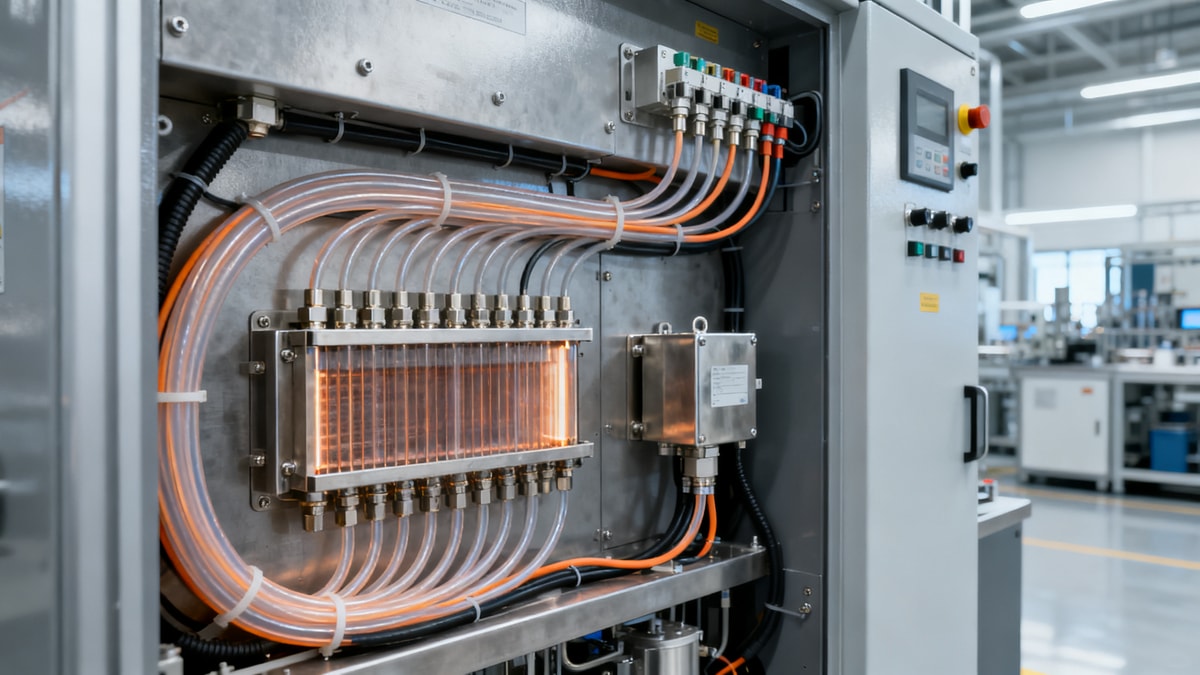
When heat, chemicals, and reliability all matter at once, teflon PTFE wires often become the material engineers investigate first. But where do they truly add value, and where might other wire options be more practical? This article explores how PTFE-insulated wire performs in high-temperature industrial environments, helping information-focused buyers and specifiers understand its real advantages, limits, and best-fit applications.
Why Interest in High-Temperature Wire Is Rising Again
Across industrial systems, the specification of wire is becoming less routine and more strategic. Electrification, denser control panels, higher duty cycles, and tougher compliance expectations are changing how engineers evaluate insulation materials. In that context, teflon PTFE wires are gaining attention not because they are new, but because operating conditions are becoming less forgiving. Facilities that once had thermal margin now run closer to limits, while OEMs are expected to deliver lighter, smaller, and more reliable assemblies.
This shift matters to EPC contractors, panel builders, maintenance leaders, and sourcing teams. Wire choice can affect not only temperature resistance, but also routing flexibility, chemical durability, life-cycle risk, certification pathways, and downtime exposure. As a result, the conversation around teflon PTFE wires is no longer only about “can this wire survive heat?” It is increasingly about where premium insulation justifies its cost, where over-specification adds little value, and how future operating conditions may change today’s best choice.
The Main Signals Behind the Shift in Material Selection
Several market and engineering signals are pushing high-performance wire materials back into evaluation cycles. First, more equipment is being installed near heat-generating sources such as motors, braking systems, heaters, turbines, transformers, and power electronics. Second, cleaning agents, fuels, oils, and aggressive process chemicals create added stress on insulation. Third, compliance and reliability teams are becoming less tolerant of failures caused by insulation embrittlement, cracking, or thermal aging.
At the same time, global sourcing has made buyers more cautious. A wire that looks equivalent on a datasheet may not perform equally in continuous heat, vibration, or chemical exposure. That has increased demand for materials with a clearer performance track record. Teflon PTFE wires benefit from this trend because PTFE is widely associated with stable performance in harsh environments, especially where temperature swings and contamination are common.
Where Teflon PTFE Wires Deliver Real Industrial Value
The strongest case for teflon PTFE wires appears where multiple stress factors overlap. Heat alone does not always justify PTFE. However, heat combined with chemical attack, frequent maintenance access, tight routing, or long service intervals often does. In these cases, PTFE insulation can reduce premature failure risk and support more stable long-term operation.
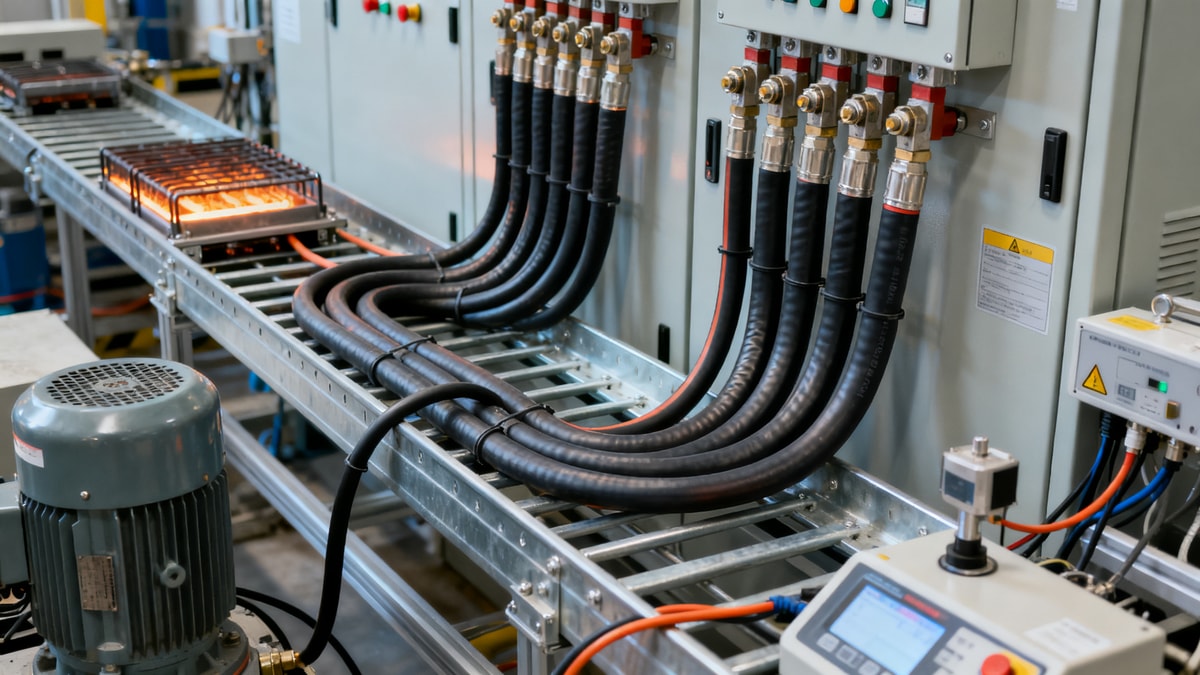
Typical high-value use cases include control wiring near furnaces or ovens, sensor leads in process plants, internal wiring in aerospace-adjacent industrial systems, generator and motor-adjacent assemblies, high-temperature instrumentation, and cable runs exposed to oils, solvents, or sterilization processes. In these environments, PTFE’s non-stick surface, thermal stability, and resistance to many corrosive substances provide practical operational benefits.
Another area where teflon PTFE wires help is precision equipment with demanding signal integrity expectations. While insulation choice is only one part of an electrical design, stable dielectric properties can matter in specific instrumentation and measurement settings. For industrial users in GIC’s core sectors, that means PTFE may support not just survival in heat, but predictable performance in systems where unstable conditions can affect readings, controls, or safety responses.
Where PTFE Is Often Considered, but Not Always Necessary
A key trend in industrial sourcing is more disciplined material matching. That means premium materials are being applied more selectively. Teflon PTFE wires are excellent in demanding conditions, but they are not automatically the most practical answer for every hot environment. If a system sees only moderate heat, limited chemical exposure, and easy replacement access, other insulation types may meet requirements at lower cost.
This is especially relevant in cost-sensitive projects with high wire volumes. Alternatives such as XLPE, silicone, FEP, or specialized PVC compounds may be sufficient depending on temperature class, flexibility needs, abrasion profile, and regulatory demands. In some moving applications, installers may also weigh the mechanical feel and handling differences between PTFE and other materials. The better question is not whether PTFE is superior in absolute terms, but whether its advantages will actually be used by the application.
That distinction is becoming more important as procurement teams are asked to justify total installed cost. Over-specification can tie up budget without improving reliability, while under-specification can create expensive maintenance events later. The present trend is therefore toward scenario-based selection rather than blanket preference.
What Is Driving More Careful Evaluation of PTFE Wire Options
The growing focus on teflon PTFE wires is not happening in isolation. It is part of a broader shift toward application-specific engineering and evidence-based sourcing. Buyers want to know how a wire behaves under continuous temperature, not just peak temperature. Engineers want clarity on bend radius, stripping behavior, installation risk, and compatibility with connectors or terminations. Compliance teams want traceability to standards and confidence that the supplied product matches the approved specification.
This has made supplier quality more important. PTFE-insulated wire can vary in construction quality, conductor plating, wall consistency, and documentation support. In trend terms, the market is moving away from generic material claims and toward verified performance context. That includes asking better questions about UL recognition, voltage rating, flame behavior, operating life, and whether the wire is intended for static installation, repeated movement, or highly contaminated spaces.
How the Impact Differs Across Industrial Roles
The implications of choosing teflon PTFE wires are not the same for every stakeholder. Design engineers focus on thermal margin and fit-for-purpose performance. Procurement managers compare unit cost against failure risk and supplier confidence. Maintenance teams care about service life, field handling, and replacement intervals. Compliance managers look for standard alignment and documentation integrity. Because of this, material selection discussions increasingly involve cross-functional trade-offs rather than isolated engineering preference.
The Next Phase of Demand: Not More PTFE Everywhere, but Smarter Placement
A notable direction in the market is more selective deployment. Instead of specifying teflon PTFE wires throughout an entire system, more organizations are isolating the highest-risk thermal and chemical zones and using PTFE there while standardizing lower-cost materials elsewhere. This hybrid approach supports reliability without pushing project costs unnecessarily high.
This trend also aligns with modular equipment design. As systems become more segmented, engineers can specify higher-performance wire only for subsystems exposed to heat, solvents, sterilization cycles, or continuous elevated temperatures. That makes the value case for PTFE more precise. It also supports better inventory planning, since maintenance teams can identify which wire families are critical and which are commodity-grade.
Signals Buyers Should Watch Before Specifying Teflon PTFE Wires
For information-focused buyers, the most useful next step is not memorizing every PTFE property, but identifying the signals that indicate when PTFE is likely to provide durable value. One signal is a narrowing gap between normal operating temperature and the maximum rating of the current wire. Another is repeated maintenance in the same heated or chemically exposed area. A third is increased packaging density that changes airflow and local heat buildup. A fourth is stricter customer or project compliance requirements that reduce tolerance for borderline materials.
Buyers should also watch for hidden misalignment between design assumptions and field reality. For example, equipment that is technically rated for a certain temperature may still create hot spots at connectors, bends, or enclosure corners. In those cases, teflon PTFE wires may solve a reliability issue that appears minor on paper but becomes significant in long service cycles.
A Practical Decision Framework for Current Projects
A useful way to judge teflon PTFE wires is to evaluate them through a layered filter. First, confirm the actual continuous temperature, not only nominal environmental temperature. Second, map chemical and contamination exposure. Third, assess whether replacement is easy, planned, and low-cost, or difficult and disruptive. Fourth, check certification and documentation requirements. Finally, compare PTFE not against the cheapest option, but against realistic alternatives that meet the same duty profile.
If multiple risk factors stack together, PTFE usually deserves serious consideration. If only one mild factor is present, another material may be fully adequate. This kind of structured judgment is increasingly important in modern industrial procurement, where the right answer depends less on generic product hierarchy and more on exposure-specific performance.
Conclusion: What to Confirm Before Moving Forward
The current direction of the market suggests that teflon PTFE wires will remain highly relevant, but in a more targeted way. Their strongest value appears in applications where heat is only part of the problem and where chemicals, reliability demands, compact design, or difficult maintenance access raise the cost of failure. The key trend is not universal substitution, but more accurate matching between wire material and real operating stress.
For companies assessing the role of teflon PTFE wires in future projects, the most important questions are straightforward: Where are thermal margins shrinking? Which zones combine heat with chemical exposure? Which failures create the highest downtime or safety consequences? Which specifications require stronger compliance confidence? If an organization can answer those questions clearly, it will be in a much stronger position to decide whether PTFE is a necessary upgrade, a selective optimization, or an unnecessary premium.
If you are evaluating how this trend affects your own equipment, start by reviewing your highest-temperature circuits, recurring maintenance points, and certification-sensitive assemblies. That is usually where the real decision about teflon PTFE wires becomes visible.
Technical Specifications
Expert Insights

Chief Security Architect
Dr. Thorne specializes in the intersection of structural engineering and digital resilience. He has advised three G7 governments on industrial infrastructure security.
Related Analysis
- May 02, 2026Chemical Metering Pumps: Which Dosing Errors Cost the Most?Author :Environmental Engineering Director
- May 02, 2026What Sets One Belt Filter Press Manufacturer Apart?Author :Environmental Engineering Director
- May 02, 2026Moving Bed Biofilm Reactor MBBR Retrofit Benefits and LimitsAuthor :Environmental Engineering Director
Core Sector // 01
Security & Safety
- Submersible Pump Cables: Why Jacket Damage Happens EarlyAuthor :Grid Infrastructure Analyst

- Wholesale Cable Trays: Steel or Aluminum for Corrosive Areas?Author :Grid Infrastructure Analyst

- Marine Cables Wholesale: Which Certifications Actually Matter?Author :Grid Infrastructure Analyst

- Teflon PTFE Wires in High Heat: Where They Really HelpAuthor :Grid Infrastructure Analyst

- What Causes Early Failure in Silicone Rubber Cables?Author :Grid Infrastructure Analyst

- Copper Price Surges 4.1% to Record High in 2026; Impacts BOM Costs for Cable & Transformer MakersAuthor :Grid Infrastructure Analyst

- Copper Price Hits 2026 High, Impacts Cable & Transformer BOM CostsAuthor :Grid Infrastructure Analyst

- SCFI Rises Again: Shanghai–LA Rate Hits $3,920/TEUAuthor :Grid Infrastructure Analyst