SCFI Rises Again: Shanghai–LA Rate Hits $3,920/TEU
Author
Date Published
Reading Time
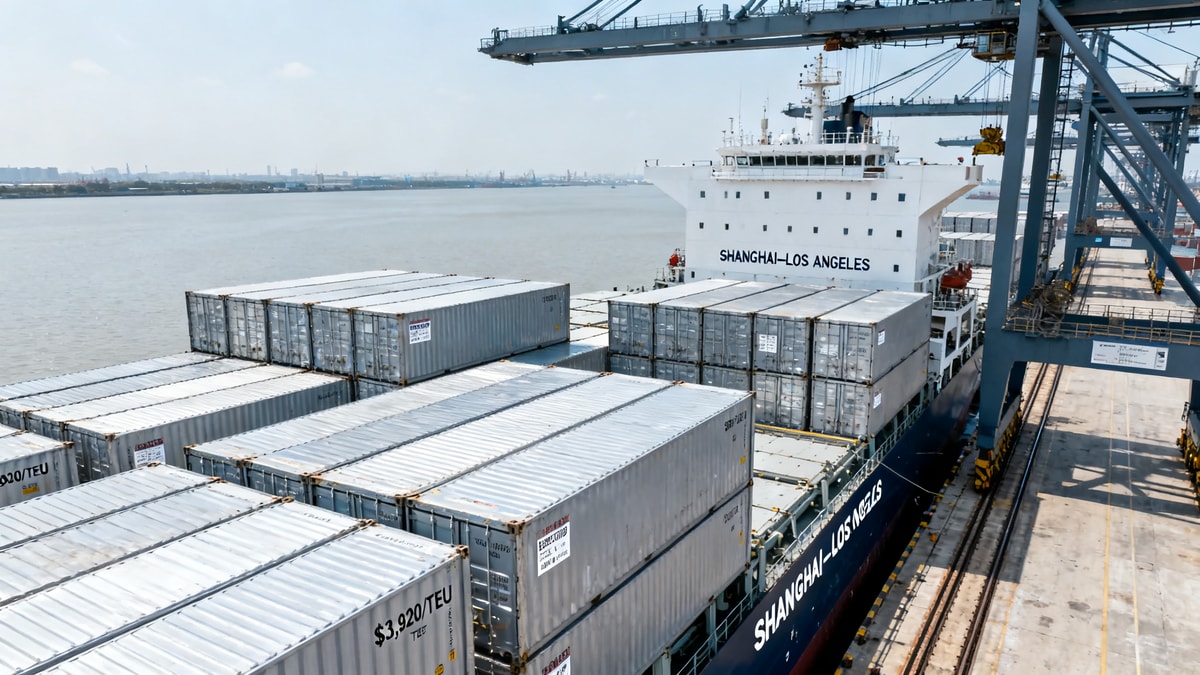
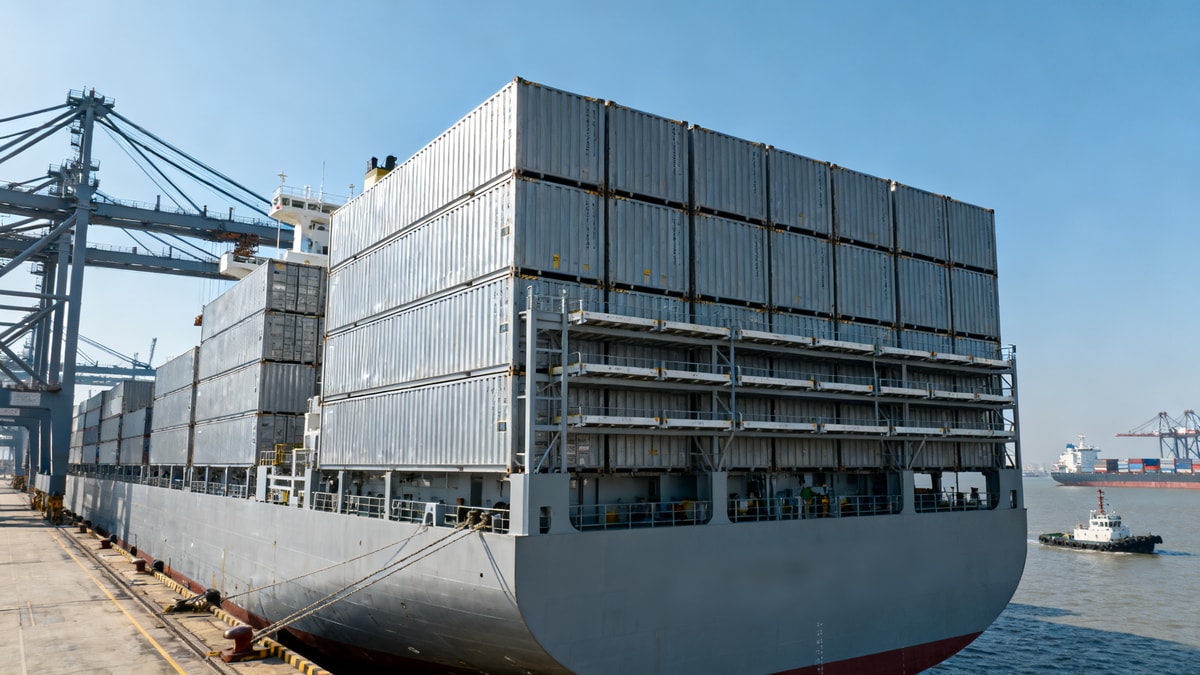
On April 29, 2026, the Shanghai Containerized Freight Index (SCFI) rose for the latest reporting week, with the Shanghai–Los Angeles route reaching $3,920 per TEU — a 21-month high and a 9.7% weekly increase. This development warrants close attention from exporters of industrial equipment, logistics service providers, and supply chain managers handling U.S.-bound cargo, as it signals rising near-term ocean freight costs and potential delivery delays.
Event Overview
The Shanghai Export Containerized Freight Index (SCFI), published on April 29, 2026, reported a freight rate of $3,920 per TEU for the Shanghai–Los Angeles shipping lane. The figure reflects a 9.7% week-on-week increase. The rise is attributed to two confirmed factors: ongoing labor negotiations at U.S. West Coast ports and the continued normalization of Red Sea route diversions. This lane accounts for over 60% of China’s industrial equipment exports, and associated logistics costs for May-delivery orders are projected to rise by an average of 11%.
Which Subsectors Are Affected
Direct Exporters (Industrial Equipment Manufacturers)
These enterprises face direct cost pressure, as the Shanghai–LA lane serves over 60% of their outbound shipments. The $3,920/TEU rate implies higher landed costs for U.S. buyers — potentially affecting pricing competitiveness or margin absorption capacity.
Supply Chain & Logistics Service Providers
Freight forwarders, NVOCCs, and integrated logistics operators must adjust real-time quoting models and capacity allocation strategies. The 11% projected logistics cost increase for May deliveries may compress margins unless contract terms allow for surcharge pass-through.
Import-Dependent Manufacturing Firms (U.S.-Based Buyers)
While not originating in China, U.S. manufacturers sourcing industrial equipment from Shanghai-based suppliers may experience delayed order fulfillment or revised purchase terms — especially if contracts lack fuel or congestion surcharge clauses tied to SCFI thresholds.
What Relevant Enterprises or Practitioners Should Monitor and Do Now
Track official updates on U.S. West Coast labor talks
The current port labor negotiation impasse is a confirmed driver. Stakeholders should monitor statements from the Pacific Maritime Association (PMA) and the International Longshore and Warehouse Union (ILWU) — not just for resolution timelines but for early signs of work slowdowns or contingency measures that could extend congestion.
Review shipment timing and container booking windows for May–June deliveries
Given the 11% projected cost lift for May deliveries, firms should assess whether advancing bookings (e.g., loading in late April for early May departure) could lock in lower pre-spike rates — where vessel space and documentation timelines permit.
Validate contractual freight cost allocation mechanisms
Parties engaged in long-term supply agreements should verify whether Incoterms (e.g., FOB vs. CIF) and surcharge clauses explicitly reference SCFI-linked adjustments — particularly for contracts covering Shanghai–LA shipments executed between April and June 2026.
Assess exposure across alternative lanes and transshipment options
Although the SCFI data covers Shanghai–LA specifically, the underlying drivers — U.S. West Coast uncertainty and Red Sea rerouting — affect broader network planning. Firms should benchmark inland transport + transshipment costs via alternative gateways (e.g., Shanghai–Oakland or Shanghai–New York via Panama Canal, where applicable) against current LA-bound quotes.
Editorial Perspective / Industry Observation
Observably, this SCFI uptick is less a standalone price surge and more a structural signal: the convergence of persistent labor friction and entrenched routing changes has begun to tighten capacity on the most critical U.S.-bound corridor. Analysis shows that while spot rates can fluctuate weekly, the 21-month high — coupled with the explicit 11% logistics cost projection for May — suggests this is now impacting committed order execution, not just speculative booking behavior. From an industry perspective, this is better understood as an operational stress test than a temporary anomaly; sustained monitoring of both SCFI sub-indexes and port-specific dwell time data will be essential in the coming weeks.
Conclusion
This SCFI milestone reflects tightening ocean capacity on a strategically vital trade lane — not merely a statistical blip. It confirms elevated cost and schedule risk for industrial equipment exporters and their downstream partners through mid-2026. Current conditions are best interpreted as a trigger for tactical supply chain recalibration, rather than a signal for strategic redirection.
Information Sources
Main source: Shanghai Containerized Freight Index (SCFI), published April 29, 2026.
Items requiring ongoing observation: U.S. West Coast port labor negotiation outcomes; actual May delivery cost realization versus the 11% projection; SCFI sub-index trends for related lanes (e.g., Shanghai–New York, Shanghai–Oakland).
Technical Specifications
Expert Insights

Chief Security Architect
Dr. Thorne specializes in the intersection of structural engineering and digital resilience. He has advised three G7 governments on industrial infrastructure security.
Related Analysis
- Apr 30, 2026Egypt SMIIC Mandates Arabic Energy Labels for Industrial PumpsAuthor :Heavy Industry Strategist
- Apr 30, 2026TÜV SÜD Launches China Industrial Optics Fast TrackAuthor :Precision Metrology Expert
- Apr 30, 2026LME Nickel Surges 5.2% on April 29, 2026: Impact on Stainless Bearings & SealsAuthor :Heavy Industry Strategist
Core Sector // 01
Security & Safety
- SCFI Rises Again: Shanghai–LA Rate Hits $3,920/TEUAuthor :Grid Infrastructure Analyst

- Copper Price Hits 2026 High, Impacts Cable & Transformer BOM CostsAuthor :Grid Infrastructure Analyst

- SCFI Surges 12.3% on Apr 28, 2026: Shanghai–Rotterdam Hits $4,482/TEUAuthor :Grid Infrastructure Analyst

- How to Choose Welding Cables WholesaleAuthor :Grid Infrastructure Analyst

- THHN Building Wire vs XHHW: What ChangesAuthor :Grid Infrastructure Analyst

- Are Solar PV Cables Worth the Higher CostAuthor :Grid Infrastructure Analyst

- How to Vet an OPGW Cable ManufacturerAuthor :Grid Infrastructure Analyst

- When Does ADSS Fiber Cable Make More SenseAuthor :Grid Infrastructure Analyst