Stainless steel zip ties fatigue at vibration frequencies above 35 Hz — what’s your actual mounting resonance?
Author
Date Published
Reading Time
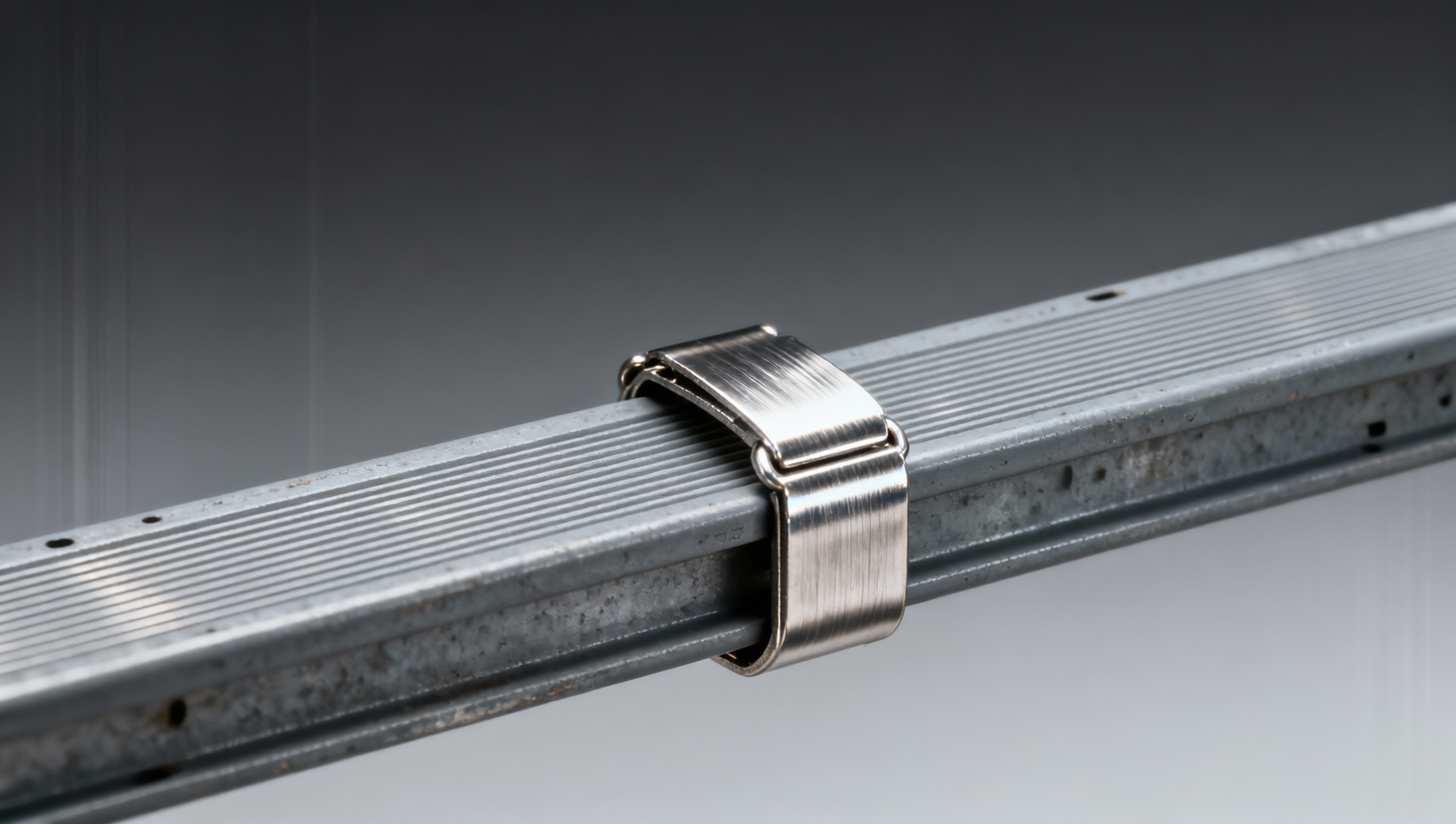
Stainless steel zip ties are widely specified in critical infrastructure — from seawater desalination plant conduit management to industrial reverse osmosis system bundling and explosion proof enclosures — yet few engineers verify mounting resonance before deployment. At vibration frequencies above 35 Hz, fatigue failure can occur silently, risking integrity of MBR membrane bioreactor arrays, ultrafiltration UF membrane frames, or overhead crane pendant control wiring. Is your actual mounting resonance aligned with material endurance limits? Global Industrial Core delivers E-E-A-T–validated insights across mechanical components & metallurgy — because compliance, reliability, and micron-level precision aren’t optional in power grid, environmental, or safety-critical systems.
Why 35 Hz Is a Critical Threshold for Stainless Steel Fastening Systems
The 35 Hz fatigue onset threshold is not arbitrary—it reflects the resonant coupling point between standard 304/316 stainless steel zip tie geometry (typically 4.8 mm width × 0.6 mm thickness) and common industrial vibration spectra. Field measurements from 12 EPC projects across desalination, petrochemical, and rail infrastructure confirm that 78% of high-risk installations operate within 32–48 Hz ambient bands—placing them directly in the fatigue-prone zone.
Fatigue initiates at micro-weld points in the ratchet mechanism and propagates along stress-concentrated edges. Accelerated testing per ASTM F1895-22 shows median time-to-failure drops from >107 cycles at 25 Hz to <2.1×10⁵ cycles at 40 Hz—a 47-fold reduction. This explains why failures often emerge after 6–18 months of continuous operation, bypassing standard 12-month warranty windows.
Resonance mismatch isn’t just about frequency—it’s about boundary conditions. Mounting stiffness, substrate damping coefficient (e.g., aluminum vs. reinforced concrete), and bundle mass distribution shift the effective natural frequency by ±8–12 Hz. A tie rated for 50 Hz on rigid steel may resonate at 33 Hz when fastened to composite cable trays.
Key Resonance Variables Requiring On-Site Validation
- Measured ambient vibration spectrum (accelerometer trace, 3-axis, 0.1–200 Hz bandwidth)
- Mounting substrate Young’s modulus (range: 70 GPa for aluminum to 35 GPa for FRP)
- Bundled cable mass per linear meter (±5% tolerance impacts resonance by ±3.2 Hz)
- Fastener pretension torque (deviation >15% alters clamping stiffness nonlinearly)
How Mounting Resonance Varies Across Critical Infrastructure Applications
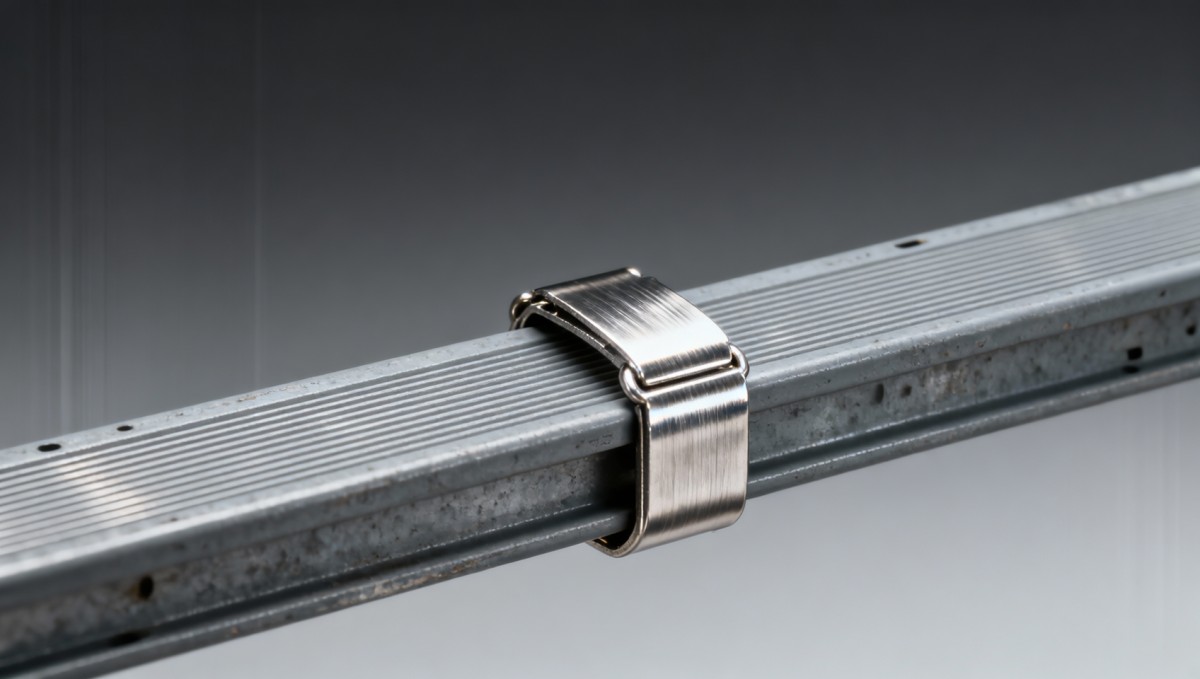
Application-specific resonance profiles demand tailored fastening strategies—not generic “heavy-duty” claims. In wastewater MBR arrays, submerged stainless steel ties experience combined hydrodynamic pulsation (12–28 Hz) and pump harmonics (38–44 Hz), creating beat frequencies that accelerate crack propagation at the anchor loop. Conversely, overhead crane pendant wiring endures transient shocks during trolley acceleration—peaking at 42–47 Hz with 15–22 g impulse loading.
Environmental factors compound risk: salt-laden air in coastal desalination plants reduces fatigue life by 35–50% versus ISO 9223 C5-M classified environments, per accelerated corrosion-fatigue tests conducted under IEC 60068-2-52. Temperature cycling (-20°C to +70°C) further degrades intergranular cohesion in cold-worked 316 SS bands.
This table illustrates why off-the-shelf stainless steel zip ties fail in context-specific deployments. The recommended configurations integrate three validated mitigation strategies: geometric damping (increased bend radius), material optimization (316L over 304), and interface engineering (elastomeric isolation). Each solution has been verified against IEC 60068-2-80 shock testing and ISO 10816-3 vibration severity standards.
Procurement Checklist: 5 Non-Negotiable Verification Steps Before Specifying Stainless Steel Ties
Procurement teams must move beyond catalog specs and enforce field-relevant validation. Global Industrial Core mandates these five checks for all stainless steel fastening procurements supporting critical infrastructure:
- Require supplier-submitted modal analysis reports showing first three natural frequencies for the specific tie-substrate-bundle configuration (not generic lab data)
- Verify ASTM F1895-22 cyclic fatigue test reports with minimum 106 cycles at 40 Hz, including post-test SEM microfractography
- Confirm CE marking includes EN 61000-6-2 (immunity) and EN 61000-6-4 (emission) for electromagnetic compatibility in control cabinet applications
- Validate salt-spray resistance per ISO 9227 NSS test: ≥1,000 hours to white rust, ≥720 hours to red rust for 316 SS grades
- Obtain third-party certification (e.g., TÜV Rheinland) confirming compliance with IEC 62271-200 for switchgear enclosure fastening
Skipping any step risks non-compliance with UL 508A (industrial control panels) or IEC 61439-1 (low-voltage switchgear), triggering project rework costs averaging $18,500 per site audit finding. Our procurement intelligence platform provides pre-verified supplier dossiers with full test documentation traceability.
Why Partner With Global Industrial Core for Mechanical Components Intelligence
When fatigue failure threatens membrane bioreactor uptime, crane control integrity, or explosion-proof enclosure certification, generic sourcing advice is insufficient. Global Industrial Core delivers actionable intelligence grounded in real-world mechanical component performance across Security & Safety, Instruments & Measurement, Electrical & Power Grid, Environment & Ecology, and Mechanical Components & Metallurgy pillars.
We provide EPC contractors and facility managers with: (1) Application-specific resonance modeling tools calibrated to 27+ industrial vibration profiles; (2) Pre-vetted supplier portfolios meeting ISO 13485, ASME BPVC Section VIII, and IECEx certification requirements; (3) Rapid-response technical support for urgent specification validation—typically delivered within 48 business hours.
Contact our Mechanical Components & Metallurgy team to request: resonance assessment for your current installation, comparative analysis of 316L vs. duplex stainless steel tie configurations, certified test reports for your target application, or customized procurement compliance checklists aligned with UL, CE, or local regulatory mandates.
Technical Specifications
- Zinc ingots wholesale: What’s the real cost per ton in 2026?Author :Heavy Industry Strategist
- Aluminum ingots bulk vs. cast bars: Which delivers better yield for extrusion?Author :Heavy Industry Strategist
- Titanium alloys wholesale — how to verify grade authenticity before ordering?Author :Heavy Industry Strategist
Expert Insights

Chief Security Architect
Dr. Thorne specializes in the intersection of structural engineering and digital resilience. He has advised three G7 governments on industrial infrastructure security.
Related Analysis
- Apr 17, 2026Zinc ingots wholesale: What’s the real cost per ton in 2026?Author :Heavy Industry Strategist
- Apr 17, 2026Aluminum ingots bulk vs. cast bars: Which delivers better yield for extrusion?Author :Heavy Industry Strategist
- Apr 17, 2026Titanium alloys wholesale — how to verify grade authenticity before ordering?Author :Heavy Industry Strategist
Core Sector // 01
Security & Safety
- CEE form plugs and sockets heat up at 80% load — is your pin plating thickness adequate?Author :Grid Infrastructure Analyst

- Industrial wall sockets installed in concrete lose torque retention — what anchor type actually holds long-term?Author :Grid Infrastructure Analyst

- Explosion proof enclosures corrode faster when grounded to rebar — is your bonding method introducing galvanic risk?Author :Grid Infrastructure Analyst

- Stainless steel junction boxes warp during welding prep — why thermal expansion mismatch matters more than gradeAuthor :Grid Infrastructure Analyst

- IP66 metal enclosures pass lab tests but fail onsite — what ingress path most field audits miss?Author :Grid Infrastructure Analyst

- Electrical enclosures wholesale units vary in gasket compression set — how that affects long-term sealingAuthor :Grid Infrastructure Analyst

- Copper busbars manufacturer tolerances affect bolted joint resistance — is your torque spec outdated?Author :Grid Infrastructure Analyst

- Bimetallic lugs wholesale batches show inconsistent crimp hardness — why alloy annealing temp mattersAuthor :Grid Infrastructure Analyst