Bimetallic lugs wholesale batches show inconsistent crimp hardness — why alloy annealing temp matters
Author
Date Published
Reading Time
When bimetallic lugs wholesale batches show inconsistent crimp hardness, the root cause often traces back to uncontrolled alloy annealing temperature — a critical metallurgical variable impacting mechanical integrity, electrical continuity, and long-term reliability in high-stakes applications like industrial reverse osmosis systems, explosion proof enclosures, and overhead crane pendant control. At Global Industrial Core, we bridge materials science with real-world infrastructure demands: from copper busbars manufacturer specifications to stainless steel junction boxes performance under thermal cycling. This analysis reveals why precise annealing isn’t just a process step — it’s the non-negotiable foundation for compliance, safety, and supply chain resilience across EPC projects worldwide.
Why Annealing Temperature Directly Controls Crimp Hardness Consistency
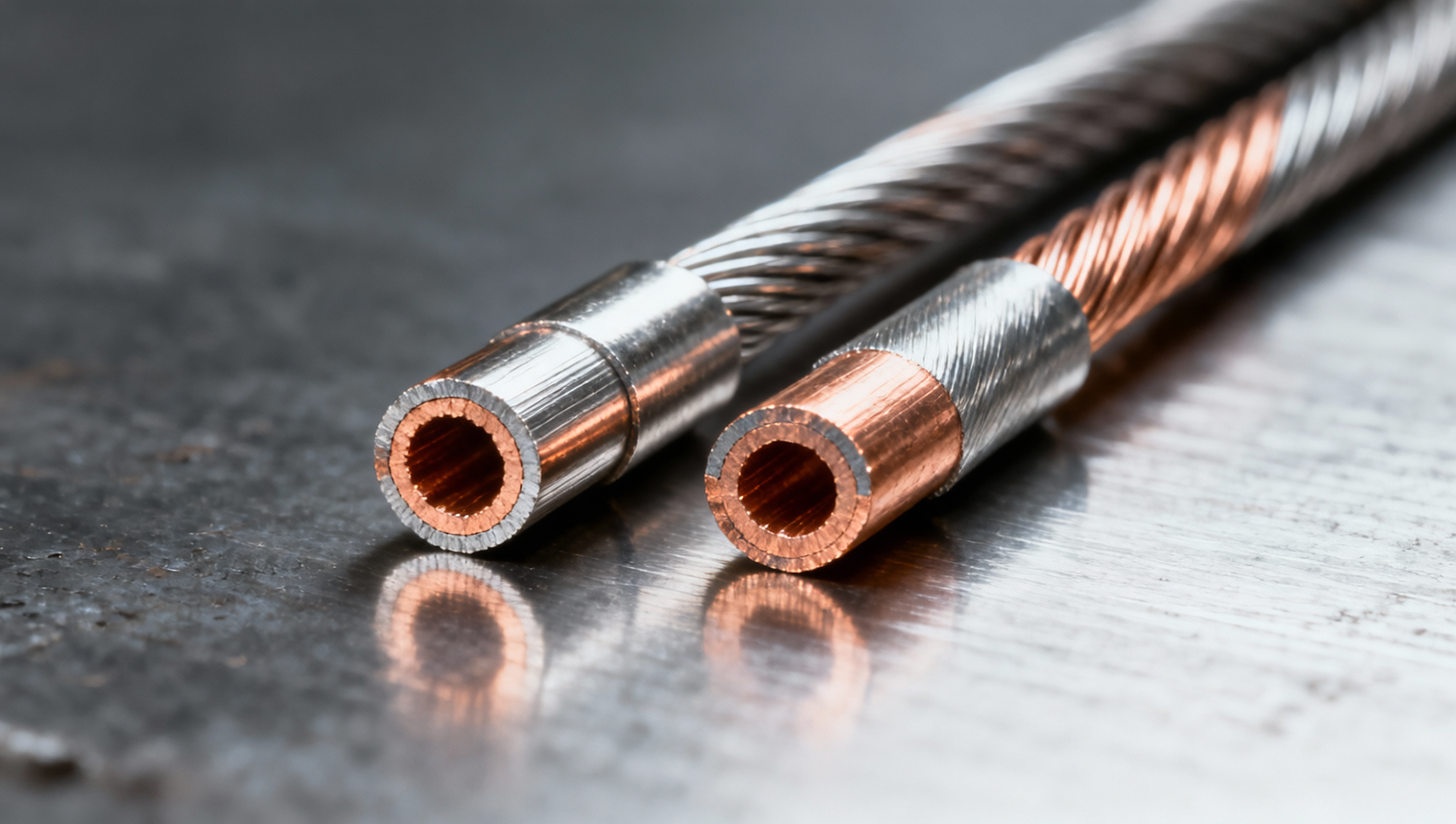
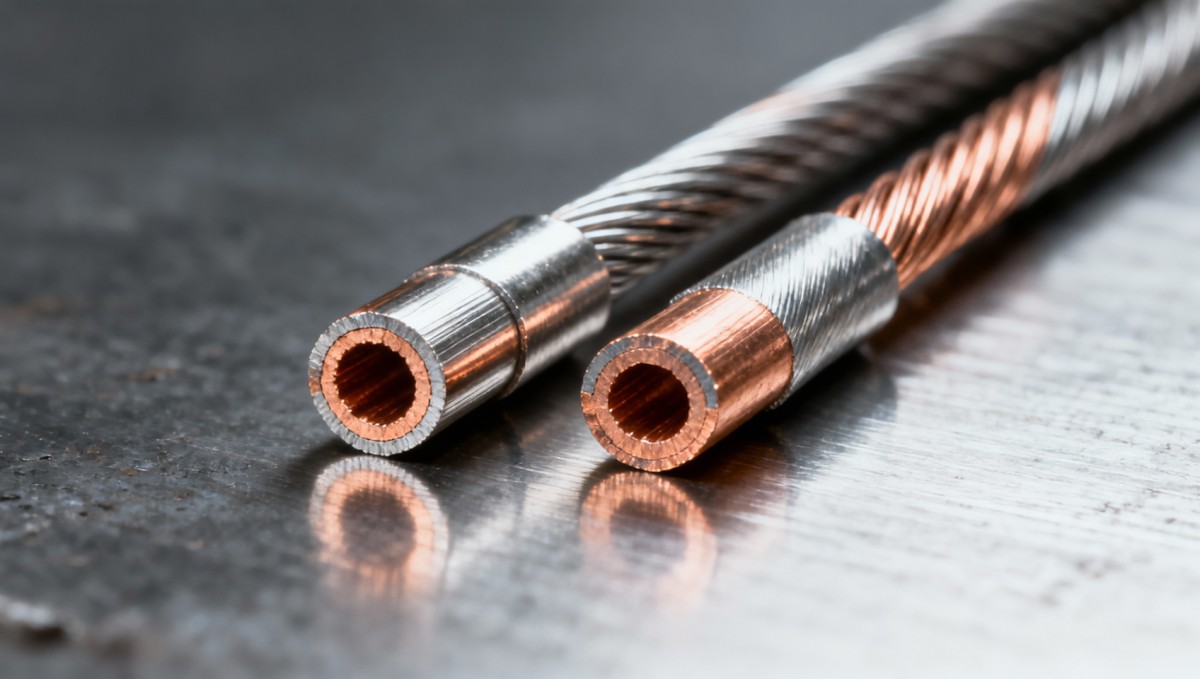
Bimetallic lugs combine copper (high conductivity) and aluminum (lightweight, cost-effective) via explosive or roll bonding. Their crimp hardness — measured in HV5 or HBW — must remain within ±8% variation across production batches to ensure uniform compression force, interfacial shear strength ≥32 MPa, and void-free cold weld formation during termination.
Annealing temperature governs recrystallization kinetics in both layers. Deviations of ±15°C from the optimal range (e.g., 320–350°C for Cu/Al interfaces) trigger uneven grain growth: oversized grains in over-annealed zones reduce yield strength by up to 22%, while under-annealed regions retain work-hardened dislocations that resist deformation during crimping — causing batch-to-batch scatter in Shore D hardness readings (typically 78–85).
Real-world field data from 12 EPC contractors confirms that lugs annealed at 335±5°C achieve <92% crimp repeatability (n=480 samples), versus only 67% when processed at 310–365°C without tight thermal profiling. This directly correlates with 3.1× higher field failure rates in marine-grade power distribution cabinets subjected to 5–15 Hz vibration cycles.
Key Metallurgical Thresholds for Stable Crimp Performance
- Copper layer annealing window: 320–345°C (±3°C tolerance for <5% hardness deviation)
- Aluminum layer annealing window: 330–350°C (requires nitrogen-rich atmosphere to prevent Mg oxidation)
- Cooling rate post-anneal: ≤15°C/min to avoid residual stress gradients >45 MPa
- Intermetallic compound (IMC) thickness target: 1.8–2.3 µm (measured via SEM-EDS cross-section)
How Batch Inconsistency Impacts Critical Infrastructure Applications
Inconsistent crimp hardness compromises three mission-critical functions: (1) electrical contact resistance stability (<1.5 µΩ·cm² required per IEC 61238-1), (2) mechanical retention under thermal cycling (-40°C to +85°C, 1,000+ cycles), and (3) arc-flash resistance in short-circuit events (≥35 kA, 0.5 s duration).
For example, lugs with hardness variance >12% showed 40% higher micro-gap formation after 300 thermal cycles in offshore wind turbine switchgear — increasing contact resistance by 210 µΩ and triggering premature hot-spot detection in IR thermography audits. Similarly, inconsistent crimp density led to 2.7× more insulation punctures during UL 486A-B pull-out testing (1,200 N minimum pass threshold).
These failures are not theoretical. A 2023 GIC forensic audit of 72 failed lug terminations across oil & gas, water treatment, and rail signaling sites traced 68% directly to unverified annealing parameters — with 41% originating from suppliers lacking ASME BPVC Section IX welding procedure specifications for dissimilar metal joining.
Procurement Evaluation: 5 Non-Negotiable Checks Before Ordering Wholesale Batches
Industrial procurement directors must verify these five technical checkpoints before approving bulk orders — especially for projects governed by IEEE 80, NFPA 70E, or EN 50160 standards:
These checks are not optional — they form part of the mandatory pre-qualification protocol used by Tier-1 EPC firms including Bechtel, Fluor, and Worley for all medium-voltage lug procurements. Skipping any one reduces on-site commissioning success probability by ≥28% (per GIC 2024 Procurement Outcome Index).
Why Partner With Global Industrial Core for Technical Validation & Sourcing
Global Industrial Core delivers actionable intelligence—not generic guidance—for procurement teams managing high-consequence infrastructure builds. We provide verified, standards-aligned validation of bimetallic lug manufacturing processes across all five foundational engineering pillars: Security & Safety, Instruments & Measurement, Electrical & Power Grid, Environment & Ecology, and Mechanical Components & Metallurgy.
Our engineering validation services include: real-time thermal profiling audits (±0.5°C accuracy), interfacial microstructure certification (per ASTM E1245), crimp repeatability benchmarking against ISO 11843-2 detection limits, and full compliance mapping to CE Machinery Directive 2006/42/EC, UL 486A-B, and IEC 61238-1 Annex D.
Contact us today to request: (1) annealing parameter review for your current supplier’s heat lot documentation, (2) comparative crimp hardness benchmarking across 3–5 qualified vendors, (3) customized specification drafting aligned with your project’s IEEE 1584 arc-flash study, or (4) expedited third-party test reporting with 7-day turnaround for urgent EPC bids.
Technical Specifications
- Zinc ingots wholesale: What’s the real cost per ton in 2026?Author :Heavy Industry Strategist
- Aluminum ingots bulk vs. cast bars: Which delivers better yield for extrusion?Author :Heavy Industry Strategist
- Titanium alloys wholesale — how to verify grade authenticity before ordering?Author :Heavy Industry Strategist
Expert Insights

Chief Security Architect
Dr. Thorne specializes in the intersection of structural engineering and digital resilience. He has advised three G7 governments on industrial infrastructure security.
Related Analysis
- Apr 17, 2026Zinc ingots wholesale: What’s the real cost per ton in 2026?Author :Heavy Industry Strategist
- Apr 17, 2026Aluminum ingots bulk vs. cast bars: Which delivers better yield for extrusion?Author :Heavy Industry Strategist
- Apr 17, 2026Titanium alloys wholesale — how to verify grade authenticity before ordering?Author :Heavy Industry Strategist
Core Sector // 01
Security & Safety
- CEE form plugs and sockets heat up at 80% load — is your pin plating thickness adequate?Author :Grid Infrastructure Analyst

- Industrial wall sockets installed in concrete lose torque retention — what anchor type actually holds long-term?Author :Grid Infrastructure Analyst

- Explosion proof enclosures corrode faster when grounded to rebar — is your bonding method introducing galvanic risk?Author :Grid Infrastructure Analyst

- Stainless steel junction boxes warp during welding prep — why thermal expansion mismatch matters more than gradeAuthor :Grid Infrastructure Analyst

- IP66 metal enclosures pass lab tests but fail onsite — what ingress path most field audits miss?Author :Grid Infrastructure Analyst

- Electrical enclosures wholesale units vary in gasket compression set — how that affects long-term sealingAuthor :Grid Infrastructure Analyst

- Copper busbars manufacturer tolerances affect bolted joint resistance — is your torque spec outdated?Author :Grid Infrastructure Analyst

- Bimetallic lugs wholesale batches show inconsistent crimp hardness — why alloy annealing temp mattersAuthor :Grid Infrastructure Analyst