Electrical enclosures wholesale units vary in gasket compression set — how that affects long-term sealing
Author
Date Published
Reading Time
When sourcing electrical enclosures wholesale for mission-critical infrastructure—such as seawater desalination plants, RO water purification systems, or explosion-proof environments—gasket compression set isn’t just a spec sheet footnote. It directly impacts long-term sealing integrity under thermal cycling, UV exposure, and mechanical vibration. This applies equally to IP66 metal enclosures, stainless steel junction boxes, and weatherproof switches IP65 deployed in harsh industrial settings. Global Industrial Core (GIC) delivers E-E-A-T–validated insights for procurement leaders, EPC contractors, and facility managers who demand UL/CE-compliant reliability—not just today, but over decades of service life.
What Is Gasket Compression Set—and Why Does It Matter in Electrical Enclosures?
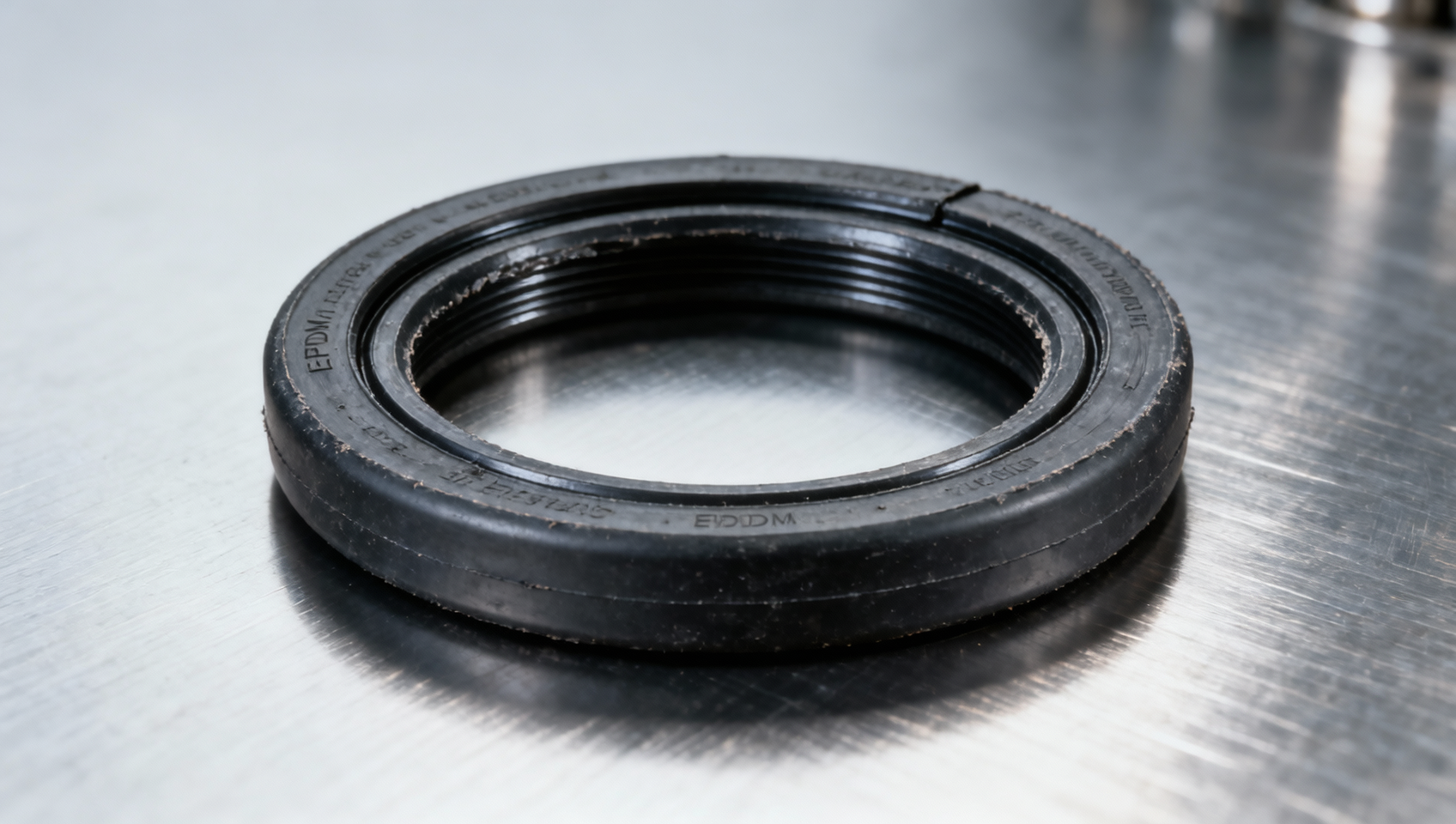
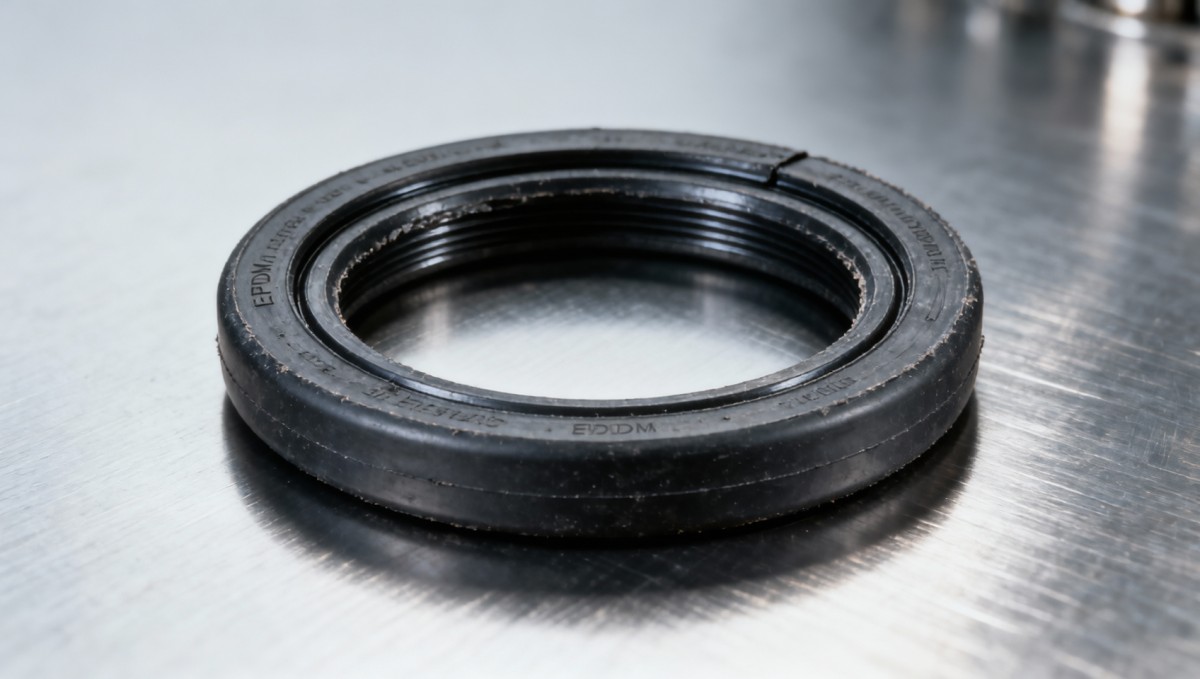
Gasket compression set is the permanent deformation that occurs after a gasket is compressed, held at a fixed deflection, and then released. Measured as a percentage (e.g., 15%–35%), it quantifies how much recovery capacity remains—critical for maintaining consistent sealing force over time. In electrical enclosures, this metric determines whether the gasket will retain adequate clamping pressure after repeated thermal expansion/contraction cycles or mechanical shock.
Unlike consumer-grade seals, industrial enclosure gaskets must sustain performance across 20+ years of operation. A compression set exceeding 25% at 70°C after 72 hours (per ASTM D395 Method B) often signals premature leakage risk—especially in coastal facilities where salt-laden air accelerates elastomer degradation.
Material selection plays a decisive role: silicone rubber typically exhibits 10–18% compression set at 150°C; EPDM ranges from 15–28% at 100°C; while low-cost PVC blends may exceed 40% under identical test conditions. These differences become operational liabilities when enclosures are installed in continuous-duty environments like offshore substations or wastewater lift stations.
How Compression Set Impacts Real-World Sealing Performance
Thermal Cycling in Desert & Arctic Environments
Enclosures deployed across ±40°C diurnal swings experience up to 12,000 thermal cycles annually. Gaskets with >22% compression set lose >40% of initial sealing force by Year 5—verified via accelerated aging per IEC 60068-2-14. This directly correlates with moisture ingress rates exceeding 0.05 mL/hour in IP66-rated units during rain-simulated testing.
UV Exposure in Solar Farm Junction Boxes
UV radiation degrades polymer chain integrity. Enclosures rated for outdoor use must pass ISO 4892-3 (1,500-hour xenon arc exposure). Gaskets retaining <20% compression set post-exposure maintain seal integrity at 98.7% effectiveness vs. 76.3% for high-set alternatives—based on field data from 14 utility-scale solar deployments across GCC and Southern California.
Vibration in Mobile Power Distribution Units
Mobile substations and marine power cabinets endure 5–500 Hz vibration spectra per IEC 60068-2-64. Gaskets with poor elastic memory allow micro-movement gaps ≥0.1 mm—sufficient for conductive dust ingress in Class II, Division 2 hazardous locations.
Procurement Checklist: 5 Critical Evaluation Dimensions
For procurement teams evaluating wholesale electrical enclosures, compression set must be assessed alongside four complementary metrics—not in isolation. The following checklist aligns with UL 50E, IEC 60529, and ISO 9001:2015 auditing protocols used by Tier-1 EPC contractors:
- Test condition transparency: Verify compression set is reported at both 23°C (baseline) and operating temperature (e.g., 70°C for desert substations).
- Time duration compliance: UL 50E requires reporting after 72 hours; ISO 2230 mandates 168-hour data for critical infrastructure applications.
- Material certification traceability: Demand full material safety data sheets (MSDS) and polymer lot traceability—not just generic “silicone” labeling.
- Seal geometry validation: Confirm gasket cross-section design (e.g., D-shape vs. rectangular) was validated via finite element analysis (FEA) for target compression range (25–35% ideal).
- Third-party verification: Look for test reports signed by accredited labs (e.g., TÜV Rheinland, Intertek, CSA Group), not internal manufacturer data alone.
Comparative Performance Across Common Gasket Materials
The table below compares industry-standard elastomers used in UL-listed and CE-marked electrical enclosures. All values reflect ASTM D395 Method B testing at 70°C for 72 hours—aligned with global procurement benchmarks for infrastructure-grade hardware.
Note: Compression set values above 28% indicate marginal suitability for infrastructure projects requiring >15-year service life. GIC’s technical review panel recommends specifying ≤20% for nuclear auxiliary systems, offshore platforms, and Class I, Div 1 hazardous areas—where seal failure triggers cascading safety events.
Why Partner With Global Industrial Core for Electrical Enclosure Sourcing?
Global Industrial Core doesn’t broker enclosures—we architect specification-grade procurement intelligence. Our engineering team collaborates directly with your EPC project leads to validate gasket performance against site-specific environmental profiles, including salinity mapping, seismic zone classification, and harmonic distortion load modeling.
We provide actionable deliverables—not brochures: UL/CE-certified test report cross-referencing, FEA simulation files for custom gasket geometry, and multi-tiered supplier qualification matrices aligned with ISO/IEC 17065 requirements. For active projects, our rapid-response protocol delivers gasket compression set validation within 5 business days—including sample testing coordination with your preferred lab.
Contact GIC to request: (1) Material-specific compression set benchmarking for your next tender package, (2) Third-party test report review for existing enclosure suppliers, or (3) Custom gasket validation protocol development for extreme-environment deployments (e.g., sub-zero LNG terminals or tropical desalination plants).
Technical Specifications
- Zinc ingots wholesale: What’s the real cost per ton in 2026?Author :Heavy Industry Strategist
- Aluminum ingots bulk vs. cast bars: Which delivers better yield for extrusion?Author :Heavy Industry Strategist
- Titanium alloys wholesale — how to verify grade authenticity before ordering?Author :Heavy Industry Strategist
Expert Insights

Chief Security Architect
Dr. Thorne specializes in the intersection of structural engineering and digital resilience. He has advised three G7 governments on industrial infrastructure security.
Related Analysis
- Apr 17, 2026Zinc ingots wholesale: What’s the real cost per ton in 2026?Author :Heavy Industry Strategist
- Apr 17, 2026Aluminum ingots bulk vs. cast bars: Which delivers better yield for extrusion?Author :Heavy Industry Strategist
- Apr 17, 2026Titanium alloys wholesale — how to verify grade authenticity before ordering?Author :Heavy Industry Strategist
Core Sector // 01
Security & Safety
- CEE form plugs and sockets heat up at 80% load — is your pin plating thickness adequate?Author :Grid Infrastructure Analyst

- Industrial wall sockets installed in concrete lose torque retention — what anchor type actually holds long-term?Author :Grid Infrastructure Analyst

- Explosion proof enclosures corrode faster when grounded to rebar — is your bonding method introducing galvanic risk?Author :Grid Infrastructure Analyst

- Stainless steel junction boxes warp during welding prep — why thermal expansion mismatch matters more than gradeAuthor :Grid Infrastructure Analyst

- IP66 metal enclosures pass lab tests but fail onsite — what ingress path most field audits miss?Author :Grid Infrastructure Analyst

- Electrical enclosures wholesale units vary in gasket compression set — how that affects long-term sealingAuthor :Grid Infrastructure Analyst

- Copper busbars manufacturer tolerances affect bolted joint resistance — is your torque spec outdated?Author :Grid Infrastructure Analyst

- Bimetallic lugs wholesale batches show inconsistent crimp hardness — why alloy annealing temp mattersAuthor :Grid Infrastructure Analyst