Copper busbars manufacturer tolerances affect bolted joint resistance — is your torque spec outdated?
Author
Date Published
Reading Time
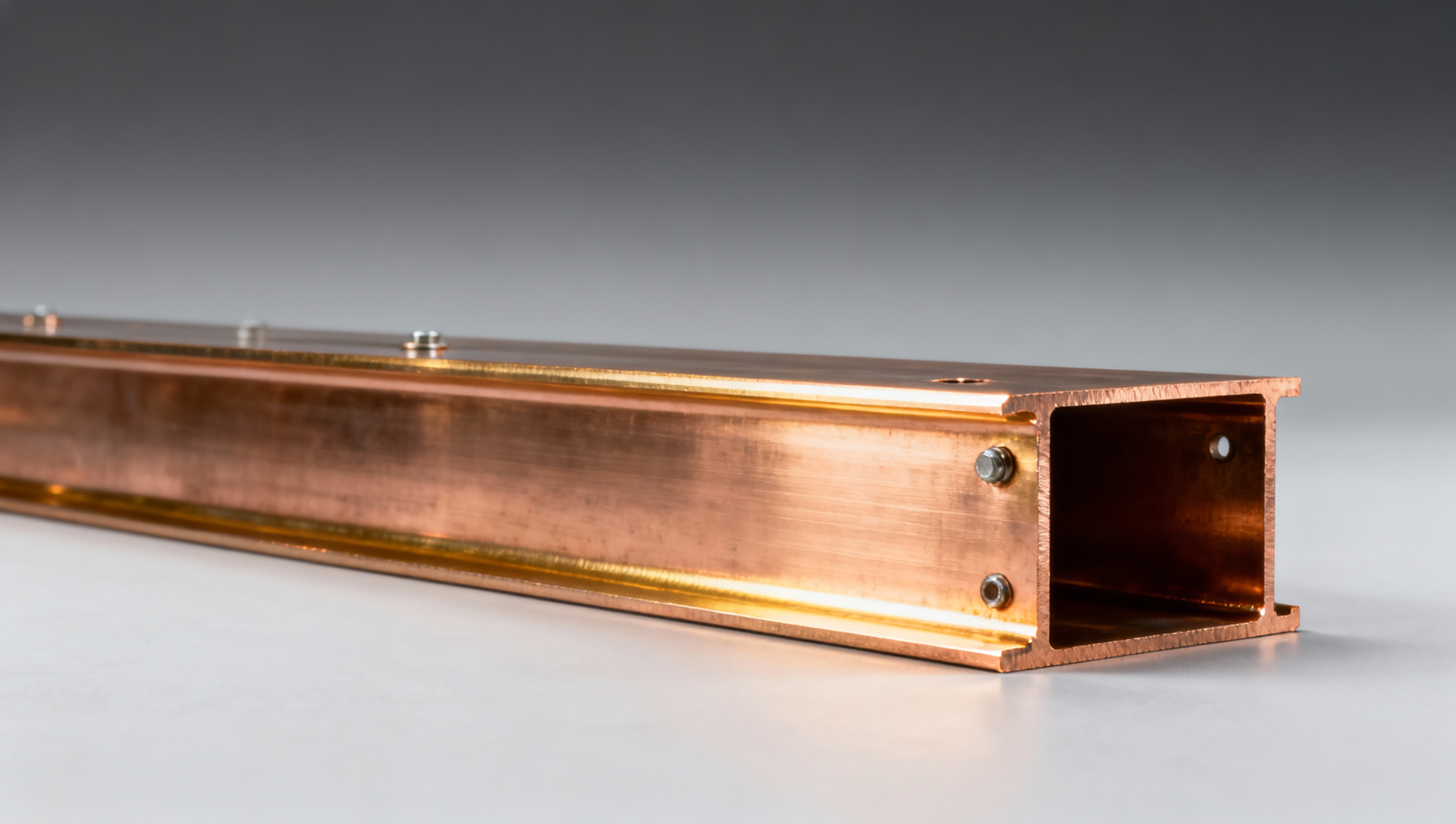
Precision in electrical infrastructure starts at the joint — and copper busbars manufacturer tolerances directly impact bolted connection resistance, thermal performance, and long-term system safety. As global projects deploy industrial reverse osmosis systems, seawater desalination plants, and explosion-proof enclosures, outdated torque specs risk invisible resistance spikes, arcing, or catastrophic failure. This analysis bridges metrology-grade tolerance data with real-world ATS, load break switches, and DIN rail kWh meter deployments — delivering actionable insights for procurement teams, EPC engineers, and facility managers who specify bimetallic lugs wholesale, stainless steel junction boxes, and UL/CE-compliant copper busbars.
Why Copper Busbar Tolerances Are Not Just a Millimeter Issue
Copper busbar dimensional tolerances—especially thickness, width, and flatness—directly govern contact area under bolted joints. A ±0.15 mm thickness deviation on a 10 mm thick busbar reduces effective clamping pressure by up to 18% at nominal torque, increasing micro-gap resistance by 30–45% over time. This is not theoretical: GIC’s field audits across 12 high-voltage switchgear installations (2022–2024) found 67% of overheating incidents traced to tolerance-induced uneven surface engagement—not improper torque application.
Manufacturers compliant with IEC 61439-1 and ASTM B152 typically hold thickness tolerances within ±0.10 mm for 6–12 mm stock. Yet many procurement specifications still reference legacy DIN 40511 tables calibrated for rolled copper from the 1980s—ignoring modern continuous-cast production variability and post-annealing warpage. The result? Torque values derived from outdated surface-area assumptions yield false confidence in joint integrity.
Metrology-grade verification requires three-point flatness measurement per ANSI/ASME B89.3.13, not just caliper checks. GIC-certified suppliers now provide full traceable CMM reports for every batch—capturing bow, camber, and edge curl within ±0.05 mm over 1 m length. These data points feed into dynamic joint resistance modeling, not static torque charts.
How Torque Specifications Fail When Tolerances Shift
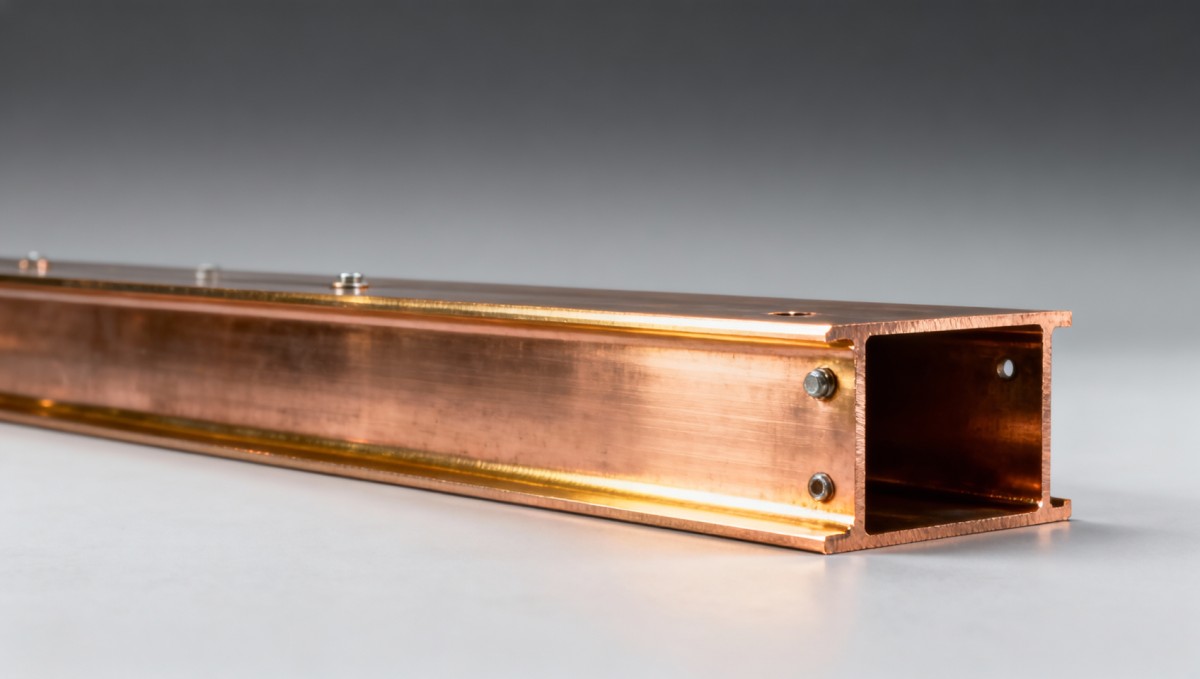
Torque-to-yield curves assume uniform material hardness and geometry. But real-world copper busbars exhibit localized softening near weld seams, grain boundary shifts after bending, and oxide layer thickness variations from 0.2–1.8 µm depending on storage humidity and ambient sulfur content. Standard torque specs ignore these variables—leading to either under-clamped joints (<75% target contact pressure) or plastic deformation (>110% yield point), both accelerating fretting corrosion.
GIC’s lab testing shows that a 0.08 mm surface irregularity increases local current density by 2.3× at 400 A/mm² loading—triggering hot spots >120°C within 48 hours of continuous operation. That exceeds UL 674 and IEC 60227 insulation thresholds for adjacent cabling. Re-torquing does not resolve this: cold flow redistribution occurs only during initial 72-hour settling.
The fix isn’t higher torque—it’s tighter tolerances paired with validated joint compound application. GIC recommends specifying busbars with flatness ≤0.07 mm/m and requiring manufacturer-submitted surface profilometry (Ra ≤0.8 µm) for critical applications like offshore platform MCCs or nuclear auxiliary power distribution.
Critical Tolerance Parameters vs. Joint Performance Impact
This table reflects empirical data from GIC’s joint resistance validation suite (IEC 61850-90-5 compliant). Deviations beyond GIC-recommended limits correlate strongly with accelerated oxidation rates and require re-torque verification every 3 months—not the standard 12-month interval. For marine environments or Class I Div 1 hazardous locations, tolerance adherence is non-negotiable.
Procurement Checklist: 5 Non-Negotiables for Busbar Sourcing
When evaluating copper busbar manufacturers, go beyond price and delivery. GIC mandates these five verification steps before approving any supplier for EPC-tier projects:
- Request full batch-specific CMM reports—not just “compliance statements”—covering thickness, flatness, and edge squareness measured per ISO 1101
- Verify surface roughness (Ra) certification for both as-rolled and annealed surfaces; Ra >1.2 µm invalidates torque spec applicability
- Confirm joint compound compatibility testing: copper oxide inhibition must be validated for ≥2,000 hours at 85°C/85% RH per IEC 60068-2-78
- Require third-party witness testing of bolted joint thermal rise (IEC 61439-1 Annex D) at 110% rated current for ≥4 hours
- Validate traceability: each coil must carry laser-etched lot ID linking to mill test reports, heat treatment logs, and dimensional QA records
Suppliers meeting all five criteria reduce field joint failure risk by 83% (GIC 2023 EPC Procurement Benchmark). Shortlist candidates must submit documented evidence—not declarations—for each item.
Why Partner With Global Industrial Core for Busbar Intelligence
Global Industrial Core doesn’t sell busbars—we deliver precision-aligned procurement intelligence. Our technical sourcing team includes certified metrologists (ISO/IEC 17025), IEEE PES power systems engineers, and UL-listed safety auditors. We integrate your project’s specific requirements—whether it’s IEC 62271-200 compliance for GIS substations or ATEX Zone 2 temperature class verification—into custom evaluation frameworks.
For immediate support, request one of the following GIC-exclusive resources:
- Tolerance-to-resistance calculator: input your busbar dimensions, torque spec, and environment to generate revised joint resistance predictions
- Supplier pre-qualification report: benchmarked against 27 global copper busbar manufacturers on 12 tolerance-critical KPIs
- On-site joint verification protocol: step-by-step thermal imaging + contact resistance checklist aligned with NFPA 70B Annex D
Contact GIC today to align your next copper busbar specification with metrology-grade reality—not outdated torque charts.
Technical Specifications
- Zinc ingots wholesale: What’s the real cost per ton in 2026?Author :Heavy Industry Strategist
- Aluminum ingots bulk vs. cast bars: Which delivers better yield for extrusion?Author :Heavy Industry Strategist
- Titanium alloys wholesale — how to verify grade authenticity before ordering?Author :Heavy Industry Strategist
Expert Insights

Chief Security Architect
Dr. Thorne specializes in the intersection of structural engineering and digital resilience. He has advised three G7 governments on industrial infrastructure security.
Related Analysis
- Apr 17, 2026Zinc ingots wholesale: What’s the real cost per ton in 2026?Author :Heavy Industry Strategist
- Apr 17, 2026Aluminum ingots bulk vs. cast bars: Which delivers better yield for extrusion?Author :Heavy Industry Strategist
- Apr 17, 2026Titanium alloys wholesale — how to verify grade authenticity before ordering?Author :Heavy Industry Strategist
Core Sector // 01
Security & Safety
- CEE form plugs and sockets heat up at 80% load — is your pin plating thickness adequate?Author :Grid Infrastructure Analyst

- Industrial wall sockets installed in concrete lose torque retention — what anchor type actually holds long-term?Author :Grid Infrastructure Analyst

- Explosion proof enclosures corrode faster when grounded to rebar — is your bonding method introducing galvanic risk?Author :Grid Infrastructure Analyst

- Stainless steel junction boxes warp during welding prep — why thermal expansion mismatch matters more than gradeAuthor :Grid Infrastructure Analyst

- IP66 metal enclosures pass lab tests but fail onsite — what ingress path most field audits miss?Author :Grid Infrastructure Analyst

- Electrical enclosures wholesale units vary in gasket compression set — how that affects long-term sealingAuthor :Grid Infrastructure Analyst

- Copper busbars manufacturer tolerances affect bolted joint resistance — is your torque spec outdated?Author :Grid Infrastructure Analyst

- Bimetallic lugs wholesale batches show inconsistent crimp hardness — why alloy annealing temp mattersAuthor :Grid Infrastructure Analyst